Background
BMW 328 Bügelfalte Roadster is one of the most distinctive pre-war racing cars in BMW history. It was not a separate production model, but one specific BMW 328, chassis number 85032, whose history began as early as 1937. The car was originally prepared for BMW competition use and took part in several international races. At the 1938 Mille Miglia, A.F.P. Fane and William James drove it to eighth place overall and victory in the up-to-two-litre class. This success had already made the car one of the most important BMW 328 competition cars before it was later transformed into the famous Bügelfalte Roadster.
Rebuilt for the 1940 Mille Miglia
In 1939, chassis 85032 was extensively reworked by BMW’s development department in preparation for the 1940 Mille Miglia. The original 328 body was removed and replaced by a particularly light and aerodynamic competition body. BMW’s objective was to reduce drag, lower weight and improve high-speed stability. The car received a tubular body structure covered with thin aluminium panels. In its completed form, it differed significantly from a standard BMW 328 in appearance, weight and performance.
The Bügelfalte name and design
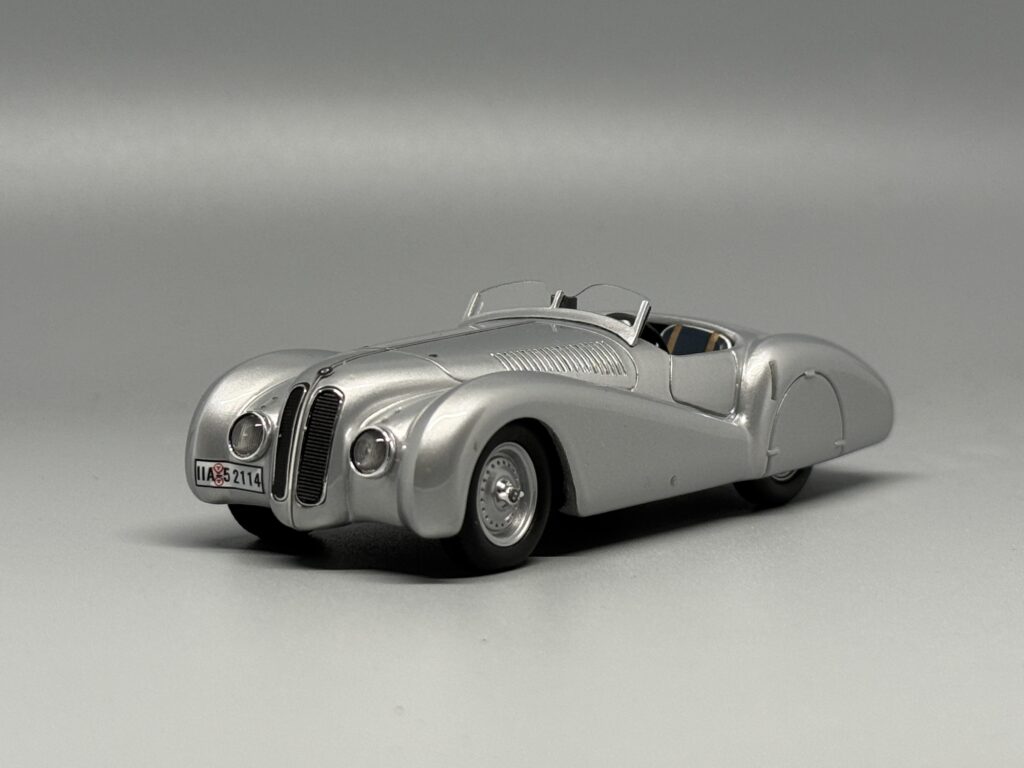
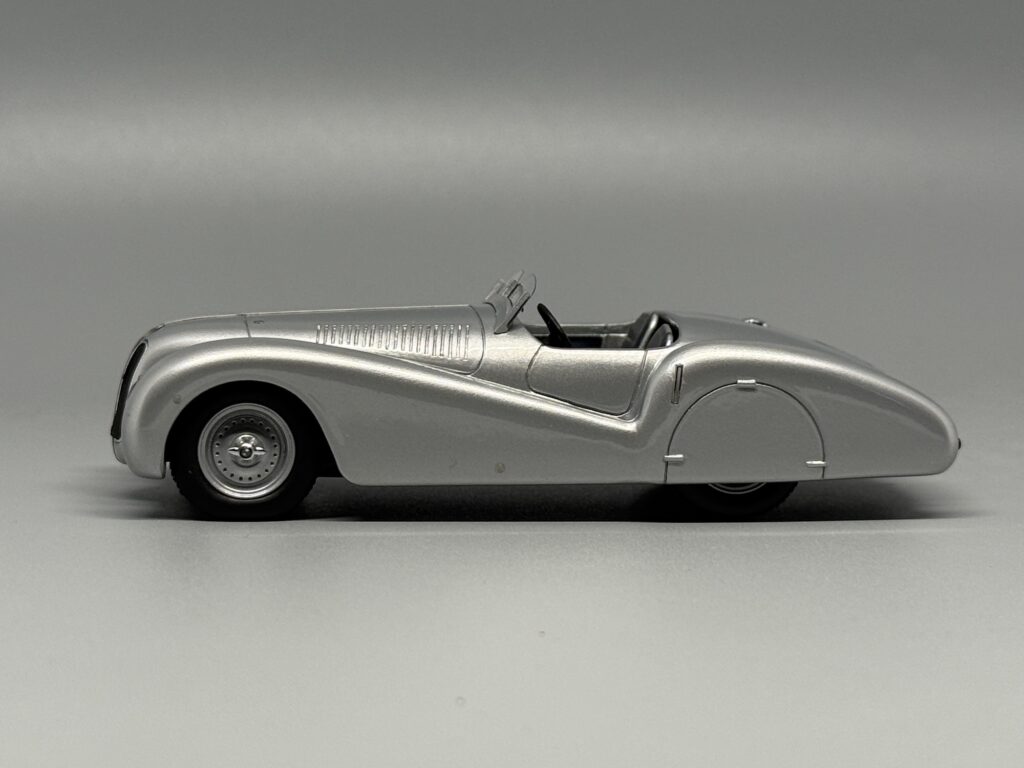
The nickname “Bügelfalte” literally refers to a pressed trouser crease. It came primarily from the sharp metal ridge running along the upper edges of the front wings, a feature not found in this form on any other BMW 328. The low body, streamlined surfaces, small windscreens and long bonnet gave the car a much more aggressive appearance than the standard 328 Roadster. The Bügelfalte body was built in BMW’s own development department in Munich and remained unique, while two other streamlined Roadsters prepared for the 1940 Mille Miglia received bodies from Carrozzeria Touring in Milan.
Lightweight construction
Weight reduction was a central objective in the development of the Bügelfalte. The aluminium outer body was mounted on a sophisticated lightweight tubular frame, while magnesium was also used for several components. Lightweight materials were applied to the brakes, transmission parts, seat structures and other elements. As a result, the car weighed approximately 725 kg, significantly less than a standard BMW 328. This low mass was one of the main reasons why the relatively small two-litre BMW could compete successfully against much more powerful cars.
2.0-litre competition engine
The standard BMW 328’s 1,971 cm³ six-cylinder in-line engine produced around 80 hp in road-going form, but in the Bügelfalte output was increased to approximately 130 hp. The engine retained the basic BMW 328 design but received several competition modifications, including an enlarged oil sump, an additional oil cooler and an improved intake arrangement for high-speed driving. Power was transmitted to the rear wheels through a reinforced four-speed manual transmission. Top speed reached approximately 200 km/h, an exceptional figure for a naturally aspirated two-litre sports car in the late 1930s.
The 1940 Mille Miglia
The I Gran Premio Brescia delle Mille Miglia, held on 28 April 1940, no longer followed the traditional Brescia–Rome–Brescia route. Instead, competitors completed nine laps of a 167-kilometre circuit linking Brescia, Cremona and Mantua. BMW entered five specially prepared 328 competition cars: three Roadsters, the Touring Coupé and the Kamm Coupé. The Bügelfalte carried race number 71 and was driven by Hans Wencher and Rudolf Scholz. The car finished the demanding event in sixth place overall. BMW achieved overall victory with the Touring Coupé, while other 328s finished third, fifth and sixth, also securing the team prize.
Relationship with the other Mille Miglia BMW 328s
The Bügelfalte was one of three open BMW 328s prepared for the 1940 Mille Miglia, but only its body was built entirely by BMW in Munich. Because of time constraints, the streamlined aluminium bodies of the other two Roadsters were constructed by Carrozzeria Touring in Milan according to BMW drawings. BMW also entered the closed Touring Coupé and the experimental Kamm Coupé. Together, these five cars represented the highest stage of BMW 328 competition development, with engine outputs of approximately 130–136 hp.
A unique Bügelfalte
The BMW 328 Bügelfalte was and remains a one-off. Chassis 85032 began life as a BMW 328 in 1937, but received its distinctive aerodynamic body only during the 1939 rebuild. This explains why different sources may describe the car as a 1937, 1939 or 1940 model – 1937 refers to the original car, 1939 to the creation of the Bügelfalte body, and 1940 to its best-known competition configuration and Mille Miglia appearance.
Later history
The Bügelfalte survived the Second World War and its post-war history became almost as remarkable as its racing career. After the war, the car reached the Soviet Union and later belonged, among others, to the family of aircraft designer Artem Mikoyan. In the 1970s, the car moved to Latvia and, after the collapse of the Soviet Union, eventually returned to Western Europe. The original car survives today and has become one of the most valuable and historically important BMW 328 competition cars.
Best of Show 2026
The historical significance of the Bügelfalte was highlighted once again at the 2026 Concorso d’Eleganza Villa d’Este, where the original car was selected as Best of Show and received the Trofeo BMW Group. Nearly nine decades after its creation, the car continues to be recognised not only as an important part of BMW competition history but also as an outstanding example of pre-war automotive design and engineering.
Significance in BMW history
The BMW 328 Bügelfalte Roadster combines almost every quality that made the BMW 328 one of the most important sports cars in the company’s history: low weight, excellent handling, an efficient six-cylinder engine and advanced aerodynamic development. At the same time, the Bügelfalte was far more specialised than a standard 328, representing a fully developed competition car. Its one-off status, class victory at the 1938 Mille Miglia before the rebuild, sixth place in 1940 and extraordinary later history make it one of the most significant surviving pre-war BMWs.
Model in the collection
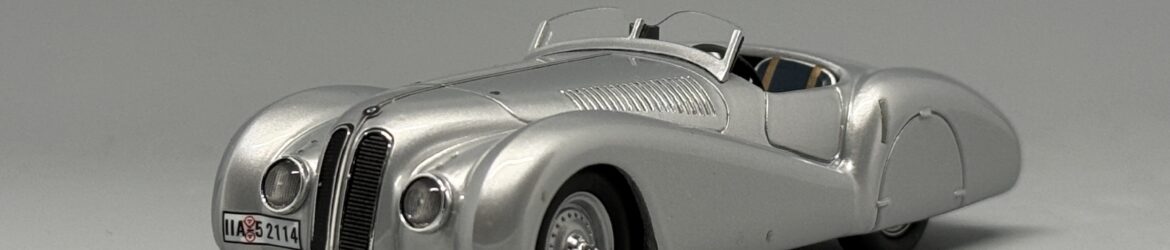
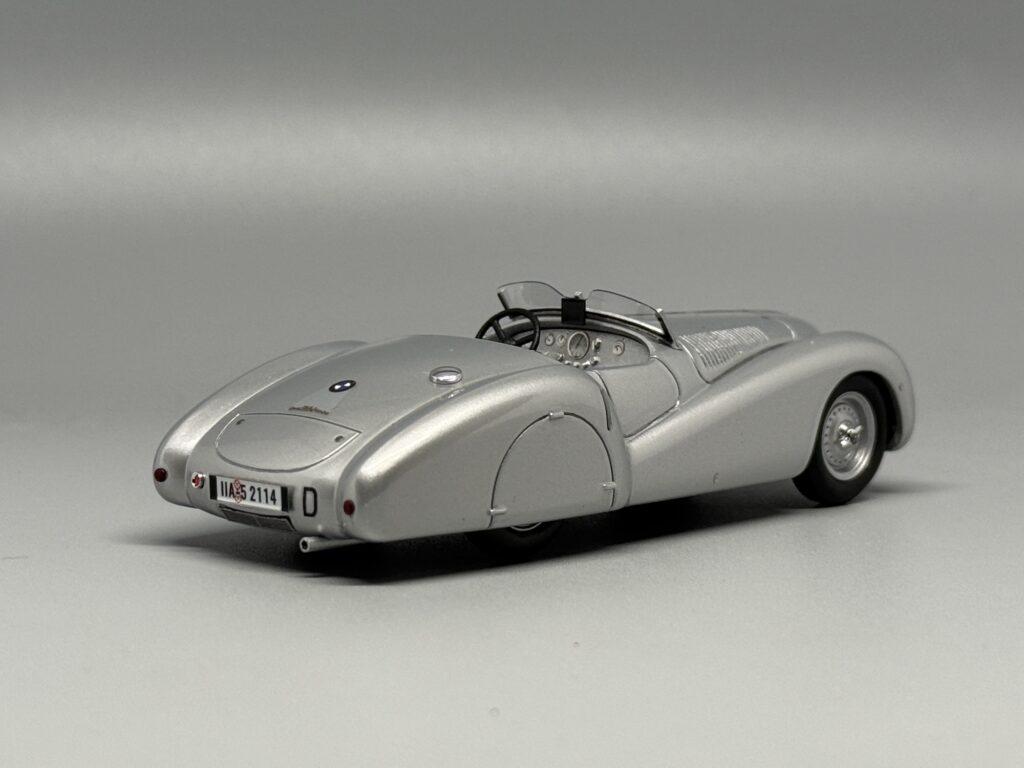
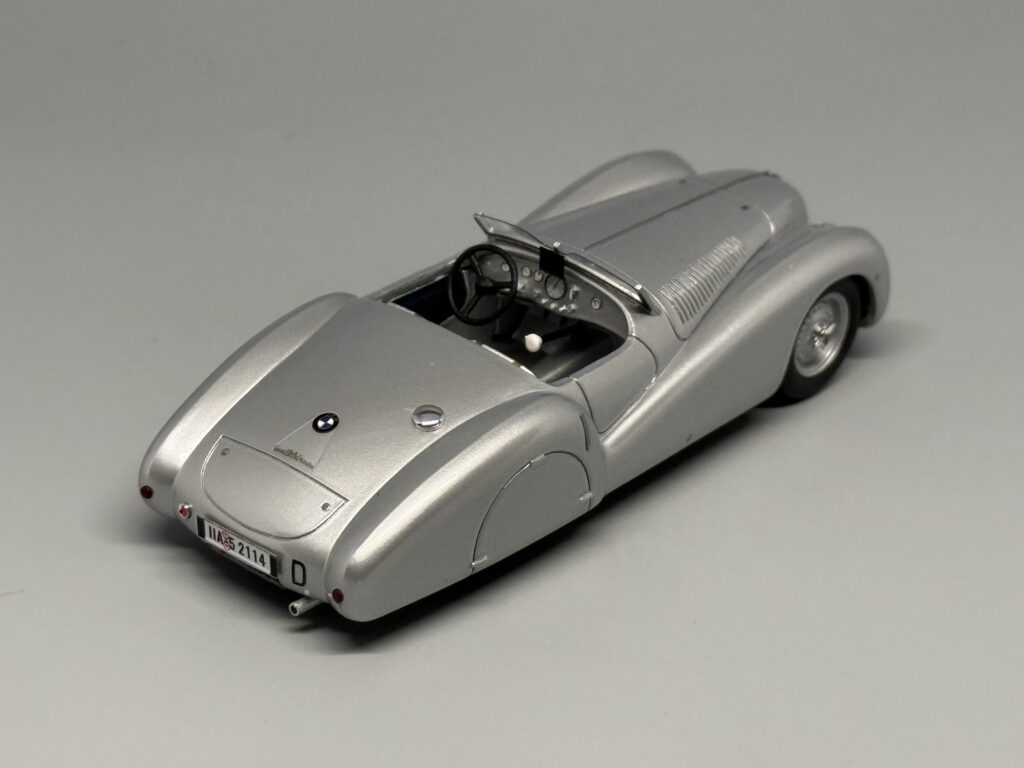
The model in my collection was produced by Brausi and represents the BMW 328 Bügelfalte Roadster in its 1940 competition configuration. It was produced in a limited edition of 100 examples, and my model is numbered 40.
Technical data in brief
Original car completed: 1937
Bügelfalte rebuild: 1939
Mille Miglia competition configuration: 1940
Chassis number: 85032
Original chassis production: Eisenach, Germany
Bügelfalte body construction: BMW, Munich
Body style: two-door aerodynamic competition Roadster
Engine: six-cylinder in-line engine
Displacement: 1,971 cm³
Power: approximately 130 hp
Transmission: 4-speed manual
Drivetrain: rear-wheel drive
Kerb weight: approximately 725 kg
Top speed: approximately 200 km/h
1940 Mille Miglia: 6th overall
Drivers at the 1940 Mille Miglia: Hans Wencher / Rudolf Scholz
Production: 1 car
Special feature: unique aerodynamic BMW 328 Roadster developed by BMW’s own competition department in Munich
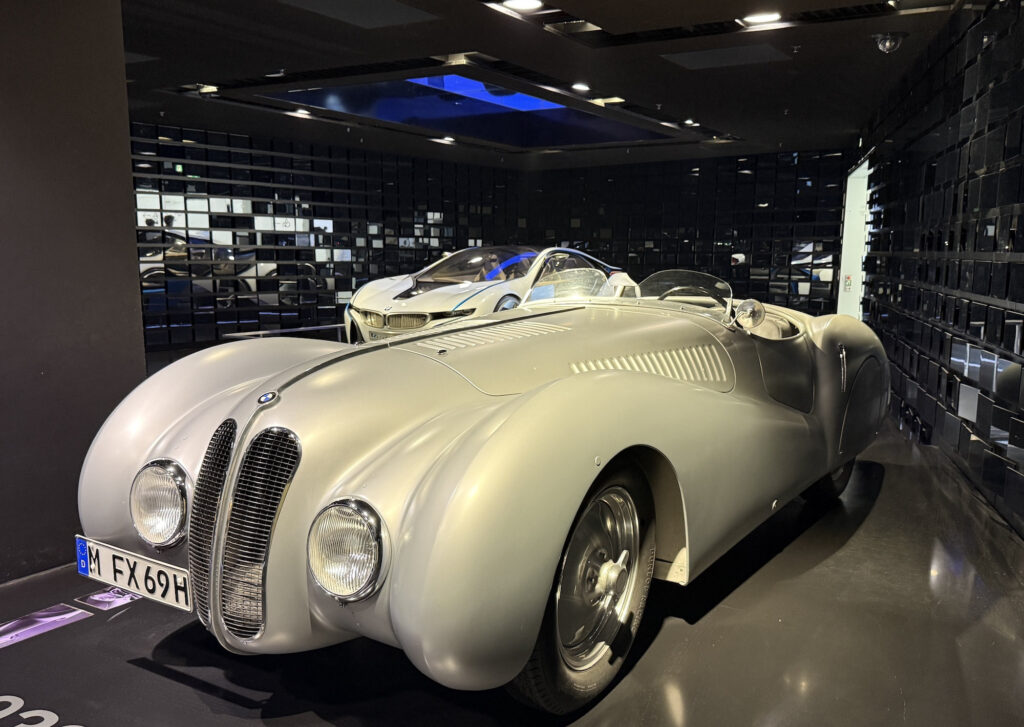
Photo of the real car, BMW Museum. Photo: Sten-Patrick Kreek