Background
BMW 2000 A belonged at the top of BMW’s Neue Klasse saloon range and combined the performance of the 2.0-litre BMW 2000 with the greater driving comfort of an automatic transmission. While the Neue Klasse had helped establish BMW’s reputation in the early 1960s as a manufacturer of sporting, well-handling and driver-focused saloons, the automatic 2000 demonstrated another side of the same model family. It was a fast and refined touring saloon aimed at customers who appreciated BMW’s driving qualities but preferred smoother and more relaxed gear changes in everyday use.
The Neue Klasse model family
The BMW Neue Klasse began with the BMW 1500, which was presented in 1961 and entered production in 1962. It was followed by the BMW 1600 and 1800 with larger engines and different equipment levels. The Neue Klasse proved exceptionally important for BMW, combining a practical four-door body with sporting handling, a modern four-cylinder engine and fresh styling. The success of the model family helped BMW finally overcome the financial difficulties of the 1950s and laid the foundations for the company’s later tradition of sporting saloons.
BMW 2000 – the flagship of the Neue Klasse
The BMW 2000 entered production in January 1966 and became one of the most prestigious four-door models in the Neue Klasse range. Its appearance also differed from the earlier versions. Large rectangular headlamps were used at the front, while wide horizontal rear-light units gave the 2000 a more distinguished appearance than the other Neue Klasse saloons. The interior and equipment level were also more luxurious. BMW positioned the model as a fast and comfortable touring car combining sporting driving characteristics with a more refined character.
Automatic transmission in the BMW range
Automatic transmission was still a relatively new option for BMW in the mid-1960s. BMW customers were first able to order an automatic transmission for the BMW 1800 in August 1965, and it was also offered for the BMW 2000 around the time of its introduction. The automatic version was known as the BMW 2000 A, with the letter A indicating the automatic transmission. It provided a more comfort-oriented alternative to the BMW 2000 with its four-speed manual gearbox.
Two-litre M10 engine
The BMW 2000 A used a 1,990 cm³ four-cylinder in-line engine from BMW’s M10 engine family. It produced 100 hp or 74 kW at 5,500 rpm. The naturally aspirated single-overhead-camshaft engine provided very respectable performance for a mid-1960s saloon. The same basic two-litre engine also formed the foundation for several more sporting BMW versions, including the 2000 ti and later the fuel-injected 2000 tii.
Three-speed ZF automatic
In the BMW 2000 A, the engine was combined with a three-speed ZF automatic transmission. Compared with the manual version, the automatic was primarily intended to provide greater comfort and suited the 2000’s character as a refined touring saloon. The car nevertheless retained the fundamental Neue Klasse qualities of rear-wheel drive, independent suspension and balanced handling. The automatic transmission therefore did not turn the BMW 2000 into merely a comfort-oriented saloon, but offered a more relaxed interpretation of BMW’s sporting character.
Performance and comfort
The BMW 2000’s 100 hp engine allowed a top speed of approximately 168 km/h. Acceleration in the automatic version was somewhat more relaxed than in the manual car, but its main purpose was to provide smoother and more effortless driving. The BMW 2000 was a fast touring saloon by the standards of its time, and the automatic version demonstrated that BMW was increasingly paying attention not only to sporting performance but also to comfort and the differing requirements of its customers.
The end of the Neue Klasse
Production of the BMW 2000 continued from January 1966 until January 1972. According to BMW’s historical records, approximately 120,000 BMW 2000 cars were produced during this period. The production total of the automatic BMW 2000 A is not listed separately in BMW’s publicly available model information, so no reliable exact figure can be assigned to this particular version. In 1972, the Neue Klasse saloons were succeeded by the first-generation BMW 5 Series E12, which continued many of the same ideas of a sporting, high-quality and comfortable four-door BMW.
Historical significance
The BMW 2000 A was not the most sporting version of the Neue Klasse, but it is an important example of the expansion of BMW’s model range during the 1960s. It demonstrated that sporting handling and the comfort of an automatic transmission did not have to be mutually exclusive. This principle later became a completely normal part of BMW’s larger saloon ranges. The 2000 A therefore represents the more mature and refined side of the Neue Klasse at a time when BMW was becoming increasingly established as a premium automobile manufacturer.
Model in the collection
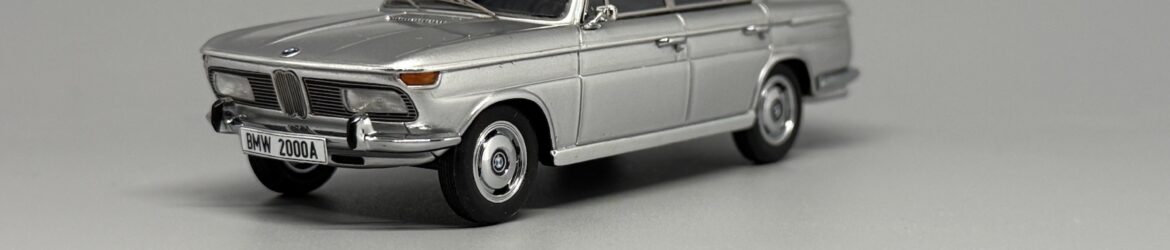
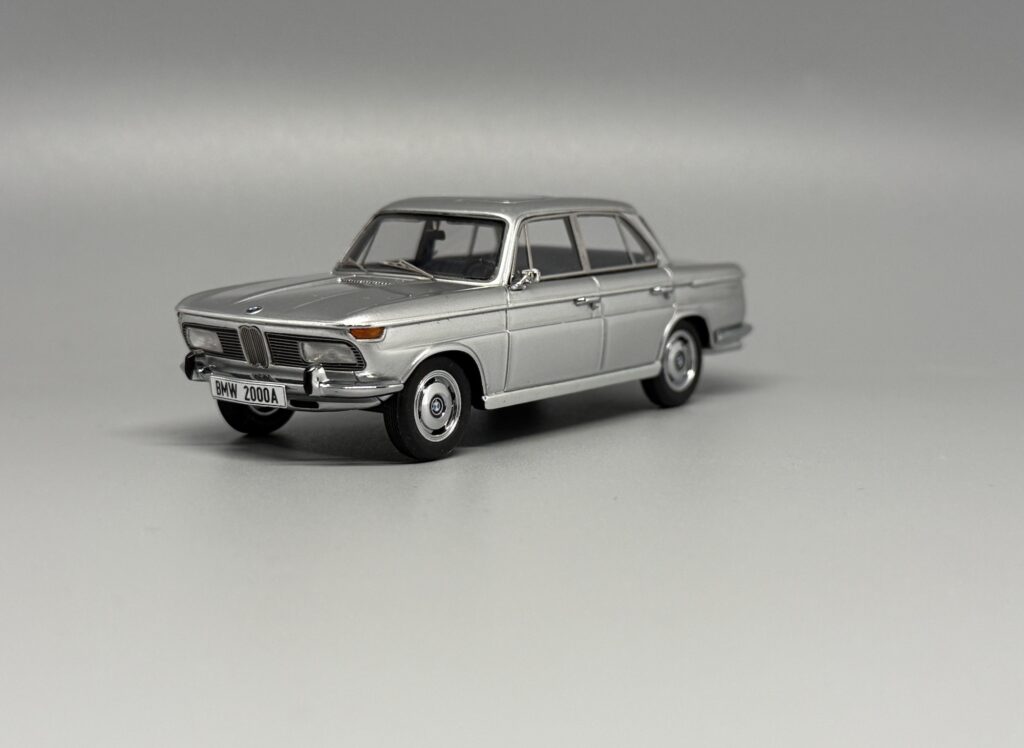
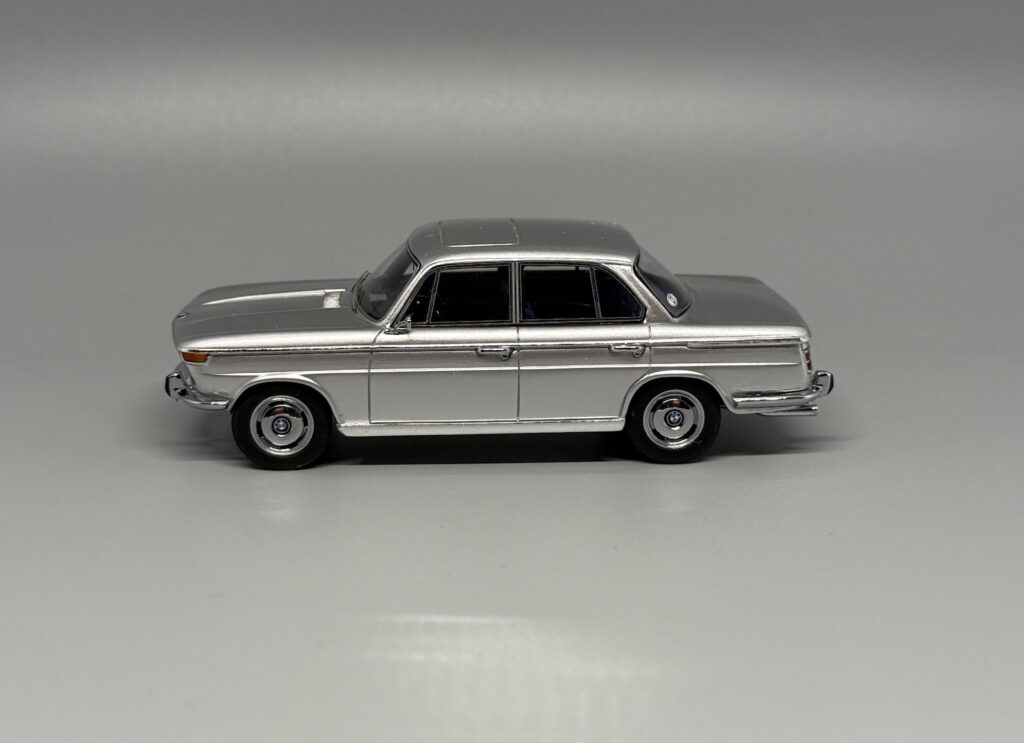
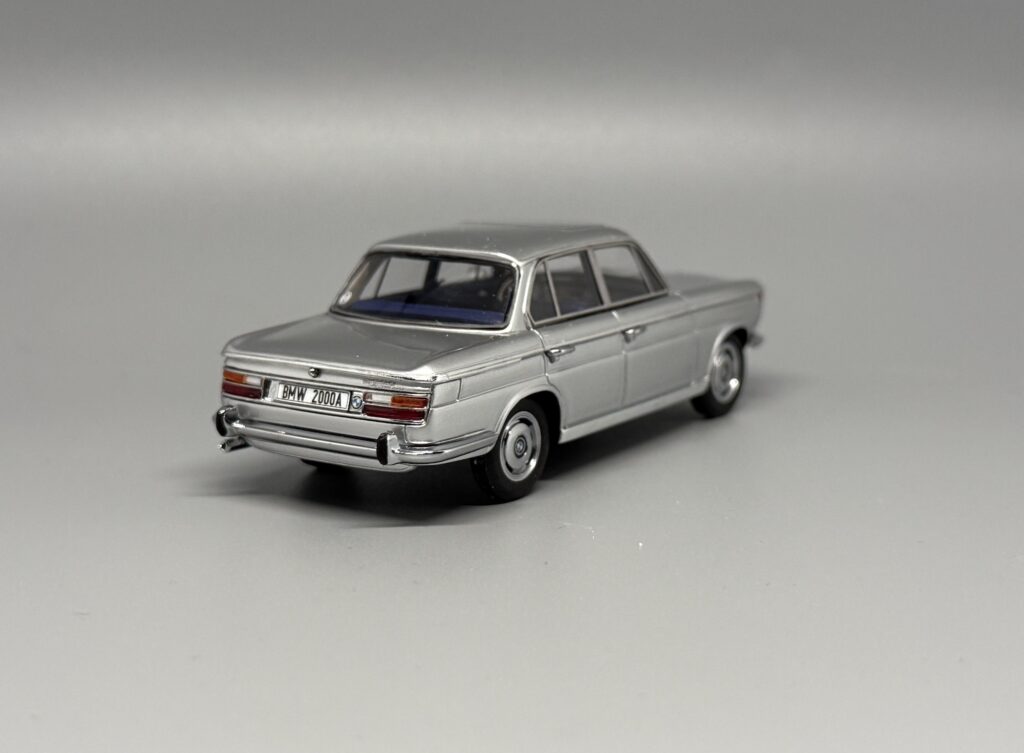
The model in my collection was produced by Minichamps and represents the BMW 2000 A saloon. It was produced in a limited edition of 600 examples. Minichamps identifies the model as a 1962 car, but this cannot be the correct year for the BMW 2000 itself, as production did not begin until January 1966. The year 1962 corresponds to the beginning of Neue Klasse series production, and the date given by Minichamps should therefore be regarded as an error in relation to the BMW 2000 A. The correct period for the model is 1966 or later.
Technical data in brief
Production period: January 1966 – January 1972
Production location: Munich, Germany
Body style: four-door saloon
Engine: four-cylinder in-line engine
Displacement: 1,990 cm³
Power: 100 hp / 74 kW @ 5,500 rpm
Transmission: 3-speed ZF automatic
Drivetrain: rear-wheel drive
Top speed: approximately 168 km/h
Weight: approximately 1,150 kg
BMW 2000 production: approximately 120,000 cars
BMW 2000 A separate production figure: unknown
Special feature: comfort-oriented automatic-transmission version of the BMW 2000

Photo of the real car. Source: Wikipedia