
Background
BMW 2000 CS was an elegant two-door coupé that combined the modern engineering of the Neue Klasse saloons with a more luxurious and sporting body. The model was presented in June 1965, with series production beginning in September of the same year. For BMW, the 2000 CS marked a return to the concept of an elegant sporting coupé at a time when the success of the Neue Klasse saloons had already transformed the company’s financial position. BMW promoted the new coupé as a comfortable touring car that combined sporting driving characteristics with a high level of equipment and a more exclusive character.
Neue Klasse engineering in a new form
The BMW 2000 CS used the same basic technical concept as the four-door Neue Klasse saloons, but its coupé body was a completely separate design. BMW did not simply convert the saloon into a two-door model, but created a new exterior specifically for the coupé. Its low roofline, slender pillars and large glass areas gave the car a light and elegant appearance while retaining the practical and driver-focused character associated with BMW.
Design by Wilhelm Hofmeister
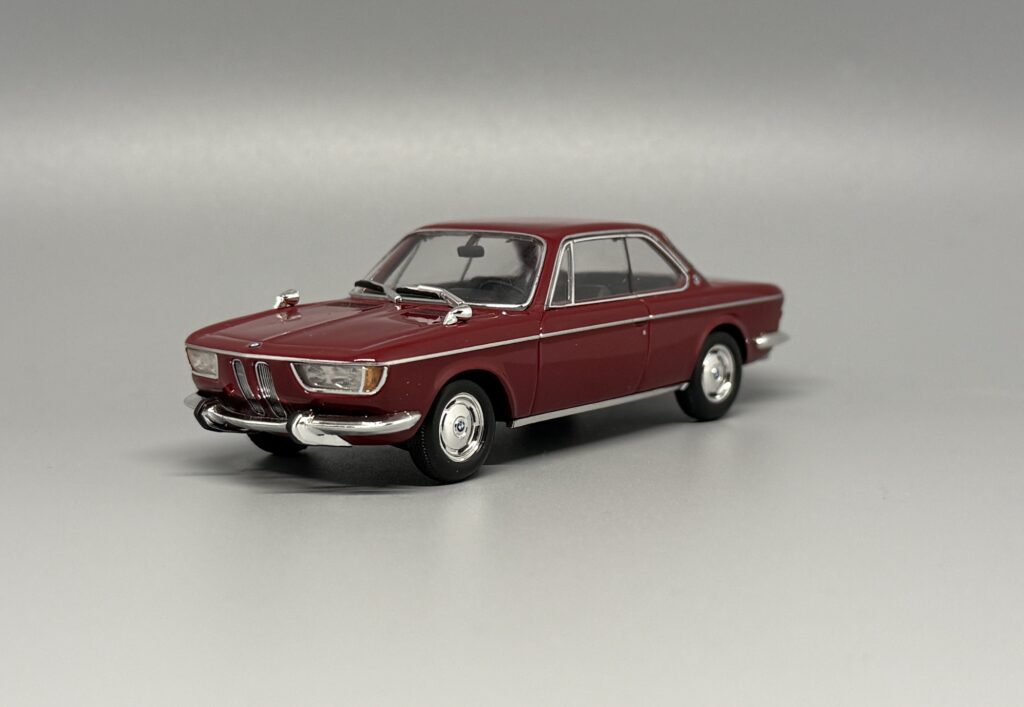
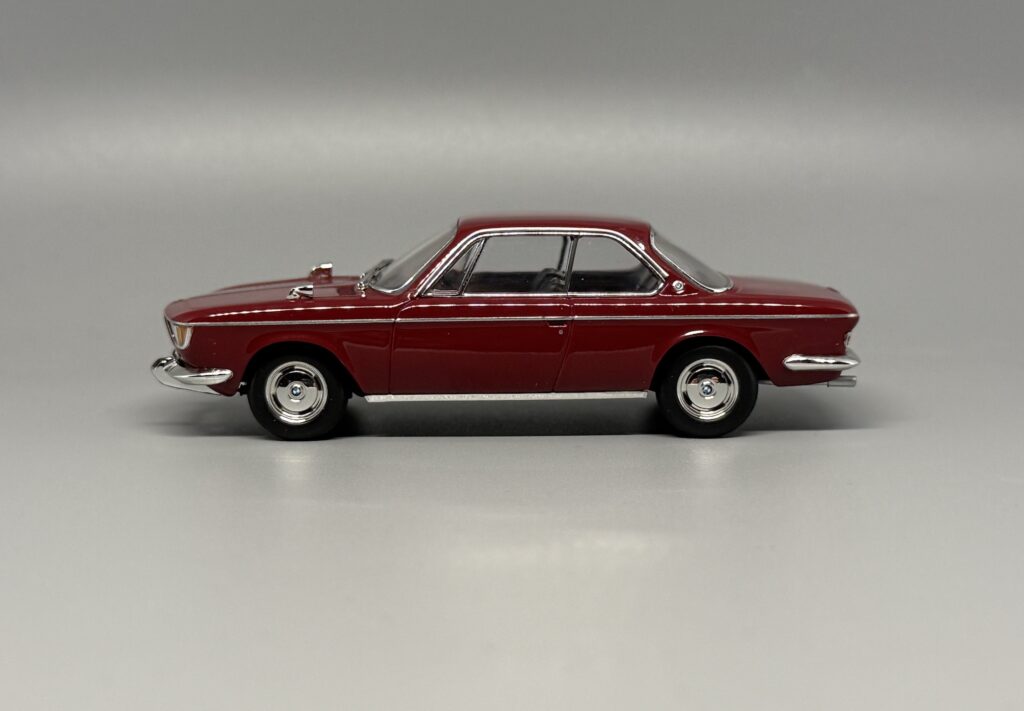
The coupé was styled under BMW chief designer Wilhelm Hofmeister and his team. In side view, the car already displayed the distinctive Hofmeister kink at the base of the C-pillar, which was becoming an important BMW design signature. The front end was particularly distinctive, with a very narrow vertical BMW kidney grille in the centre and trapezoidal headlamps covered by transparent lenses. This gave the 2000 CS a very different appearance from contemporary BMW saloons.
Connection with the BMW 3200 CS
The BMW 2000 CS followed some of the styling themes established by the earlier BMW 3200 CS coupé designed by Bertone. The elegant Gran Turismo character could be seen especially in the roofline, slender pillars and overall side proportions. Technically, however, the newer coupé was fully connected with the Neue Klasse generation and was considerably lighter and more modern. While the V8-powered 3200 CS still belonged to the world of BMW’s 1950s luxury cars, the 2000 CS represented the company’s new direction.
Body production by Karmann
BMW did not have sufficient in-house production capacity to manufacture the new coupé bodies, so the company worked with Karmann in Osnabrück. Karmann produced the bodies for the Neue Klasse coupés and played a central role in their manufacture throughout the model generation. Between 1965 and 1970, a total of 13,691 BMW 2000 C, CA and CS models were built, with the sporting 2000 CS being the most numerous version.
Two-litre four-cylinder engine
The BMW 2000 CS used a 1,990 cm³ four-cylinder in-line engine from BMW’s Neue Klasse M10 engine family. The engine was equipped with two Solex twin-choke carburettors and produced 120 hp at 5,500 rpm. The same power output was also used in the sporting BMW 2000 ti saloon. Power was transmitted to the rear wheels through a four-speed manual gearbox.
A sporting touring coupé
The 120 hp engine allowed the BMW 2000 CS to reach a top speed of 185 km/h. It was not intended as a pure sports car, but rather as an elegant Gran Turismo-type touring coupé in which sporting handling was combined with a comfortable interior and a higher level of equipment. BMW Group Classic describes the model as a combination of sporting driving qualities, an exclusive interior and the comfort expected from an elegant touring car. When new, the BMW 2000 CS cost 17,500 Deutsche Mark in Germany.
BMW 2000 C and 2000 CA
Alongside the sporting 2000 CS, BMW also offered the more relaxed 2000 C and 2000 CA versions. These used the same 1,990 cm³ engine, but with a single Solex carburettor and an output of 100 hp. The 2000 CA was equipped with an automatic transmission, while the low-production 2000 C used a manual gearbox. With its 120 hp engine, the 2000 CS remained the most sporting and also the most successful version of the coupé family.
The road to the E9 coupés
Much of the historical significance of the BMW 2000 CS lies in the fact that its basic body concept evolved directly into BMW’s next generation of coupés. The BMW 2800 CS (E9), introduced in 1968, retained much of the fundamental architecture of the 2000 CS but received a longer front section and a new six-cylinder engine. It was followed by the 3.0 CS, 3.0 CSi and the legendary 3.0 CSL. The BMW 2000 CS can therefore be regarded as a direct bridge between the Neue Klasse era and BMW’s famous six-cylinder coupés of the 1970s.
Historical significance
The BMW 2000 CS combined the company’s new engineering direction of the 1960s with its tradition of building elegant sporting coupés. Although its four-cylinder engine was more modest than the six-cylinder units that followed, the model’s greatest strengths were its refined design, high-quality interior and balance between sporting character and touring comfort. It established the body and design concept from which the E9 evolved and, in turn, helped shape BMW’s long tradition of large luxury coupés.
Model in the collection
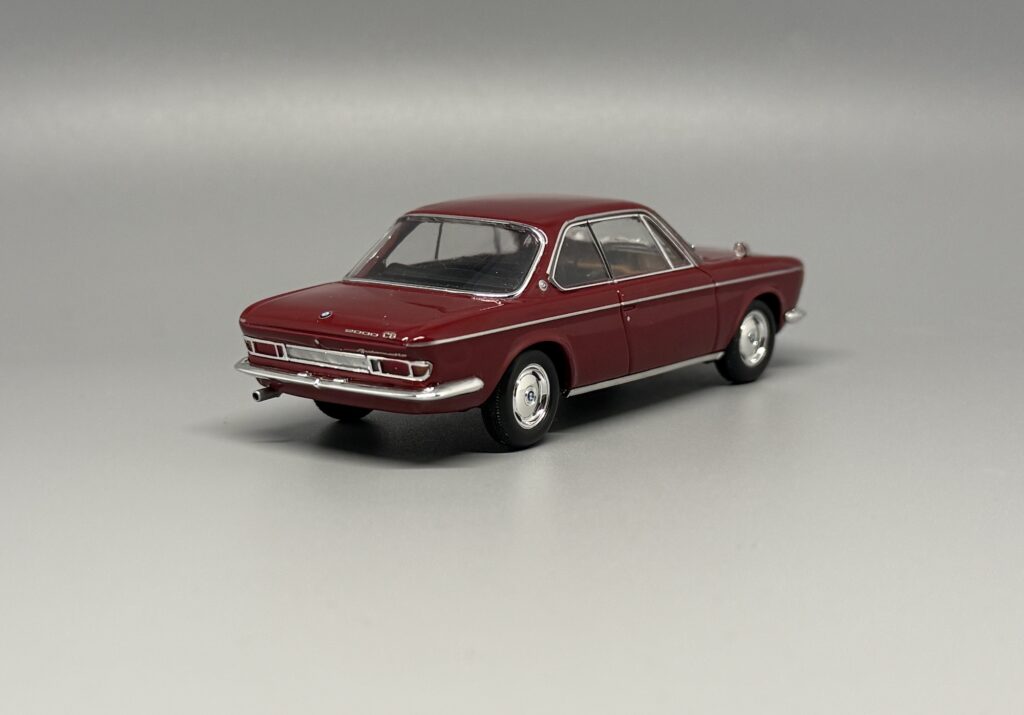
The model in my collection was produced by Minichamps and represents a 1967 BMW 2000 CS coupé. The model was produced in a limited edition of 1,008 examples.
Technical data in brief
Public debut: June 1965
Production period: September 1965 – February 1970
Body style: two-door coupé
Body production: Karmann, Osnabrück, Germany
Engine: four-cylinder in-line engine
Displacement: 1,990 cm³
Carburettors: two Solex twin-choke carburettors
Power: 120 hp @ 5,500 rpm
Transmission: 4-speed manual
Drivetrain: rear-wheel drive
Top speed: 185 km/h
Price when new: 17,500 Deutsche Mark
Production: 9,999 cars
Special feature: sporting luxury coupé based on Neue Klasse engineering and the direct predecessor of the later E9 coupé generation
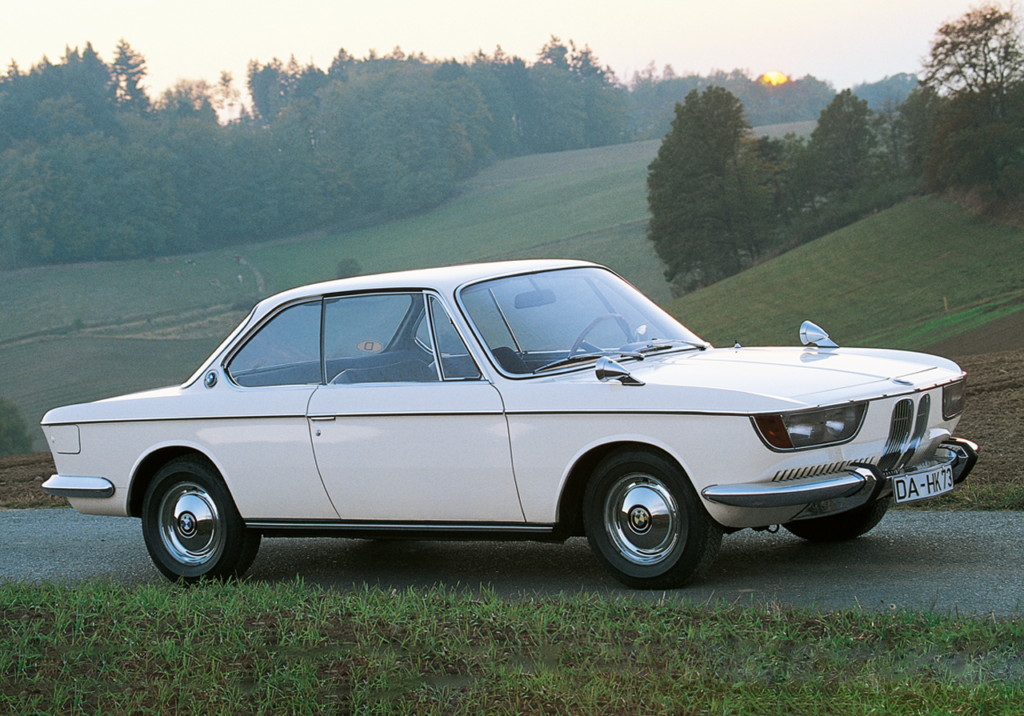
Photo of the real car. Source: bmwgroup-classic.com