
Background
BMW 3.0 CSi (E9) is one of BMW’s best-known classic coupés and one of the most important versions of the E9 “large coupé” family. The model entered production in July 1971 and combined the elegant Gran Turismo character of the E9 with a considerably more powerful fuel-injected six-cylinder engine. Compared with the carburettor-equipped BMW 3.0 CS, the CSi offered more power and an even more convincing sporting luxury-coupé character. Its low body, large glass areas, frameless side windows and clearly driver-oriented nature made it one of the most distinctive BMW models of the 1970s.
The E9 “large coupé”
The BMW E9 model family began in 1968 with the BMW 2800 CS. The E9 evolved from the earlier BMW 2000 CS coupé, but received a longer front section and a new six-cylinder engine. BMW referred to these cars as its “Große Coupé”, or large coupé, models and positioned them in the sporting luxury segment of the range. The body design was created under BMW designer Manfred Rennen and combined a long bonnet, low roofline, large glass areas and the classic BMW front end with twin round headlamps.
From 3.0 CS to 3.0 CSi
In April 1971, BMW replaced the earlier 2800 CS with the new BMW 3.0 CS, whose 2,985 cm³ six-cylinder engine produced 180 hp. The BMW 3.0 CSi followed in July of the same year. The M30B30 engines used by the two models were very similar in their basic construction, but the CSi replaced the carburettors with electronically controlled fuel injection. As a result, output increased by 20 hp to an impressive 200 horsepower.
Electronic Bosch fuel injection
One of the most important technical differences of the BMW 3.0 CSi was its electronically controlled Bosch petrol injection system. In the early 1970s, this was still a technically advanced solution and allowed the engine to provide greater power and more precise fuel delivery than the carburettor-equipped 3.0 CS. Fuel injection not only made the CSi more powerful but also reinforced its position as one of the most technically advanced coupés in BMW’s range at the time.
Three-litre straight-six
The BMW 3.0 CSi used a 2,985 cm³ M30B30 six-cylinder in-line engine producing 200 hp or 147 kW at 5,500 rpm. By this time, the BMW M30 engine family had become one of the company’s most important power units, combining strong performance with the smooth running that became characteristic of BMW straight-six engines. Power was transmitted to the rear wheels through a four-speed manual gearbox.
A 220 km/h Gran Turismo
The 200 hp engine gave the BMW 3.0 CSi a top speed of 220 km/h. This was an impressive figure for a four-seat luxury coupé in the early 1970s and placed the CSi among BMW’s fastest road cars. At the same time, it was not a stripped-out sports car: the E9 offered a high-quality interior, comfortable seating and sufficient space for long-distance touring. This combination of performance and Gran Turismo comfort was one of the E9’s greatest strengths.
Four-speed manual transmission
The production BMW 3.0 CSi was equipped with a four-speed manual transmission. An automatic transmission was not offered as a normal production option for the CSi. According to BMW Classic documentation, only two automatic-transmission prototypes were built. This distinguished the CSi from the carburettor-equipped 3.0 CS, for which an automatic transmission was available, and further emphasised the more sporting character of the fuel-injected model.
Coupé body by Karmann
Production of the E9 coupé bodies involved Karmann in Osnabrück, which had already worked with BMW on the earlier Neue Klasse 2000 C and 2000 CS coupés. The E9 retained much of the basic architecture of the earlier coupé, but its front section was extended to accommodate the six-cylinder engine. The result was a particularly elegant car with a long bonnet, slender pillars and frameless side windows that became characteristic features of classic BMW coupé design.
Connection with the BMW 3.0 CSL
The engineering of the BMW 3.0 CSi also played an important role in the development of the most famous sporting version of the E9. From 1972, the fuel-injected BMW 3.0 CSL used an engine developed from the CSi’s 200 hp unit. For homologation purposes, displacement was increased slightly to 3,003 cm³, and the CSL later evolved into still more powerful versions. The CSi engine therefore had a direct role in the development of one of BMW’s most famous competition cars.
Luxury and exclusivity
When new, the BMW 3.0 CSi cost 29,440 Deutsche Mark in Germany, making it one of the most expensive BMW models of its time. The high price reflected its powerful engine, electronic fuel injection, rich equipment and exclusive coupé body. The 3.0 CSi was clearly intended for customers who wanted to combine high performance, luxury and the elegance of a true Gran Turismo.
Approximately 8,100 cars
Production of the BMW 3.0 CSi continued from July 1971 until November 1975. During this period, approximately 8,100 cars were built. Although this was considerably more than the rare 3.0 CSL variants, it was still a small number compared with BMW’s mainstream production models. Today, well-preserved E9 coupés are highly valued classic BMWs, with the fuel-injected CSi regarded as one of the most desirable road-going versions of the model family.
The road to the BMW 6 Series
The historical significance of the E9 “large coupés” extends far beyond their own production period. When E9 production ended in 1975, its role was taken over in 1976 by the new BMW 6 Series (E24). The E24 continued the same basic philosophy: a long and elegant coupé body, powerful six-cylinder engines and a combination of sporting ability with luxury touring-car qualities. The E9 can therefore be regarded as the direct predecessor of the BMW 6 Series.
Historical significance
The BMW 3.0 CSi perfectly represents BMW’s development during the early 1970s. It combined the elegant and now-classic E9 body with a 200 hp fuel-injected six-cylinder engine and genuine Gran Turismo comfort. At the same time, its engineering provided an important foundation for the more competition-focused 3.0 CSL. The E9 family helped establish BMW’s reputation for fast, driver-focused and luxurious coupés – a tradition later continued by the BMW 6 Series.
Model in the collection
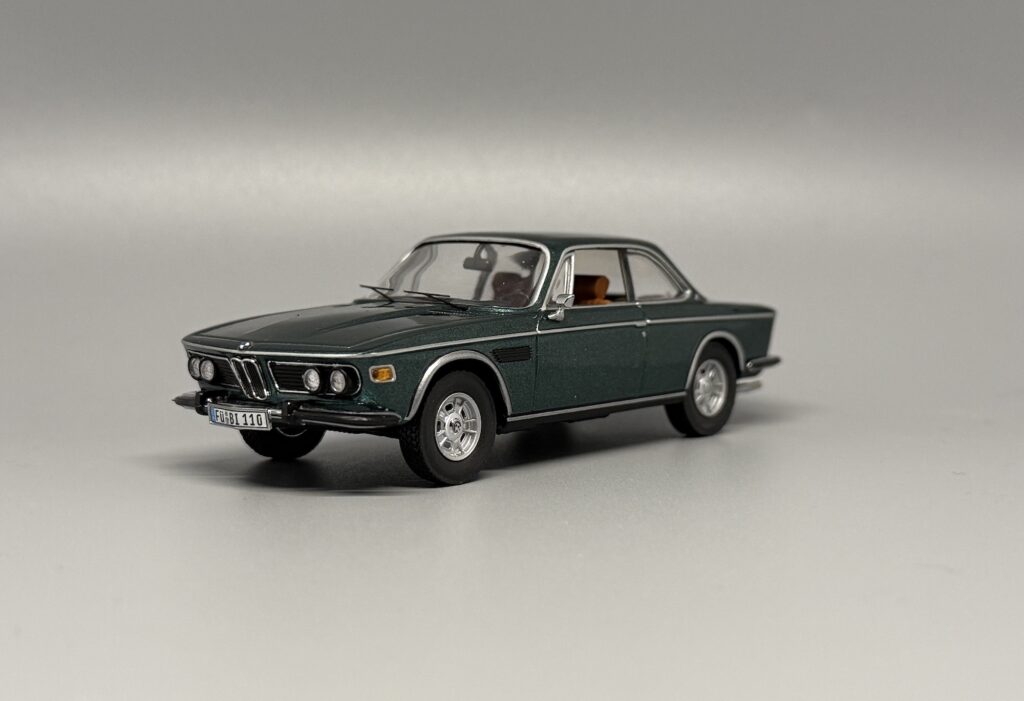
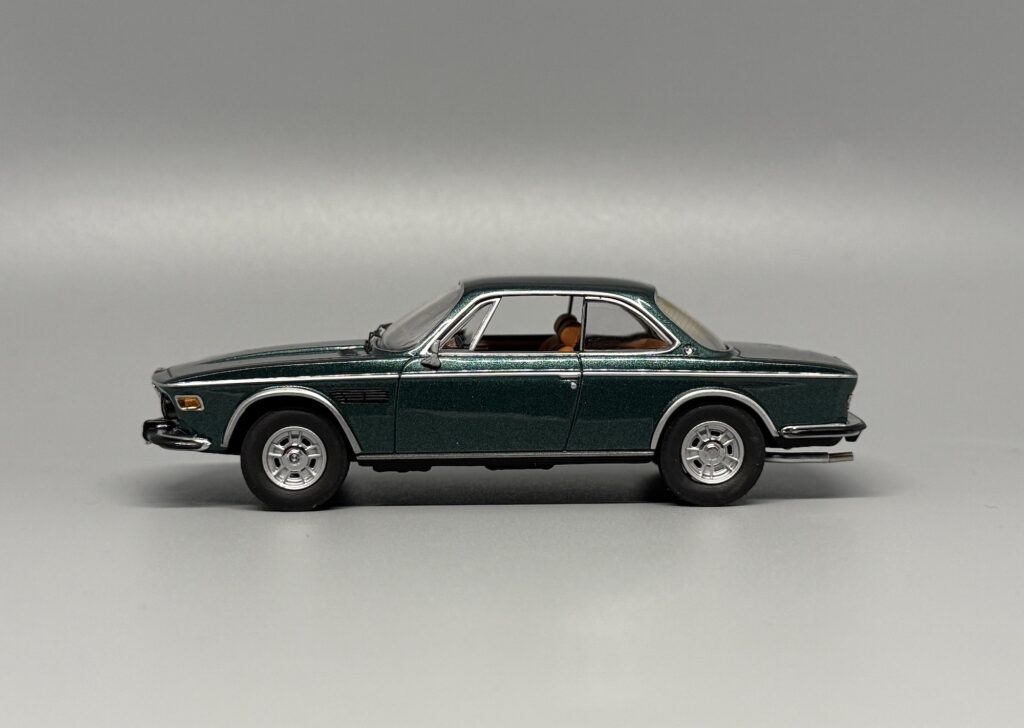
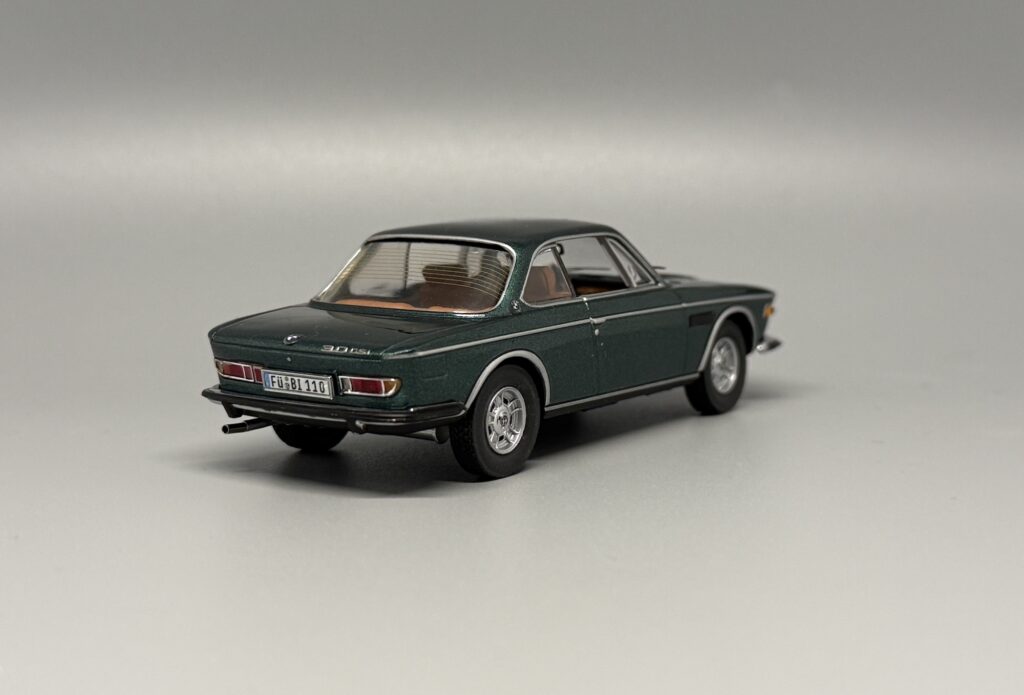
The model in my collection was produced by Schuco and represents the BMW 3.0 CSi (E9) coupé. It was produced in a limited edition of 1,000 examples.
Technical data in brief
Production period: July 1971 – November 1975
Body style: two-door Gran Turismo coupé
Body production: Karmann, Osnabrück, Germany
Engine: M30B30 six-cylinder in-line engine
Displacement: 2,985 cm³
Fuel system: electronically controlled Bosch petrol injection
Power: 200 hp / 147 kW @ 5,500 rpm
Transmission: 4-speed manual
Drivetrain: rear-wheel drive
Top speed: 220 km/h
Price when new: 29,440 Deutsche Mark
Production: approximately 8,100 cars
Special feature: 200 hp fuel-injected E9 luxury coupé and one of the direct predecessors of the BMW 6 Series
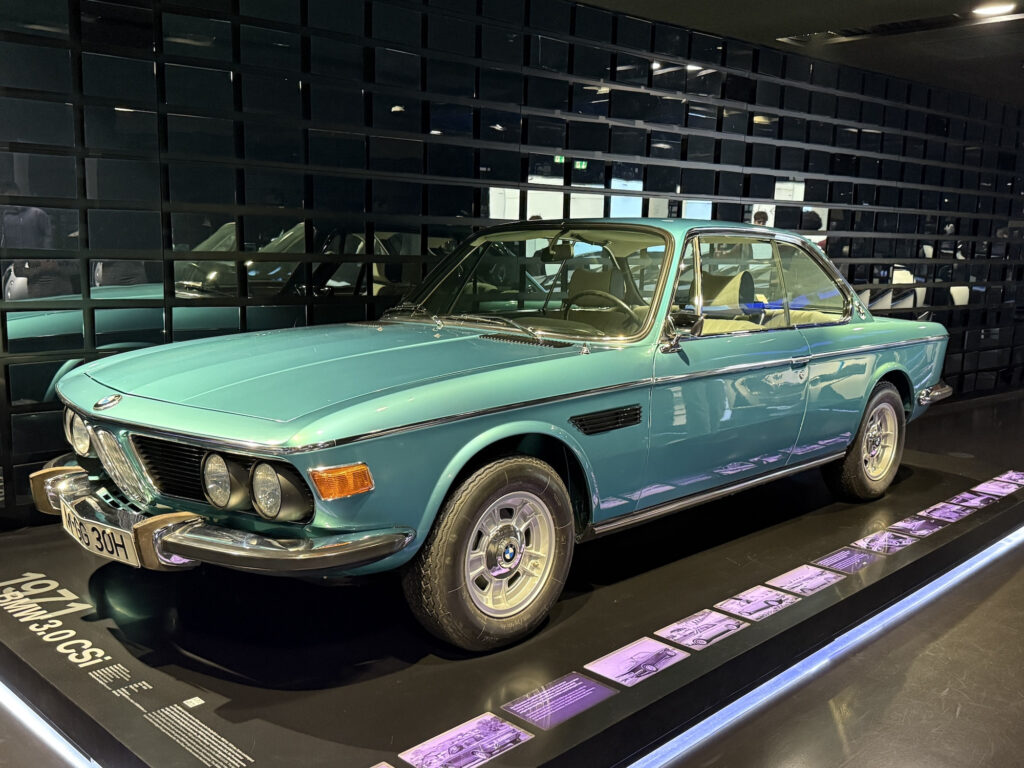
Photo of the real car, BMW Museum. Photo: Sten-Patrick Kreek