
BMW 545i (E60) was one of the first and most powerful versions of the fifth-generation BMW 5 Series introduced in 2003. The E60 marked a significant change for BMW in terms of design, construction and technology. Compared with its more conservative E39 predecessor, the new model featured much bolder styling, considerably more sophisticated electronics and a distinctly new-generation character. The E60 became one of the cars that largely defined BMW’s design and technology direction during the 2000s.
A deliberately bold new design
The fifth-generation 5 Series was developed during the period when BMW design was headed by Chris Bangle, while the exterior design of the E60 is primarily associated with Davide Arcangeli. The new model differed significantly from the restrained E39, with sharply styled headlights, a higher rear end, more pronounced body surfaces and a distinctive new interpretation of the boot lid.
BMW Group Classic describes the fifth-generation 5 Series as a model that polarised opinion with its completely new design. Although the styling was controversial when the car was introduced, the E60 helped establish BMW’s visual identity for the following years and eventually became one of the most recognisable 5 Series generations of the 2000s.
A major technological step forward
The E60 was not innovative only in its appearance. BMW also moved the 5 Series into a new era of electronic control systems. The iDrive operating concept previously introduced in the 7 Series now became available in the 5 Series, allowing many vehicle functions to be controlled through a central display and rotary controller on the centre console.
A Head-Up Display was also available, projecting important driving information directly into the driver’s field of vision on the windscreen. Other advanced options included Active Steering and the Dynamic Drive active anti-roll system, which reduced body roll when cornering. These technologies demonstrated how BMW was increasingly combining its traditional focus on mechanical driving dynamics with sophisticated electronic systems.
Aluminium and steel in one body structure
The E60 was the first 5 Series to make extensive use of a composite aluminium-and-steel body structure. The front section of the car was constructed from aluminium while the main passenger cell remained steel. This reduced the amount of weight carried over the front axle and helped BMW maintain the balanced axle-load distribution considered important for the handling characteristics of the 5 Series.
BMW Group Classic has highlighted that the new construction allowed the E60 to offer more interior space and comfort than its predecessor while also reducing weight and fuel consumption and improving performance. The lightweight aluminium front section was especially valuable in V8-powered versions, where it helped compensate for the additional weight of the larger engine.
545i – the V8 at the top of the range
At the launch of the E60 generation, the 545i was the most powerful regular petrol-engined version of the 5 Series. Under its bonnet was a naturally aspirated 4.4-litre N62 V8 producing 245 kW, or 333 hp, and 450 Nm of torque. The engine incorporated BMW’s Valvetronic variable valve lift system and Double VANOS variable camshaft timing.
Power was sent to the rear wheels, with buyers able to choose between a six-speed manual transmission and a six-speed Steptronic automatic. The manual version accelerated from 0 to 100 km/h in approximately 5.8 seconds, while the automatic required around 5.9 seconds. Maximum speed was electronically limited to 250 km/h.
These figures made the 545i a very fast executive sedan, yet unlike the later M5 its primary purpose was not maximum performance. Instead, the 545i combined V8 power with the comfort, refinement and equipment expected from a 5 Series, creating a car equally suited to fast motorway driving and everyday use.
A short-lived flagship version
The 545i remained in the E60 range for a relatively short period and is therefore closely associated with the first years of the fifth-generation 5 Series. In 2005 it was replaced by the 550i, whose larger 4.8-litre V8 produced 270 kW, or 367 hp.
This makes the 545i an interesting transitional model in BMW history. It represented the original V8 flagship of the E60 range and combined a new generation of body technology, electronic systems and design with BMW’s traditional large naturally aspirated petrol engine. In the following years, turbocharging and increasingly complex powertrains would begin to transform the character of BMW’s most powerful 5 Series models.
Model in the collection
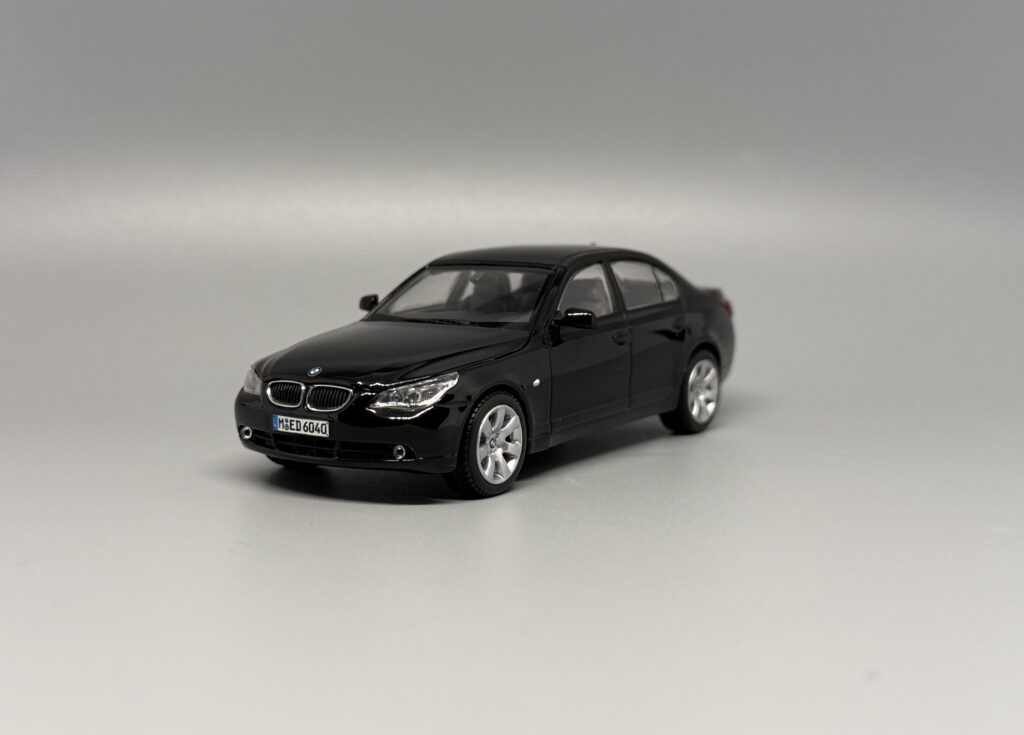
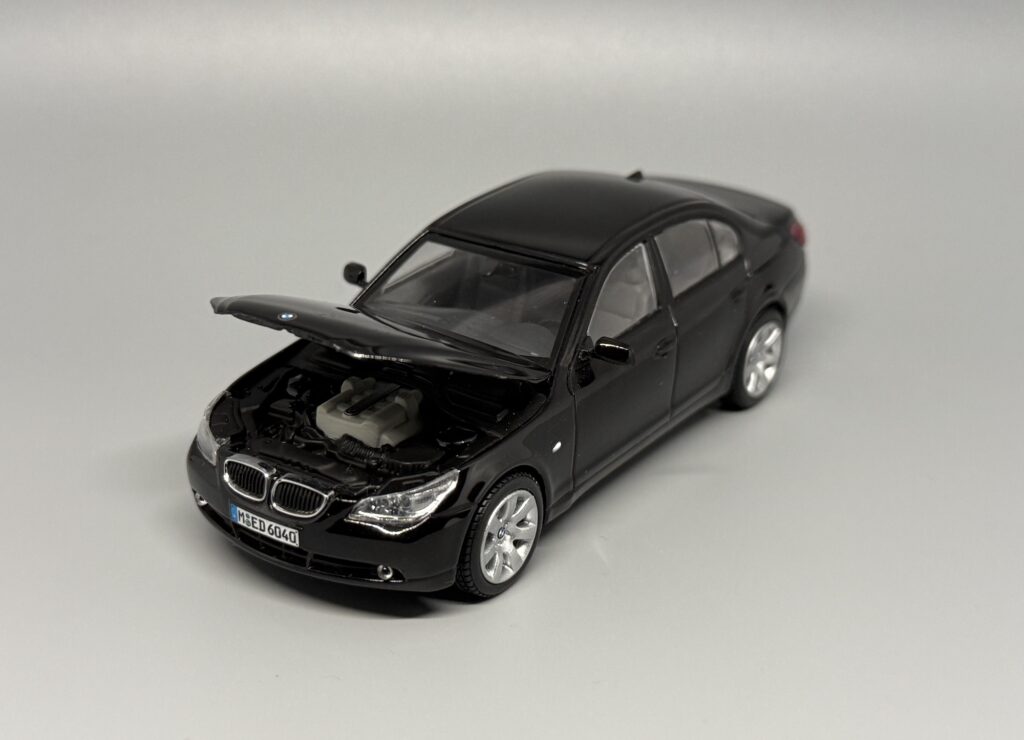
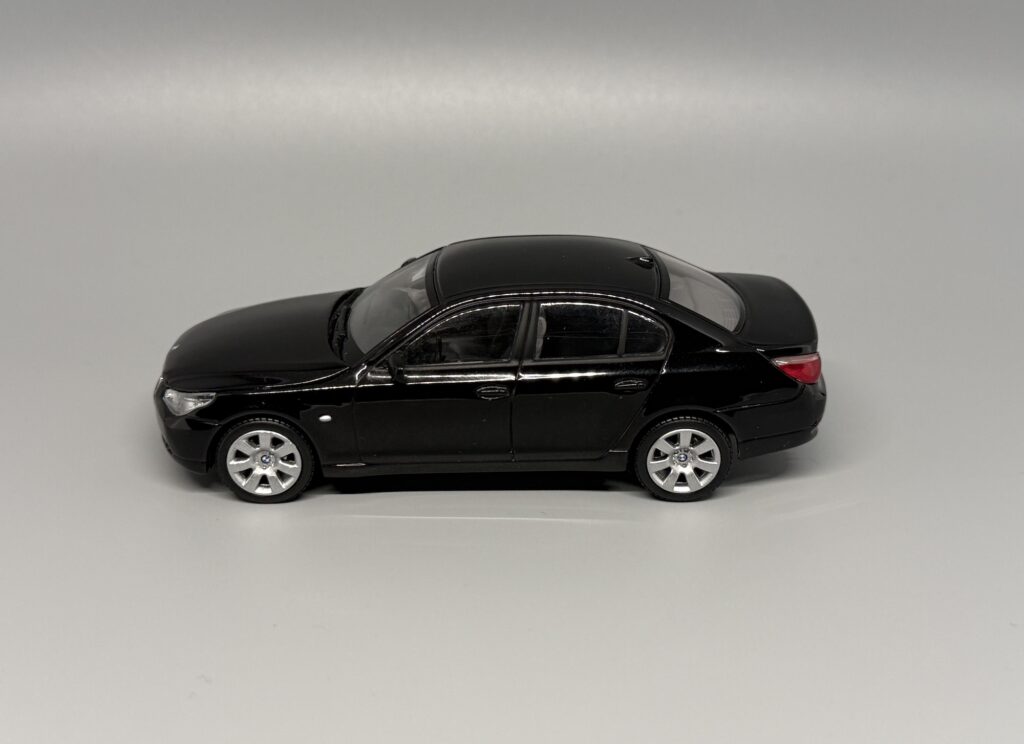
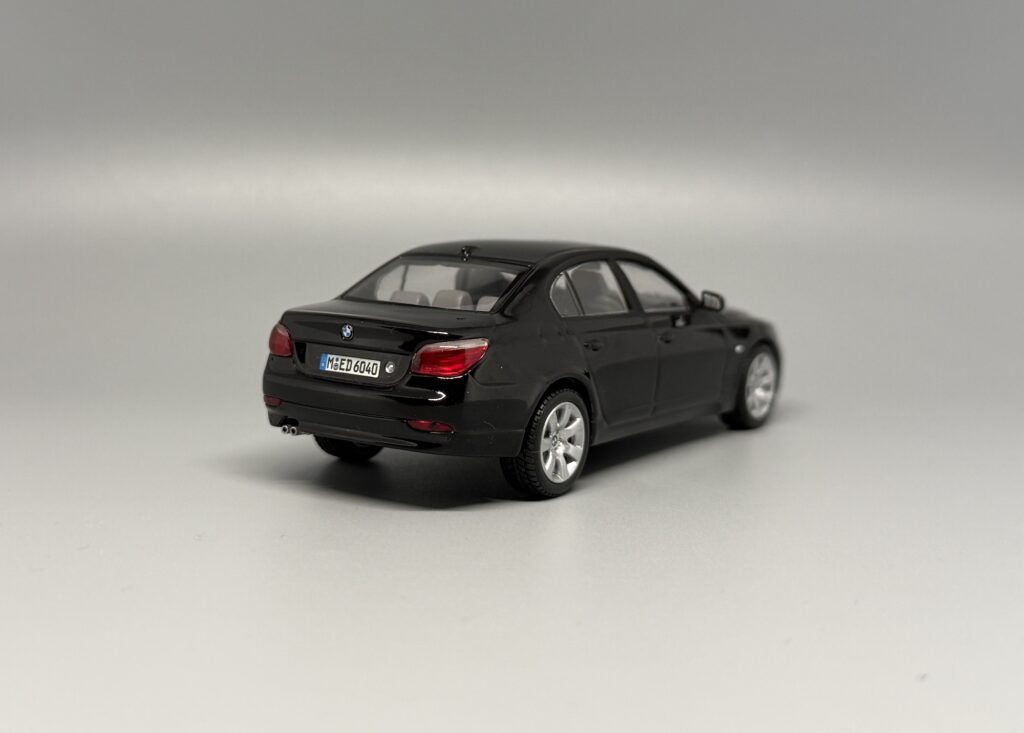
The 1:43-scale model in my collection was produced by Kyosho as an official BMW dealer model. In BMW’s catalogue the model is described more generally as a BMW 5 Series Sedan (E60), without identifying a specific engine version.
The model has been identified in the collection as a BMW 545i on the basis of the V8 engine represented beneath the opening bonnet. Its layout and appearance correspond to the 4.4-litre N62 engine used in the early E60 545i, while the production period of the miniature also matches the years in which the 545i was offered. For these reasons, the 545i is considered the most likely and best-supported identification of this particular model.
Technical data
Production: 2003–2005
Production location: Dingolfing, Germany
Body style: four-door sedan
Engine: N62B44 naturally aspirated V8 petrol engine
Displacement: 4,398 cc
Power output: 245 kW / 333 hp
Torque: 450 Nm
Transmission: 6-speed manual or 6-speed Steptronic automatic
Drive: rear-wheel drive
0–100 km/h: approximately 5.8–5.9 seconds
Top speed: 250 km/h
Special feature: the V8 flagship of the early E60 range before the arrival of the 550i
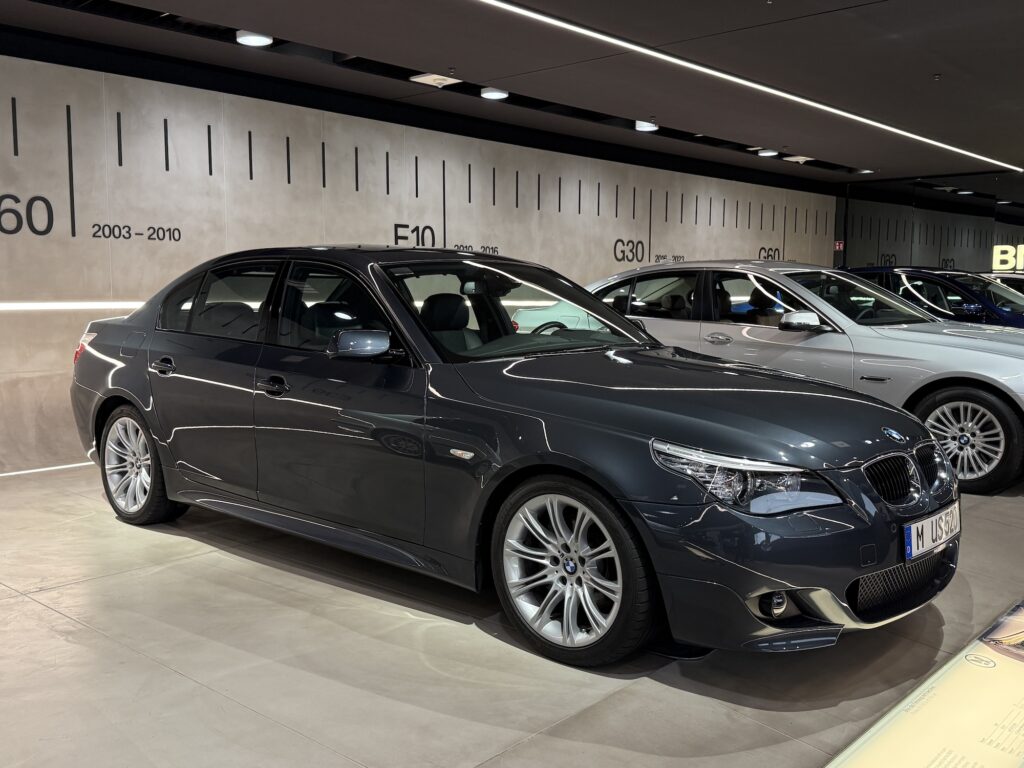
Photo of the real car, BMW Museum. Photo: Sten-Patrick Kreek