
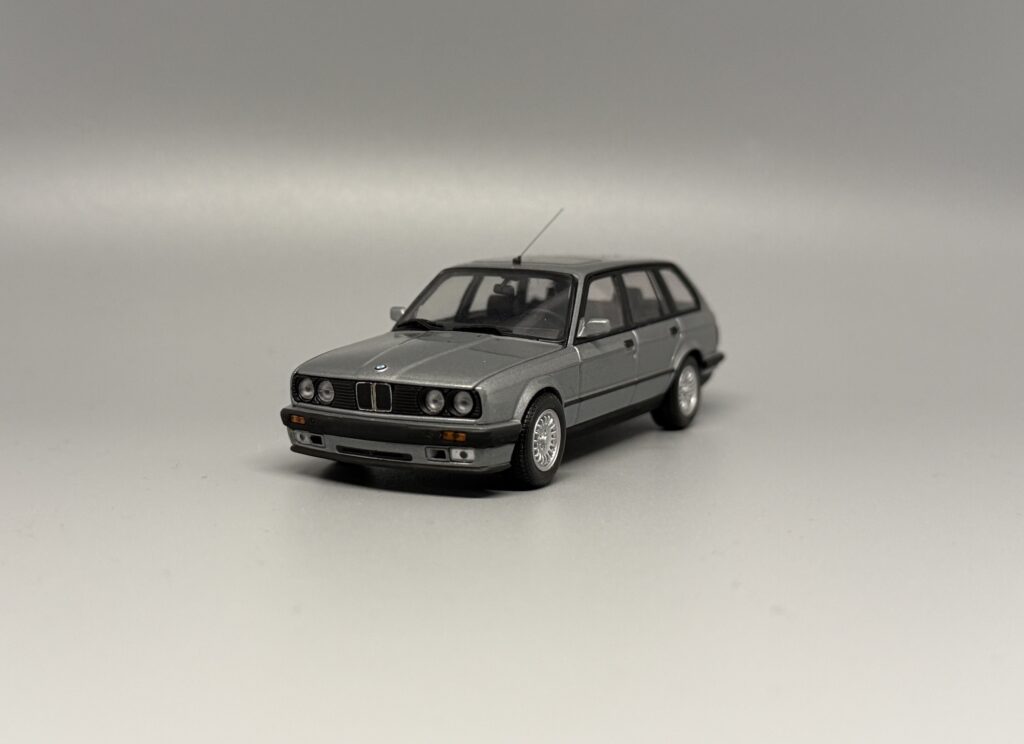
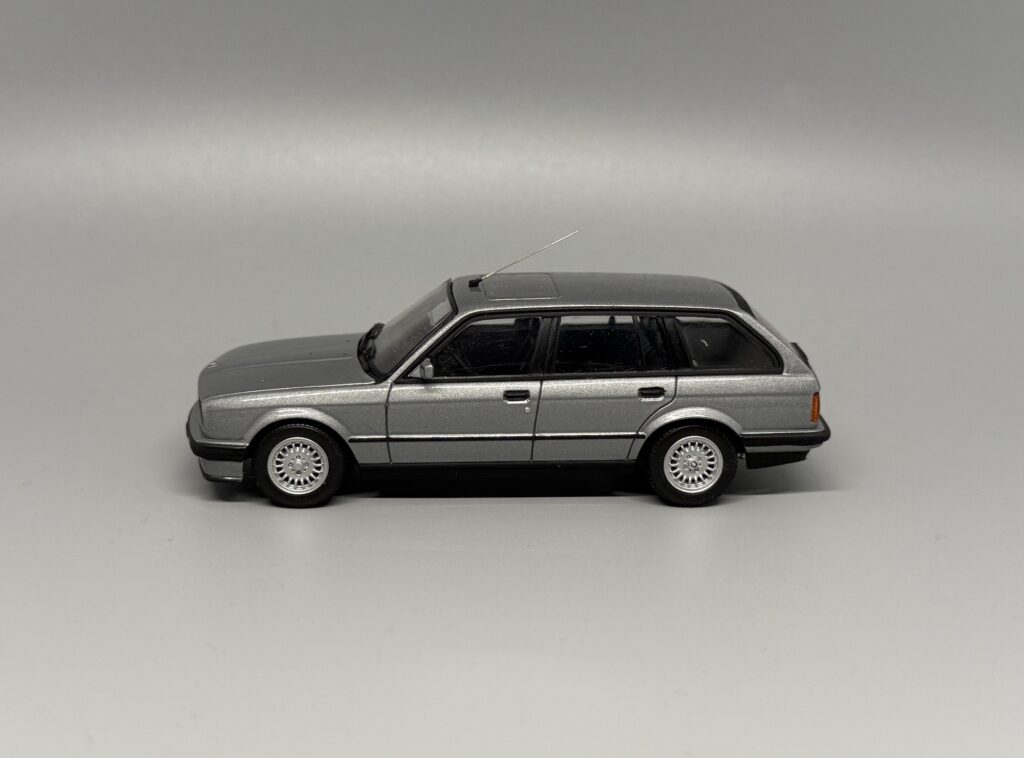
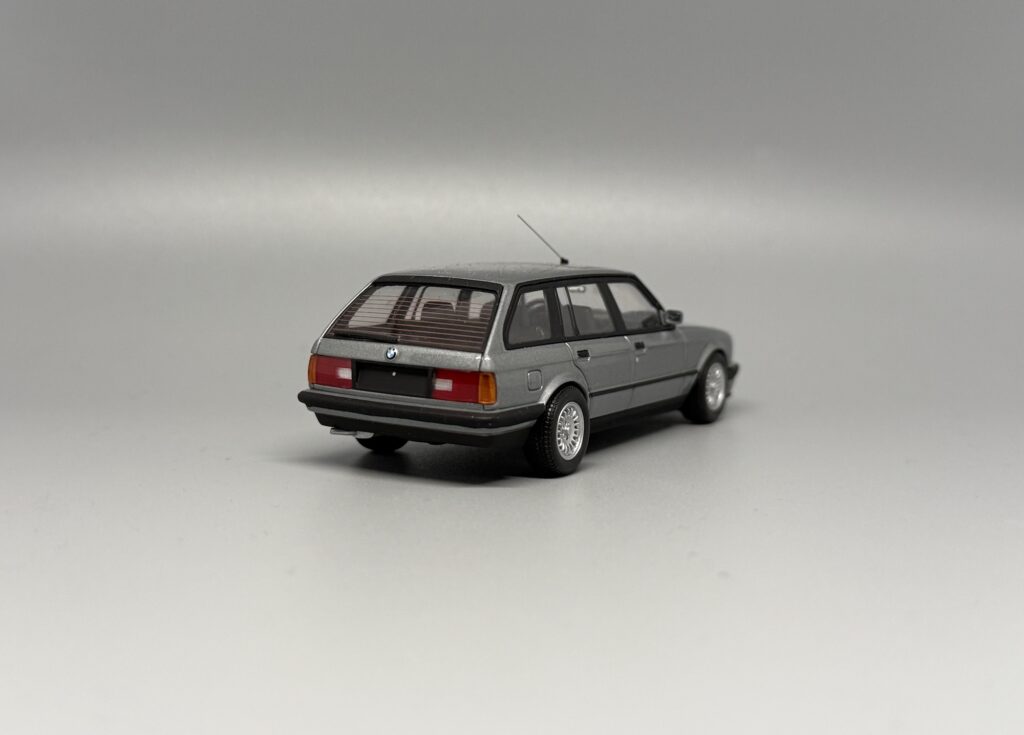
BMW 320i Touring (E30) was one of the most distinctive models of the second-generation 3 Series and helped establish the Touring as a permanent part of the BMW range. Introduced in 1987, the E30 Touring was the first series-production 3 Series to combine the model’s sporting, driver-focused character with the practicality of a five-door body. The 320i Touring added the smoothness of a 2.0-litre six-cylinder engine, making it one of the most balanced of the early Touring versions.
From a garage project to series production
The origins of the E30 Touring are unusually interesting in BMW history. BMW prototype engineer Max Reisböck wanted a more practical car for his family and, in his spare time, converted an E30 sedan into a five-door estate. His solution attracted attention within BMW, and the company decided to develop the idea into a production model.
BMW presented the first 3 Series Touring at the Frankfurt IAA in September 1987, with series production beginning in 1988. Surprisingly few changes were required to Reisböck’s original concept, making the E30 Touring a remarkable example of a personal project evolving into an entirely new direction for BMW’s production range.
A new type of practical BMW
BMW did not intend the Touring to be a conventional utility estate. Instead, the aim was to combine greater practicality with the sporting character traditionally associated with the 3 Series. This was one reason for using the Touring name rather than positioning the car simply as an estate.
The five-door body significantly increased the versatility of the E30. A large tailgate, folding rear seat and more flexible luggage area made it suitable for family use and travelling, while its compact dimensions, rear-wheel drive and E30 chassis retained the familiar BMW driving experience.
320i – the smallest six-cylinder Touring
The 320i was among the first E30 Touring versions, alongside the 325i and 324td. Under its bonnet was BMW’s M20B20, a naturally aspirated 1,990 cc straight-six and the smallest six-cylinder petrol engine offered in the Touring range.
In 1989 specification, the engine produced 95 kW or 129 hp at 6,000 rpm and 164 Nm of torque at 4,300 rpm. Its main strength was not outright performance but its smoothness, characteristic six-cylinder sound and willingness to rev.
The straight-six gave the 320i Touring a distinctly different character from the four-cylinder versions introduced later. It combined the practical body with BMW’s classic small-capacity straight-six and provided a particularly appealing balance of performance, refinement and everyday usability.
Practicality without sacrificing driving character
The 320i Touring retained the traditional E30 mechanical layout. Its engine was mounted longitudinally at the front and drove the rear wheels. MacPherson struts were used at the front, with independent semi-trailing-arm suspension at the rear, following the same basic chassis concept as the E30 sedans.
A five-speed manual gearbox suited the character of the M20 straight-six particularly well, while an automatic transmission was also available. With 129 hp, the 320i Touring could reach a top speed of 195 km/h, demonstrating that additional practicality did not turn the car into a conventional slow estate.
The foundation for every later 3 Series Touring
The E30 Touring proved successful and permanently changed BMW’s approach to this body style. The following E36 generation continued the concept, and the Touring subsequently became one of the most characteristic versions of the 3 Series, particularly in the European market.
The E30 Touring also outlived the sedan of the same generation. While production of the E30 sedan ended in 1991, Touring models continued to be built until 1994. Approximately 103,700 E30 Touring models were produced in total.
The 1989 320i Touring
The 1989 car represented by the model in the collection comes from the earlier years of Touring production, when the 320i was one of its core models. A four-cylinder 318i Touring joined the range in the same year, but the six-cylinder 320i remained the more refined alternative.
Production of the 320i Touring ended in 1991, although the E30 Touring itself continued for several more years with other engines. The relatively short production life of the 320i Touring therefore represents an important early phase in the history of BMW’s Touring models.
Model in the collection
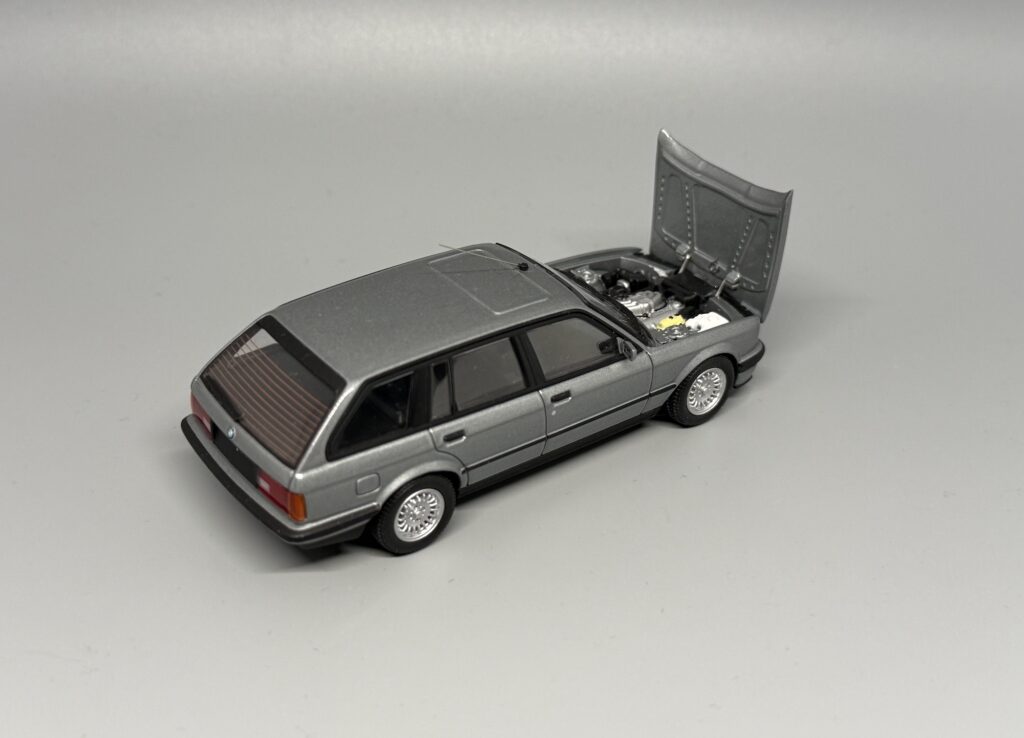
The 1:43-scale BMW 320i Touring (E30) in my collection was produced by Minichamps. The model represents a 1989 car and was released as a limited edition of 2,016 pieces.
The miniature represents the early period of E30 Touring production and combines the most characteristic feature of the body style – its practical five-door design – with BMW’s classic 2.0-litre M20 straight-six.
Technical data
Production: 1988–1991
Body style: five-door Touring
Engine: M20B20 naturally aspirated straight-six petrol engine
Displacement: 1,990 cc
Power output: 95 kW / 129 hp at 6,000 rpm
Torque: 164 Nm at 4,300 rpm
Transmission: 5-speed manual or automatic
Drive: rear-wheel drive
Top speed: 195 km/h
Total E30 Touring production: approximately 103,700 cars
Special feature: one of the first BMW 3 Series Touring versions, combining a practical five-door body with the classic six-cylinder E30 driving character
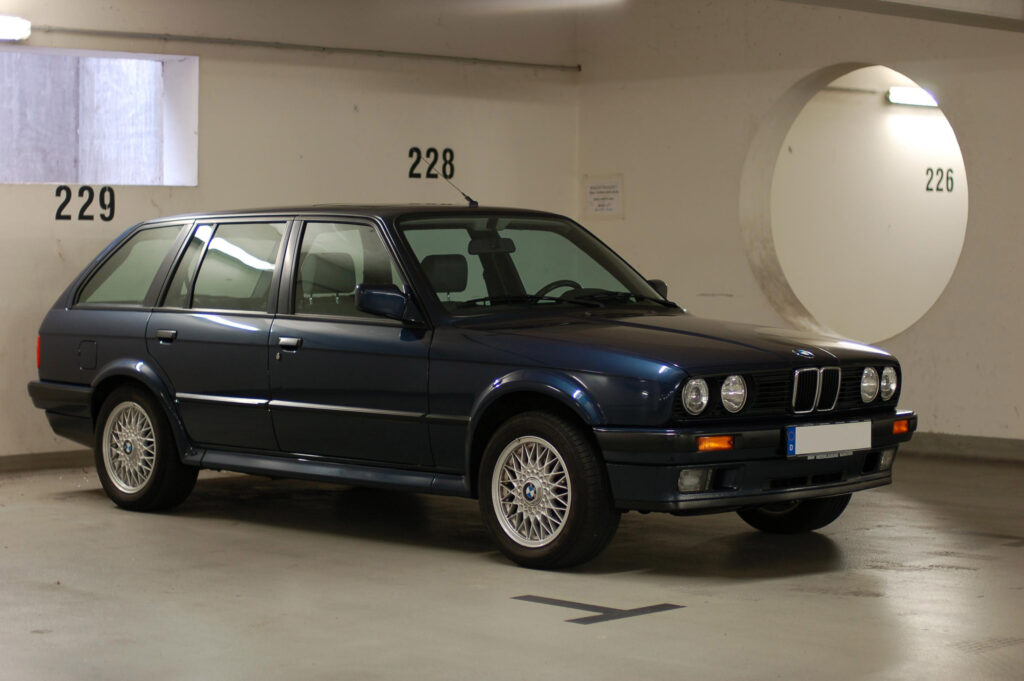
Photo of the real car. Photo: Edreissig / Wikimedia Commons, CC BY-SA 3.0