
BMW M1 on üks BMW ajaloo tähtsamaid ja erilisemaid sportautosid. Tegemist oli esimese BMW Motorsport GmbH arendatud iseseisva seeriamudeliga ning autoga, mis pani tugeva aluse BMW M-i kui eraldiseisva kõrge jõudlusega kaubamärgi mainele. Mudelit esitleti 1978. aastal ning see eristus kõigist teistest oma aja BMW-dest: M1 oli madal, teravnurkne ja keskmootoriga sportauto, mille põhiolemus tuli otse võidusõidust.
BMW M1 sündis väga ambitsioonika projektina. Algne eesmärk oli luua auto, mida saaks kasutada võidusõidus ja homologeerida vastavalt Group 4 reeglitele. BMW soovis osaleda Saksa DRM-sarjas, kuid arendusprotsess osutus keeruliseks ja venis pikemaks kui alguses kavandatud. Samal ajal muutusid ka võistlusreeglid ning M1 ei saanud oma algset rolli täita päris sellisel kujul, nagu BMW oli lootnud. Selle asemel sündis legendaarne BMW M1 Procar sari, mis toimus 1979. ja 1980. aastal Euroopa vormel-1 etappide raames ning kus sõitsid nii F1 tippsõitjad kui ka turismiautode võidusõitjad.
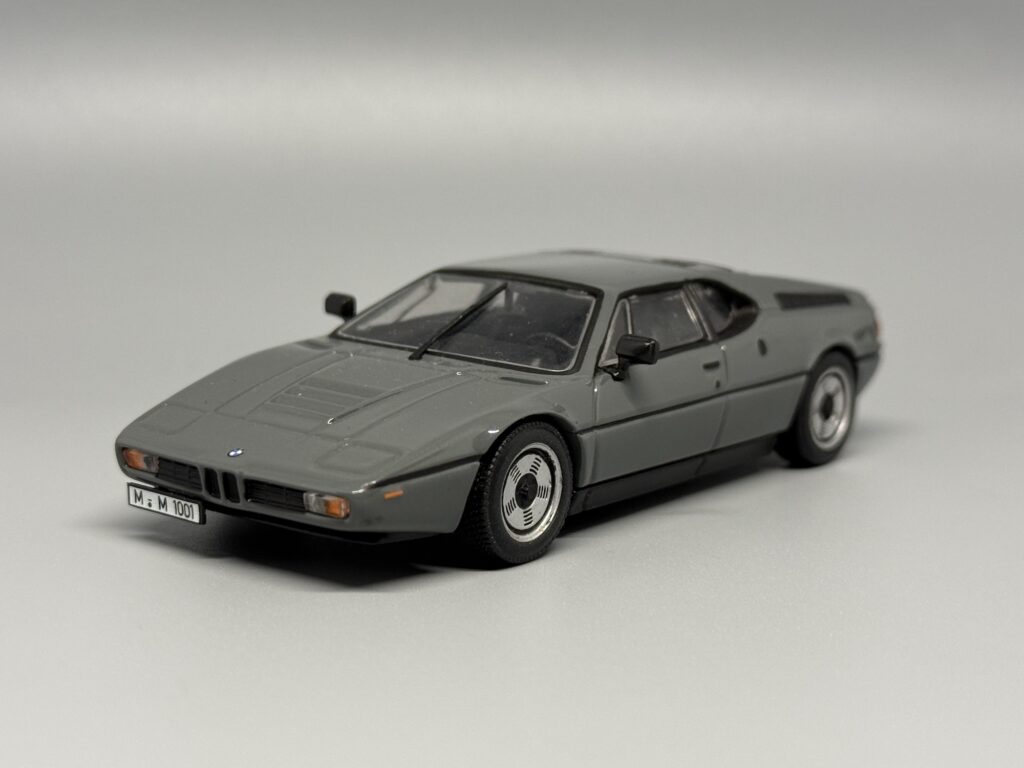
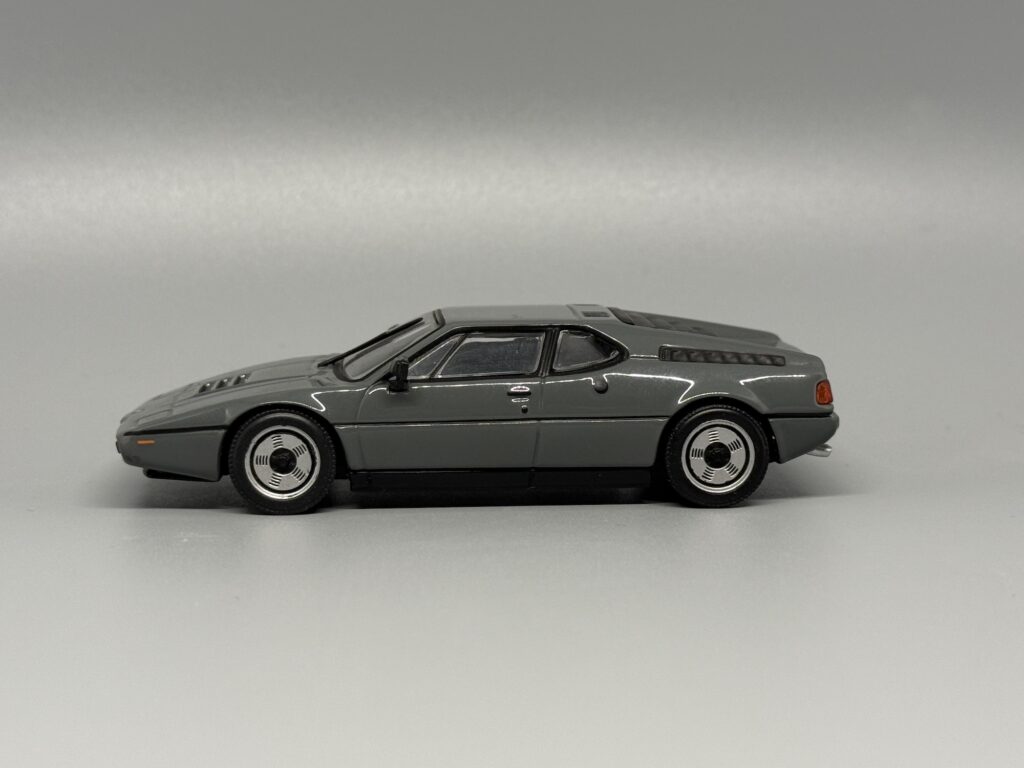
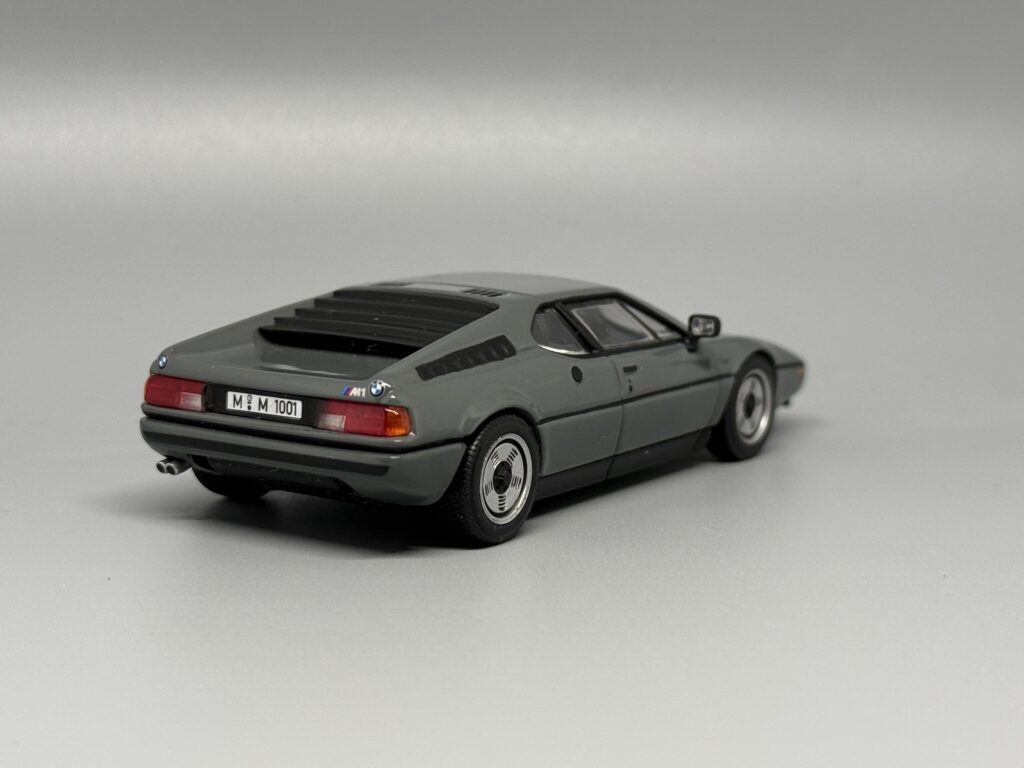
Disaini poolest oli BMW M1 tõeline verstapost. Auto kuju põhines osaliselt Paul Bracqi 1972. aasta BMW Turbo ideeautol, kuid seeriamudeli lõpliku välimuse kujundas Itaalia disainer Giorgetto Giugiaro. Kiilukujuline kere, väga madal kõrgus, klappesituled, lame neerukujuline iluvõre ja mustad ribid tagaklaasi kohal andsid autole väga selgelt äratuntava välimuse. BMW M1 kõrgus oli vaid 1,14 meetrit, mis rõhutas selle võidusõidulikku hoiakut ja aitas kaasa madalale raskuskeskmele.
Tehniliselt oli M1 BMW jaoks täiesti eriline auto. Erinevalt tavapärastest ees asuva mootoriga BMW-dest kasutati siin keskele paigutatud jõuallikat. Auto südameks oli 3,5-liitrine vabalthingav kuuesilindriline ridamootor M88, mis arendas maanteeversioonis 277 hobujõudu ja 330 njuutonmeetrit pöördemomenti. Mootor kasutas nelja klappi silindri kohta ja mehaanilist sissepritset, mis oli oma aja kohta väga arenenud lahendus. Jõud suunati tagaratastele ning tippkiirus ulatus umbes 265 km/h-ni, tehes M1-st oma aja kiireima Saksa seerias toodetud sportauto.
BMW M1 tugevus ei seisnenud ainult võimsuses. Keskmootori paigutus andis autole väga hea kaalujaotuse ja suurepärased juhitavusomadused. Tühimass oli umbes 1300 kilogrammi, mis koos madala kere, tugeva mootori ja võidusõidust lähtuva konstruktsiooniga andis autole erakordselt puhta sportauto iseloomu. M1 oli piisavalt radikaalne, et olla tõsiseltvõetav võistlusauto alus, kuid samas piisavalt viimistletud, et saada tänavale lubatud sportautoks.
M1 mootoril oli BMW M ajaloos oluline mõju ka pärast selle mudeli tootmise lõppu. M88 jõuallika edasiarendused jõudsid hiljem sellistesse ikoonilistesse BMW M-mudelitesse nagu BMW M635CSi ja esimene BMW M5. Seetõttu ei olnud M1 ainult eraldiseisev sportauto, vaid ka tehniline lähtepunkt mitmele hilisemale BMW M legendile.
BMW M1 eriline koht motorspordis seostub eelkõige Procar sarjaga. See sari loodi sisuliselt M1 jaoks ning tõi ühte stardirivvi erinevate võistlussarjade tippnimed. Procar-autod olid maanteeversioonist oluliselt võimsamad ja võistluslikumad, kuid säilitasid M1 põhilise kuju ja tehnilise kontseptsiooni. Just see sari aitas muuta M1 nime kiiresti legendaarseks, isegi kui auto esialgne võistlusprogramm ei kulgenud päris kavandatud kujul.
BMW M1 on tähtis ka BMW Art Car traditsioonis. Üks Group 4 võistlusversioonidest sai 1979. aastal Andy Warholi kujunduse ning osales samal aastal Le Mansi 24 tunni sõidul. Warholi BMW M1 Art Car on tänapäeval üks kuulsamaid BMW kunstiautosid ja on aidanud M1 kuvandit veelgi tugevdada mitte ainult sportautona, vaid ka kultuurilise ikoonina.
Tootmine jäi väga väikese mahuga ja kõik autod valmisid suuresti käsitööna. BMW M-i materjalides märgitakse koguarvuks 460 autot, hõlmates nii maantee- kui ka võistlusversioone. Sageli tuuakse eraldi välja, et maanteekasutuseks mõeldud autosid valmis 399. Just väike tootmisarv, keskmootoriga ülesehitus, BMW Motorsporti taust ja Procar-sarja legend muudavad M1 tänapäeval üheks kõige hinnatumaks BMW klassikuks.
BMW M1 tähtsus BMW ajaloos on väga suur. See oli tehniline pioneer, disainiline verstapost ja võidusõidust sündinud sportauto, mis näitas, et BMW M suudab luua täiesti iseseisva kõrge jõudlusega mudeli. Kuigi M1 ei toonud BMW-le suurt seeriatootmise edu, sai sellest ajatu legend. See on mudel, mis ühendab BMW M-i algusaja julguse, Itaalia disaini, Saksa inseneritöö ja puhta motorspordi üheks kõige erilisemaks tervikuks BMW ajaloos.
Minu kollektsioonis olev mudel on Minichampsi toodang.
Tehnilised andmed lühidalt:
Tootmisaeg: 1978–1981
Tootmiskoht: käsitöönduslik tootmine koostöös mitme partneriga
Keretüüp: kaheukseline keskmootoriga sportkupee
Disainer: Giorgetto Giugiaro
Mootor: 3,5 l kuuesilindriline ridamootor M88
Võimsus: 277 hj
Pöördemoment: 330 Nm
Käigukast: 5-käiguline manuaal
Veoskeem: keskmootor, tagavedu
Tühimass: umbes 1300 kg
Tippkiirus: umbes 265 km/h
Tootmisarv: 460 autot BMW M-i andmetel, sh 399 maanteeautot
Eripära: esimene BMW Motorsport GmbH arendatud iseseisev seeriamudel, keskmootoriga ülesehitus ja Procar-sarja kaudu legendiks saanud BMW M sportauto
BMW M1 is one of the most important and most special sports cars in BMW history. It was the first independent series-production model developed by BMW Motorsport GmbH and a car that laid a strong foundation for the reputation of BMW M as a separate high-performance brand. The model was introduced in 1978 and stood apart from every other BMW of its time: the M1 was a low, sharply styled mid-engined sports car whose character came directly from racing.
The BMW M1 was born as a highly ambitious project. The original aim was to create a car that could be used in racing and homologated according to Group 4 regulations. BMW intended to compete in the German DRM series, but the development process proved complex and took longer than originally planned. At the same time, racing regulations changed, and the M1 could no longer fulfil its original role exactly as BMW had hoped. Instead, the legendary BMW M1 Procar series was created, running in 1979 and 1980 alongside European Formula One events and bringing together both top F1 drivers and touring car racers.
In terms of design, the BMW M1 was a true milestone. Its shape was partly based on Paul Bracq’s 1972 BMW Turbo concept car, while the final appearance of the production model was created by Italian designer Giorgetto Giugiaro. The wedge-shaped body, very low height, pop-up headlights, flat kidney grille and black louvres above the rear window gave the car a highly distinctive look. The BMW M1 was only 1.14 metres high, underlining its racing stance and helping achieve a low centre of gravity.
Technically, the M1 was a completely special car for BMW. Unlike traditional front-engined BMW models, it used a mid-mounted power unit. At its heart was the 3.5-litre naturally aspirated M88 six-cylinder in-line engine, producing 277 hp and 330 Nm of torque in the road version. The engine used four valves per cylinder and mechanical fuel injection, a very advanced solution for its time. Power was sent to the rear wheels, and top speed was around 265 km/h, making the M1 the fastest German series-production sports car of its era.
The strength of the BMW M1 did not lie only in power. The mid-engine layout gave the car very good weight distribution and excellent handling characteristics. Its unladen weight was around 1300 kilograms, and together with the low body, strong engine and racing-derived construction, this gave the car an exceptionally pure sports-car character. The M1 was radical enough to serve as a serious basis for racing, yet refined enough to be a road-legal sports car.
The M1 engine also had an important influence on BMW M history after the end of the model’s production. Further developments of the M88 power unit later found their way into iconic BMW M models such as the BMW M635CSi and the first BMW M5. For this reason, the M1 was not only a standalone sports car, but also a technical starting point for several later BMW M legends.
The BMW M1’s special place in motorsport is connected above all with the Procar series. This series was effectively created for the M1 and brought major names from different racing disciplines onto the same starting grid. The Procar cars were much more powerful and competition-focused than the road version, while retaining the M1’s basic shape and technical concept. This series helped turn the M1 name into a legend, even though the car’s original racing programme did not develop exactly as planned.
The BMW M1 is also important in the BMW Art Car tradition. In 1979, one of the Group 4 racing versions was painted by Andy Warhol and competed in the 24 Hours of Le Mans that same year. The Warhol BMW M1 Art Car is today one of the most famous BMW Art Cars and has further strengthened the M1’s image not only as a sports car, but also as a cultural icon.
Production remained very limited, and all cars were largely hand-built. BMW M material gives the total number as 460 cars, including both road and racing versions. It is often stated separately that 399 cars were built for road use. The small production number, mid-engine layout, BMW Motorsport background and Procar legend make the M1 one of the most highly regarded classic BMWs today.
The importance of the BMW M1 in BMW history is very great. It was a technical pioneer, a design milestone and a racing-born sports car that showed BMW M could create a completely independent high-performance model. Although the M1 did not bring BMW major series-production success, it became a timeless legend. It is a model that combines the early courage of BMW M, Italian design, German engineering and pure motorsport into one of the most special packages in BMW history.
The model in my collection is produced by Minichamps.
Technical data in brief:
Production period: 1978–1981
Production location: hand-built production in cooperation with several partners
Body style: two-door mid-engined sports coupé
Designer: Giorgetto Giugiaro
Engine: 3.5-litre M88 six-cylinder in-line engine
Power: 277 hp
Torque: 330 Nm
Transmission: 5-speed manual
Drivetrain: mid-engine, rear-wheel drive
Unladen weight: around 1300 kg
Top speed: around 265 km/h
Production number: 460 cars according to BMW M, including 399 road cars
Special feature: first independent series-production model developed by BMW Motorsport GmbH, with a mid-engine layout and a BMW M sports car legend through the Procar series
BMW M1 on üks BMW ajaloo tähtsamaid ja erilisemaid sportautosid. Tegemist oli esimese BMW Motorsport GmbH arendatud iseseisva seeriamudeliga ning autoga, mis pani tugeva aluse BMW M-i kui eraldiseisva kõrge jõudlusega kaubamärgi mainele. Mudelit esitleti 1978. aastal ning see eristus kõigist teistest oma aja BMW-dest: M1 oli madal, teravnurkne ja keskmootoriga sportauto, mille põhiolemus tuli otse võidusõidust.
BMW M1 sündis väga ambitsioonika projektina. Algne eesmärk oli luua auto, mida saaks kasutada võidusõidus ja homologeerida vastavalt Group 4 reeglitele. BMW soovis osaleda Saksa DRM-sarjas, kuid arendusprotsess osutus keeruliseks ja venis pikemaks kui alguses kavandatud. Samal ajal muutusid ka võistlusreeglid ning M1 ei saanud oma algset rolli täita päris sellisel kujul, nagu BMW oli lootnud. Selle asemel sündis legendaarne BMW M1 Procar sari, mis toimus 1979. ja 1980. aastal Euroopa vormel-1 etappide raames ning kus sõitsid nii F1 tippsõitjad kui ka turismiautode võidusõitjad.
Disaini poolest oli BMW M1 tõeline verstapost. Auto kuju põhines osaliselt Paul Bracqi 1972. aasta BMW Turbo ideeautol, kuid seeriamudeli lõpliku välimuse kujundas Itaalia disainer Giorgetto Giugiaro. Kiilukujuline kere, väga madal kõrgus, klappesituled, lame neerukujuline iluvõre ja mustad ribid tagaklaasi kohal andsid autole väga selgelt äratuntava välimuse. BMW M1 kõrgus oli vaid 1,14 meetrit, mis rõhutas selle võidusõidulikku hoiakut ja aitas kaasa madalale raskuskeskmele.
Tehniliselt oli M1 BMW jaoks täiesti eriline auto. Erinevalt tavapärastest ees asuva mootoriga BMW-dest kasutati siin keskele paigutatud jõuallikat. Auto südameks oli 3,5-liitrine vabalthingav kuuesilindriline ridamootor M88, mis arendas maanteeversioonis 277 hobujõudu ja 330 njuutonmeetrit pöördemomenti. Mootor kasutas nelja klappi silindri kohta ja mehaanilist sissepritset, mis oli oma aja kohta väga arenenud lahendus. Jõud suunati tagaratastele ning tippkiirus ulatus umbes 265 km/h-ni, tehes M1-st oma aja kiireima Saksa seerias toodetud sportauto.
BMW M1 tugevus ei seisnenud ainult võimsuses. Keskmootori paigutus andis autole väga hea kaalujaotuse ja suurepärased juhitavusomadused. Tühimass oli umbes 1300 kilogrammi, mis koos madala kere, tugeva mootori ja võidusõidust lähtuva konstruktsiooniga andis autole erakordselt puhta sportauto iseloomu. M1 oli piisavalt radikaalne, et olla tõsiseltvõetav võistlusauto alus, kuid samas piisavalt viimistletud, et saada tänavale lubatud sportautoks.
M1 mootoril oli BMW M ajaloos oluline mõju ka pärast selle mudeli tootmise lõppu. M88 jõuallika edasiarendused jõudsid hiljem sellistesse ikoonilistesse BMW M-mudelitesse nagu BMW M635CSi ja esimene BMW M5. Seetõttu ei olnud M1 ainult eraldiseisev sportauto, vaid ka tehniline lähtepunkt mitmele hilisemale BMW M legendile.
BMW M1 eriline koht motorspordis seostub eelkõige Procar sarjaga. See sari loodi sisuliselt M1 jaoks ning tõi ühte stardirivvi erinevate võistlussarjade tippnimed. Procar-autod olid maanteeversioonist oluliselt võimsamad ja võistluslikumad, kuid säilitasid M1 põhilise kuju ja tehnilise kontseptsiooni. Just see sari aitas muuta M1 nime kiiresti legendaarseks, isegi kui auto esialgne võistlusprogramm ei kulgenud päris kavandatud kujul.
BMW M1 on tähtis ka BMW Art Car traditsioonis. Üks Group 4 võistlusversioonidest sai 1979. aastal Andy Warholi kujunduse ning osales samal aastal Le Mansi 24 tunni sõidul. Warholi BMW M1 Art Car on tänapäeval üks kuulsamaid BMW kunstiautosid ja on aidanud M1 kuvandit veelgi tugevdada mitte ainult sportautona, vaid ka kultuurilise ikoonina.
Tootmine jäi väga väikese mahuga ja kõik autod valmisid suuresti käsitööna. BMW M-i materjalides märgitakse koguarvuks 460 autot, hõlmates nii maantee- kui ka võistlusversioone. Sageli tuuakse eraldi välja, et maanteekasutuseks mõeldud autosid valmis 399. Just väike tootmisarv, keskmootoriga ülesehitus, BMW Motorsporti taust ja Procar-sarja legend muudavad M1 tänapäeval üheks kõige hinnatumaks BMW klassikuks.
BMW M1 tähtsus BMW ajaloos on väga suur. See oli tehniline pioneer, disainiline verstapost ja võidusõidust sündinud sportauto, mis näitas, et BMW M suudab luua täiesti iseseisva kõrge jõudlusega mudeli. Kuigi M1 ei toonud BMW-le suurt seeriatootmise edu, sai sellest ajatu legend. See on mudel, mis ühendab BMW M-i algusaja julguse, Itaalia disaini, Saksa inseneritöö ja puhta motorspordi üheks kõige erilisemaks tervikuks BMW ajaloos.
Minu kollektsioonis olev mudel on Minichampsi toodang.
Tehnilised andmed lühidalt:
Tootmisaeg: 1978–1981
Tootmiskoht: käsitöönduslik tootmine koostöös mitme partneriga
Keretüüp: kaheukseline keskmootoriga sportkupee
Disainer: Giorgetto Giugiaro
Mootor: 3,5 l kuuesilindriline ridamootor M88
Võimsus: 277 hj
Pöördemoment: 330 Nm
Käigukast: 5-käiguline manuaal
Veoskeem: keskmootor, tagavedu
Tühimass: umbes 1300 kg
Tippkiirus: umbes 265 km/h
Tootmisarv: 460 autot BMW M-i andmetel, sh 399 maanteeautot
Eripära: esimene BMW Motorsport GmbH arendatud iseseisev seeriamudel, keskmootoriga ülesehitus ja Procar-sarja kaudu legendiks saanud BMW M sportauto
BMW M1 is one of the most important and most special sports cars in BMW history. It was the first independent series-production model developed by BMW Motorsport GmbH and a car that laid a strong foundation for the reputation of BMW M as a separate high-performance brand. The model was introduced in 1978 and stood apart from every other BMW of its time: the M1 was a low, sharply styled mid-engined sports car whose character came directly from racing.
The BMW M1 was born as a highly ambitious project. The original aim was to create a car that could be used in racing and homologated according to Group 4 regulations. BMW intended to compete in the German DRM series, but the development process proved complex and took longer than originally planned. At the same time, racing regulations changed, and the M1 could no longer fulfil its original role exactly as BMW had hoped. Instead, the legendary BMW M1 Procar series was created, running in 1979 and 1980 alongside European Formula One events and bringing together both top F1 drivers and touring car racers.
In terms of design, the BMW M1 was a true milestone. Its shape was partly based on Paul Bracq’s 1972 BMW Turbo concept car, while the final appearance of the production model was created by Italian designer Giorgetto Giugiaro. The wedge-shaped body, very low height, pop-up headlights, flat kidney grille and black louvres above the rear window gave the car a highly distinctive look. The BMW M1 was only 1.14 metres high, underlining its racing stance and helping achieve a low centre of gravity.
Technically, the M1 was a completely special car for BMW. Unlike traditional front-engined BMW models, it used a mid-mounted power unit. At its heart was the 3.5-litre naturally aspirated M88 six-cylinder in-line engine, producing 277 hp and 330 Nm of torque in the road version. The engine used four valves per cylinder and mechanical fuel injection, a very advanced solution for its time. Power was sent to the rear wheels, and top speed was around 265 km/h, making the M1 the fastest German series-production sports car of its era.
The strength of the BMW M1 did not lie only in power. The mid-engine layout gave the car very good weight distribution and excellent handling characteristics. Its unladen weight was around 1300 kilograms, and together with the low body, strong engine and racing-derived construction, this gave the car an exceptionally pure sports-car character. The M1 was radical enough to serve as a serious basis for racing, yet refined enough to be a road-legal sports car.
The M1 engine also had an important influence on BMW M history after the end of the model’s production. Further developments of the M88 power unit later found their way into iconic BMW M models such as the BMW M635CSi and the first BMW M5. For this reason, the M1 was not only a standalone sports car, but also a technical starting point for several later BMW M legends.
The BMW M1’s special place in motorsport is connected above all with the Procar series. This series was effectively created for the M1 and brought major names from different racing disciplines onto the same starting grid. The Procar cars were much more powerful and competition-focused than the road version, while retaining the M1’s basic shape and technical concept. This series helped turn the M1 name into a legend, even though the car’s original racing programme did not develop exactly as planned.
The BMW M1 is also important in the BMW Art Car tradition. In 1979, one of the Group 4 racing versions was painted by Andy Warhol and competed in the 24 Hours of Le Mans that same year. The Warhol BMW M1 Art Car is today one of the most famous BMW Art Cars and has further strengthened the M1’s image not only as a sports car, but also as a cultural icon.
Production remained very limited, and all cars were largely hand-built. BMW M material gives the total number as 460 cars, including both road and racing versions. It is often stated separately that 399 cars were built for road use. The small production number, mid-engine layout, BMW Motorsport background and Procar legend make the M1 one of the most highly regarded classic BMWs today.
The importance of the BMW M1 in BMW history is very great. It was a technical pioneer, a design milestone and a racing-born sports car that showed BMW M could create a completely independent high-performance model. Although the M1 did not bring BMW major series-production success, it became a timeless legend. It is a model that combines the early courage of BMW M, Italian design, German engineering and pure motorsport into one of the most special packages in BMW history.
The model in my collection is produced by Minichamps.
Technical data in brief:
Production period: 1978–1981
Production location: hand-built production in cooperation with several partners
Body style: two-door mid-engined sports coupé
Designer: Giorgetto Giugiaro
Engine: 3.5-litre M88 six-cylinder in-line engine
Power: 277 hp
Torque: 330 Nm
Transmission: 5-speed manual
Drivetrain: mid-engine, rear-wheel drive
Unladen weight: around 1300 kg
Top speed: around 265 km/h
Production number: 460 cars according to BMW M, including 399 road cars
Special feature: first independent series-production model developed by BMW Motorsport GmbH, with a mid-engine layout and a BMW M sports car legend through the Procar series
Foto päris autost, BMW muuseum. Foto: Sten-Patrick Kreek
Photo of the real car, BMW Museum. Photo: Sten-Patrick Kreek