
Background
BMW M1 Hommage was presented in 2008 at the Concorso d’Eleganza Villa d’Este to mark 30 years since the debut of the legendary BMW M1. It was not intended as a prototype for a future production model, but as a design study created by BMW Group Design to explore how the legacy of one of BMW’s most iconic sports cars could be interpreted in 21st-century design language. The inspiration for the M1 Hommage did not come only from the original M1. BMW also deliberately referenced Paul Bracq’s BMW Turbo, which itself was an important predecessor to the M1. In this way, the M1 Hommage brought together three eras: the futuristic thinking of the 1972 BMW Turbo, the sports-car heritage of the 1978 BMW M1 and BMW’s contemporary design language of the 2000s.
Design and concept
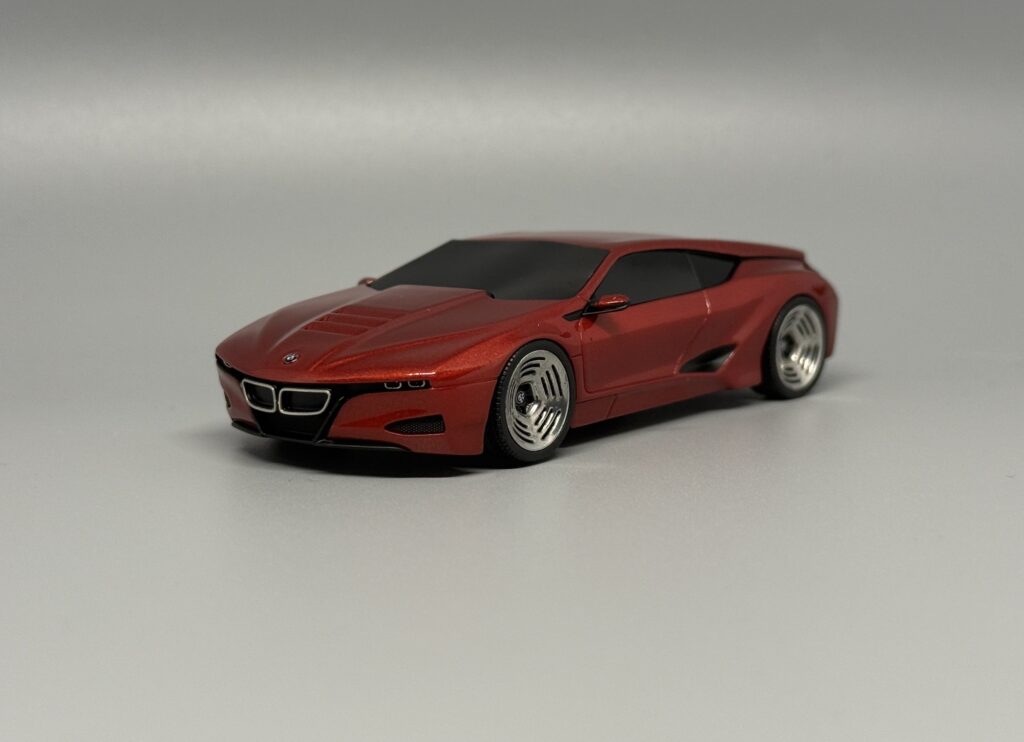
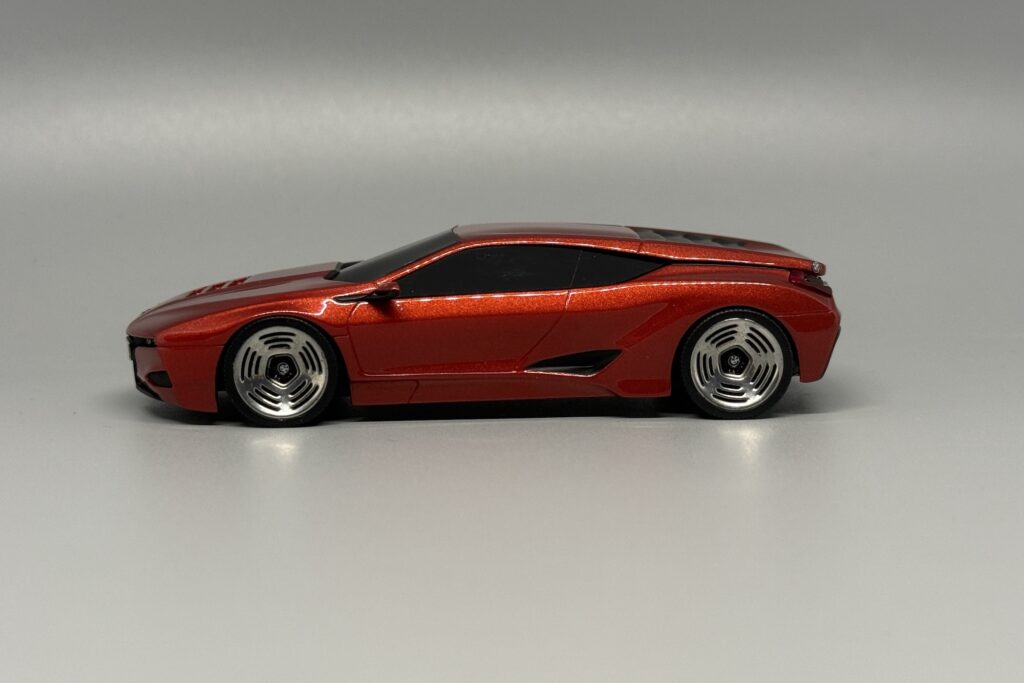
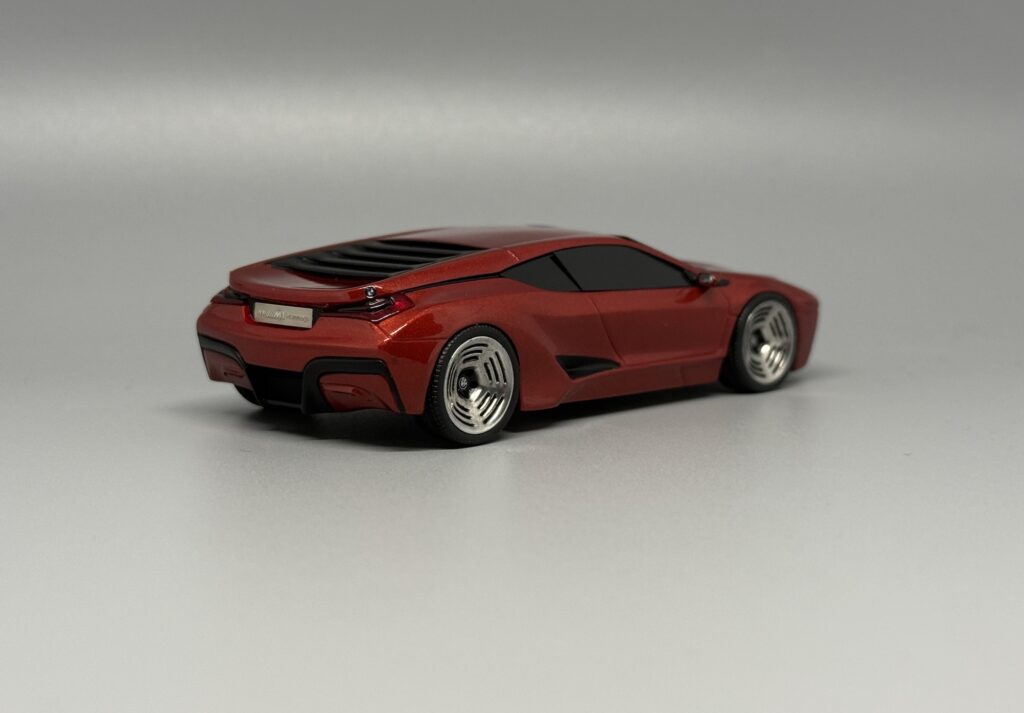
The BMW M1 Hommage retained several of the most recognisable features of the original M1, but reinterpreted them in a far more powerful and sculptural form. The car’s low and wide stance, long horizontal lines and proportions typical of a mid-engined sports car created a strong visual connection with the original model. References to the M1 also included the small, low-positioned kidney grilles, air vents on the engine cover, slats over the rear window and the two BMW badges positioned at the outer edges of the rear. The latter was one of the original M1’s most distinctive details and was deliberately carried over to the Hommage model. At the same time, recognisable BMW elements such as the Hofmeister kink and the relatively long, clearly defined front section were retained. The headlights were integrated into the body surfaces and only became visible when switched on, echoing the original M1’s pop-up headlights. BMW also developed a special Liquid Orange paint finish for the car, referring to the historic orange associated with the M1 while giving it a more modern and dramatic appearance.
Connecting the past and the future
The M1 Hommage was not simply a retro-style reinterpretation. BMW’s aim was to take the key proportions and graphic elements of the M1 and combine them with the more complex surface treatment and aerodynamic thinking of contemporary BMW design. The air intakes and channels in the bodywork were also shaped to emphasise the mid-engine concept and to create a visual connection with the car’s technical layout. Unlike a conventional concept car, the BMW M1 Hommage was not focused on a specific engine, power output or planned production version. Its main value lay in its design and its idea – to demonstrate how BMW could use its historic models as inspiration without simply copying them.
Significance in BMW history
The significance of the BMW M1 Hommage extends beyond the 30th anniversary of the original M1. It became the first major model in BMW’s later Hommage series of concept cars, in which historic BMW models were reinterpreted in a contemporary way. The M1 Hommage showed that BMW’s historical heritage could play an active role in shaping future design. The car brought together the Giugiaro-designed M1, Paul Bracq’s BMW Turbo and the ideas of contemporary BMW Group Design, while also bringing BMW’s mid-engined sports-car concept back into the spotlight. Although the BMW M1 Hommage never entered production, it became one of the best-known BMW concept cars of the 2000s and an important example of how historic brand design can serve as the starting point for an entirely new interpretation.
Model in the collection
The model in my collection was produced by Schuco Pro.R43. It is a limited-edition model, with a total production run of 1,000 examples.
Technical specifications
Public debut: 2008
Presentation venue: Concorso d’Eleganza Villa d’Este, Italy
Type: concept car / design study
Concept: modern interpretation of the BMW M1 and the mid-engined sports car
Colour: Liquid Orange
Inspiration: BMW Turbo and BMW M1
Production: one-off concept car / design study
Special feature: a tribute to the original BMW M1 and the first model in BMW’s later Hommage concept-car series
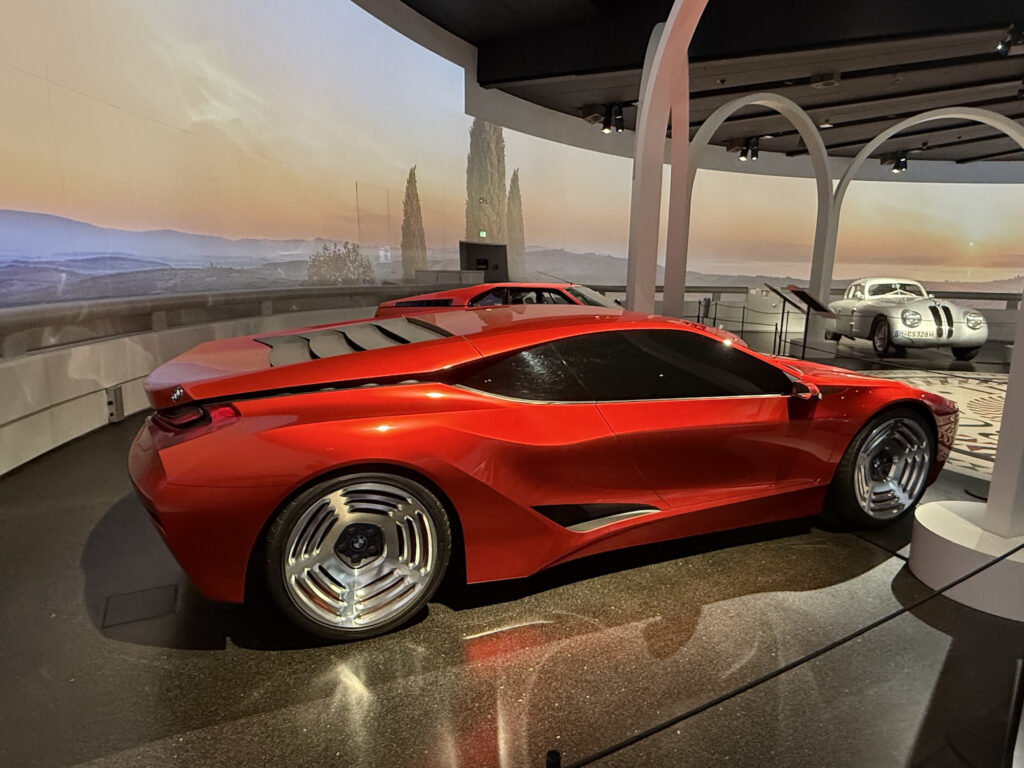
Photo of the real car, BMW Museum. Photo: Sten-Patrick Kreek