
Background
BMW 315/1 is one of the most important sports models in BMW’s early automobile history and the car that helped establish the marque’s long tradition of roadsters. A prototype was presented at the 1934 Berlin Motor Show alongside the new BMW 315. While the standard 315 was primarily a compact six-cylinder passenger car, the 315/1 was developed as a clearly more sporting two-seat roadster. Public interest was strong enough for BMW to put the car into limited production. The “/1” suffix in the model name identified the sporting special version, a naming principle BMW later also used for the more powerful 319/1. The 315/1 represented an important step for BMW because it helped establish the company’s reputation for producing small, lightweight and agile sports cars several years before the legendary BMW 328 appeared.
Design and concept
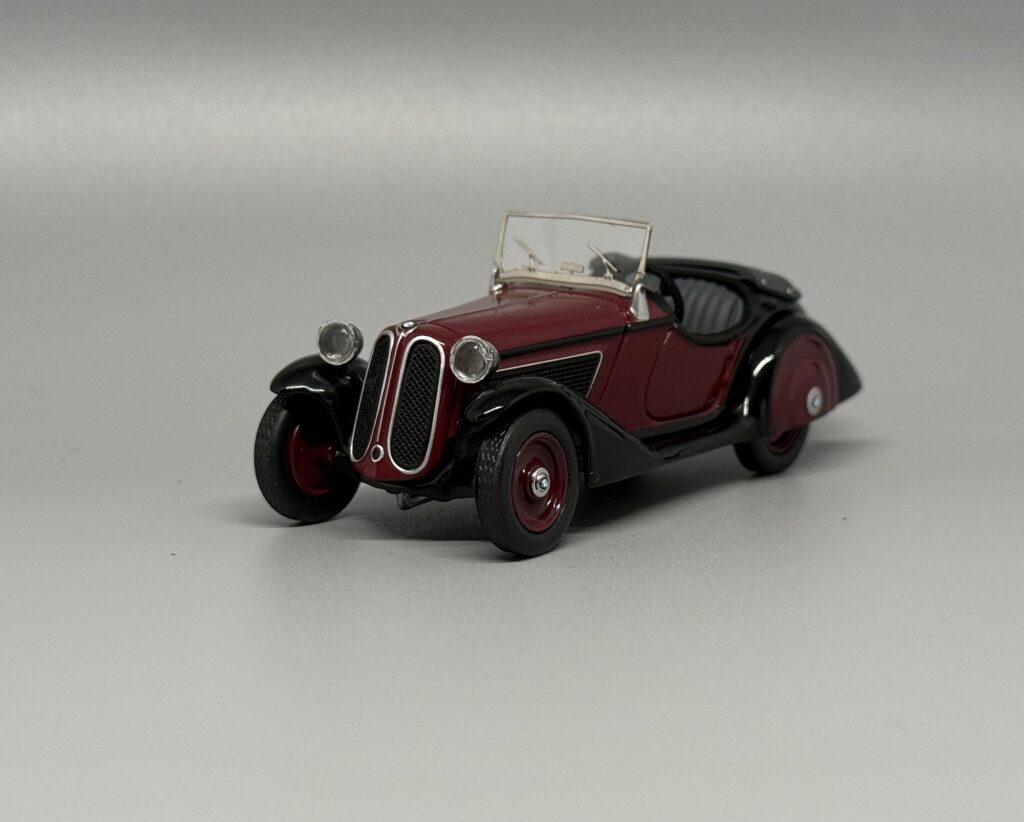
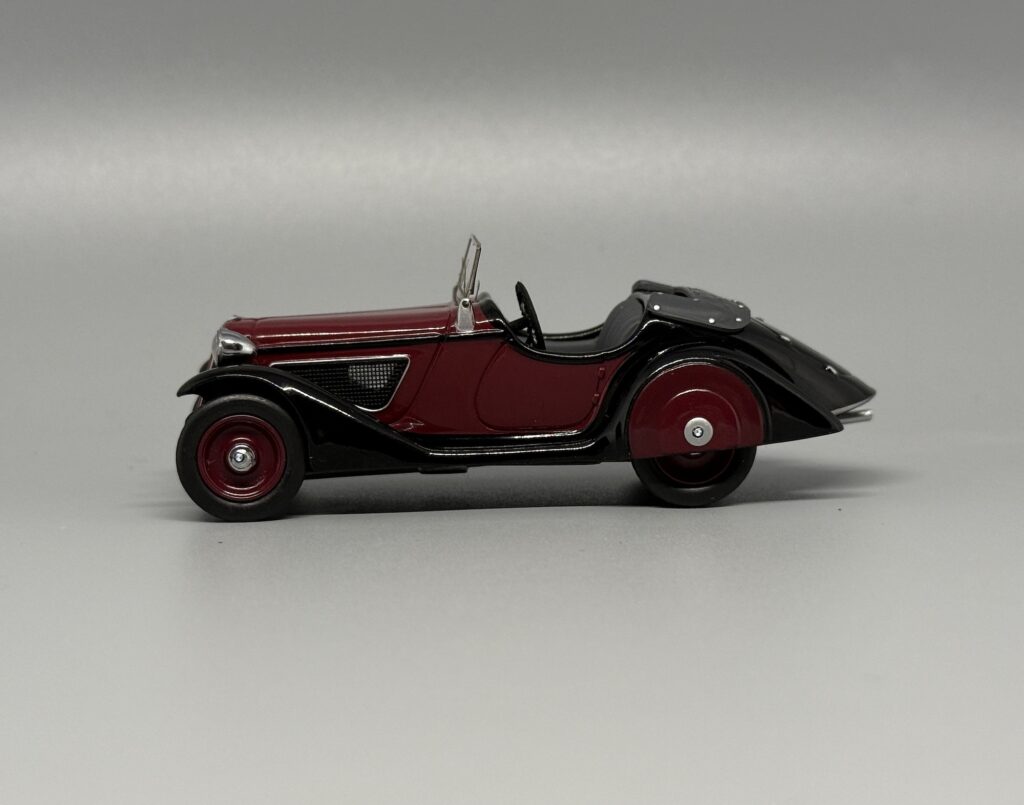
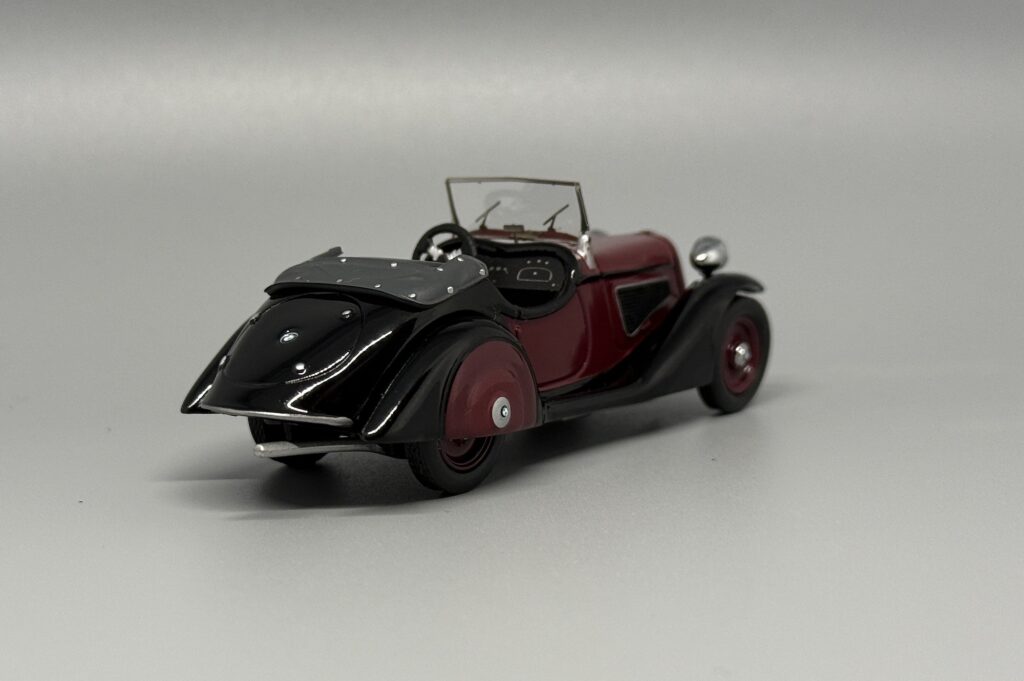
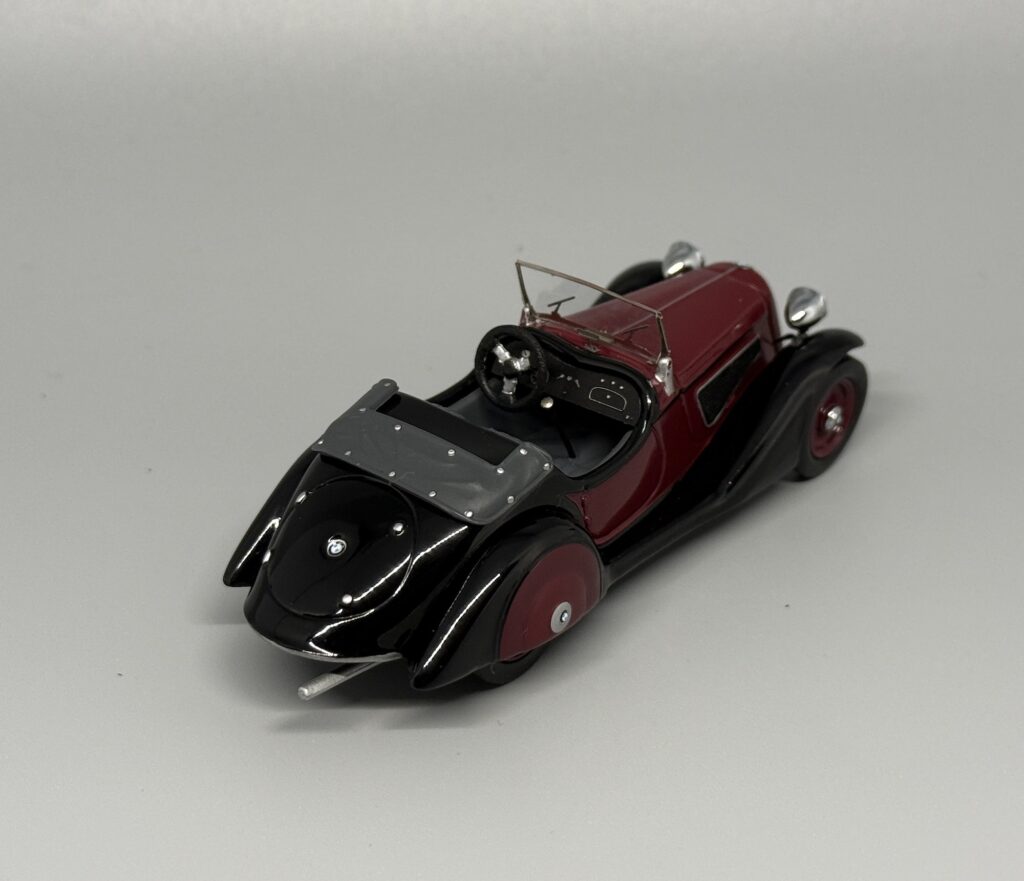
The BMW 315/1 was clearly distinguished from the standard 315. It received a low two-seat roadster body, a rearward-sloping radiator and windscreen, deeply cut doors and a smoothly rounded tail. The rear wheels were partially covered, while both the folding roof and spare wheel were integrated into the body lines so that they did not interrupt the car’s flowing silhouette. A two-tone paint scheme further emphasised the sporting proportions of the body. Compared with earlier BMW models, the 315/1 appeared noticeably lower, faster and more purposeful. The production version differed from the prototype shown in 1934 in several details, including the position of the headlights and the ventilation grilles used on the sides of the bonnet. The 315/1 already displayed the combination that later became characteristic of BMW roadsters: a long bonnet, two seats, lightweight construction and a strongly driver-focused sporting character.
Technology
The BMW 315/1 used a 1,490 cm³ six-cylinder in-line engine based on the power unit of the standard BMW 315. While the 315’s engine used two carburettors and produced 34 hp, the sports model received three carburettors and developed 40 hp at 4,200–4,500 rpm. With a weight of approximately 750 kilograms, this was enough to provide very good performance, and BMW Group Classic gives a top speed of up to 125 km/h. The front axle used independent suspension with a transverse leaf spring and hydraulic shock absorbers, while the rear featured a rigid axle with semi-elliptic leaf springs. Its lightweight construction, good road holding and high speed for the period made the 315/1 not only an attractive roadster but also a serious sports car.
Motorsport
The BMW 315/1 also played an important role in BMW’s early motorsport history. In 1934, the model took part in the International Alpine Rally, one of the most demanding endurance events of its era. The rally started in Nice and covered almost 2,900 kilometres through the Alps to Munich. BMW’s five works cars completed the event in their class without a single penalty point, while the BMW 315/1 team achieved first place in its category. This success confirmed that the small 1.5-litre BMW was not merely an elegant sports car, but was also competitive in demanding competition. The 315/1 later found its way into the hands of private drivers as well and was successfully used in various events, helping BMW build the sporting reputation that would gain international recognition a few years later with the BMW 328.
Production
Production of the BMW 315/1 lasted from April 1934 until July 1935, and only 230 cars were built. It was therefore an exclusive low-volume model even when new. The car cost 5,200 Reichsmarks, making it considerably more expensive than the standard BMW 315 and aimed primarily at wealthier sports-car enthusiasts. The small production run and active use in motorsport mean that original 315/1 cars are extremely rare today. In 1935, the model was succeeded by the more powerful BMW 319/1, whose larger six-cylinder engine took the same roadster concept to the next level.
Significance in BMW history
The significance of the BMW 315/1 extends far beyond its small production total. It was one of the first cars to associate the BMW name directly with lightweight construction, a six-cylinder engine, good handling and motorsport. The 315/1 laid the foundations for BMW’s roadster development line, which continued first with the 319/1 and then with the BMW 328, introduced in 1936. The 328 took many of the principles already visible in the 315/1 to an international level. For this reason, the 315/1 can be regarded as one of the cars in which BMW’s sports-car identity began to take shape – not through power alone, but through low weight, a balanced chassis and a driving experience designed around the driver.
Model in the collection
The model in my collection was produced by Schuco.
Technical data in brief
Production period: 04/1934–07/1935
Place of production: Germany
Body style: two-seat roadster / sports car
Engine: 1,490 cm³ six-cylinder in-line engine
Carburettors: three
Power: 40 hp @ 4,200–4,500 rpm
Kerb weight: approximately 750 kg
Top speed: up to 125 km/h
Production number: 230 cars
Price when new: 5,200 Reichsmarks
Special feature: one of BMW’s first true sporting roadsters, successful in early motorsport and an important predecessor to the BMW 319/1 and later BMW 328
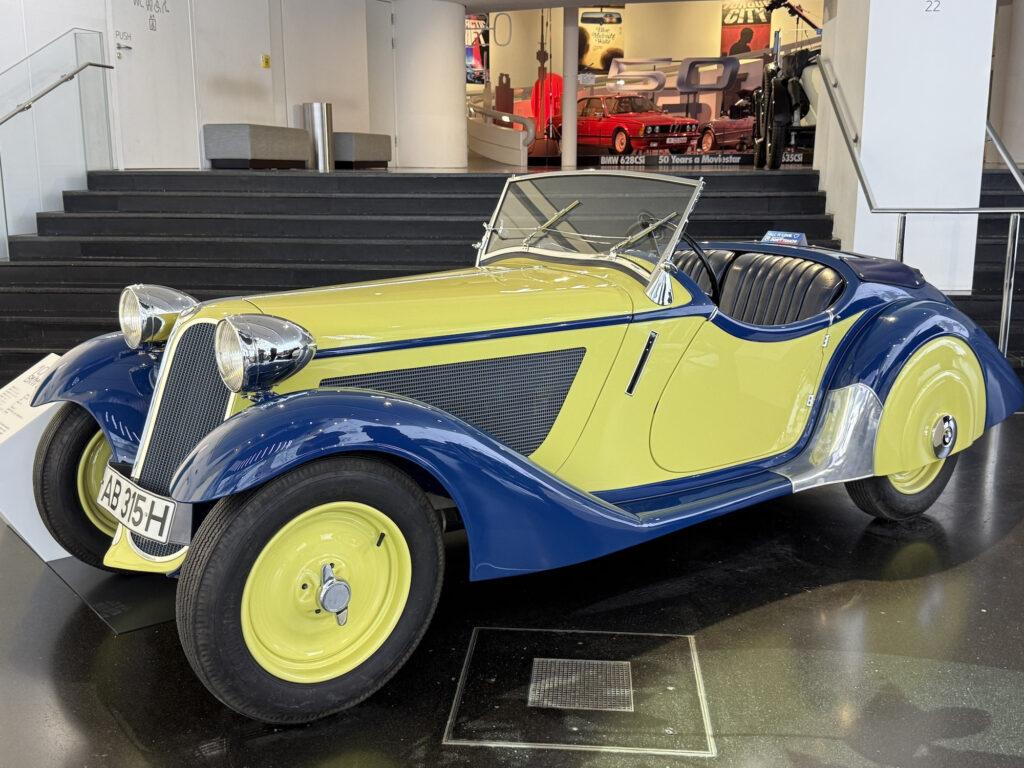
Photo of the real car, BMW Museum. Photo: Sten-Patrick Kreek