Background
BMW 328 is one of the most legendary early BMW sports cars and the model that firmly established the BMW name in international motorsport. The car was developed in the mid-1930s and made its first public appearance on 14 June 1936 at the Eifelrennen on the Nürburgring. The new and still largely secret sports car was entrusted to BMW works driver Ernst Jakob Henne, and its debut was immediately successful: Henne won the class for naturally aspirated sports cars up to 2 litres. This marked the beginning of the BMW 328’s remarkable competition career. Although the first cars were still prototypes, series production began in the spring of 1937. The BMW 328 quickly became a model that combined an elegant roadster body, low weight, a six-cylinder engine and excellent driving characteristics in one coherent package.
Design and concept
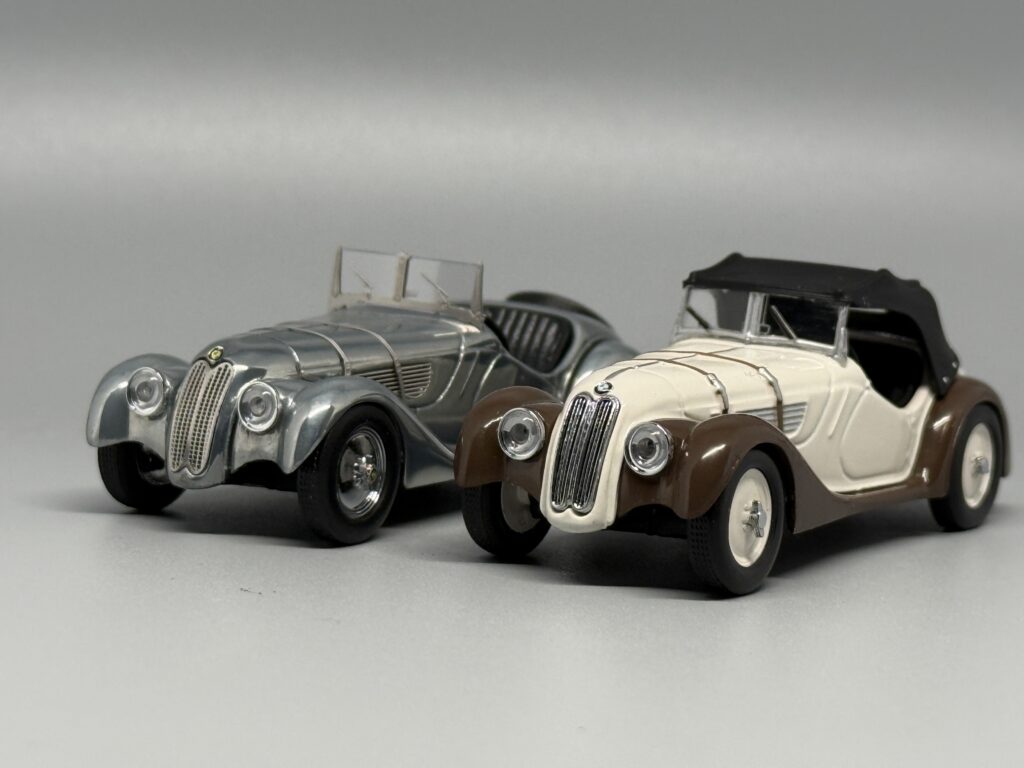
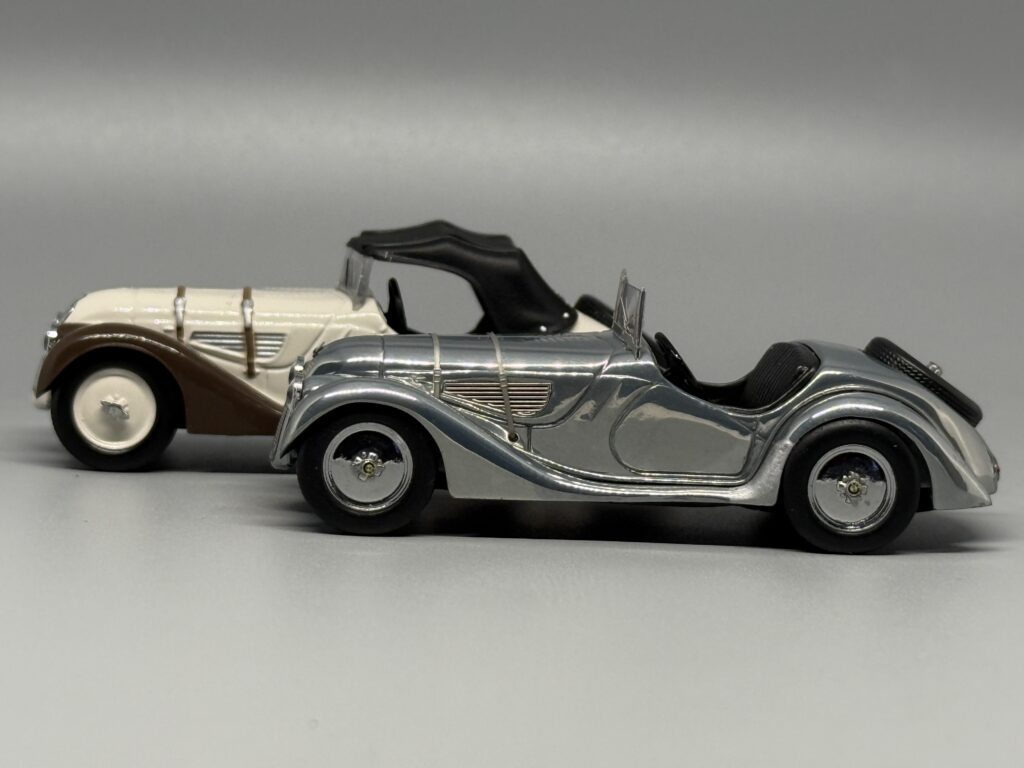
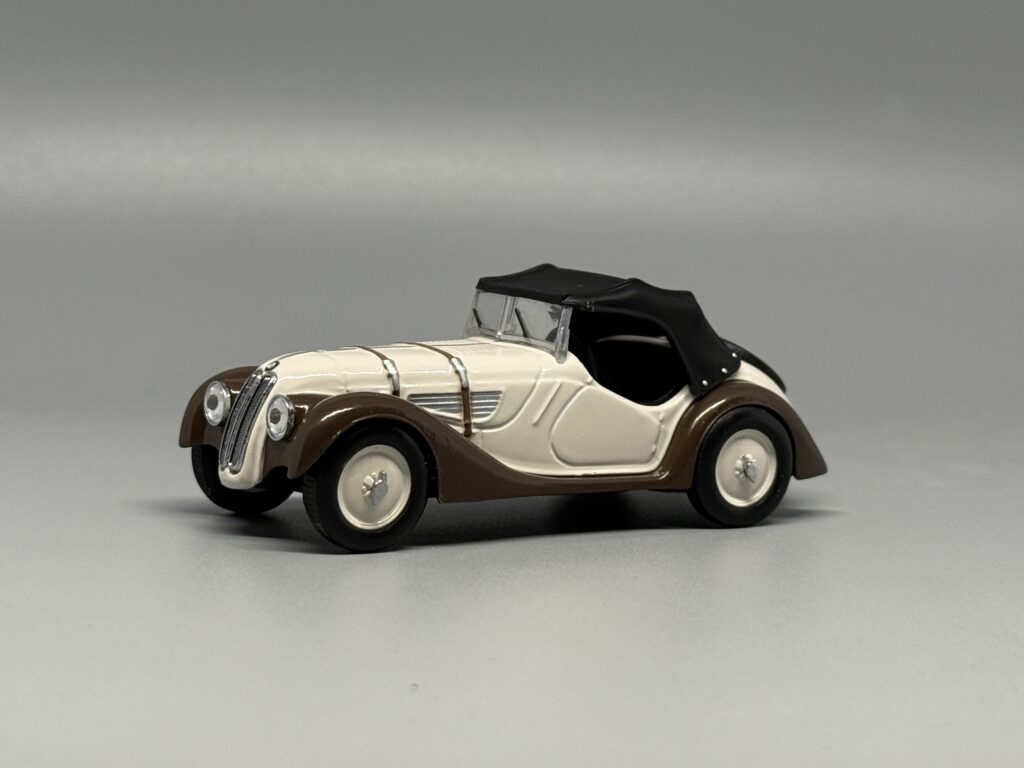
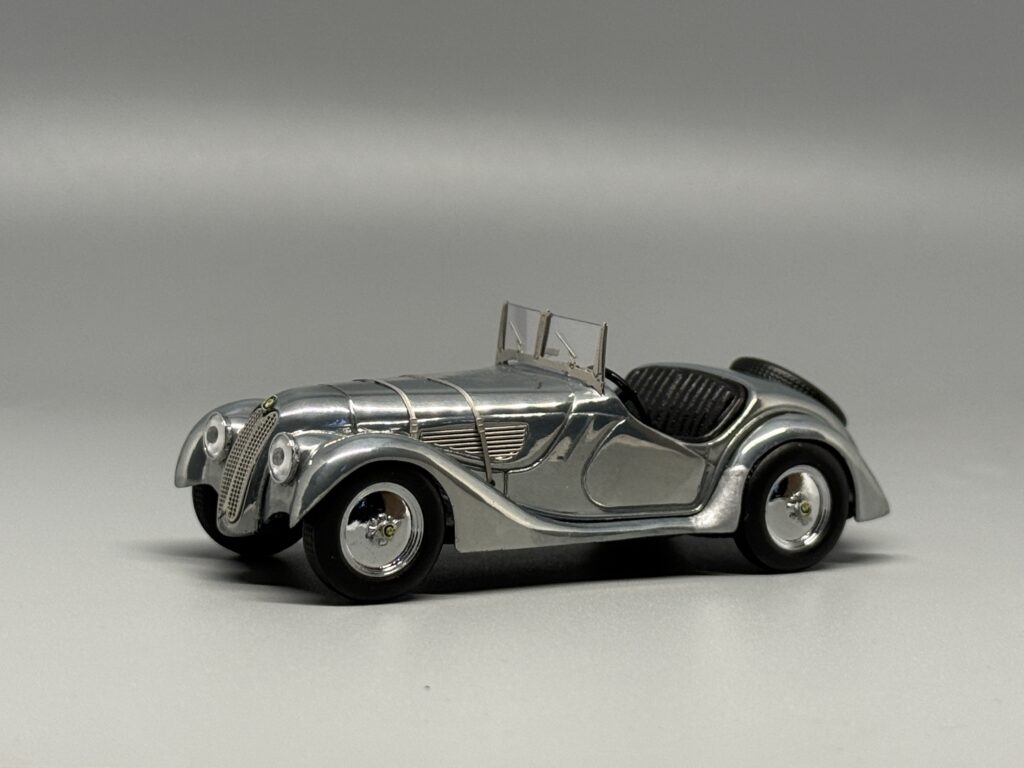
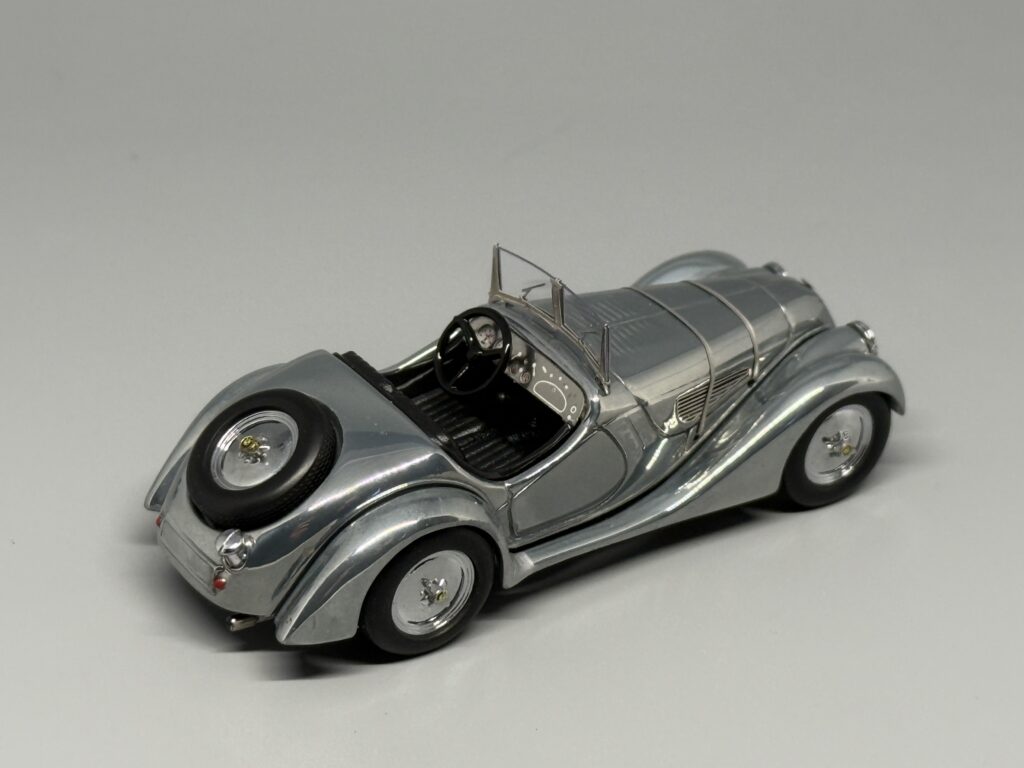
The BMW 328 was a two-seat sporting Roadster, but unlike a modern competition car it was also a fully usable road car. Its low body, long bonnet, narrow twin kidney grille, headlights integrated into the front wings and smoothly rounded rear section gave it a very modern appearance for its time. The two-piece V-shaped windscreen could be folded down, while the soft top made the car usable in less favourable weather conditions as well. Two leather straps running over the bonnet became one of the 328’s most recognisable visual details. The strength of the BMW 328 lay in the fact that it was not a brutally competition-focused machine, but an elegant and lightweight sports Roadster that was equally at home on public roads and on the race track.
Technology
At the heart of the BMW 328 was a 1,971 cm³ six-cylinder in-line engine, based on BMW’s existing 2.0-litre power unit but fitted with a new aluminium-alloy cylinder head and improved gas flow. In series-production form, the engine produced 80 hp at 4,500 rpm. By modern standards this does not sound especially powerful, but the car weighed only around 780 kilograms and was capable of a top speed of approximately 155 km/h. Power was transmitted to the rear wheels through a four-speed manual gearbox, while hydraulic drum brakes were fitted to all four wheels. The success of the BMW 328 therefore did not depend on engine power alone, but above all on low weight, a well-balanced chassis, precise handling and the overall efficiency of the design.
Motorsport
The BMW 328 Roadster was already a serious sports car in standard form, and its technical basis proved exceptionally successful in competition. Several specialised racing versions were developed from the model, with higher engine outputs and more advanced aerodynamics than the standard production car. At the 1938 Mille Miglia, a BMW 328 Roadster achieved success in the up-to-2-litre class. For the 1939 24 Hours of Le Mans, Carrozzeria Touring created a streamlined Superleggera Coupé on the 328 chassis, which won the 2-litre class and finished fifth overall. The greatest racing success of the BMW 328 came at the 1940 Mille Miglia, where Fritz Huschke von Hanstein and Walter Bäumer won the entire event in the same Touring Coupé. These victories were achieved by specially prepared racing cars, but their technical foundation was the same BMW 328 that customers could buy as an elegant two-seat Roadster.
Production
The BMW 328 was built from 1936 to 1940, with only 464 cars produced in total. The first cars used in competition during 1936 were prototypes, while deliveries of series-production cars to private customers began in the spring of 1937. Most examples were built with the classic two-seat Roadster body, although a small number of chassis received special racing or coachbuilt bodies. The BMW 328 was manufactured in Eisenach and cost 7,400 Reichsmarks when new, making it an exclusive sports car rather than a mass-market model. Its low production volume, extensive use in competition and the events of the Second World War have made original 328s extremely rare today.
Significance in BMW history
The significance of the BMW 328 extends far beyond its small production total. The car demonstrated that a sports car did not need to have the most powerful engine in order to succeed – low weight, a balanced chassis, good aerodynamics and precise handling were just as important. These principles later became an important part of BMW’s sports-car philosophy and the broader technical identity of the brand. The 328’s remarkable competition success at the Nürburgring, Le Mans and the Mille Miglia helped establish BMW internationally as a manufacturer of serious sports cars and created a reputation on which the company would repeatedly build in later decades. Today, the BMW 328 is regarded as one of the most desirable classic BMWs, an important design icon and one of the most significant cars in the marque’s motorsport history.
Model in the collection
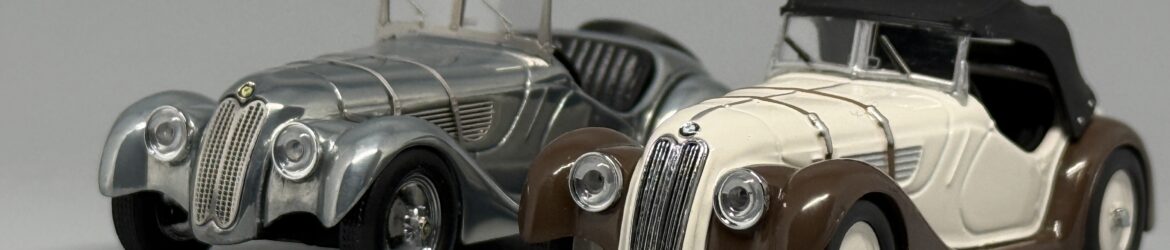
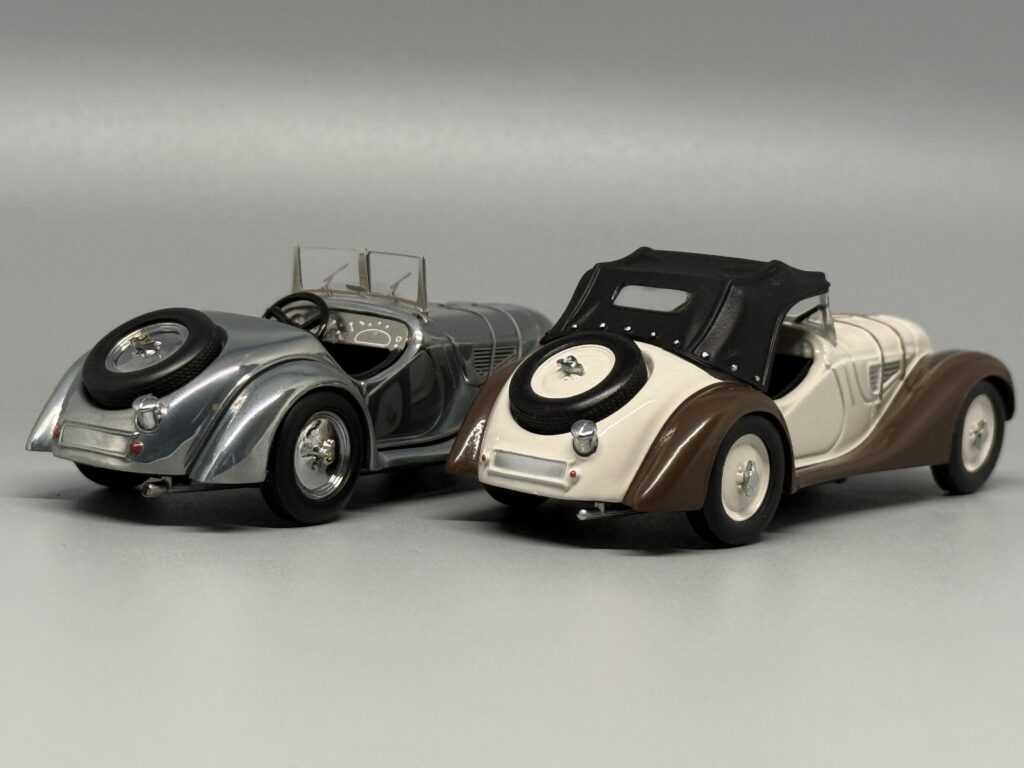
My collection includes two Schuco models of the BMW 328. Both represent the classic BMW 328 Roadster – one with the roof open and the other with the soft top raised.
Technical data in brief
Production period: 1936–1940
Series production: from spring 1937
Place of production: Eisenach, Germany
Body style: two-seat Roadster / sports car
Engine: 1,971 cm³ six-cylinder in-line engine
Power: 80 hp @ 4,500 rpm
Drivetrain: rear-wheel drive
Gearbox: 4-speed manual
Brakes: hydraulic drum brakes
Kerb weight: approximately 780 kg
Top speed: approximately 155 km/h
Production number: 464 cars
Price when new: 7,400 Reichsmarks
Special feature: legendary two-seat BMW sports Roadster whose technical basis was developed into successful racing cars that achieved major results at the Nürburgring, Le Mans and the Mille Miglia
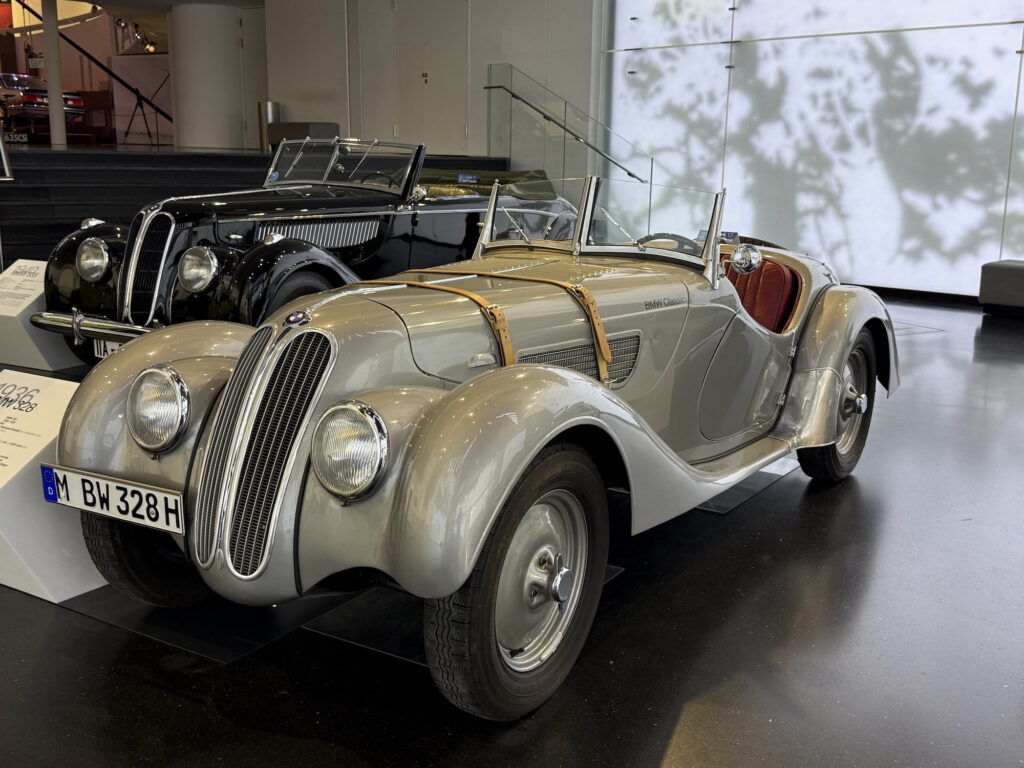
Photo of the real car, BMW Museum. Photo: Sten-Patrick Kreek