
Background
BMW 335 was BMW’s largest and most luxurious series-production model of the pre-war era and marked the company’s entry into the upper luxury-car segment. The model entered series production in 1939, at a time when BMW had developed within only a few years from a manufacturer of small cars into a producer of increasingly prestigious six-cylinder automobiles. The BMW 335 was based to a large extent on the successful BMW 326, but the introduction of a new and considerably larger 3.5-litre engine required significant changes to the design. According to BMW Group Classic, the wheelbase was extended by 114 millimetres, while the overall body was approximately 23 centimetres longer than that of the 326. The result was a more spacious, powerful and prestigious BMW with which the company clearly entered the higher luxury-car class for the first time.
Design and comfort
The BMW 335 retained many of the elegant design features of the 326, but its longer front section and larger dimensions gave it a considerably more imposing appearance. The headlights were integrated into the front wings in a similar manner to the BMW 327, while the long bonnet emphasised the presence of the large six-cylinder engine. The Limousine interior was more luxurious than that of the 326, with particular attention paid to rear-seat comfort. The wide rear bench featured three folding armrests that provided passengers with additional lateral support, while two strong luggage supports could be folded out at the rear if the luggage compartment did not provide enough space for a large suitcase. The BMW 335 was therefore not conceived as a sports car, but as a fast and comfortable long-distance automobile combining BMW’s characteristic driving qualities with a high level of passenger comfort.
Technology
The most important technical innovation of the BMW 335 was its completely new 3,485 cm³ six-cylinder in-line engine. The engine produced 90 hp at only 3,500 rpm and gave the large car very strong performance for its time. Top speed was approximately 145 km/h, making the 335 one of BMW’s fastest series-production models before the Second World War. The greater weight and more powerful engine also required stronger brakes and wider tyres. Power was transmitted to the rear wheels through a four-speed manual gearbox. The aim of the 335 was not maximum sporting performance, but powerful, smooth and effortless progress – qualities that suited its position at the top of BMW’s luxury-car range.
Body versions
The BMW 335 was not limited to the four-door Limousine. The model was also offered as two-door and four-door Cabriolet versions, which ranked among BMW’s most exclusive open cars of the period. All versions used the same 3.5-litre six-cylinder engine, but the Cabriolets offered an even more prestigious and luxurious character. Only 118 examples of the two-door Cabriolet were produced, while other special versions were even rarer. This shows that the BMW 335 was conceived from the outset as an expensive and exclusive low-volume model rather than a high-volume production car.
Production
Production of the BMW 335 model family began in January 1939 and continued for some body versions until 1941. The 335 Limousine itself was produced from January 1939 until December 1940, with only 233 saloons built. Total production of the entire BMW 335 model family is generally given as approximately 415 cars. The principal reason for the low production volume was the outbreak of the Second World War, which changed BMW’s production priorities and rapidly restricted the manufacture and private sale of luxury cars. The Limousine cost 7,850 Reichsmarks when new, placing it firmly at the expensive end of the BMW range. Wartime conditions also meant that many 335s entered official or military service, and a considerable number did not survive the war years.
Significance in BMW history
The significance of the BMW 335 lies in how clearly it demonstrated BMW’s rapid development as an automobile manufacturer during the 1930s. Only ten years after its first BMW 3/15 small car, the company was able to offer a large luxury automobile with a 3.5-litre six-cylinder engine, a high level of comfort and a top speed of 145 km/h. The 335 remained a short-lived model because of the war, but it clearly indicated the direction BMW might have continued to pursue in the development of luxury cars. After the war, BMW did not return to the same market segment until the 1950s with the BMW 501 and 502. The 335 can therefore be regarded as the culmination of BMW’s pre-war luxury-car development and an important predecessor to the marque’s later large executive saloons.
Model in the collection
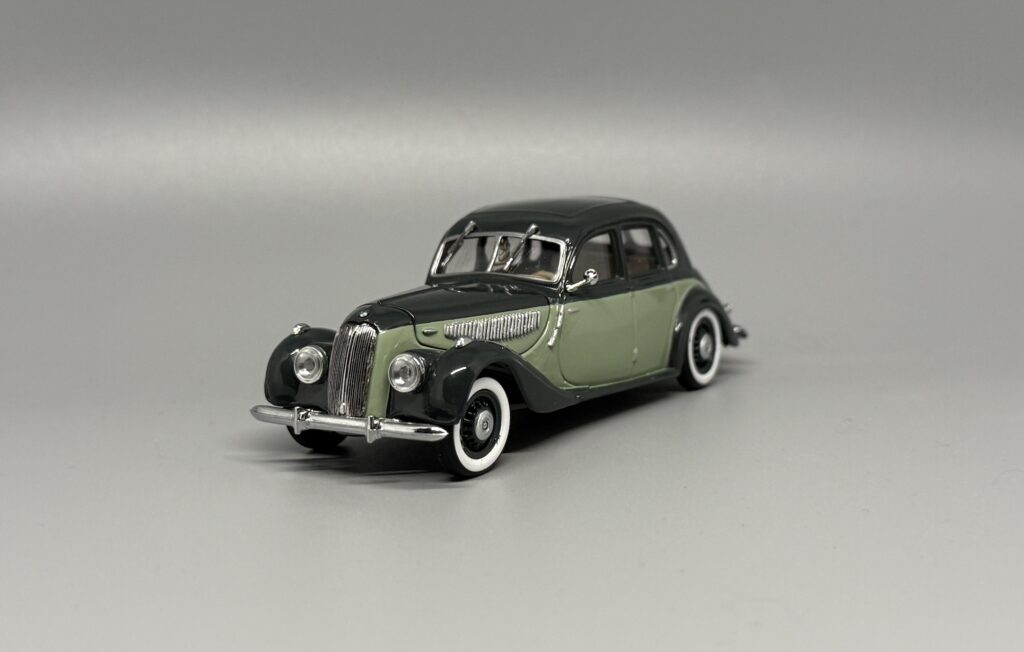
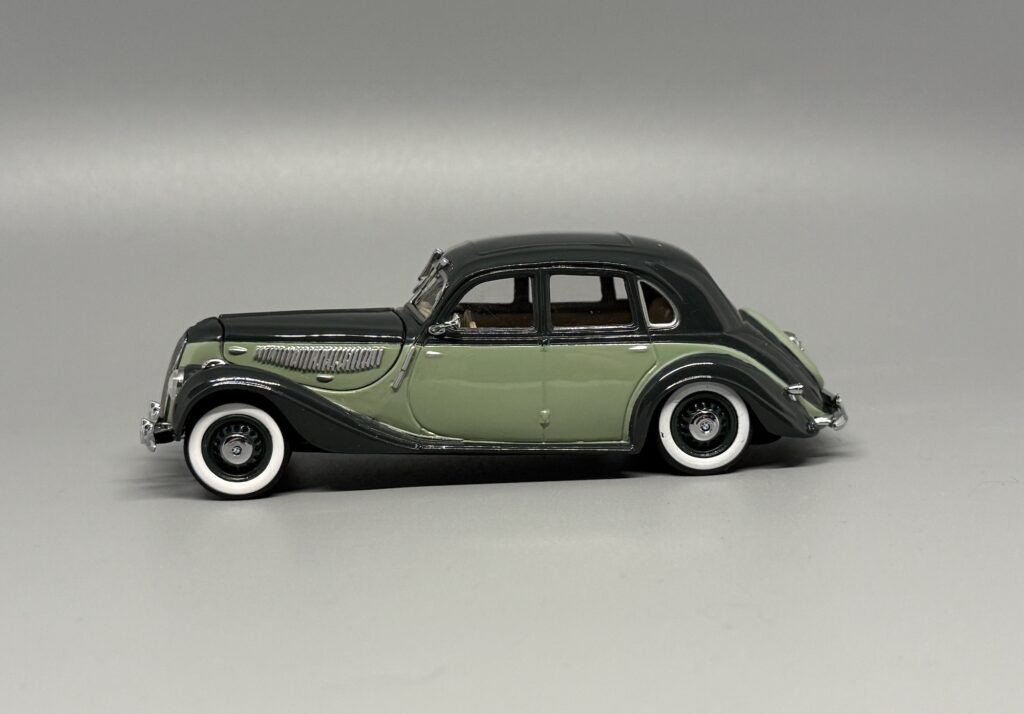
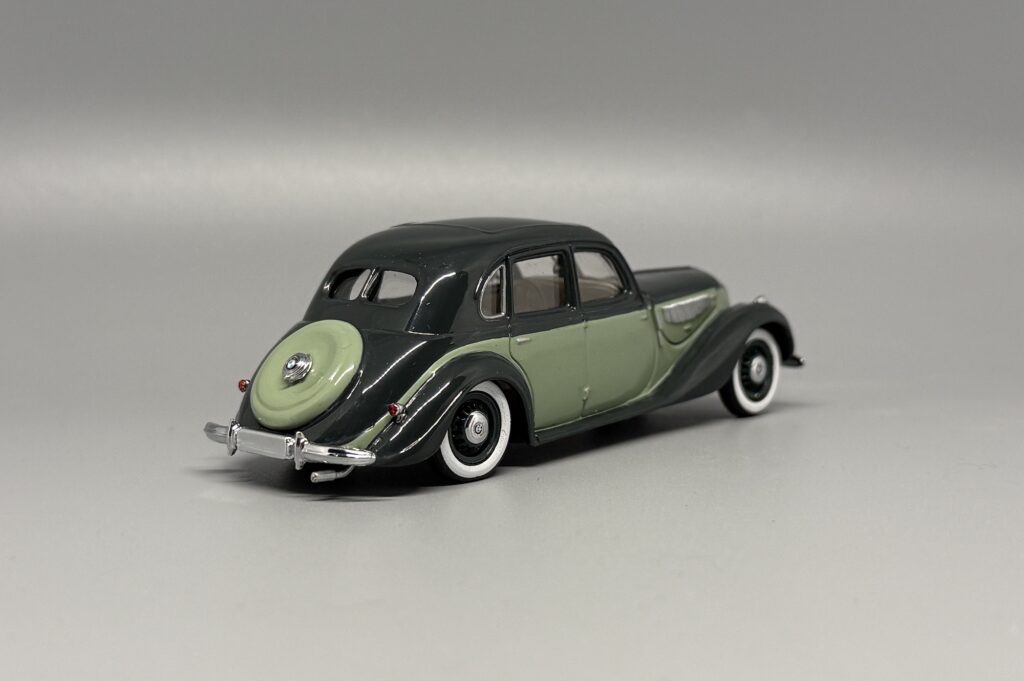
The model in my collection was produced by Schuco and represents the BMW 335 Limousine.
Technical data in brief
BMW 335 model family production period: 01/1939–05/1941
BMW 335 Limousine production period: 01/1939–12/1940
Place of production: Eisenach, Germany
Body style: four-door Limousine / luxury saloon
Engine: 3,485 cm³ six-cylinder in-line engine
Power: 90 hp @ 3,500 rpm
Drivetrain: rear-wheel drive
Gearbox: 4-speed manual
Top speed: approximately 145 km/h
BMW 335 Limousine production number: 233 cars
Total BMW 335 model family production: approximately 415 cars
Price when new: 7,850 Reichsmarks
Special feature: BMW’s largest and most luxurious series-production model of the pre-war era, marking the company’s entry into the upper luxury-car class
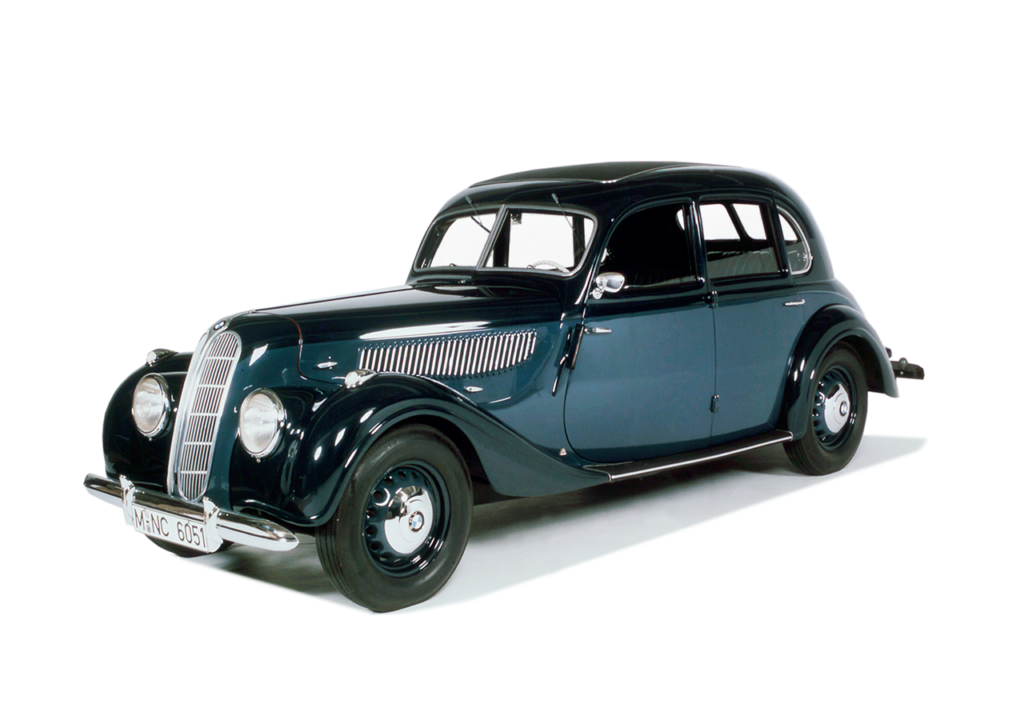
Photo of the real car. Source: bmwgroup-classic.com