
Background
BMW 850i (E31) was the first model of the new BMW 8 Series and reached customers in 1989. The E31 was not simply a development of the previous E24 6 Series, but an entirely new flagship coupé designed to place BMW among the world’s most exclusive sporting grand tourers. The 850i combined luxury, a large V12 engine and exceptionally advanced technology for its time, positioning it at the very top of the BMW model range.
Design
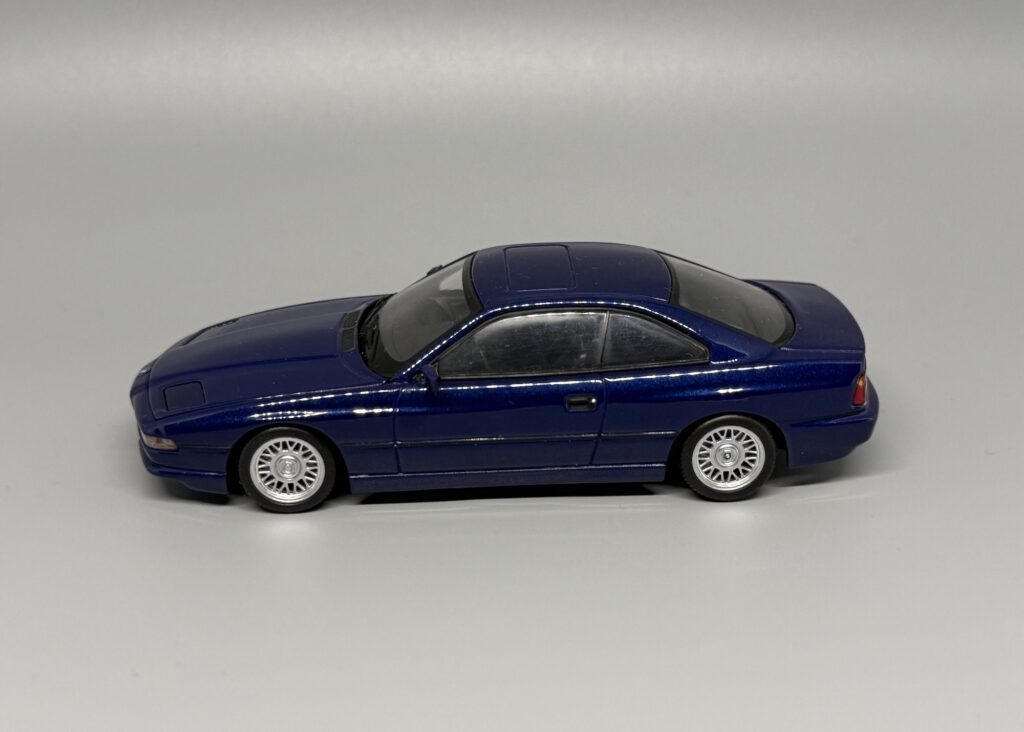
The low, wide and wedge-shaped body of the E31 clearly distinguished it from other BMW models of the period. A long and low bonnet with pop-up headlights, frameless side windows, the absence of a B-pillar and a sharply defined rear section gave the car a futuristic yet elegant appearance. The 8 Series was a 2+2-seat grand tourer designed not only for sporting performance but also for fast and comfortable long-distance travel.
V12 engine
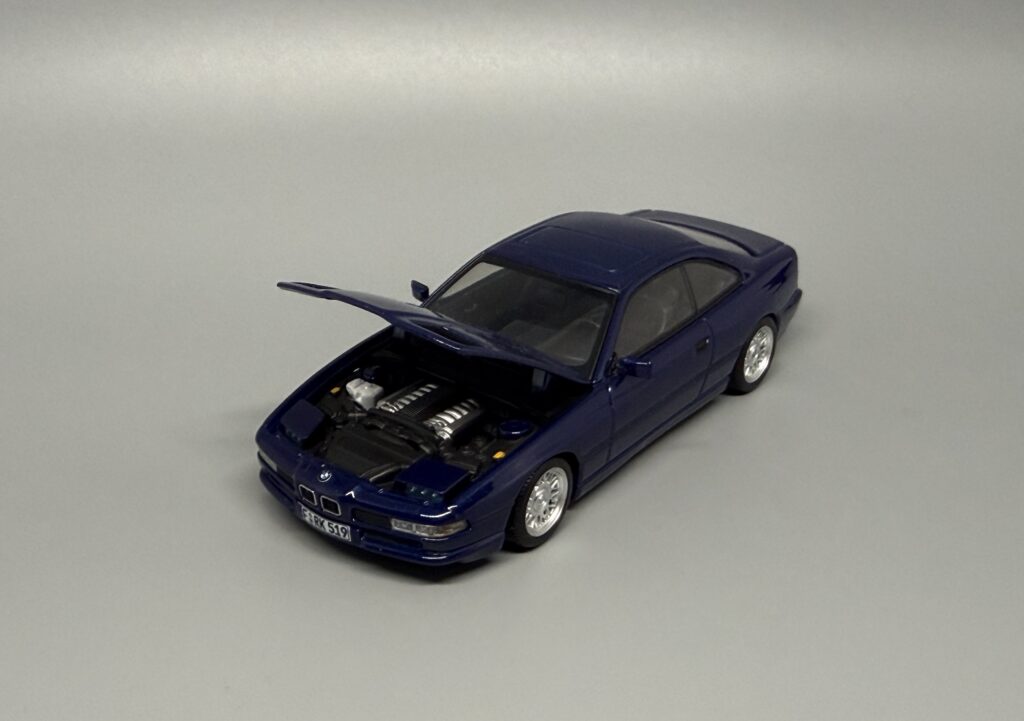
The BMW 850i was powered by the 4,988 cm³ M70 V12 engine, whose basic design was also used in the BMW 750i. It produced 300 hp, or 220 kW, at 5,200 rpm and a maximum torque of 450 Nm. The 1,790-kilogram 850i accelerated from 0 to 100 km/h in 6.8 seconds, while top speed was electronically limited to 250 km/h. The strength of the V12 was not only its performance but also its exceptionally smooth and refined character, which suited the large luxury coupé particularly well.
Drivetrain and technology
The 850i was available with either a six-speed manual transmission developed for the model or a four-speed automatic, with power sent to the rear wheels. The E31 introduced several important technical solutions to the BMW range. It featured a five-link Integral rear suspension, while ASC+T traction control, speed-sensitive power steering and electronically controlled EDC dampers were available. The car also used a multiplex electrical system, allowing several electronic systems to share data connections and reducing the amount of wiring required.
From 850i to 850Ci
With the 1992 model update, the BMW 850i was renamed BMW 850Ci. Initially, the 4,988 cm³ M70 V12 and its 300 hp output remained unchanged, although equipment and interior details were updated. In autumn 1994, the 850Ci received the new 5.4-litre M73 V12 producing 326 hp. During the E31 production period, the range was also expanded with the V8-powered 840Ci and the more sporting 850CSi, but the 850i was the model that began the 8 Series story.
Exclusivity and production
The BMW 850i was one of the most expensive series-production BMW models of its era. In Germany, its new-car price was 135,000 Deutsche Mark, clearly reflecting its flagship position. A total of 20,072 M70-powered 850i and 850Ci models were produced. Total production of the E31 8 Series amounted to 30,621 cars, meaning that the original five-litre V12 version represented a substantial proportion of the entire generation.
Significance in BMW history
The BMW 850i represented a new technological and design flagship for BMW. Its V12 engine, six-speed manual transmission, innovative rear suspension, advanced electronics and distinctive coupé design made the E31 one of BMW’s most ambitious models of the early 1990s. It was not simply a replacement for the E24 6 Series, but a separate luxury grand tourer that established an entirely new 8 Series at the top of the BMW range.
Model in the collection
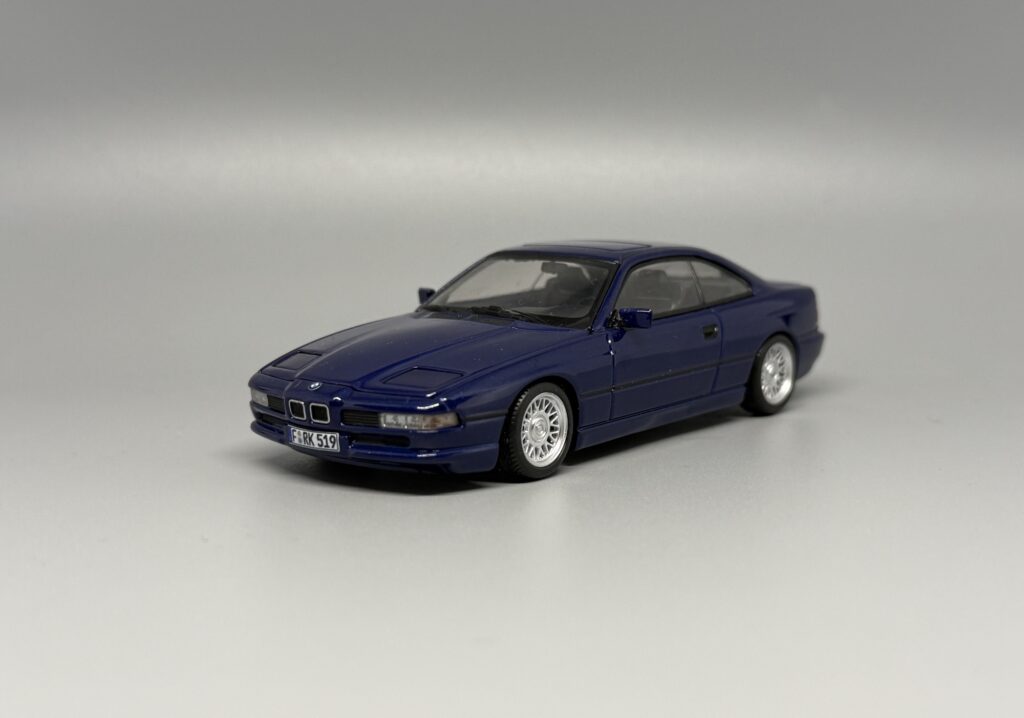
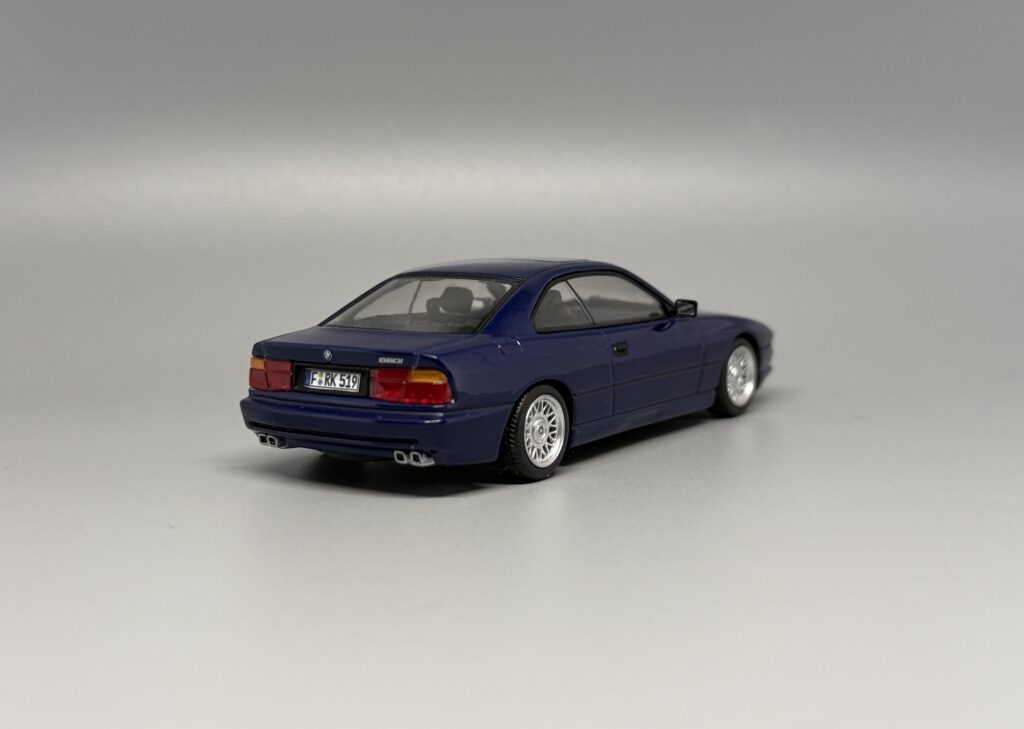
The model in my collection was produced by Minichamps and represents a 1991 BMW 850i (E31). It was produced in a limited edition of 3,024 examples.
Technical data in brief
Production period: 05/1989–10/1994, covering the M70-powered 850i/850Ci period
Place of production: BMW Group Plant Dingolfing, Germany
Body style: two-door 2+2-seat Coupé / grand tourer
Engine: M70 V12
Displacement: 4,988 cm³
Power: 300 hp / 220 kW @ 5,200 rpm
Torque: 450 Nm
Transmission: 6-speed manual or 4-speed automatic
Drivetrain: rear-wheel drive
0–100 km/h: 6.8 s
Top speed: 250 km/h, electronically limited
Price when new: 135,000 Deutsche Mark
M70-powered 850i/850Ci production: 20,072 cars
Total E31 8 Series production: 30,621 cars
Special feature: the first BMW 8 Series model and a technologically ambitious V12-powered luxury grand tourer
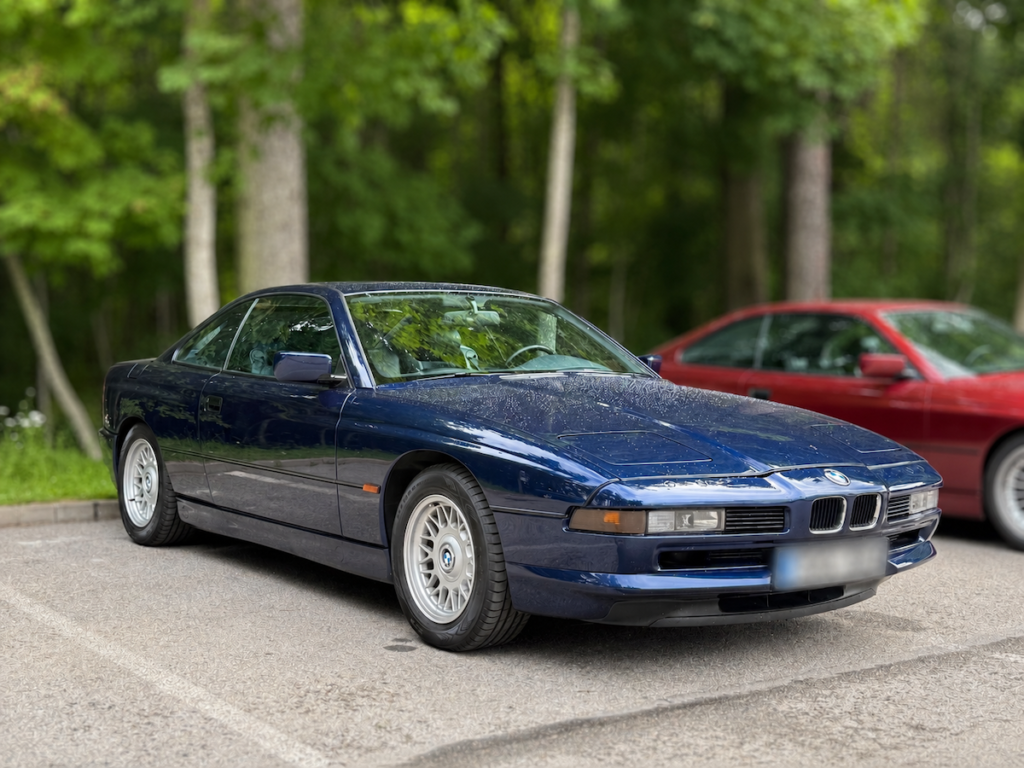
Photo of the real car. Photo: Sten-Patrick Kreek