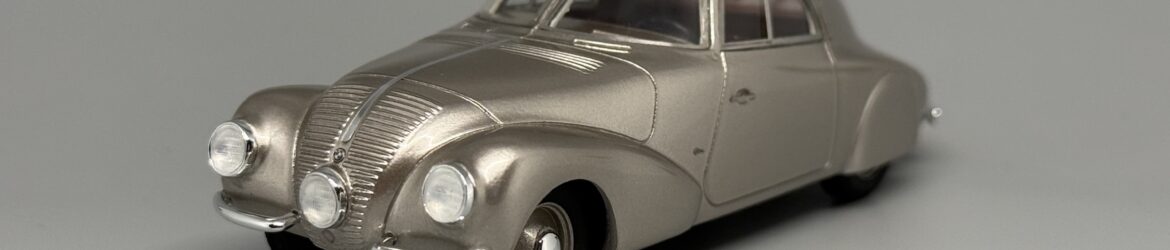
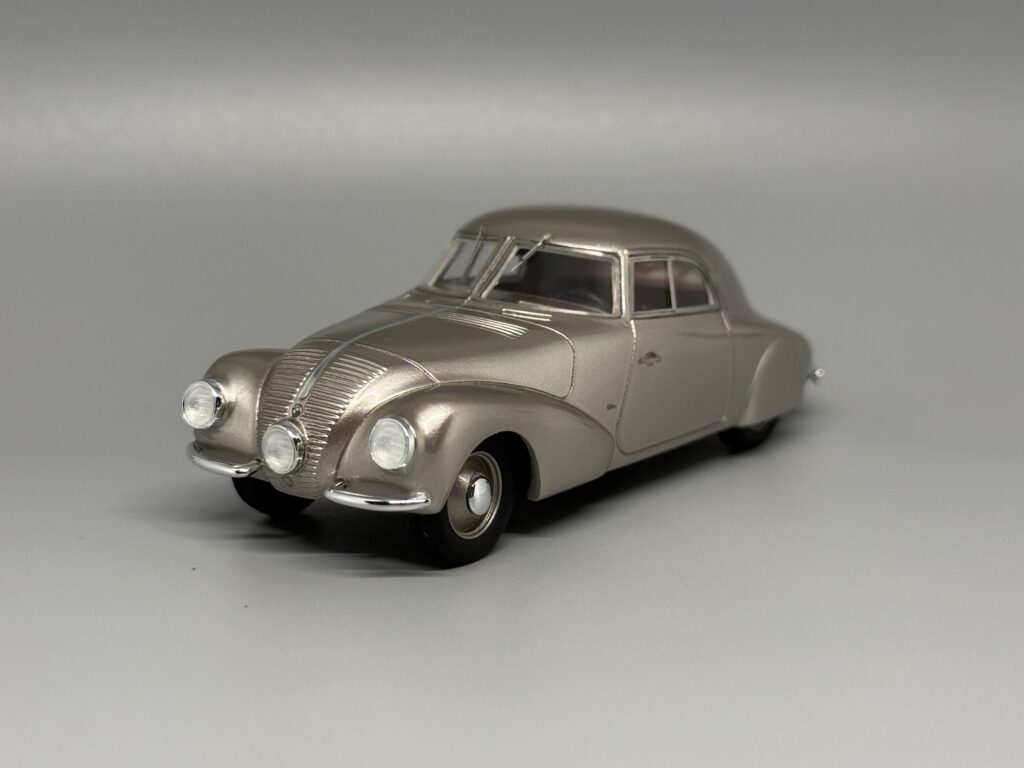
BMW 326 Stromlinie Wendler was one of the rarest and most fascinating special-bodied BMWs of the pre-war period. It combined the mechanical basis of the BMW 326 with the aerodynamic ideas of Reinhard Freiherr von Koenig-Fachsenfeld and the craftsmanship of the Wendler coachbuilding company in Reutlingen. The result was a streamlined car almost completely different in appearance from the standard BMW 326 and a striking example of the rapid development of automotive aerodynamics during the 1930s.
The BMW 326 as a technical foundation
Introduced in 1936, the BMW 326 was an important model in BMW’s pre-war development. It marked the company’s move into the market for larger and more comfortable mid-range cars and was BMW’s first four-door series-production passenger car. It was powered by a 1,971 cc straight-six engine producing 50 hp.
The BMW 326 also became a commercial success. A total of 15,873 cars were produced before production ended in 1941, making it BMW’s most numerous pre-war model. Its chassis also provided an attractive basis for special coachwork, and several independent coachbuilders created their own designs using BMW 326 mechanical components.
The age of streamlining
During the 1930s, aerodynamics became an increasingly important subject throughout the European motor industry. Reducing drag was no longer regarded solely as an issue for racing and record-breaking cars, but also as a way to improve the speed, fuel efficiency and stability of ordinary road vehicles.
One of Germany’s pioneers in this field was Reinhard Freiherr von Koenig-Fachsenfeld. During the 1930s he was already carrying out wind-tunnel experiments with different body shapes, and his work was strongly influenced by the earlier ideas and patents of aerodynamic pioneer Paul Jaray.
Koenig-Fachsenfeld and Wendler
The streamlined body for the BMW 326 was developed according to Koenig-Fachsenfeld’s aerodynamic principles and constructed by Erhard Wendler’s coachbuilding company in Reutlingen. Wendler had established an excellent reputation for high-quality bespoke bodies and expanded its activities considerably during the 1930s.
By 1937, Wendler was offering the streamlined BMW 326 as part of its regular programme and had even produced a dedicated sales brochure. The car was advertised as a 50 hp, three- to four-seat streamlined BMW. This demonstrates that it was not merely a single experimental body built for one customer, but a design Wendler actively attempted to sell to additional buyers.
Almost unrecognisable as a BMW 326
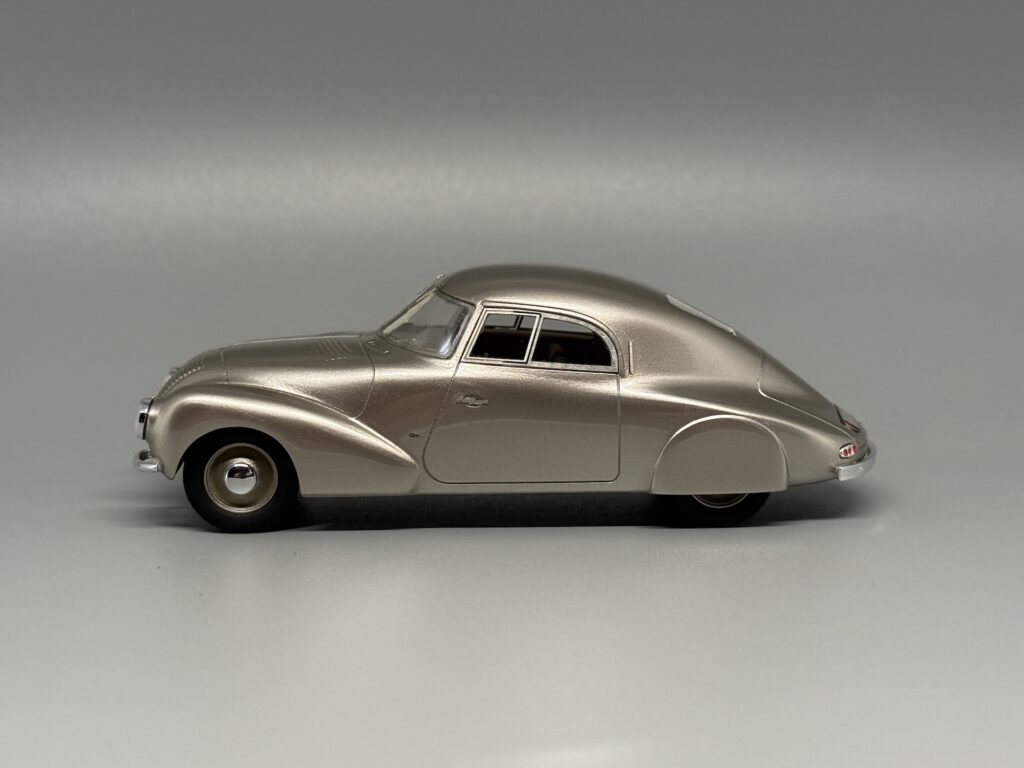
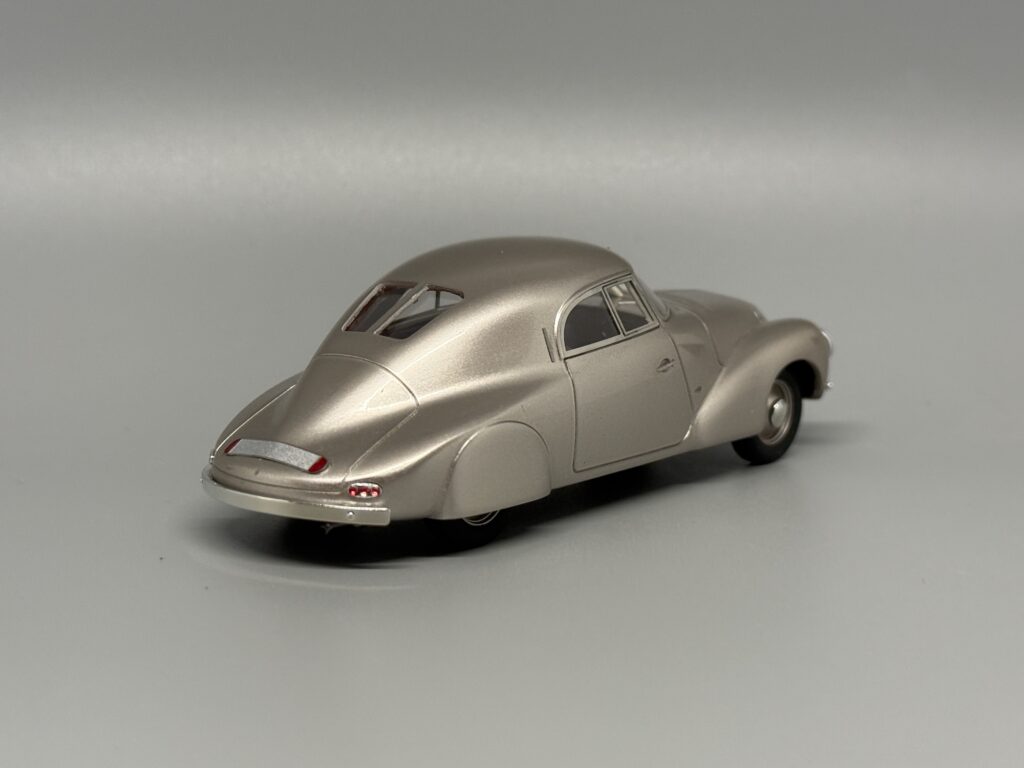
The streamlined special body transformed the appearance of the BMW 326 almost completely. In place of the tall and dignified four-door sedan body was a low, rounded form with a strongly tapering rear section. Long, flowing surfaces and a minimum of projecting details were intended primarily to reduce aerodynamic drag.
The overall shape clearly reflected the aerodynamic school associated with Paul Jaray and Koenig-Fachsenfeld. Its streamlined tail, carefully integrated wheel openings and rounded front end were dramatically different from the conventional production cars of the 1930s.
Traditional construction with a futuristic shape
Although the exterior form was remarkably modern for its time, the construction still followed traditional bespoke coachbuilding practice. A timber framework formed the internal structure, while lightweight aluminium panels created the outer skin.
This contrast is one of the most fascinating aspects of the streamlined Wendler BMWs: a futuristic aerodynamic form was achieved using construction methods rooted in the traditional craft of carriage building.
Five BMW 326s and two BMW 328s
Recent research by the Deutsches Museum provides a clearer picture of the streamlined Wendler BMWs than was previously available. Between 1937 and 1938, a total of seven cars were fitted with streamlined bodies based on Koenig-Fachsenfeld’s designs: five were based on the BMW 326 and two on the BMW 328.
The BMW 326 Stromlinie Wendler was therefore not a unique one-off, as earlier accounts often suggested. Production was nevertheless extremely limited, with only five BMW 326-based cars known to have been built.
All five streamlined BMW 326s are now considered lost. In contrast, both BMW 328-based Wendler streamliners have survived, allowing the construction and aerodynamic concepts developed by Koenig-Fachsenfeld and Wendler to be studied in much greater detail.
Connection with the streamlined BMW 328
The BMW 326 Stromlinie and BMW 328 Stromlinien-Versuchswagen were therefore not completely separate projects but belonged to the same late-1930s development of streamlined BMW special bodies. Both were based on Koenig-Fachsenfeld designs and received aerodynamic coachwork built by Wendler.
The 326 version represented the concept of a comfortable streamlined touring car, while the more sporting BMW 328 chassis allowed similar aerodynamic ideas to be combined with greater performance. Together, the two types illustrate how far aerodynamic thinking had progressed in special-bodied BMWs even before the Second World War.
Model in the collection
The 1:43-scale BMW 326 Stromlinie Wendler in my collection was produced by AutoCult. The manufacturer identifies the miniature as a 1936 car, and it was released as a limited edition of just 333 pieces.
The model belongs to AutoCult’s Streamliner series and carries catalogue number 04042. Although AutoCult dates the car to 1936, Wendler’s 1937 sales material and more recent historical research associate the BMW 326-based Koenig-Fachsenfeld streamliners primarily with the 1937–1938 period.
Technical data
Construction period: 1937–1938
Base vehicle: BMW 326
Coachbuilder: Wendler, Reutlingen, Germany
Body design: Reinhard Freiherr von Koenig-Fachsenfeld
Aerodynamic influence: principles and patents of Paul Jaray
Body style: streamlined bespoke enclosed body
Body construction: timber frame with aluminium panelling
Engine: naturally aspirated straight-six petrol engine
Displacement: 1,971 cc
Power output: 37 kW / 50 hp
Number of BMW 326 Stromlinie cars: 5
Surviving BMW 326 Stromlinie cars: none currently known
Special feature: streamlined Wendler coachwork designed according to Koenig-Fachsenfeld’s aerodynamic principles on a BMW 326 chassis