Background
BMW Hurrican is one of the most unusual special cars ever built using BMW mechanical components. It was not an official BMW prototype or factory concept car, but an ambitious final-year project created by students studying coachbuilding and vehicle construction at the Pfälzische Meisterschule für Handwerker in Kaiserslautern. The project was initiated by 22-year-old Swiss student Max Seelaus, who together with seven fellow students decided in 1965 to build an attractive and practical sports coupé using as many production-car components as possible. The result was the Hurrican – a car whose development would ultimately continue for almost ten years.
BMW support for the project
Although the Hurrican was not part of BMW’s official development programme, the Munich company was directly involved at the beginning of the project. Max Seelaus approached BMW in 1965, and the company’s technical director Helmut Werner Bönsch responded positively to the idea. BMW provided the students with a BMW 1800 technical basis and powertrain. At the time, BMW lacked a compact sports coupé in its range following the end of BMW 700 production, and a successful student project could potentially have suggested an interesting direction for the company.
BMW 1800 TI technical basis
The starting point for the Hurrican was a 1964 BMW 1800 TI from the Neue Klasse family. Its floor structure, suspension and original 1.8-litre four-cylinder engine provided the basic mechanical foundation. With independent suspension, rear-wheel drive and BMW’s sporting M10 engine, the Neue Klasse was a suitable platform for a lightweight GT car. The donor car’s 1964 model year is also the reason why the Hurrican is sometimes listed in model catalogues and later sources as a “1964 BMW Hurrican”, even though work on the Hurrican itself began only in the following year.
Body construction in Kaiserslautern
The Hurrican body was built by the students themselves, and the project became exceptionally labour-intensive. The body was constructed around a steel tubular framework covered with hand-formed metal panels. The doors, wings and bonnet were made from aluminium to reduce weight. Thousands of working hours were invested during the school project, while the completed car with its fully finished interior is estimated to have required approximately 12,000 hours of work. In the autumn of 1967, the still-unpainted car was submitted as the students’ final project so that the quality of the structure and craftsmanship could be fully inspected.
Max Seelaus and the Hurrican design
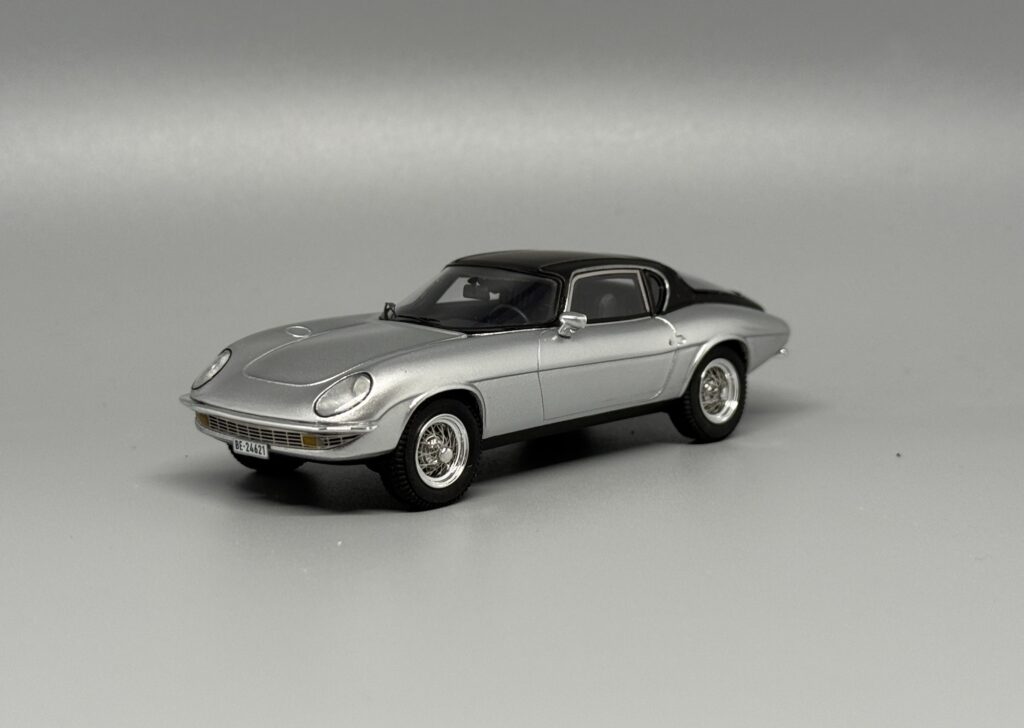
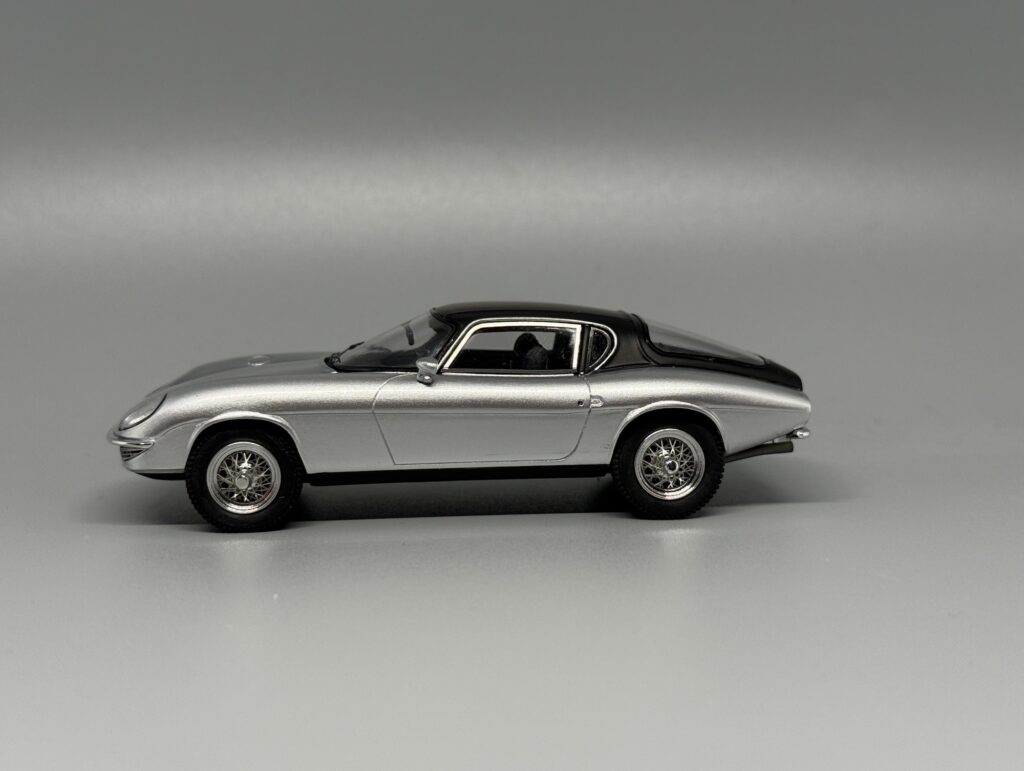
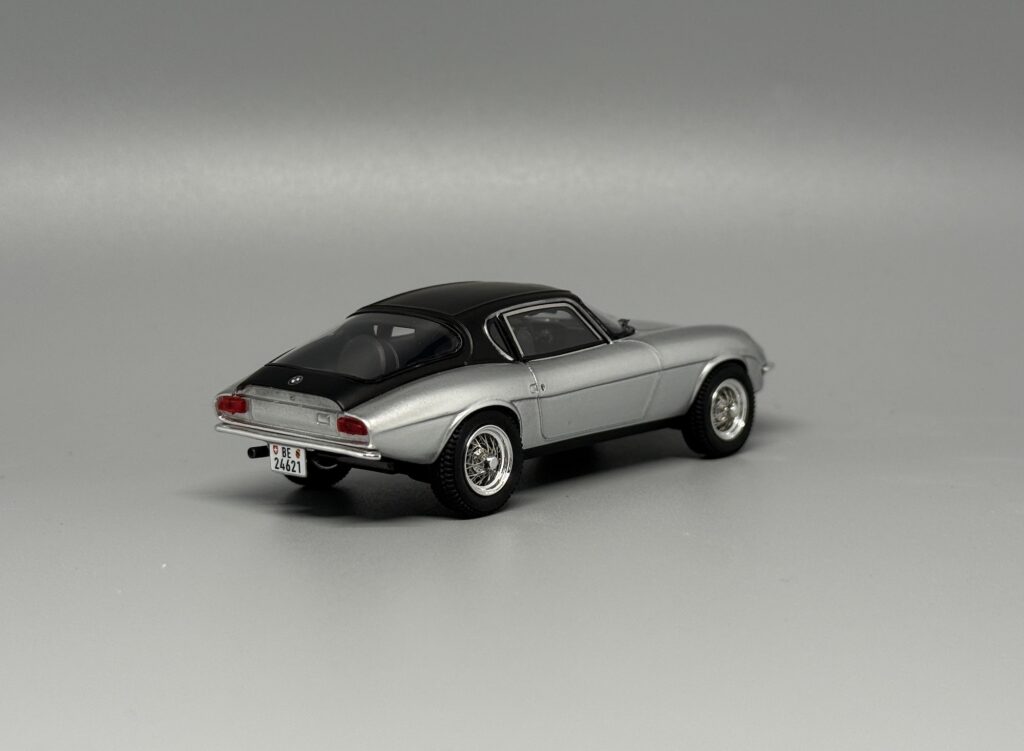
The shape of the Hurrican was remarkably bold for its time. A low silhouette, large glazed area and smoothly descending rear section gave it a clear GT character. The aim was not to copy an existing BMW, but to create a completely new sports coupé around reliable production mechanical components. The result was a car that is difficult to identify immediately as a BMW. The traditional BMW kidney grille was absent, and the small BMW badges were among the few obvious visual references to the marque.
Components from several manufacturers
The Hurrican is a good example of how a special car could be created on a limited budget by using existing production components. Parts from several European manufacturers were incorporated into the car over the years. The windscreen has been associated with the Ferrari 250 LM, the headlamps came from the Volvo 122 Amazon and the rear lamps from the Fiat 850 Sport Spider, while other details were sourced from manufacturers including Jaguar, NSU and Citroën. Despite their varied origins, the components formed a distinctive overall design, and this mixture of parts is today one of the Hurrican’s most characteristic features.
BMW 2000 ti engine
The Hurrican did not retain its original 1.8-litre engine. During the later stages of development it was replaced by a 1,990 cm³ BMW 2000 ti M10 four-cylinder engine. Fitted with two Weber 45 DCOE carburettors, it produced approximately 120 hp at 5,500 rpm and around 170 Nm of torque. Power was transmitted to the rear wheels through a five-speed sports transmission. In its completed form, the car was capable of approximately 195 km/h and accelerated from 0 to 100 km/h in around 9.5 seconds.
Aerodynamics and chassis
The Hurrican was more than a visual experiment. Its aerodynamic body achieved a drag coefficient of approximately Cd 0.34, a very respectable figure for a one-off car created during the 1960s. BMW independent front suspension was retained, while externally adjustable spring units derived from BMW 1800 competition cars were later used. At the rear, the car retained BMW’s independent semi-trailing-arm arrangement. The Hurrican was approximately 4,460 mm long, only 1,250 mm high and weighed around 1,140 kg.
Why did it not become a BMW production model?
When the project began, BMW had good reason to be interested in the idea of a compact sports coupé. The situation changed in 1966–1967 when BMW acquired Hans Glas GmbH. This gave BMW access to the Pietro Frua-designed Glas 1300/1700 GT, which was subsequently developed into the BMW 1600 GT. BMW therefore no longer had the same need for a separate project such as the Hurrican, and any possible factory future for the student-built car disappeared. The Hurrican remained Max Seelaus’s personal project.
A long road to completion
Max Seelaus received his diploma on 28 September 1967 and subsequently took the Hurrican to Switzerland. The car was not yet fully finished, however, and development continued with a number of technical modifications. The project received financial support from Eduard Eugster, while technicians Horst Luithardt and Max Zedi were also involved in the work. At one stage the car even survived a rollover accident and had to be repaired. Only in 1975 did the Hurrican receive official road approval from the Zurich authorities.
A one-off
Only one BMW Hurrican was built. The vehicle’s own identification plate lists Max Seelaus as the manufacturer, further emphasising that this was not a BMW factory-built automobile. The Hurrican is most accurately described as an independently constructed special car or prototype based on BMW mechanical components. Its long development history, student-project origins and connection with official BMW engineering make it a particularly unusual chapter in the history of BMW-related vehicles.
Model in the collection
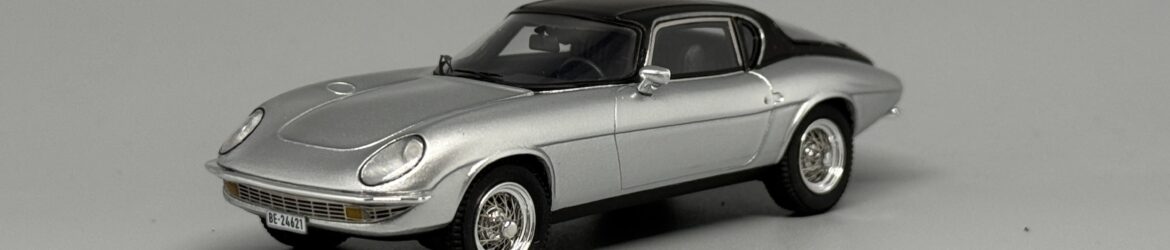
The model in my collection was produced by Avenue 43 and represents the BMW Hurrican in its completed sports-coupé configuration. The model manufacturer lists the car with the year 1964, referring to the model year of the BMW 1800 donor car; the Hurrican project itself began in 1965 and the car was not finally completed and road-registered until 1975. The model was produced in a limited edition of 300 examples.
Technical data in brief
Donor car: BMW 1800 TI, 1964
Project started: 1965
School project completed: 1967
Final completion and road registration: 1975
Project leader: Max Seelaus
Construction location: Kaiserslautern, Germany / later Switzerland
Basis: BMW 1800 TI
Final engine: BMW 2000 ti M10 four-cylinder in-line engine
Displacement: 1,990 cm³
Power: 120 hp @ 5,500 rpm
Torque: approximately 170 Nm
Transmission: 5-speed manual
Drivetrain: rear-wheel drive
Body style: two-seat sports coupé
Body construction: steel structure with aluminium doors, wings and bonnet
Length: 4,460 mm
Width: 1,690 mm
Height: 1,250 mm
Wheelbase: 2,550 mm
Weight: approximately 1,140 kg
Drag coefficient: Cd 0.34
0–100 km/h: approximately 9.5 seconds
Top speed: approximately 195 km/h
Production: 1 car
Special feature: unique BMW 1800/2000-based sports coupé created as a student project led by Max Seelaus
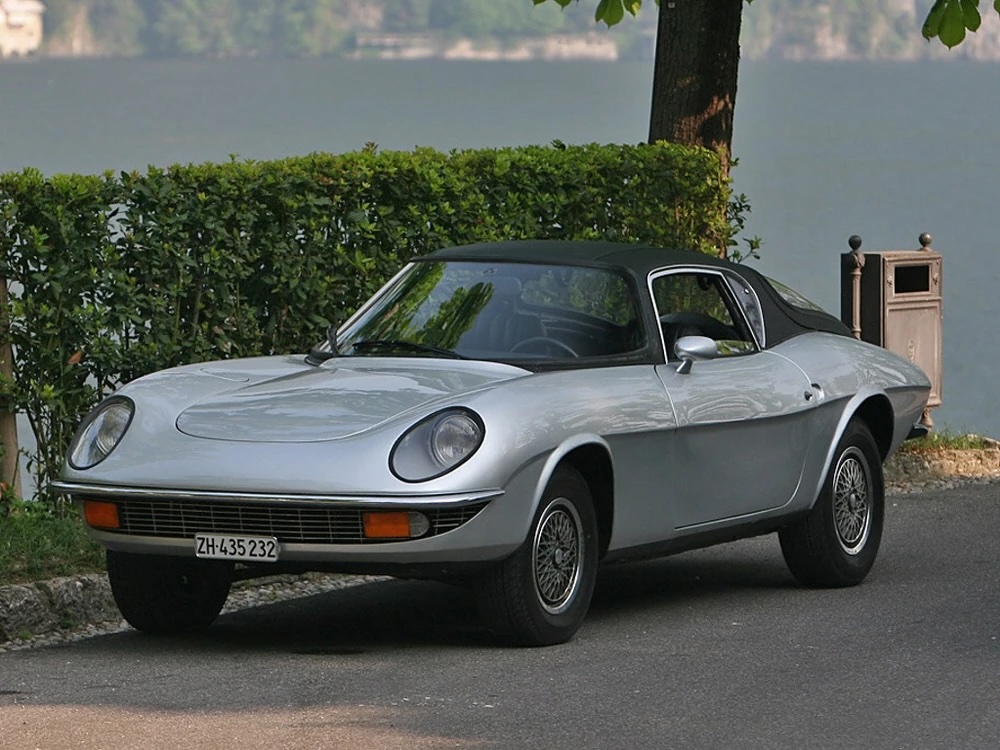
Photo of the real car. Source: classiccars.fandom.com