Background
BMW-Glas 3000 V8 emerged during a very unusual transition period in the history of BMW and Hans Glas GmbH. Glas, based in Dingolfing, had achieved success in the 1950s with the Goggomobil and other small cars, but by the mid-1960s the company was also attempting to enter the market for larger and more powerful automobiles. The most ambitious result of this strategy was the Glas V8 luxury coupé designed by Pietro Frua. When BMW took over the financially troubled Hans Glas GmbH in 1966, it decided to continue development and production of the model for a short time. The result was the BMW-Glas 3000 V8, introduced in 1967 – a rare car combining Glas engineering, Italian styling and BMW ownership.
Glas 2600 V8
The predecessor of the BMW-Glas 3000 V8 was the Glas 2600 V8, presented at the 1965 Frankfurt Motor Show. Glas wanted to enter the luxury GT market with the new model and commissioned the well-known Italian designer Pietro Frua to create the body. The result was an elegant four-seat coupé with a long bonnet, low roofline and clean proportions that showed similarities to Frua’s Maserati designs. For this reason, the Glas V8 later acquired the nickname “Glaserati”.
Pietro Frua design
Frua’s design differed clearly from BMW’s own styling language of the 1960s. The front was wide and low, the side profile clean and restrained, and the rear elegant without unnecessary ornamentation. Although the car later carried BMW badges, it did not receive BMW’s characteristic kidney grille. This also distinguished the BMW-Glas 3000 V8 from the BMW 1600 GT, another Glas-derived model whose appearance BMW modified more extensively after the takeover. The 3000 V8 remained visually almost entirely a Glas and Frua creation.
BMW takes over Glas
BMW acquired Hans Glas GmbH in November 1966. One of the most important consequences of the takeover was BMW gaining access to the production facilities in Dingolfing, a location that would later become home to one of BMW’s most important factories. Glas models were gradually discontinued or adapted to BMW components. In the case of the Glas V8, however, BMW decided to use the larger 3.0-litre engine that had already been developed before the takeover and to continue production of the coupé under BMW control.
BMW-Glas 3000 V8
The BMW-Glas 3000 V8 entered production in September 1967. Compared with the earlier Glas 2600 V8, the appearance changed very little, with BMW badges being among the most visible differences. The Glas name was retained in the model designation, clearly reflecting the car’s origins. It became one of the few automobiles in BMW history whose design and basic technical concept had been developed by another manufacturer before coming under BMW ownership.
Three-litre V8
The car was powered by a 2,982 cm³ V8 engine producing 160 hp or 118 kW. The engine used an overhead camshaft for each cylinder bank and was fed by three Solex twin-choke carburettors. Maximum torque was approximately 236 Nm. Power was transmitted to the rear wheels through a four-speed manual transmission. The BMW-Glas 3000 V8 was capable of around 200 km/h and could accelerate from 0 to 100 km/h in approximately ten seconds.
Unusual chassis technology
The BMW-Glas 3000 V8 had a comparatively advanced chassis for its time. Independent suspension with double wishbones was used at the front, while the rear featured a De Dion axle. The rear suspension also used a Boge Hydromat self-levelling system, helping maintain a constant ride height regardless of load. Disc brakes were fitted to all four wheels, and the car was equipped with hydraulically assisted steering. These features demonstrated that Glas had aimed to create not merely an attractive coupé, but a technically serious luxury GT car.
Limited production
Production of the BMW-Glas 3000 V8 lasted only from September 1967 until May 1968. During this period, 418 cars were produced in BMW-Glas 3000 V8 form. Lower production figures appear in some older sources, but 418 cars is the figure most often used in German Glas histories and sources based on factory documentation. Even when the earlier Glas 2600 V8 is included, total production of Frua’s V8 coupé remained very limited.
Before BMW’s new generation of coupés
The BMW-Glas 3000 V8 was never intended to become a long-term BMW model. BMW was simultaneously developing its own new generation of large coupés, and in 1968 the BMW 2800 CS entered production, later developing into the E9 family. Once BMW’s own new coupé was available, there was little reason to continue the Glas-derived model. The 3000 V8 therefore became a short-lived bridge between Glas and BMW’s new generation of luxury coupés.
Glaserati
The nickname “Glaserati” became permanently associated with the car. It referred mainly to Pietro Frua’s styling and the resemblance to some of his Maserati designs, particularly the first-generation Quattroporte. Technically, however, the BMW-Glas 3000 V8 was an independent German design. The combination of Italian styling and Glas-developed V8 engineering made it one of the most distinctive German luxury coupés of the 1960s.
Historical significance
The BMW-Glas 3000 V8 is important in BMW history above all as a transitional model. It had not originally been developed by BMW, but its final production took place under BMW ownership and with BMW badging. The car represents a moment when independent Glas automobile production was coming to an end and the Dingolfing facilities were gradually becoming part of BMW’s manufacturing network. Today, its short production period, limited numbers, Pietro Frua design and unusual origins make it one of the rarest production cars to carry the BMW name during the 1960s.
Model in the collection
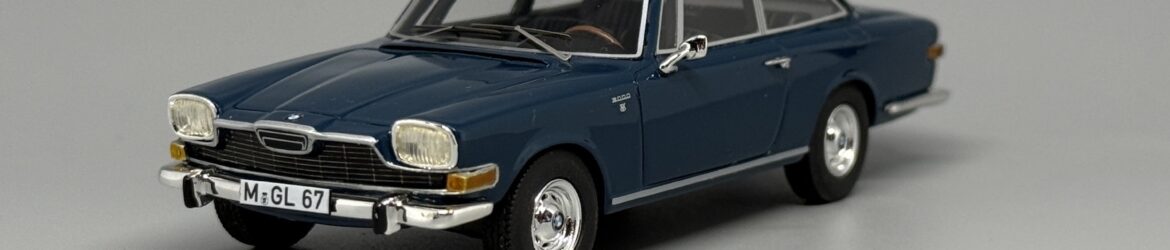
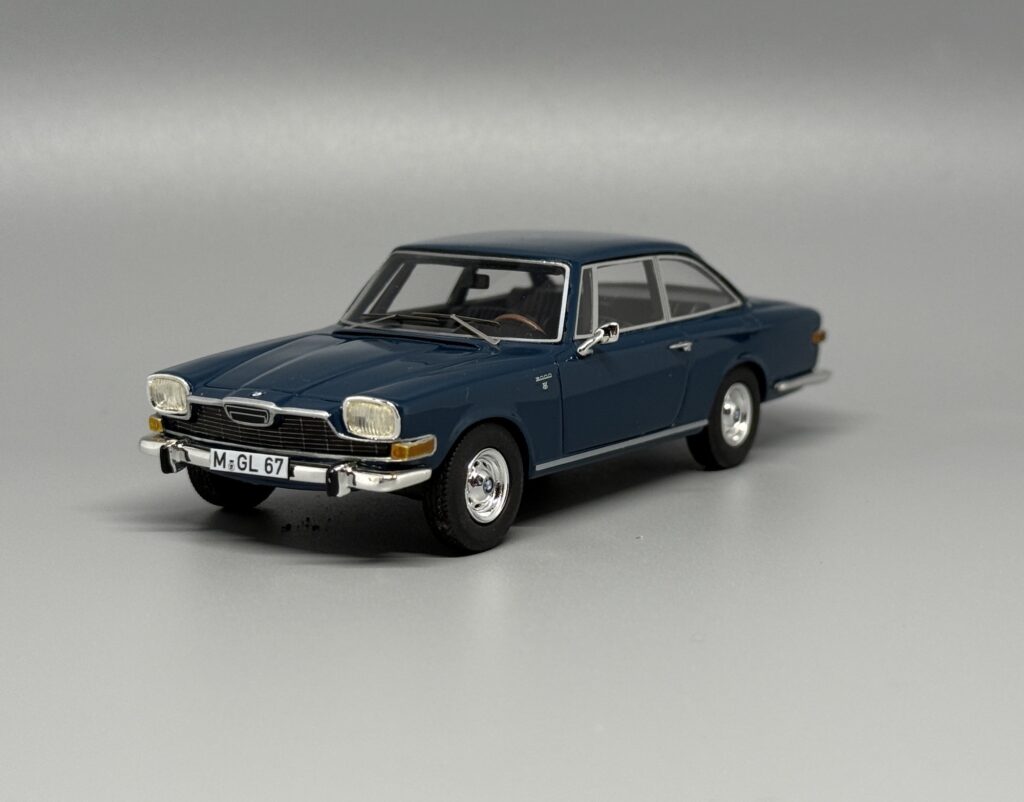
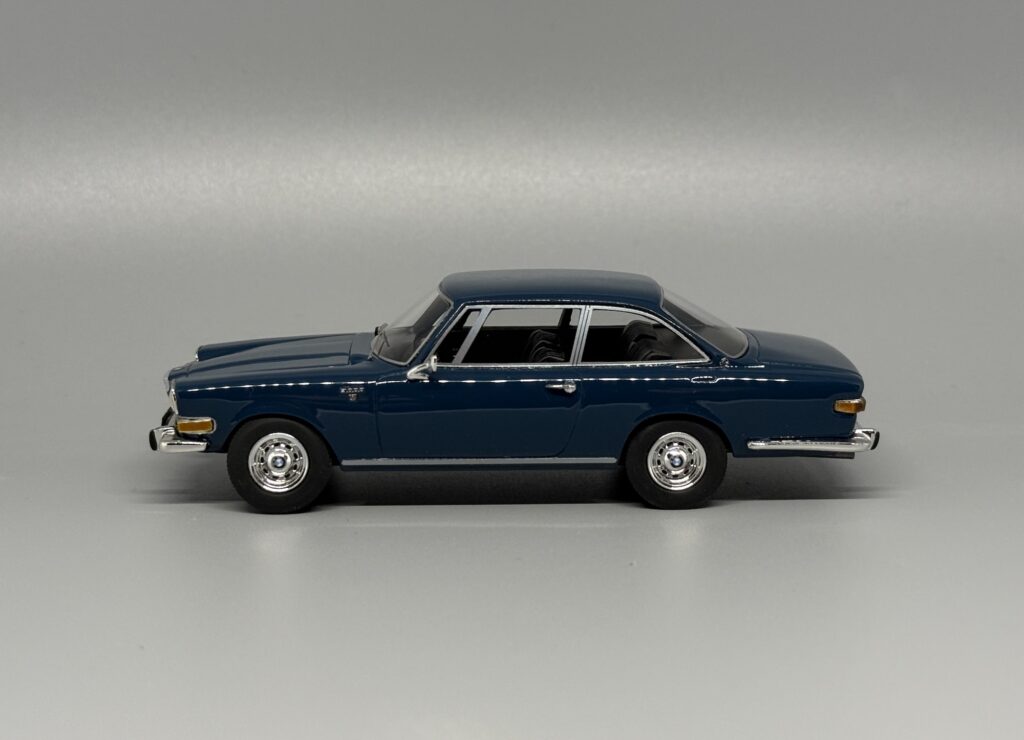
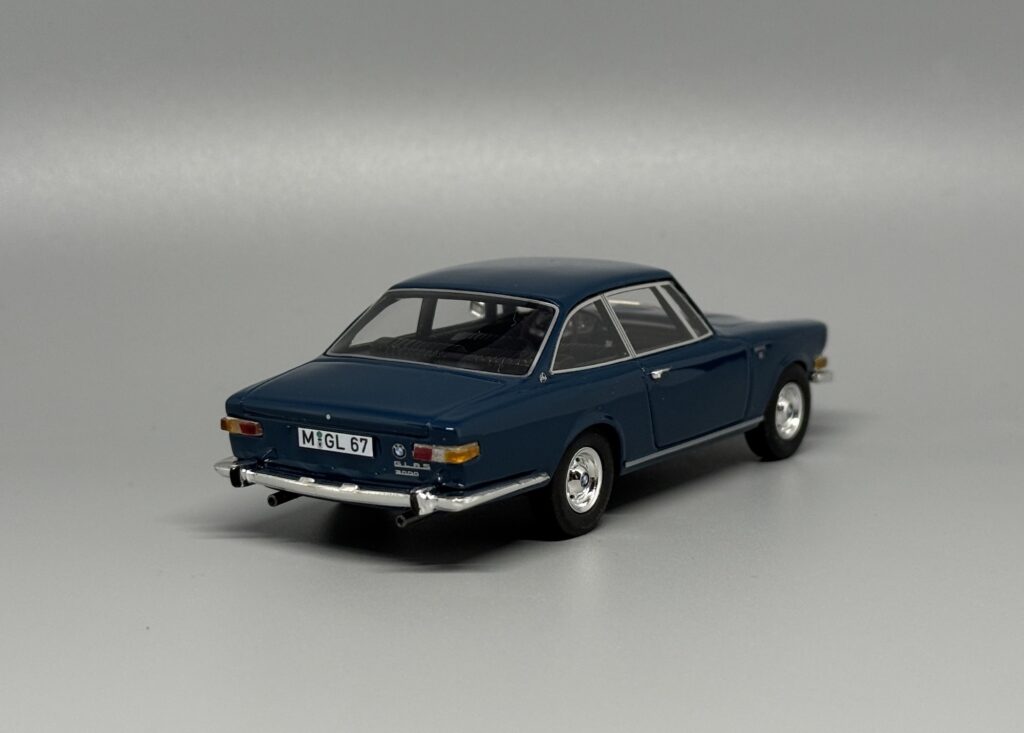
The model in my collection was produced in the Schuco Pro.R43 series and represents a blue BMW-Glas 3000 V8 coupé. Schuco produced the model in a limited edition of 500 examples.
Technical data in brief
Production period: September 1967 – May 1968
Production location: Dingolfing, Germany
Designer: Pietro Frua
Body style: two-door four-seat coupé
Engine: V8
Displacement: 2,982 cm³
Power: 160 hp / 118 kW
Torque: approximately 236 Nm
Transmission: 4-speed manual
Drivetrain: rear-wheel drive
Rear suspension: De Dion axle with Boge Hydromat self-levelling system
Brakes: disc brakes on all four wheels
Length: 4,600 mm
Width: 1,750 mm
Height: 1,380 mm
Wheelbase: 2,500 mm
Weight: approximately 1,350 kg
0–100 km/h: approximately 10 seconds
Top speed: approximately 200 km/h
Production: 418 cars
Special feature: Pietro Frua-designed development of the Glas V8, produced under BMW ownership and sold as the BMW-Glas 3000 V8
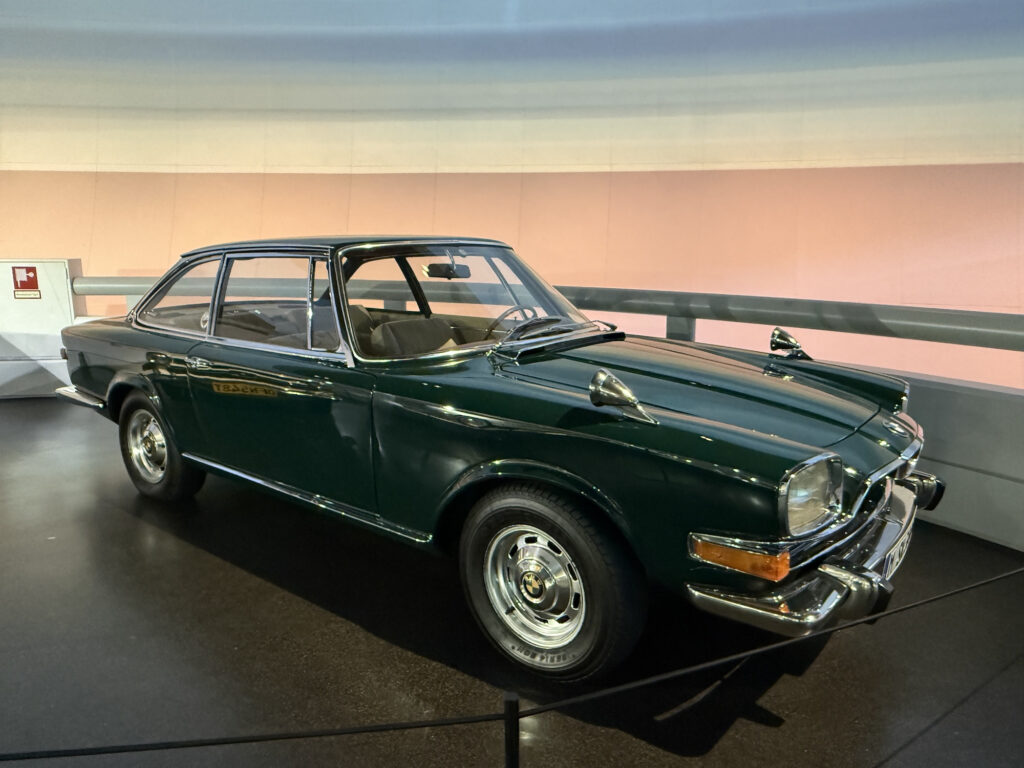
Photo of the real car, BMW Museum. Photo: Sten-Patrick Kreek