
Background
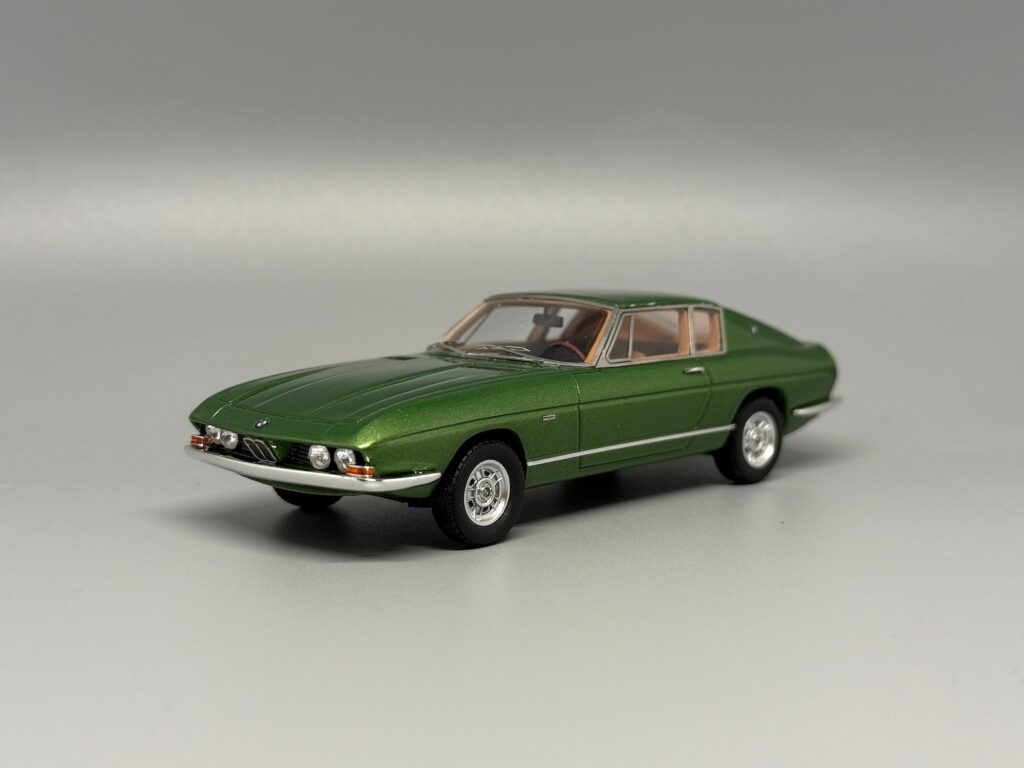
BMW 2800 GTS Coupé Frua was one of the most elegant and rare special-bodied cars created on the technical basis of the BMW E9. The car was completed in 1969 as an independent project by Italian designer and coachbuilder Pietro Frua, at a time when Frua was trying to continue his relationship with BMW after the takeover of Hans Glas GmbH. He chose the BMW 2800 CS as the technical foundation, but instead of merely modifying the existing coupé in detail, Frua created an entirely new 2+2 Gran Turismo body. The result was a low, long and elegant coupé that differed almost completely from BMW’s own E9.
Pietro Frua and BMW
Pietro Frua had already been connected with BMW indirectly through Glas, as he had designed both the Glas GT and the Glas V8. After BMW acquired Glas, Frua hoped to continue working with the new owner and therefore created several show cars and special-bodied models based on BMW mechanical components. These included the BMW 2000 TI Coupé, the BMW 2002 GT4 and later several larger BMW-based coupés. The BMW 2800 GTS belonged to this series of projects and carried Frua project number 350/2.
Frua’s attempt to attract BMW’s attention
According to BMW’s own historical account, the 2800 GTS was one of Frua’s independently created design studies intended to persuade BMW to continue working with him. The BMW 2800 CS provided a suitable technical basis, but Frua gave the car an entirely new appearance. BMW describes the 2800 GTS as a kind of “audition on wheels”, through which Frua demonstrated his design language and capabilities to the company.
BMW 2800 CS technical basis
The BMW 2800 GTS was based on the BMW 2800 CS (E9). Frua retained the basic mechanical layout, engine and drivetrain, but replaced the standard BMW body completely with his own design. The car used a 2,788 cm³ six-cylinder in-line engine producing 170 hp or 125 kW. According to BMW Museum information, the car had a top speed of 200 km/h. Power was transmitted to the rear wheels, so mechanically the car remained clearly rooted in the BMW 2800 CS.
An entirely new Gran Turismo body
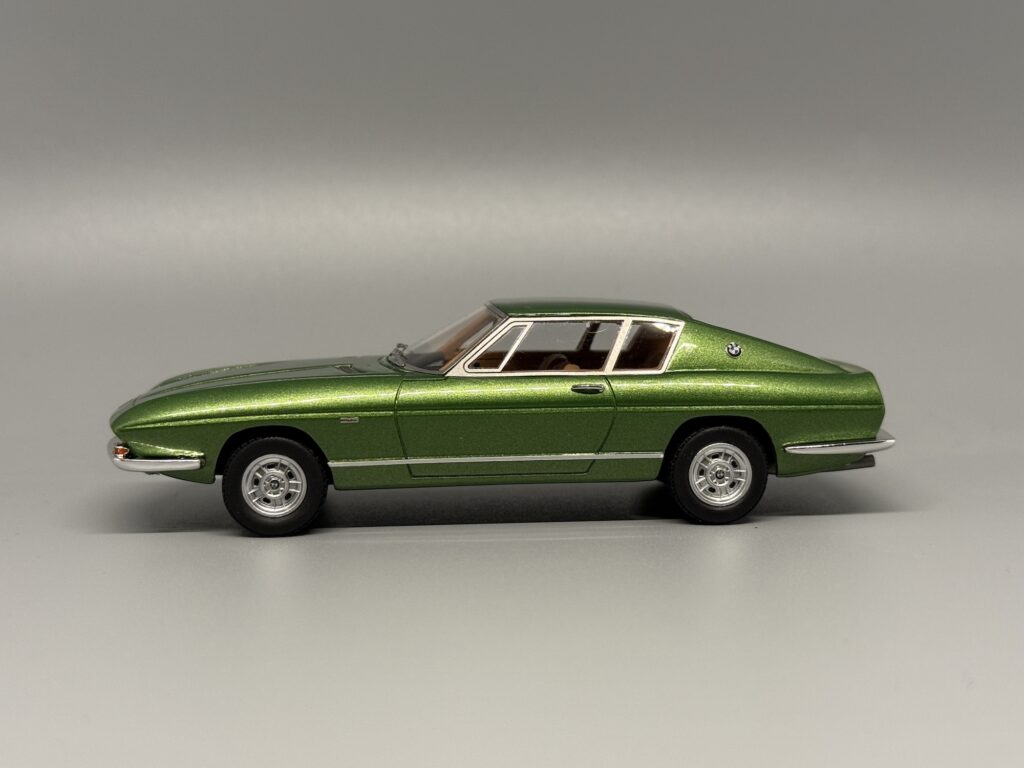
Frua’s body was considerably lower than the standard E9 and appeared visually longer. The front end had a forward-sloping shape, while the BMW kidney grille was positioned low and at a pronounced angle. The side profile was dominated by a long, clean line and a low roof arc, giving the car classic Italian Gran Turismo proportions. Frua did not attempt to create a conventional evolution of an existing BMW, but instead built an entirely new visual identity around BMW mechanical components.
The “evil eye”
BMW highlights one of the 2800 GTS’s most distinctive design features as the so-called “evil eye”, or “Böser Blick” in German. The projecting edge of the bonnet partially covers the upper sections of the headlamps, creating the visual impression of lowered eyebrows. This gives the front of the car a considerably more aggressive expression than the standard BMW 2800 CS and is one of the most recognisable elements of Frua’s design.
Connection with Frua’s earlier projects
The BMW 2800 GTS did not emerge entirely in isolation. Frua had already used a similar design language on several Gran Turismo projects, and a number of related styling ideas can also be seen on the BMW 2000 TI Coupé. The 2800 GTS transferred this approach to the larger six-cylinder BMW E9 platform. As a result, Frua’s BMW-based coupés from this period form a clearly recognisable family of designs.
1969 debut
The BMW 2800 GTS was first presented at the 1969 Frankfurt Motor Show. It was also shown in Paris later that year and appeared at the Geneva and Barcelona motor shows in 1970. Frua’s aim was to attract BMW’s interest in his alternative coupé concept and to demonstrate what a BMW Gran Turismo could look like when interpreted through Italian design.
Why did it not reach series production?
According to BMW’s own historical account, the 2800 GTS did not generate sufficient enthusiasm within the company. BMW preferred to continue developing its own large coupé, and the E9 family later became one of the marque’s best-known coupé lines, particularly in the form of the BMW 3.0 CSi. Frua’s alternative Gran Turismo therefore remained a one-off and never became a BMW production model.
A one-off
Only one BMW 2800 GTS Coupé Frua was built. Frua later created other BMW-based cars using a similar design language and different technical platforms, which is why several visually related Frua BMWs appear in historical sources. The 1969 BMW 2800 GTS, however, was the unique E9-based example.
Show car sold to Spain
After its period as a show car, the BMW 2800 GTS was sold to a private owner in Spain in 1971. Over the following decades, the car changed hands and was modified both visually and mechanically. Its original light metallic green paint was replaced by dark red, an opening sunroof was added, and the original 2.8-litre engine was later replaced by a BMW 3.0 CSi power unit.
Return to BMW
In 2000, the car was acquired by BMW Mobile Tradition, BMW’s historic vehicle division. A comprehensive restoration was carried out between 2017 and 2019 with the aim of returning the car as closely as possible to its 1969 presentation condition. The later sunroof was removed, the 3.0 CSi engine was replaced by the correct 2.8-litre six-cylinder unit, and the interior was restored to a configuration close to its original specification.
Restoring the original colour
One of the most interesting challenges during the restoration was identifying the original paint colour. Almost all traces of the first finish had disappeared beneath later paint layers, but a small area of the original light metallic green was discovered near the fuel-filler flap hinge. This surviving sample was used to recreate the original colour. Today, the BMW 2800 GTS once again appears much as Pietro Frua intended it to look when it was presented in 1969.
Historical significance
The BMW 2800 GTS Frua was not a direct prototype for a future BMW production model, but an independent Italian designer’s interpretation of what an exclusive Gran Turismo based on BMW engineering could be. The car is particularly interesting when compared with BMW’s own E9: both shared the same technical foundation, but their design philosophies were entirely different. Frua’s one-off illustrates a period when independent Italian designers could use the mechanical basis of an established production car to create a vehicle with a completely new identity and appearance.
Model in the collection
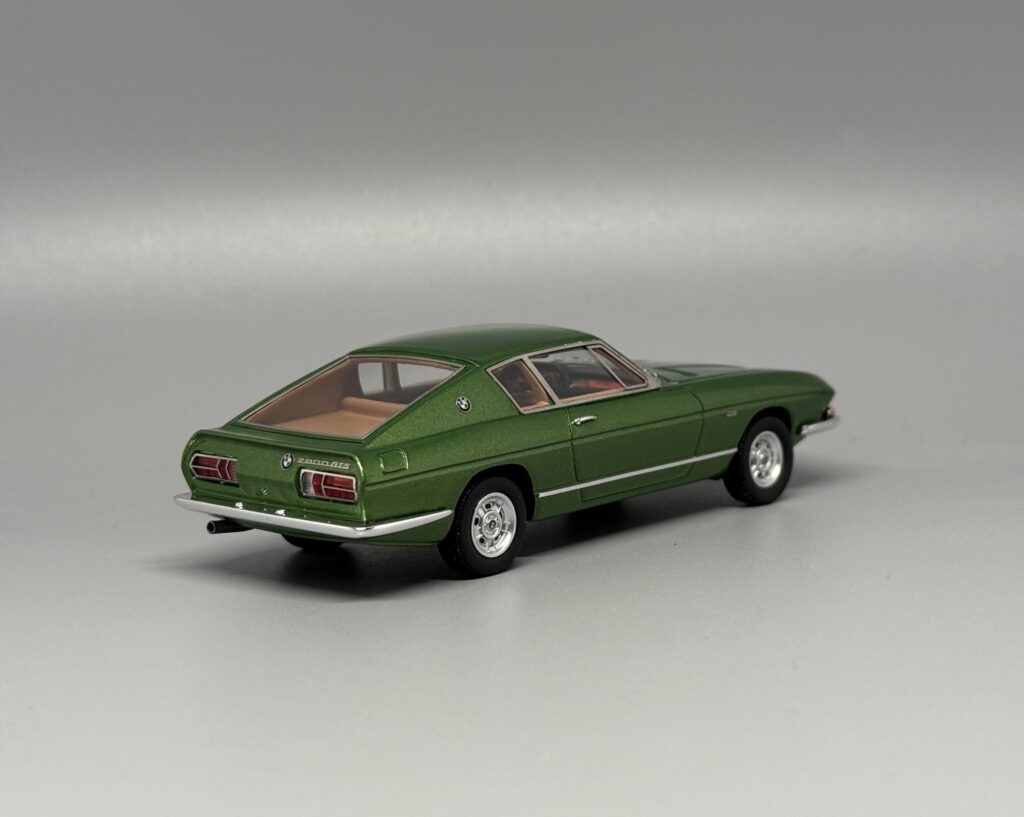
The model in my collection was produced by Avenue 43 and represents the 1969 BMW 2800 GTS Coupé Frua. The model was produced in a limited edition of 333 examples.
Technical data in brief
Year: 1969
Designer and coachbuilder: Pietro Frua
Frua project number: 350/2
Construction location: Turin, Italy
Technical basis: BMW 2800 CS (E9)
Body style: two-door 2+2 Gran Turismo coupé
Engine: six-cylinder in-line engine
Displacement: 2,788 cm³
Power: 170 hp / 125 kW
Transmission: manual
Drivetrain: rear-wheel drive
Top speed: 200 km/h
Public debut: Frankfurt Motor Show 1969
Production: 1 car
Special feature: unique Gran Turismo body created by Pietro Frua on the technical basis of the BMW 2800 CS
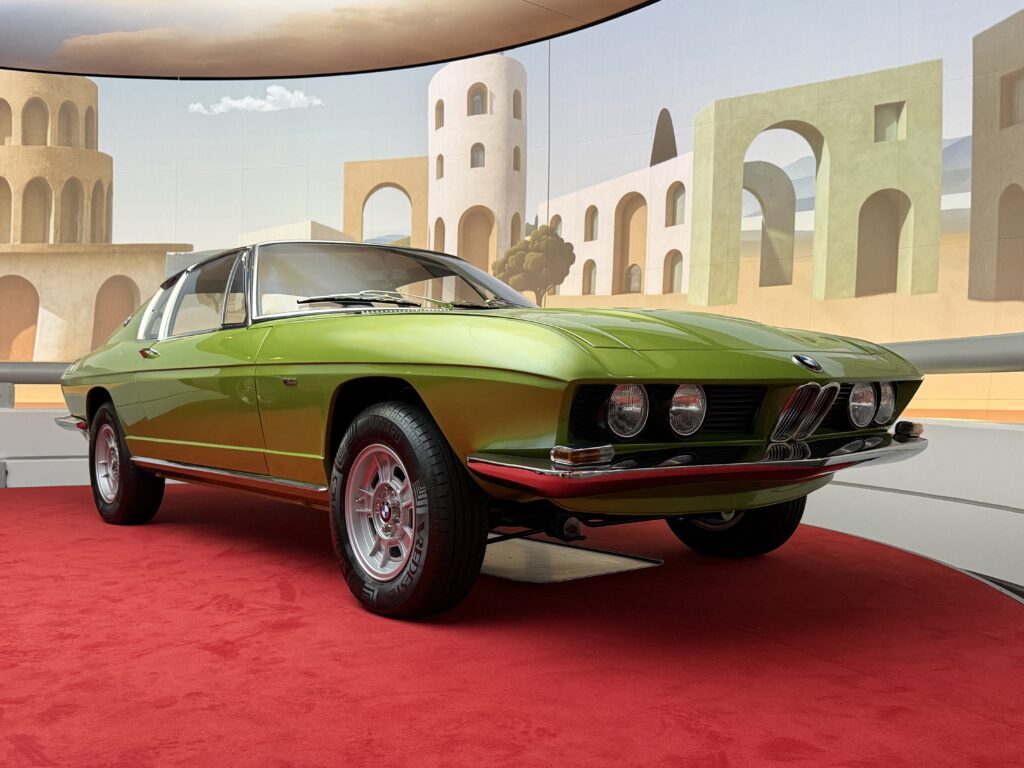
Photo of the real car, BMW Museum. Photo: Sten-Patrick Kreek