Background
BMW 528 GT Coupé Frua was one of the last and most mature BMW-based special projects created by Pietro Frua. Developed during 1976–1977 on the technical basis of the first-generation BMW 5 Series, the E12, it represented another attempt by Frua to offer BMW an alternative vision of an elegant Gran Turismo coupé. Its low fastback body, long bonnet and clean Italian proportions transformed the appearance of the E12 almost completely. Only one example was built.
Pietro Frua’s long attempt to continue working with BMW
After BMW took over Hans Glas GmbH, Pietro Frua spent several years trying to continue his relationship with the Munich company. To demonstrate his ideas, he created a series of special-bodied and experimental cars using BMW mechanical components, including the BMW 2000 TI Coupé, BMW 2800 GTS and BMW 2002 GT4. The 528 GT was one of the last major projects in this line and showed that Frua had not given up hope of securing a production-related design commission from BMW.
BMW was initially opposed to the project
The history of the 528 GT is particularly interesting because BMW management was initially cautious about Frua’s proposal. According to BMW board minutes from 3 February 1976, Frua intended to build a coupé on the E12 platform and present it at the Geneva Motor Show, but BMW objected on the grounds of its existing model policy. A few weeks later, however, a compromise was reached: Frua was allowed to build one prototype, after which BMW would decide whether the project justified further support. The 528 GT was therefore not a conventional official BMW factory project, but its development took place with BMW’s knowledge and limited approval.
BMW 520i technical basis
According to information based on BMW board documentation, the prototype was originally built on the technical basis of a BMW 520i E12. This is an important detail, because the later 528 GT name can easily suggest that the car was based on a BMW 528 from the beginning. In reality, the same car and basic structure were retained throughout the project while its powertrain was developed further.
The first version in 1976
In its original configuration, the car used a BMW M10 four-cylinder engine. Since BMW was not prepared to supply every component Frua required for the project, parts from other manufacturers were also used. The front indicators came from the Alfa Romeo 1750 GT, while the rear lights were sourced from the Maserati Bora. The use of existing production-car components from different manufacturers was quite typical for one-off cars created by independent Italian coachbuilders.
An Italian Gran Turismo with a BMW face
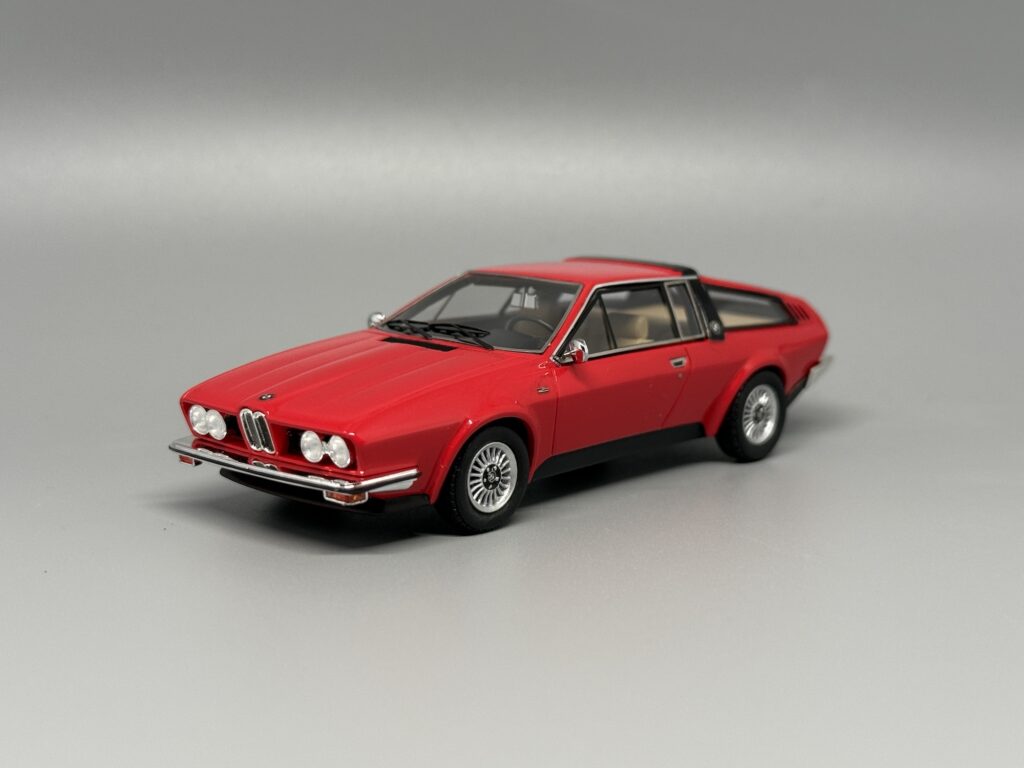
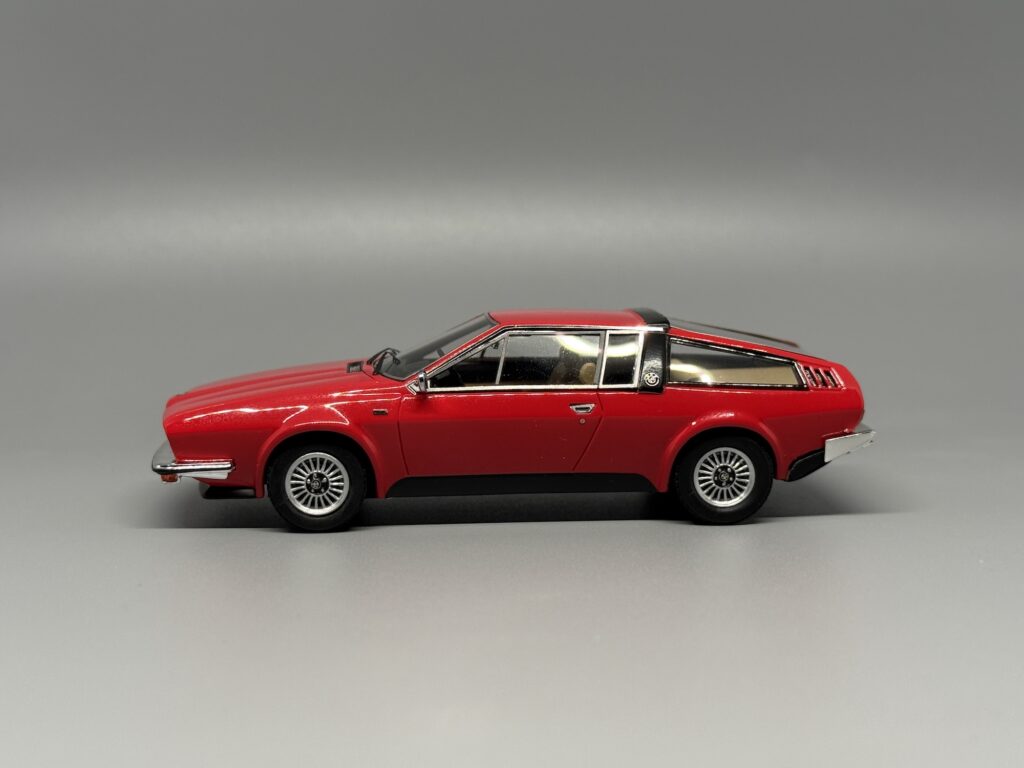
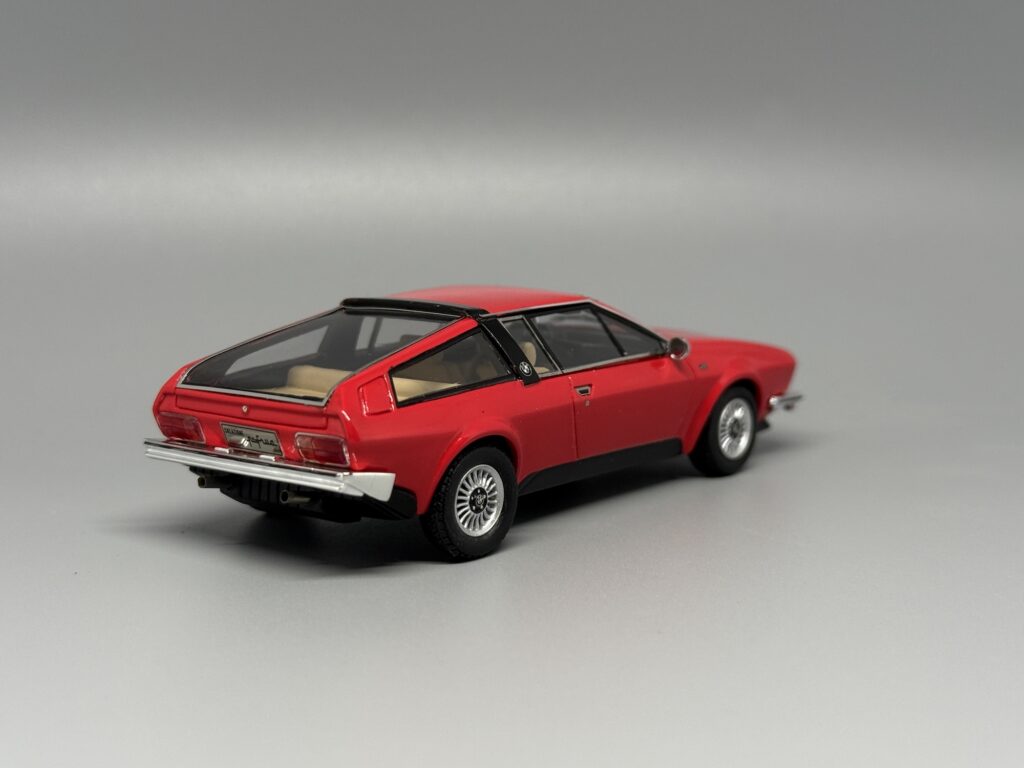
Despite the entirely new body, Frua retained several elements that clearly identified the car as a BMW. The front featured four round headlamps, narrow BMW kidney grilles and a forward-sloping bonnet that gave the car the characteristic BMW “shark nose” appearance of the period. The rest of the body, however, was unmistakably Italian Gran Turismo in character: low, long and finished with a smoothly descending fastback rear. The interior was arranged as a 2+2 and trimmed in luxurious beige leather and velour.
Distinctive Frua details
The car featured several small details that emphasised its hand-built origin. A small metal plaque carrying the word “CREAZIONE” and Pietro Frua’s signature was fitted to the left front spoiler. BMW badges were also placed on the B-pillars, while louvre-like air outlets appeared behind the rear side windows. The car was fitted with 14-inch ALPINA 20-spoke wheels, strengthening its visual connection with BMW.
Public debut in Turin
Frua had originally hoped to show the car at the 1976 Geneva Motor Show, but BMW’s initial opposition and the late approval of the project made this impossible. The completed car made its public debut at the Turin Motor Show in November 1976. BMW representatives, including members of the company’s development and design management, attended the presentation. This indicates that BMW followed the project closely even though it was not prepared to adopt the car as a production model.
1977 – six-cylinder engine
In 1977, Frua continued developing the same one-off and replaced the four-cylinder engine with a BMW M30 fuel-injected six-cylinder engine. It was from this later stage that the designation 528 GT became established. Some sources simplify the story by describing the car as a coupé based directly on the BMW 528 and therefore associate it with the 2.8-litre production engine producing 165 hp. The project’s earlier history shows, however, that the same car passed through at least two different engine configurations. The most accurate description is therefore to distinguish between the 1976 and 1977 stages of development.
Why did it not reach production?
By 1976, Frua’s proposal had arrived relatively late in terms of BMW’s model strategy. The new BMW 6 Series E24 coupé was introduced that same year, while BMW was also working on its next generation of luxury models and the BMW M1 project. There was little room in the model range for a separate Frua-designed 5 Series coupé. BMW therefore continued with its own design team and coupé programme, leaving the 528 GT as one of Frua’s last major attempts to establish a lasting relationship with the company.
Later motor-show appearances
The 528 GT was shown again at the 1978 Geneva and Turin motor shows and also appeared at the Concours d’Élégance in Nice. Its show career was therefore considerably longer than that of many other Frua one-offs. By this stage, the car had already received the six-cylinder engine and represented the more fully developed form of the project.
BMW ownership and later sale to Mexico
After its period as a show car, the 528 GT was owned for a time by BMW AG. In March 1979, BMW decided to sell the car to a buyer in Mexico. Sales documentation even referred to it as “BMW Type 52028 Alpina”, reflecting the car’s unusual and complicated technical development. The car was modified again in later years, including changes to the interior trim and seats, but the unique vehicle has survived.
Historical significance
The BMW 528 GT Frua represents the end of an era. During the 1950s and 1960s, it had been relatively common for independent Italian coachbuilders to create one-off bodies on chassis supplied by major manufacturers and use them to seek production contracts. By the mid-1970s, that world was rapidly disappearing as large manufacturers increasingly relied on their own in-house design centres. Frua’s 528 GT was one of the last significant examples of this tradition and one of his final major BMW-based projects.
Model in the collection
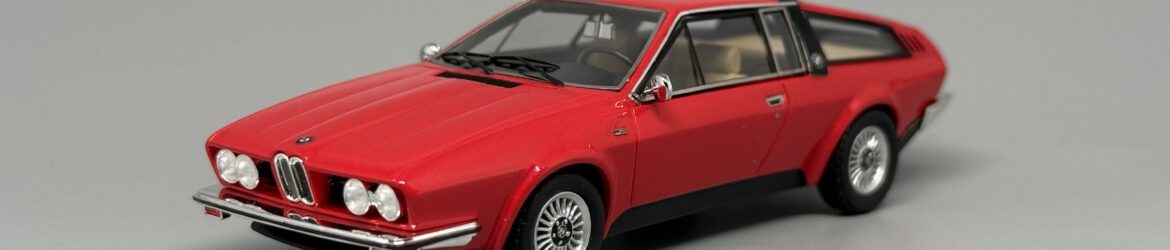
The model in my collection was produced by Avenue 43 and represents the red 1976 BMW 528 GT Coupé Frua. The model was produced in a limited edition of 333 examples.
Technical data in brief
Project period: 1976–1977
Designer and coachbuilder: Pietro Frua
Construction location: Turin, Italy
Technical basis: BMW 5 Series E12, originally BMW 520i
Body style: two-door 2+2 fastback coupé
Original engine in 1976: BMW M10 four-cylinder
Later engine in 1977: BMW M30 fuel-injected six-cylinder
Displacement of the production BMW 528 engine: 2,788 cm³
Power of the production BMW 528 engine: 165 hp / 121 kW
Drivetrain: rear-wheel drive
Wheels: 14-inch ALPINA 20-spoke wheels
Public debut: Turin Motor Show, November 1976
Later appearances: Geneva and Turin 1978, Concours d’Élégance in Nice
Production: 1 car
Special feature: unique Pietro Frua project that began as a BMW 520i-based four-cylinder prototype and was later developed into the six-cylinder BMW 528 GT
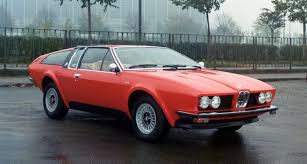
Photo of the real car. Source: classicdriver.com