Background
BMW 2800 (E3) belonged to BMW’s new generation of large six-cylinder saloons, now commonly known as the New Six. BMW introduced the 2500 and 2800 in the autumn of 1968, with the 2800 entering production in 1969. It was the more powerful and better-equipped sister model to the BMW 2500 and marked BMW’s return, after a long absence, to the market for large luxury saloons with six-cylinder engines. The E3 combined a prestigious four-door body with the increasingly characteristic BMW emphasis on sporting handling and helped shape the company’s later reputation as a manufacturer of sporting luxury saloons.
BMW’s return to the large-saloon class
During the early 1960s, the Neue Klasse had been the foundation of BMW’s success, but the company still lacked a larger six-cylinder executive saloon. The BMW 2500 and 2800 changed that. They were larger, more powerful and more luxurious than the Neue Klasse models, while retaining BMW’s driver-focused character. For BMW, the E3 represented a major step into a higher market segment and laid the foundations for the large-saloon tradition that continued with the BMW 7 Series from 1977 onwards.
The more powerful companion to the BMW 2500
The BMW 2800 joined the 2500 as the second version of the E3 family. Although the two cars shared very similar bodies and basic mechanical layouts, the 2800 offered a larger engine and a more generous level of standard equipment. BMW highlights features such as Nivomat self-levelling rear suspension, a limited-slip differential and a heated rear window, which underlined the 2800’s more luxurious position within the range.
A new six-cylinder engine
The BMW 2800 used a 2,788 cm³ six-cylinder in-line engine from what later became the famous BMW M30 engine family. Its basic engineering was related to the Neue Klasse M10 four-cylinder engine, but the larger six-cylinder unit brought BMW a new level of performance and refinement. The engine produced 170 hp or 125 kW at 6,000 rpm.
The character of BMW’s six-cylinder engine
One of the most important qualities of the M30 engine was its exceptionally smooth operation. The crankshaft was supported by seven main bearings, and the engine was installed at a 30-degree angle. BMW also developed a distinctive combustion-chamber design that improved mixture combustion and helped combine strong performance with relatively modest fuel consumption. Engines of this type helped establish BMW’s reputation for particularly smooth six-cylinder power units.
A 200 km/h saloon
One of the most striking figures associated with the BMW 2800 was its 200 km/h top speed. In the late 1960s, this placed a large four-door saloon close to sports-car territory in terms of outright performance. BMW itself has emphasised that the 170 hp 2.8-litre engine allowed the 2800 to enter the then rather exclusive class of 200 km/h automobiles.
A driver-focused luxury saloon
The BMW 2800 was not designed merely as a comfortable executive car. Rear-wheel drive, independent suspension and BMW’s characteristically driver-oriented ergonomics gave the large saloon a distinctly sporting personality. The combination of a spacious and well-finished interior, a strong six-cylinder engine and good handling became one of the defining characteristics of BMW’s larger saloons over the following decades.
Equipment and comfort
The BMW 2800 also differed from the 2500 through its richer equipment. The Nivomat system helped maintain the correct rear ride height regardless of load, the limited-slip differential improved traction, and a heated rear window was still a notable comfort feature in the late 1960s. The car could also be ordered with an automatic transmission and additional luxury equipment, helping BMW compete more directly with Germany’s traditional executive-car manufacturers.
The arrival of the 3.0-litre models
In 1971, BMW expanded the E3 range with the new 3.0 S and 3.0 Si models. These used larger and more powerful six-cylinder engines and moved above the 2800 in the model hierarchy. This did not, however, mean the immediate end of 2800 production. BMW Group Classic lists the production period of the model as continuing until 1974, with some market-specific versions lasting even longer.
E3 and the BMW 7 Series
The historical importance of the E3 family extends far beyond its own production period. The 2500, 2800 and later 3.0- and 3.3-litre versions established BMW’s concept of a large sporting luxury saloon. When E3 production ended in 1977, its role was taken over by the first-generation BMW 7 Series. The E3 family can therefore be regarded as the direct predecessor of the 7 Series.
Historical significance
The BMW 2800 was an important model in the development of the E3 family because it clearly demonstrated BMW’s future direction as early as the late 1960s. It was a large and comfortable luxury saloon, but its 170 hp six-cylinder engine, 200 km/h top speed and sporting handling set it apart from many more traditional competitors. This combination of luxury and performance later became one of the most characteristic qualities of BMW’s larger saloons.
Model in the collection
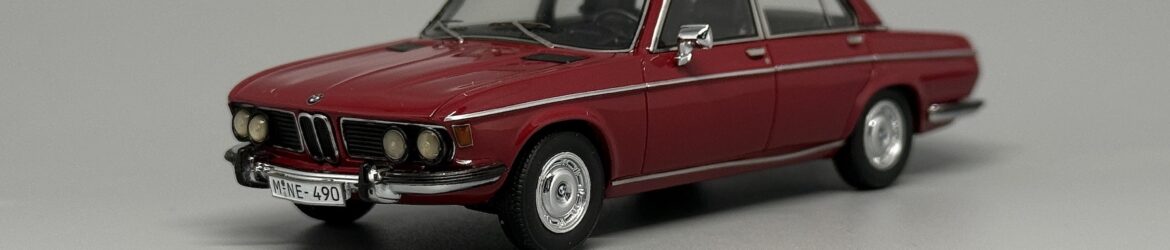
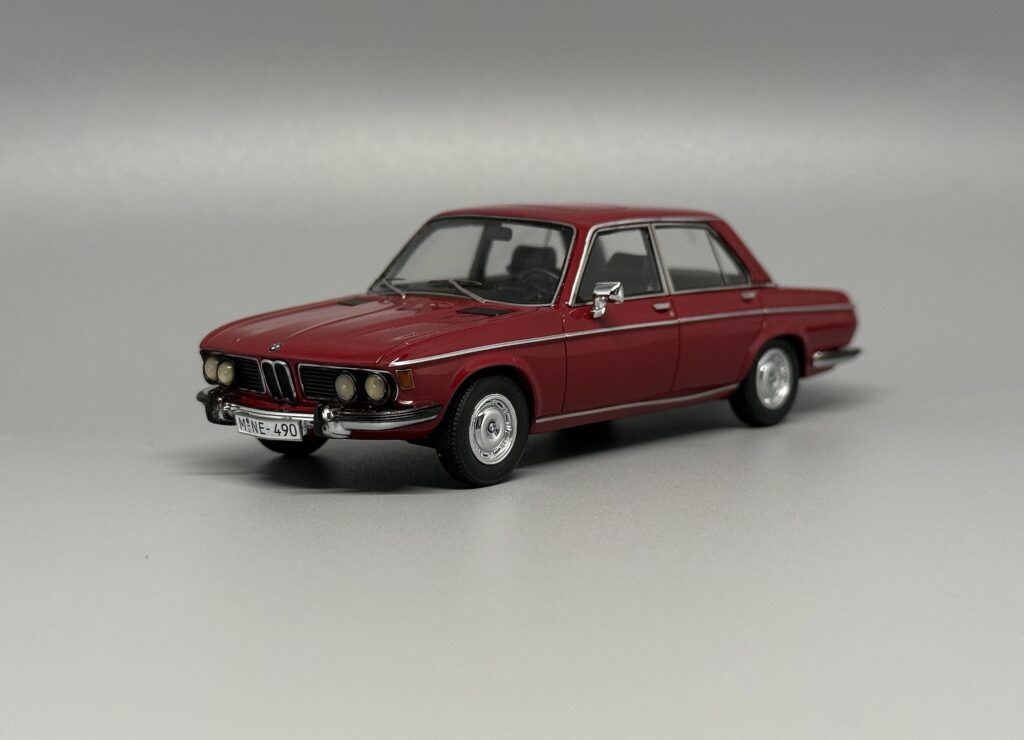
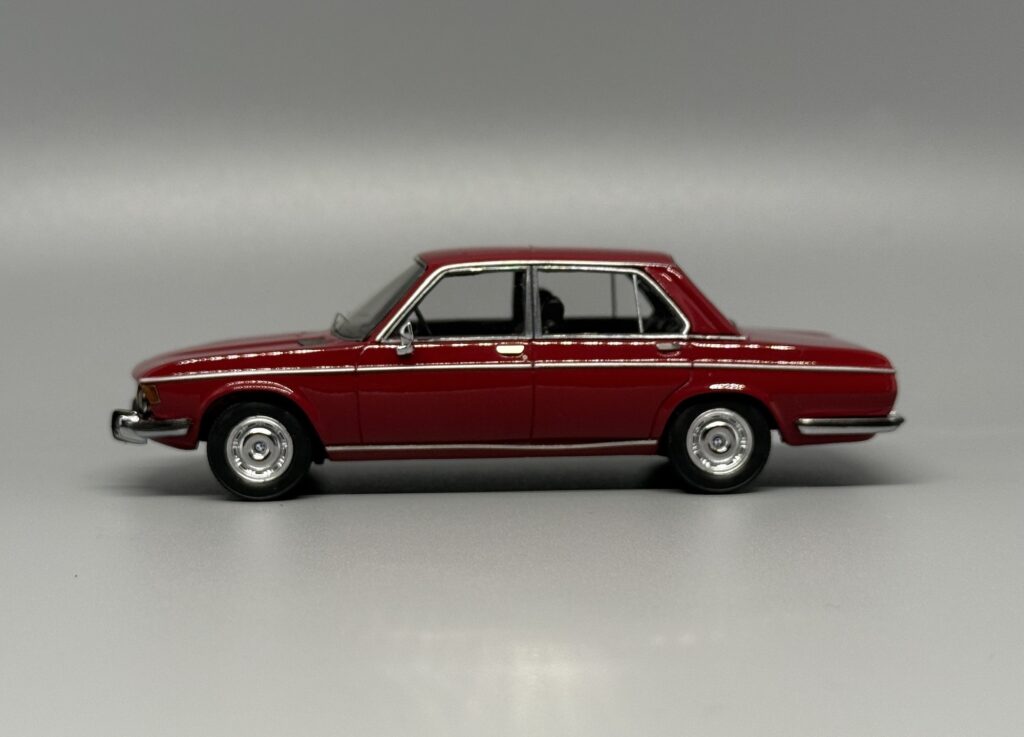
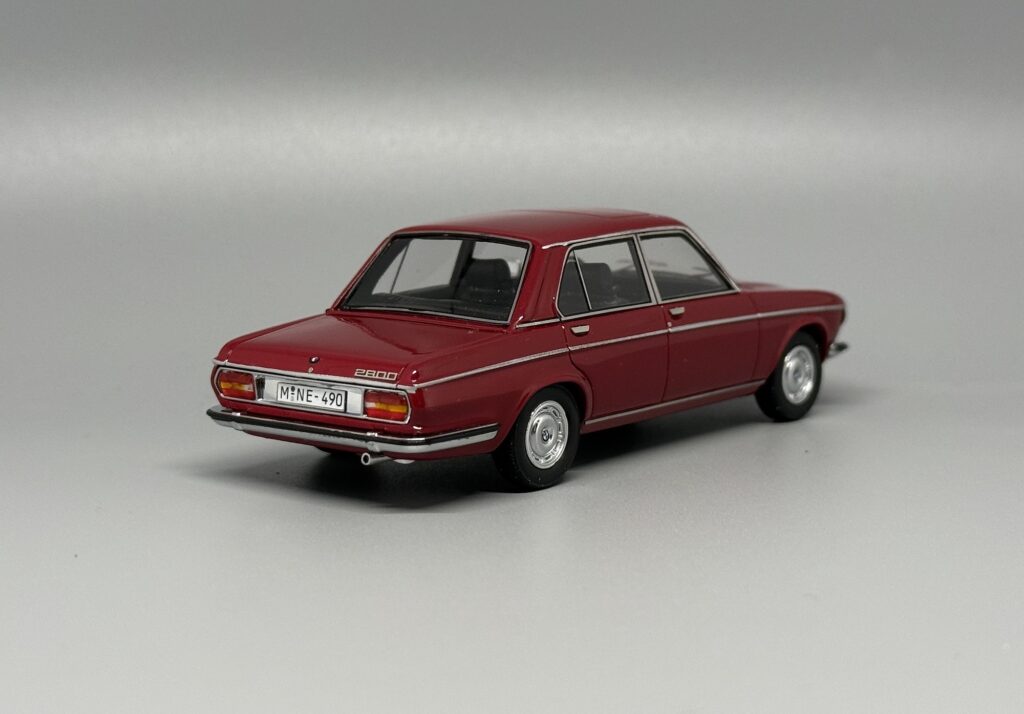
The model in my collection was produced by Neo Scale Models and represents the BMW 2800 (E3) saloon.
Technical data in brief
Public debut: 1968
Production period: 1969–1974
Production location: Germany
Body style: four-door luxury saloon
Engine: six-cylinder in-line engine
Displacement: 2,788 cm³
Power: 170 hp / 125 kW @ 6,000 rpm
Transmission: 4-speed manual, automatic transmission also available
Drivetrain: rear-wheel drive
Top speed: 200 km/h
Price when new: 17,250 Deutsche Mark
Production: BMW Group Classic does not list a separate total production figure for the model
Special feature: more powerful and better-equipped E3 version than the BMW 2500 and one of the foundations of BMW’s later large sporting luxury saloon tradition
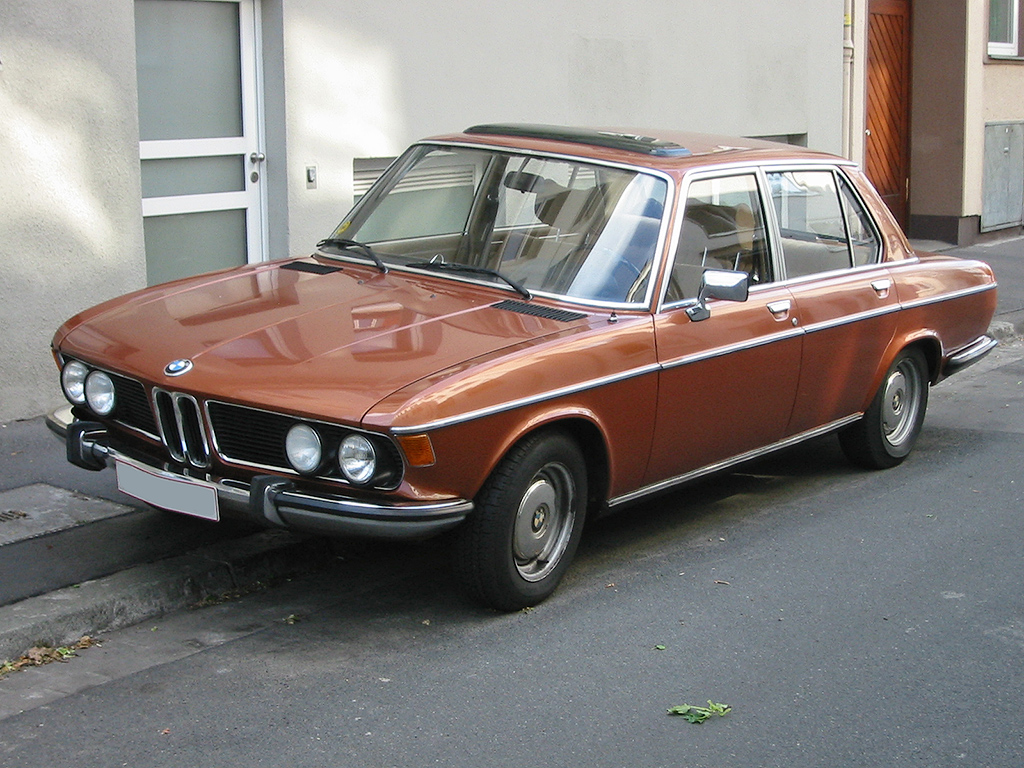
Photo of the real car. Source: Wikipedia