
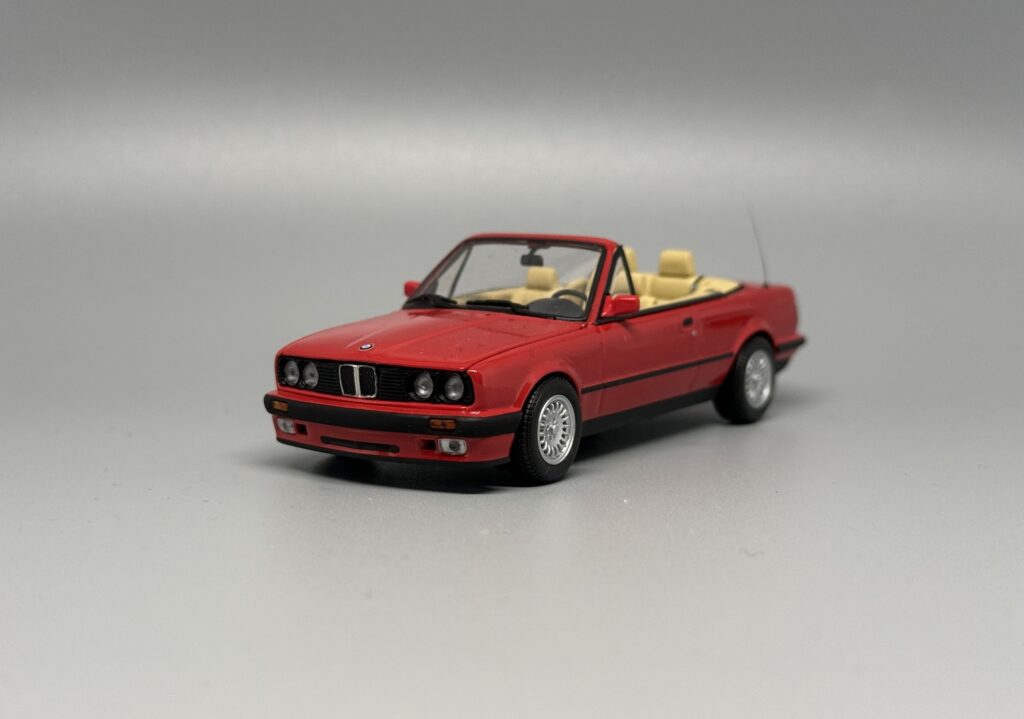
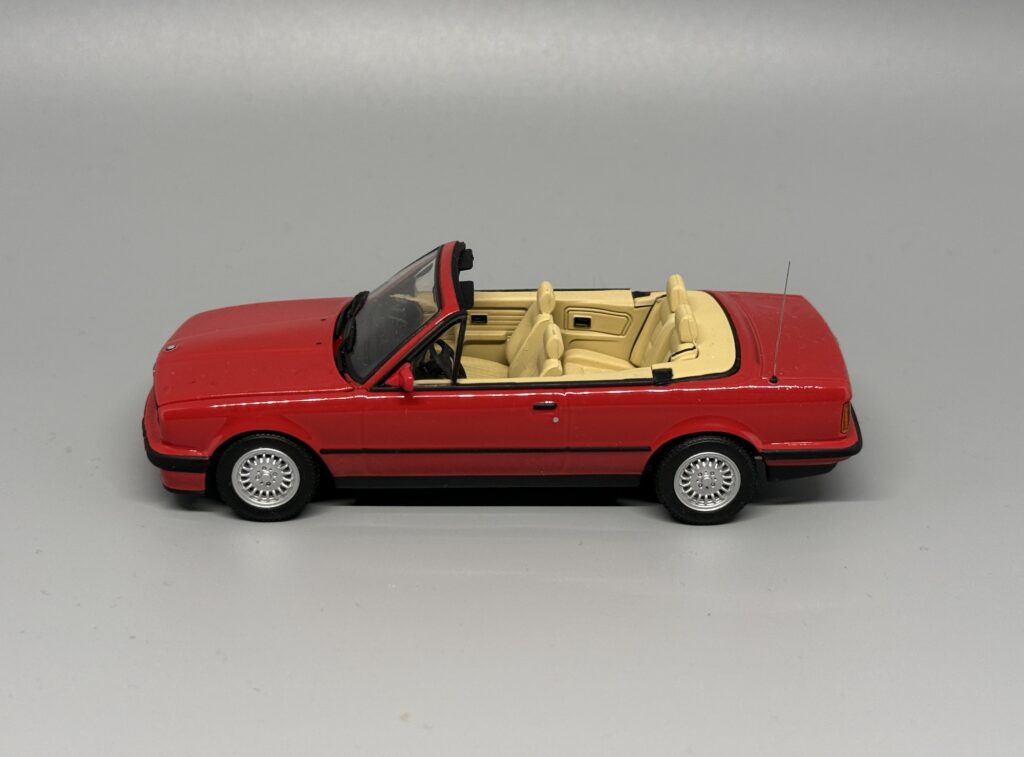
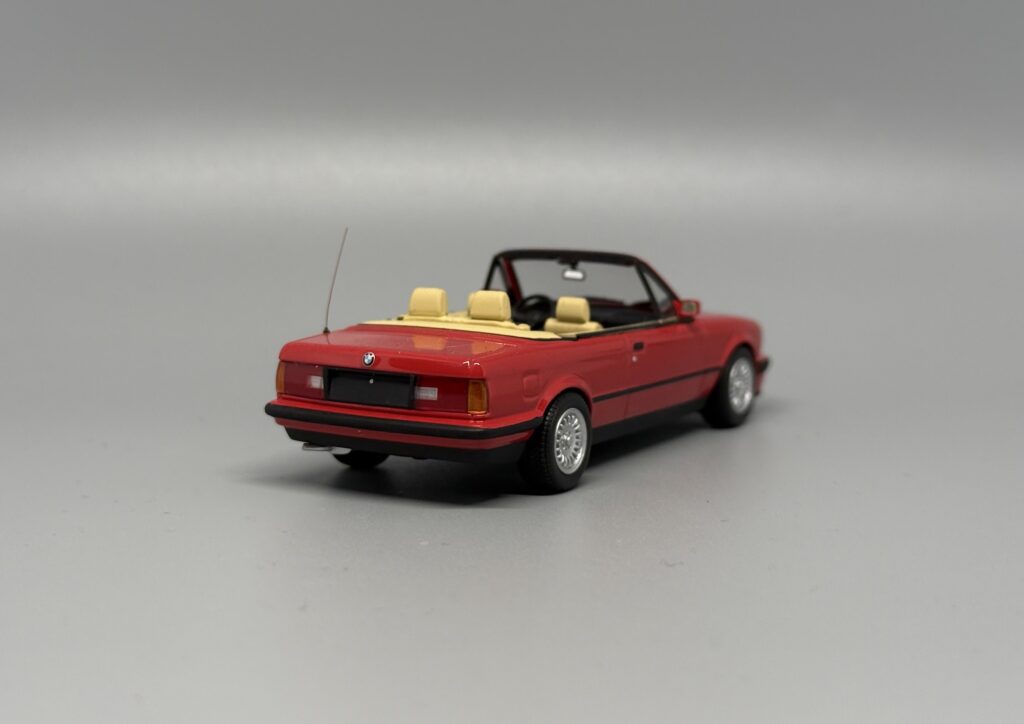
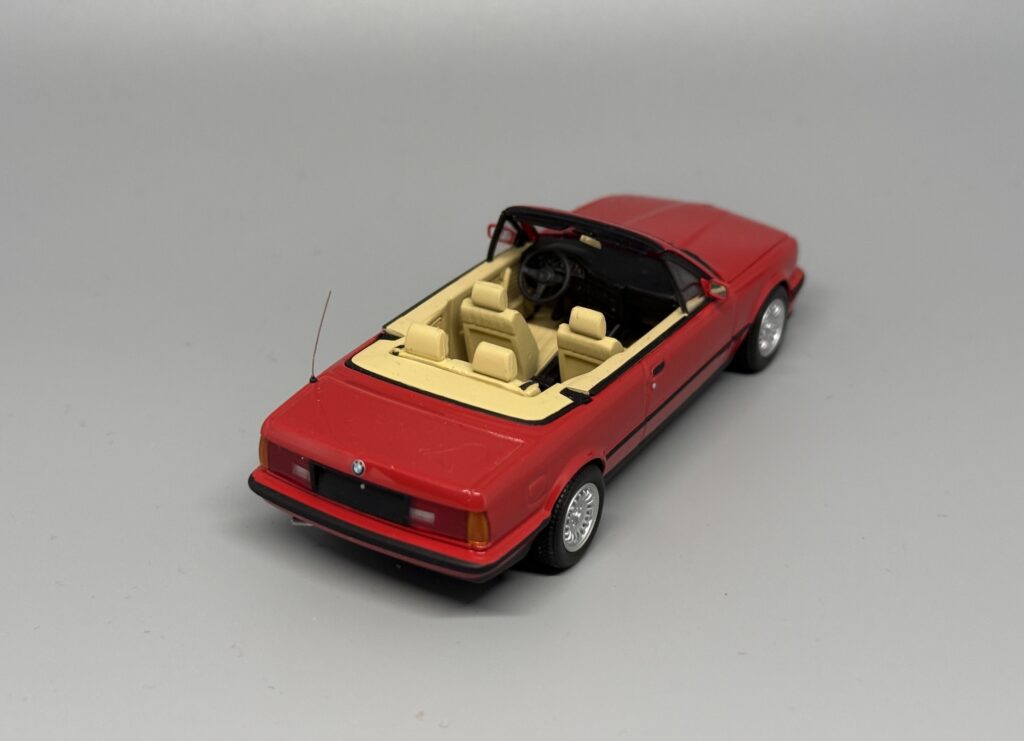
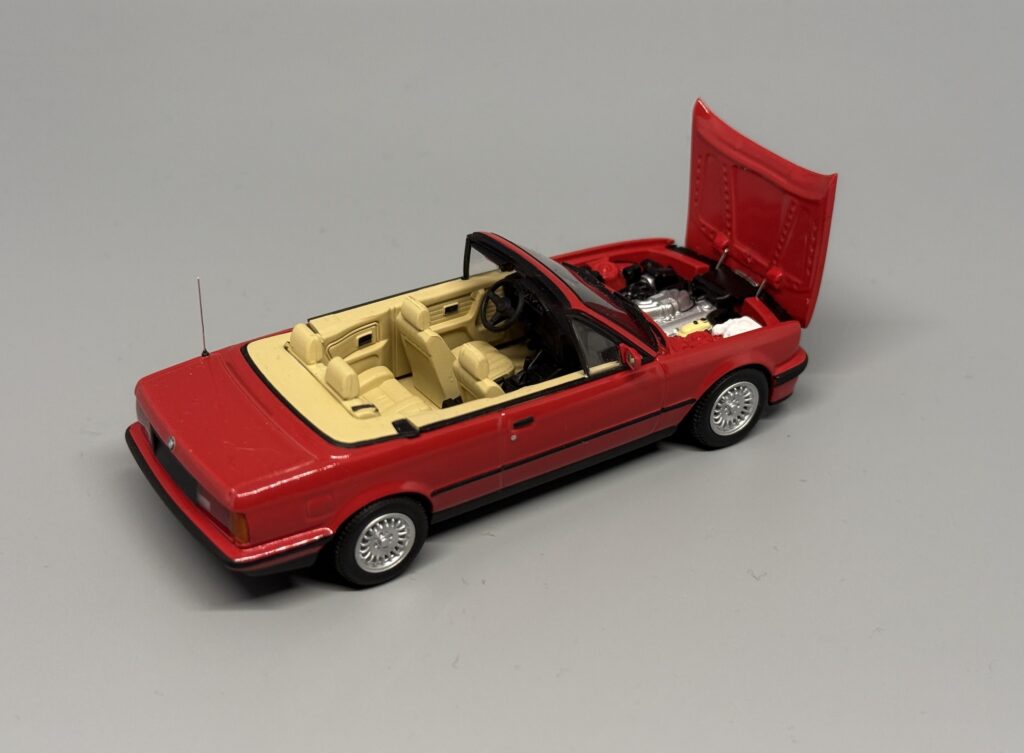
BMW 320i Convertible (E30) was one of the most elegant and distinctive versions of the second-generation 3 Series. BMW presented its own full convertible based on the E30 in 1985, with series production beginning in 1986. It was the first full convertible developed by BMW since the BMW 503 Convertible of the 1950s and established the open-top 3 Series as a permanent part of the BMW range.
BMW’s own full convertible
An open version of the 3 Series was not an entirely new idea when the E30 arrived. Stuttgart coachbuilder Baur had already offered its TopCabriolet based on the E21 and subsequently the E30, retaining the side roof rails and a substantial rollover bar. BMW’s own E30 Convertible was fundamentally different: it was a true full convertible without permanent side roof rails or a fixed rollover bar.
BMW initially launched the six-cylinder 325i Convertible, with the smaller six-cylinder 320i Convertible joining the range in the same year. The four-cylinder 318i Convertible did not appear until 1990. The six-cylinder cars therefore defined the character of the factory-built E30 Convertible during its early years.
The classic E30 in open form
The E30 Convertible retained the classic BMW proportions familiar from the sedan – a long bonnet, compact passenger compartment and rear-wheel-drive mechanical layout – but its low beltline and fully folding soft top gave the car a very different character.
Removing the fixed roof required substantial strengthening of the body structure. This made the Convertible heavier than the sedan, but helped preserve the rigidity and handling character expected of an E30. The 320i Convertible weighed approximately 1,280 kilograms and provided seating for four occupants.
The 2.0-litre M20 straight-six
Under the bonnet of the 320i Convertible was BMW’s M20B20, a naturally aspirated 1,990 cc straight-six. It was the smallest six-cylinder engine in the E30 range and was valued less for outright performance than for its smoothness, willingness to rev and characteristic BMW straight-six sound.
In 1989 specification, the 320i Convertible produced 95 kW or 129 hp at 6,000 rpm and a maximum torque of 164 Nm at 4,300 rpm. With the five-speed manual gearbox it was capable of a top speed of 195 km/h.
The more powerful 325i was considerably quicker, but the appeal of the 320i lay in its refined and balanced character. The smaller straight-six was particularly well suited to a convertible, where smooth power delivery, engine sound and the open-air driving experience mattered more than outright performance.
Rear-wheel drive and E30 character
The Convertible retained the classic E30 mechanical layout, with the engine mounted longitudinally at the front and power sent to the rear wheels. Independent suspension was used at both ends, with front spring struts and semi-trailing arms at the rear.
As a result, despite its reinforced body and additional weight, the car remained recognisably an E30 to drive. The combination of compact dimensions, a six-cylinder engine, rear-wheel drive and a fully open body became the essence of the 320i Convertible’s appeal.
An important model in BMW convertible history
The E30 Convertible proved highly successful and permanently established open-top cars within the BMW model range. BMW Group Classic notes that it ranked among the most successful convertibles of its kind in the world during its production period. By 1989, BMW’s Regensburg plant had already produced the 100,000th second-generation 3 Series Convertible.
The Convertible remained in production even after the E30 sedan had been replaced by the E36 generation. BMW continued building the E30 Convertible until 1993, when it was succeeded by the E36 Convertible. Widely documented production figures put total E30 Convertible production at 143,371 cars.
The 320i Convertible is a particularly representative version of this history, combining BMW’s first full factory-developed 3 Series Convertible body with the smooth small-capacity M20 straight-six and all the classic characteristics of the E30 generation.
Model in the collection
The 1:43-scale BMW 320i Convertible (E30) in my collection was produced by Minichamps. The model represents a 1989 car and was released as a limited edition of 2,016 pieces.
The miniature represents a mature stage in E30 Convertible production, by which time BMW’s open-top 3 Series had become a successful and established part of the model family.
Technical data
Production: 1986–1993
Body style: two-door four-seat Convertible
Production locations: BMW plants in Regensburg and Dingolfing, Germany
Engine: M20B20 naturally aspirated straight-six petrol engine
Displacement: 1,990 cc
Power output: 95 kW / 129 hp at 6,000 rpm
Torque: 164 Nm at 4,300 rpm
Transmission: 5-speed manual or automatic
Drive: rear-wheel drive
Weight: approximately 1,280 kg
Top speed: 195 km/h
Total E30 Convertible production: 143,371 cars
Special feature: BMW’s first fully factory-developed 3 Series full convertible
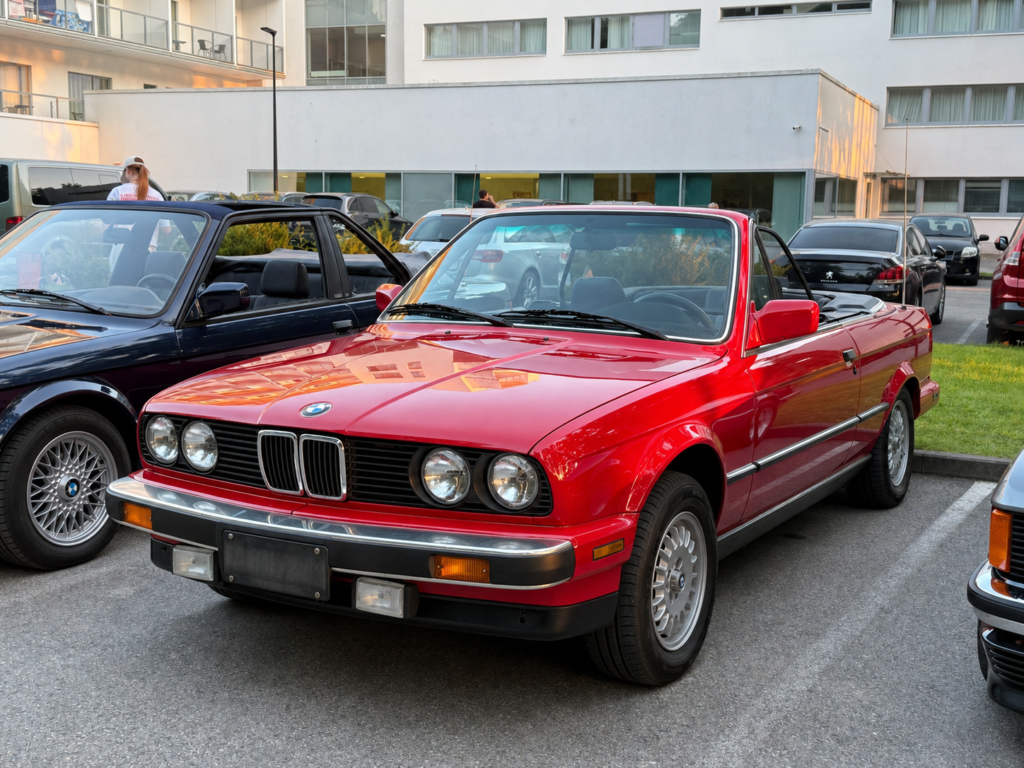
Photo of the real car. Photo: Sten-Patrick Kreek