
BMW M3 Sport Evolution (E30) was the most powerful and highly developed road-going version of the first-generation M3 and represented the final major evolutionary stage of the E30 M3. Introduced in 1990, the Sport Evolution was once again developed directly in response to motorsport requirements. Its purpose was to homologate new technical developments for touring-car racing and to keep the E30 M3 competitive against increasingly strong opposition.
The Sport Evolution was far more than a more powerful special edition of the standard M3. BMW increased engine displacement, reduced weight and further developed the aerodynamics, creating the most focused series-production road version of the E30 M3.
The final stage of E30 M3 development
The BMW M3 had been conceived from the beginning as an FIA Group A homologation model, and its development remained closely linked to the requirements of the racing car. Several evolutionary versions appeared during the E30 production period, allowing BMW to homologate further technical developments.
The Sport Evolution represented the final stage of this process. BMW Group Classic also refers to it as the Evolution III and describes the model as the most powerful development stage of the E30 M3. Production began in December 1989 and ended in March 1990.
The 2.5-litre S14
The most important technical change was an increase in the displacement of the S14 four-cylinder engine to 2,467 cc. This was the largest-capacity S14 fitted to a series-production E30 M3 and clearly distinguished the Sport Evolution from the earlier 2.3-litre versions.
The naturally aspirated four-cylinder produced 175 kW or 238 hp at 7,000 rpm and a maximum torque of 240 Nm. It retained the high-revving character of the S14 while the additional displacement provided stronger performance throughout the rev range.
With 238 hp, the Sport Evolution was the most powerful production E30 M3. According to BMW figures, it accelerated from 0 to 100 km/h in approximately 6.5 seconds and reached a top speed of 248 km/h.
Lower weight and greater efficiency
Alongside the increase in power, BMW Motorsport placed considerable emphasis on reducing weight. Lighter solutions were used for several body, glass and interior components, helping keep the Sport Evolution’s weight at approximately 1,200 kilograms.
The interior featured special sports seats with integrated head restraints, red seat belts and suede-type trim for the steering wheel, gear lever and handbrake. A Sport Evolution 1990 plaque on the centre console further distinguished the model from a regular M3.
Adjustable aerodynamics
The Sport Evolution had a more aggressive appearance than the regular M3, but its changes were functional rather than purely cosmetic. The front spoiler incorporated an adjustable lower splitter, while a larger adjustable rear wing was fitted to the boot lid. These features allowed the aerodynamic balance of the car to be adapted to different driving conditions.
Larger openings in the front bumper assisted cooling, while distinctive 16-inch alloy wheels completed the exterior changes. BMW offered the Sport Evolution in only two exterior colours: Gloss Black and Brilliant Red.
A homologation car for the road
The character of the Sport Evolution cannot be separated from motorsport. It was produced to allow BMW to homologate the larger 2.5-litre engine and other technical and aerodynamic developments for competition versions of the E30 M3.
This meant that many of the road car’s distinguishing characteristics were directly connected with the development of the racing car. At the same time, the Sport Evolution remained a fully road-legal four-seat car and retained the everyday usability that had been one of the strengths of the original M3.
Only 600 cars
BMW built only 600 examples of the M3 Sport Evolution. Production lasted just four months, from December 1989 until March 1990, making it one of the most limited and highly prized major versions of the E30 M3.
Its original German market price was DM 85,000, a considerable amount compared with a regular 3 Series. The Sport Evolution was never intended as a high-volume model; its primary purpose was to fulfil homologation requirements and represent the final stage of E30 M3 technical development.
The culmination of the E30 M3
The Sport Evolution brought together much of what BMW had learned through racing the E30 M3. Its larger engine, lower weight and adjustable aerodynamics made it the most radical series-production road-going development of the original M3.
It also marked the end of a particular philosophy. The following E36 M3 adopted a substantially different concept, replacing the four-cylinder homologation-based approach with a six-cylinder high-performance road car. The Sport Evolution therefore represents the final expression of the original M3’s exceptionally close relationship with motorsport.
Model in the collection
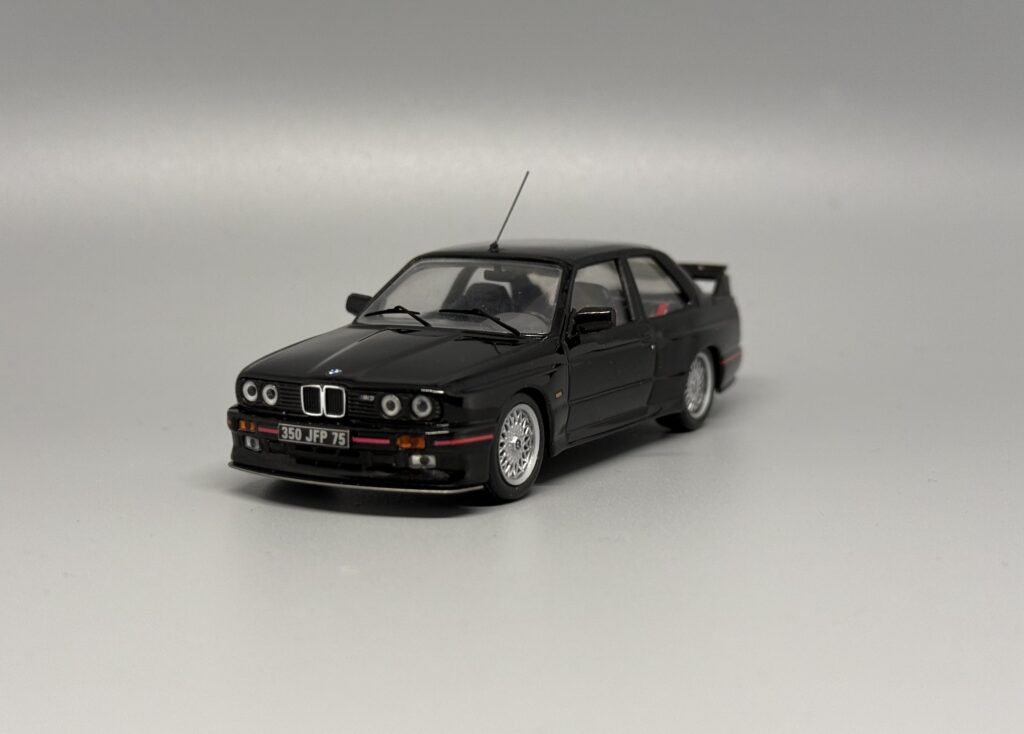
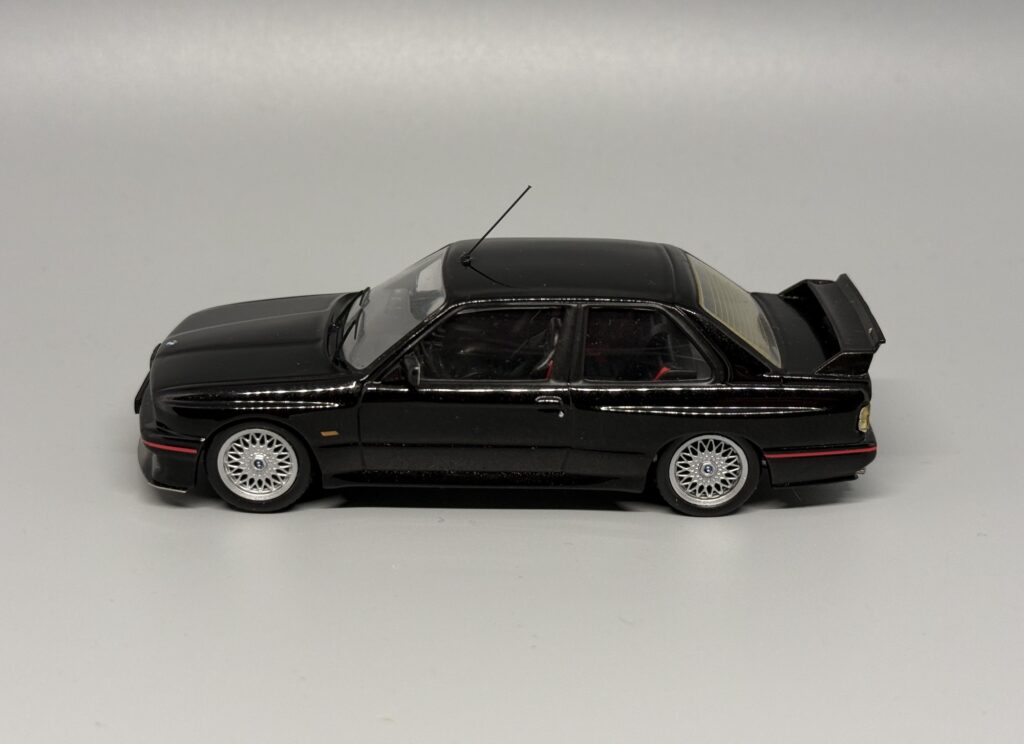
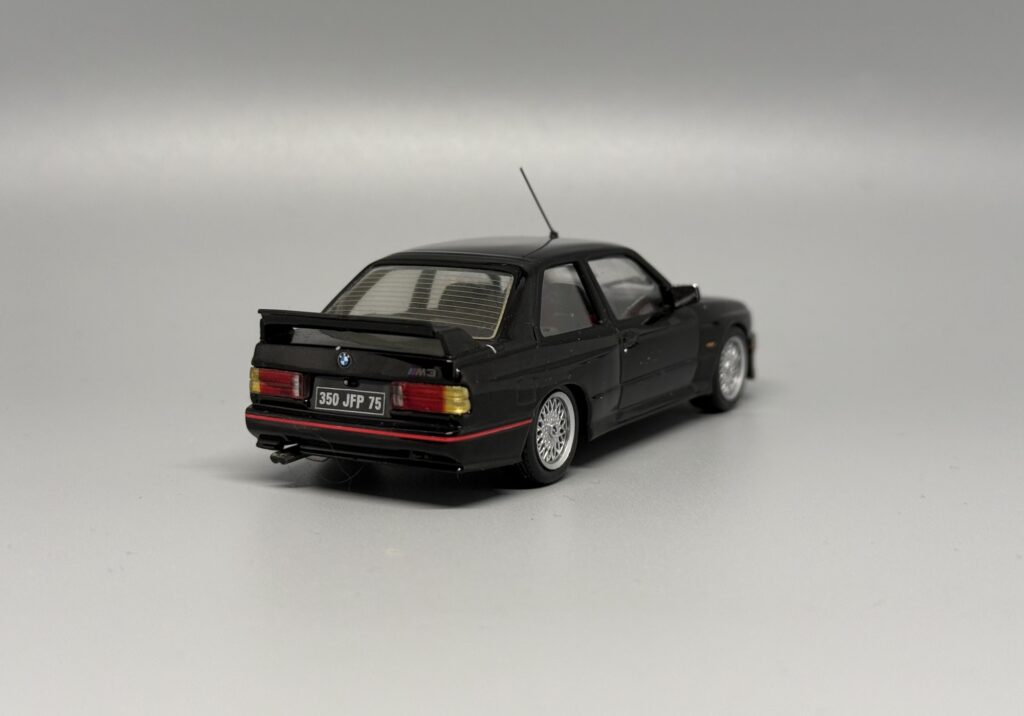
The 1:43-scale BMW M3 Sport Evolution (E30) in my collection was produced by IXO Models.
The miniature represents the most highly developed road-going version of the E30 M3 and reproduces characteristic Sport Evolution details including the enlarged front spoiler and adjustable rear wing.
Technical data
Production: 12/1989–03/1990
Body style: two-door sedan
Engine: S14 2.5-litre naturally aspirated inline-four petrol engine
Displacement: 2,467 cc
Power output: 175 kW / 238 hp at 7,000 rpm
Torque: 240 Nm at 4,750 rpm
Transmission: 5-speed manual
Drive: rear-wheel drive
Weight: approximately 1,200 kg
0–100 km/h: approximately 6.5 seconds
Top speed: 248 km/h
Production total: 600 cars
Special feature: the most powerful series-production evolution of the E30 M3, created for motorsport homologation
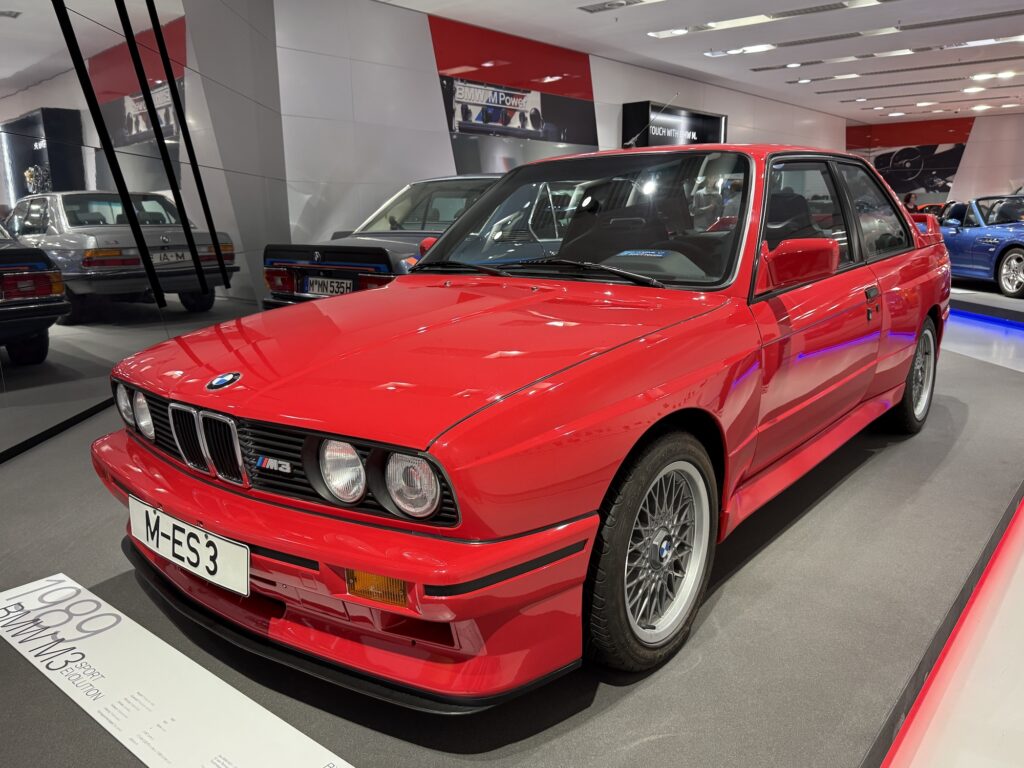
Photo of the real car, BMW Museum. Photo: Sten-Patrick Kreek