
Background
BMW 503 Cabriolet was one of the most exclusive German luxury cars of the 1950s and the open version of BMW’s elegant 503 Gran Turismo model. BMW presented the 503 Coupé and Cabriolet to the public at the Frankfurt Motor Show in September 1955, where the BMW 503 appeared alongside the new BMW 507 as one of the company’s two major attractions. Both cars reflected BMW’s ambition to re-establish its position after the war as a manufacturer of prestigious and high-performance luxury automobiles. While the BMW 507 was a sporting two-seat roadster, the 503 Cabriolet was a luxurious 2+2 open grand tourer combining V8 power, elegant aluminium bodywork and a very high standard of finish.
Based on BMW 502 engineering
Like the BMW 503 Coupé, the Cabriolet was technically based on BMW’s large 501/502 model family. Its foundations came from the 3.2-litre V8 engineering and strong chassis concept of the BMW 502, but the large and conservative saloon body was replaced by a much lower, more elegant and modern two-door design. BMW was therefore able to use its proven V8 technology in a luxury car with an entirely different character, combining strong performance with the experience of open-top motoring.
Design by Albrecht Graf Goertz
The BMW 503 was designed by Albrecht Graf Goertz, who also created the BMW 507 at the same time. According to BMW Museum’s own description, Goertz was responsible for the aluminium bodies of both luxury models. The 503’s long bonnet, low waistline, large glass areas and clean body surfaces represented a clear departure from the more rounded “Baroque Angel” styling of the BMW 501 and 502. In Cabriolet form, the design appeared particularly elegant and well balanced, with the absence of a fixed roof emphasising the body’s long horizontal lines. The result was more of a luxurious Gran Turismo than a traditional sports car.
Aluminium body
One of the most distinctive features of the BMW 503 was its aluminium body. The use of light alloy helped reduce the weight of the large luxury car, but such bodywork was labour-intensive and expensive to manufacture. The cars were built largely by hand, and the low production volume allowed considerable attention to be paid to finish and detail. The complex body construction, expensive V8 engineering and labour-intensive production were among the main reasons why the BMW 503 became one of the most exclusive and expensive BMWs of its era.
3.2-litre V8
The BMW 503 Cabriolet was powered by a 3,168 cm³ light-alloy V8 engine producing 103 kW / 140 hp at 4,800 rpm. The engine belonged to BMW’s 1950s V8 family, the first version of which had entered production with the BMW 502. Equipped with two carburettors, the engine offered strong performance for its time and was particularly well suited to the character of a luxury touring car, where smooth and quiet operation was just as important as outright speed.
190 km/h
With 140 hp, the BMW 503 Cabriolet could reach a top speed of 190 km/h. Power was transmitted to the rear wheels through a four-speed manual gearbox. For a four-seat luxury convertible of the mid-1950s, this was an impressive figure. The BMW 503 was not designed as an uncompromising sports car, but as a fast and comfortable long-distance touring car that combined V8 performance with the experience of open-top driving.
Luxurious 2+2 grand tourer
The BMW 503 Cabriolet was a 2+2-seater, offering more space and practicality than the two-seat BMW 507. The interior featured high-quality materials, leather upholstery and careful hand finishing. All side windows could be lowered completely into the body, creating a particularly clean and elegant profile with the roof down. The BMW 503 was aimed at customers who wanted sports-car levels of performance without sacrificing luxury, comfort or long-distance usability.
Hydraulics and electric windows
The BMW 503 was exceptionally sophisticated for its time. On first-series cars, both the side windows and the Cabriolet roof were hydraulically operated. On later second-series cars, the hydraulic window mechanism was replaced by electric window lifts, while the folding roof remained hydraulically operated. Such convenience features were extremely unusual in the 1950s and underlined the 503’s position at the top of the BMW range.
Two series
The BMW 503 was produced in two main series. Earlier first-series cars featured a column-mounted gear selector together with hydraulic operation of the windows and Cabriolet roof. Second-series cars received a floor-mounted gear lever and electric windows, while several smaller exterior and interior details were also revised. The basic 3.2-litre V8 engine, elegant aluminium body and overall character of the model remained unchanged throughout the production period.
One of the most expensive BMWs of its time
The BMW 503 cost approximately 30,000 Deutsche Mark when new, with an official price of around 29,500 DM. This made it one of the most expensive BMWs of its era and limited its customer base to the very wealthy. The high price resulted from the aluminium body, V8 engineering, sophisticated convenience features and labour-intensive hand-built production. BMW Museum appropriately describes the 503 as one of the most exclusive automobiles of its time.
BMW 503 and BMW 507
The BMW 503 and 507 were presented together at the Frankfurt Motor Show in 1955, and their histories are therefore closely linked. Both used BMW’s 3.2-litre V8 engineering, both had aluminium bodies designed by Albrecht Graf Goertz, and both occupied the very top of BMW’s model range. Their characters, however, were quite different. The BMW 507 was a sporting two-seat roadster and primarily an image-building model, while the 503 offered more space, comfort and practicality. The 503 was therefore better described as an elegant luxury Gran Turismo than as a conventional sports car.
Only 139 Cabriolets
Series production of the BMW 503 Cabriolet began in 1956 and ended in 1960. During this period, only 139 Cabriolets were built. Together with 273 Coupés, total BMW 503 production amounted to just 412 cars. The Cabriolet was therefore even rarer than the Coupé and today ranks among BMW’s most exclusive post-war production models.
A special place in BMW convertible history
The BMW 503 Cabriolet occupies a special place in the history of BMW’s open cars. It combined the V8 engineering of a large luxury automobile with a hand-built aluminium body and a sophisticated hydraulically operated roof in a way that BMW would not offer again for many years. After production of the 503 Cabriolet ended, decades passed before BMW once again produced a fully fledged four-seat production convertible of its own.
Historical significance
The BMW 503 Cabriolet represents a period in which BMW, despite very small production volumes, sought to compete with Europe’s most prestigious luxury-car manufacturers. Albrecht Graf Goertz’s elegant design, hand-built aluminium body, 3.2-litre V8 engine and highly advanced comfort features made it one of BMW’s most sophisticated and luxurious cars of the 1950s. With only 139 examples built, the 503 Cabriolet is also one of the rarest post-war luxury models in BMW history.
Model in the collection
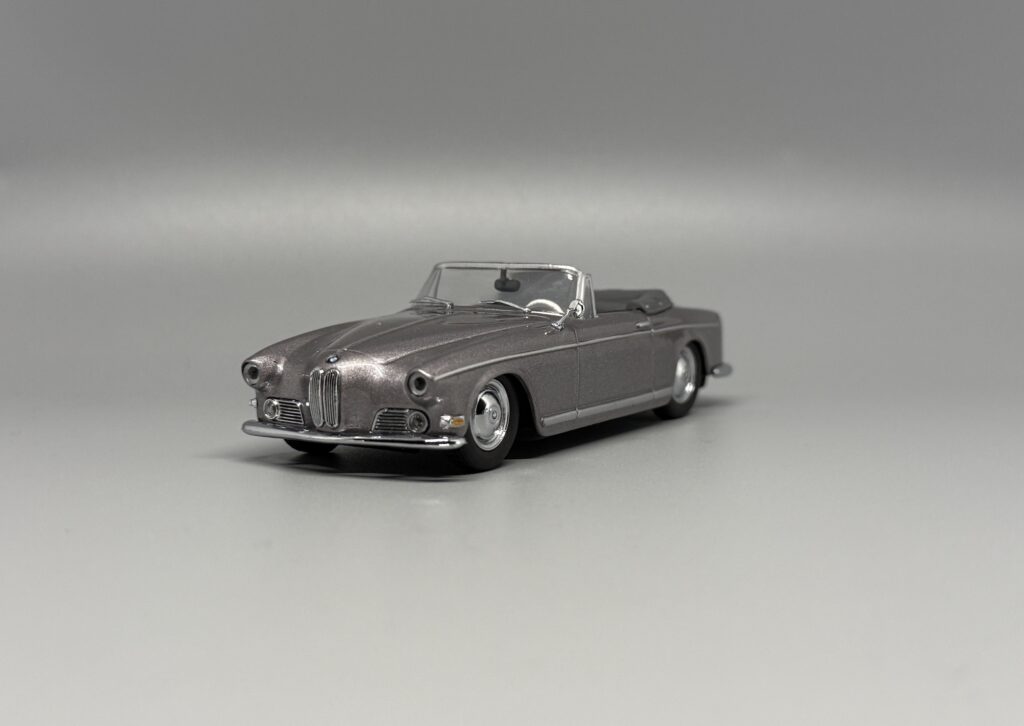
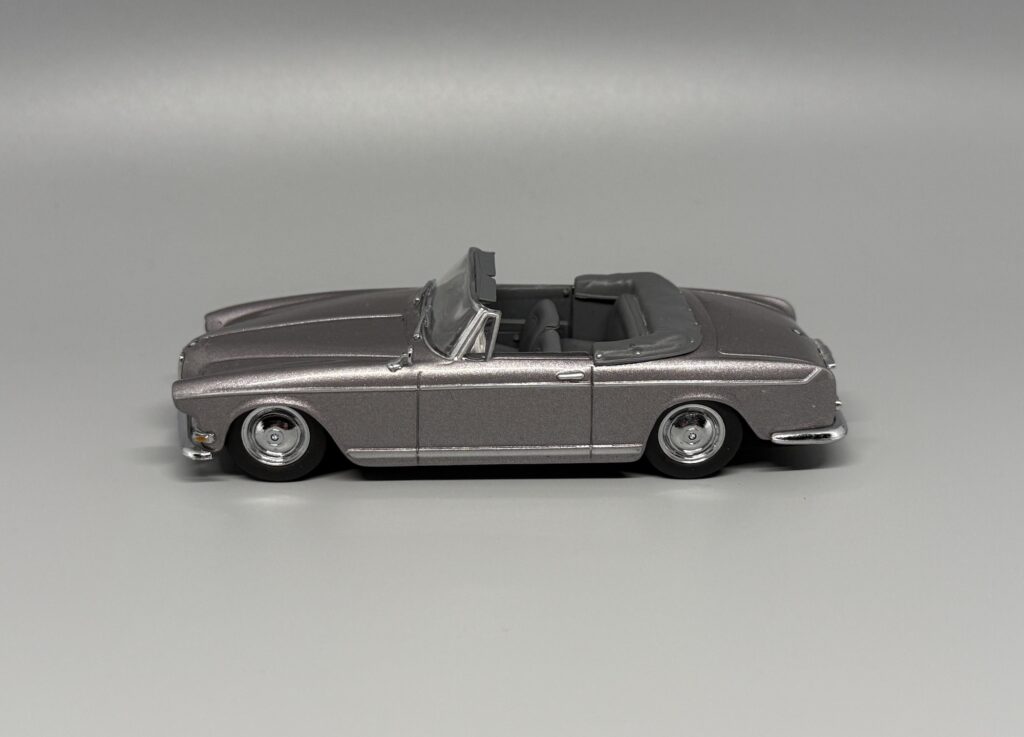
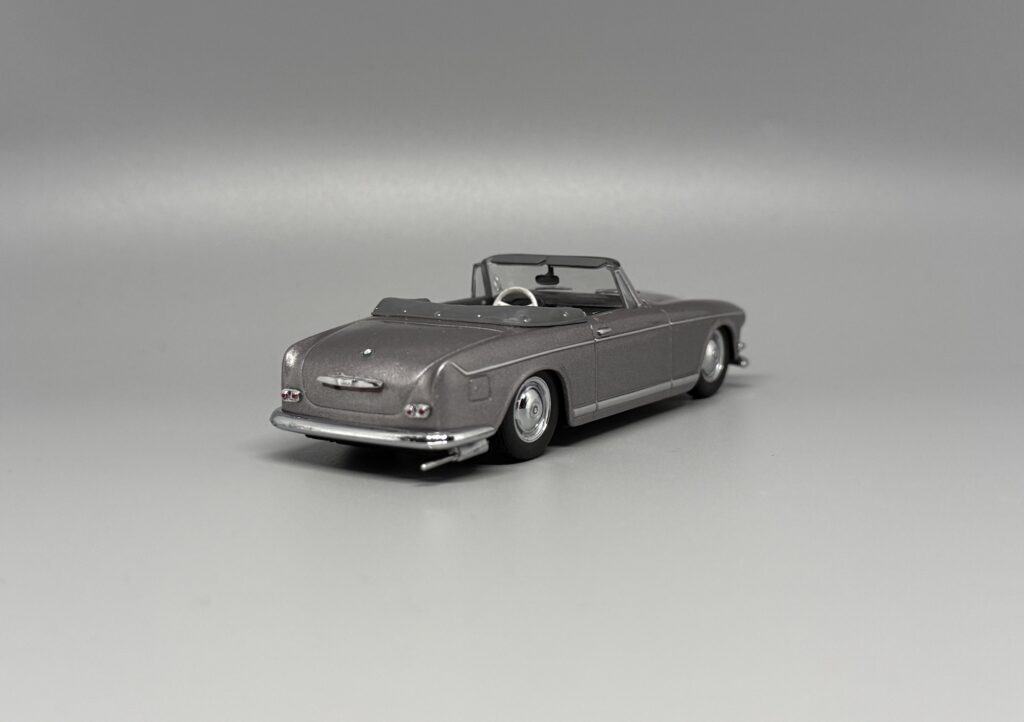
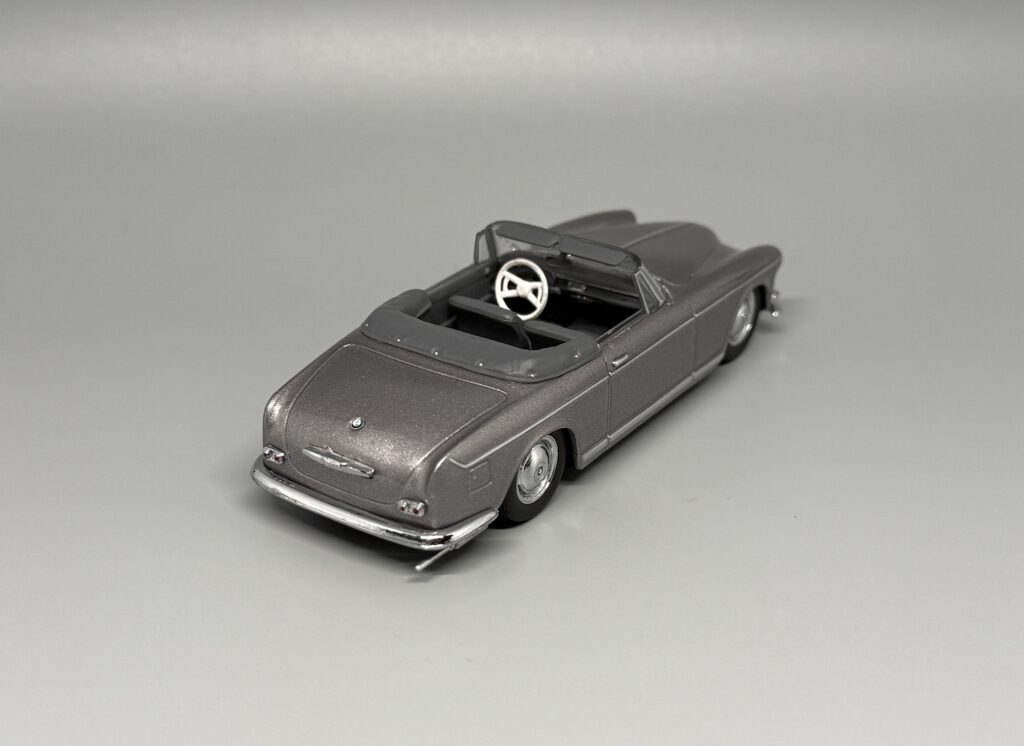
The model in my collection was produced by Schuco and represents the BMW 503 Cabriolet.
Technical data in brief
Production period: 1956–1960
Body style: two-door 2+2 Cabriolet
Designer: Albrecht Graf Goertz
Technical basis: BMW 502 V8 model family
Body: aluminium body
Engine: V8
Displacement: 3,168 cm³
Power: 103 kW / 140 hp @ 4,800 rpm
Transmission: 4-speed manual
Drivetrain: rear-wheel drive
Top speed: 190 km/h
Price when new: approximately 29,500 Deutsche Mark
Total BMW 503 production: 412 cars
Cabriolet production: 139 cars
Special feature: hand-built BMW luxury Cabriolet designed by Albrecht Graf Goertz, with an aluminium body and hydraulically operated roof
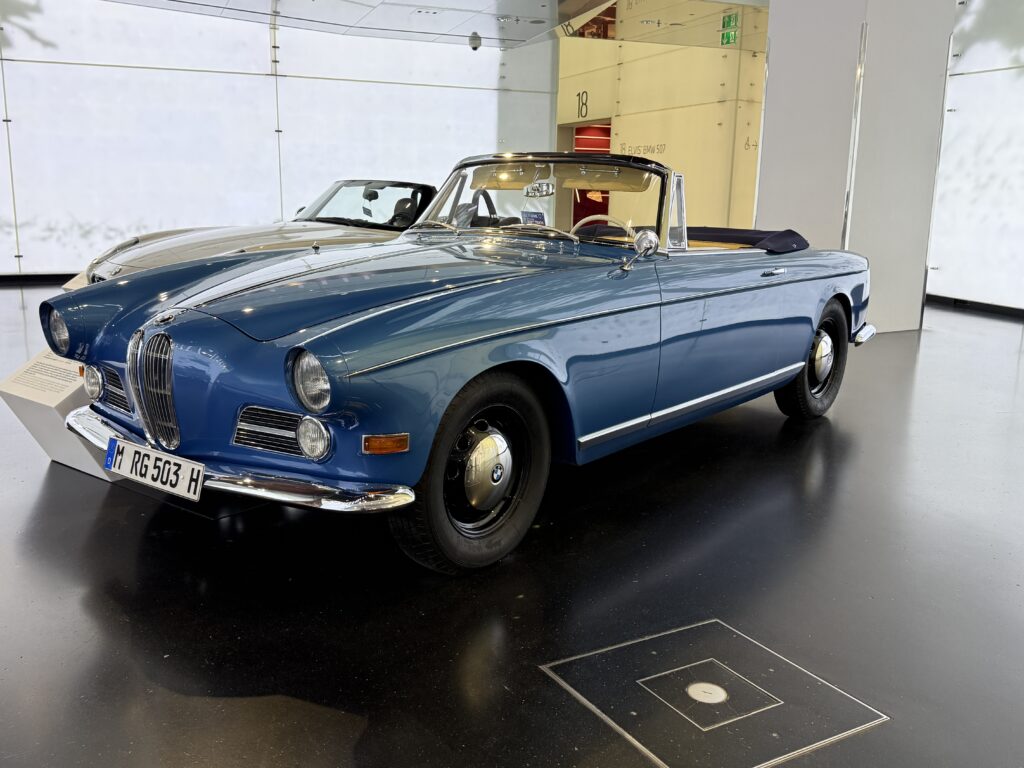
Photo of the real car, BMW Museum. Photo: Sten-Patrick Kreek