
BMW 3 Series Convertible (E36) brought a new level of maturity, comfort and elegance to BMW’s open-top 3 Series during the 1990s. Following the debut of the E36 Sedan in 1990 and the introduction of the independent Coupé in 1992, the new four-seat Convertible reached the market in 1993. It continued the tradition established by the E30 Convertible while becoming larger, technically more advanced and more refined.
The E36 Convertible combined the emotional appeal of open-air motoring with BMW’s traditional rear-wheel-drive layout, four-seat accommodation and a broad range of petrol engines. Its low shoulder line, long bonnet and clean proportions made it one of the most elegant members of the E36 family.
A distinct model alongside the Coupé
The proportions of the E36 Convertible were closely related to those of the Coupé. Both featured a longer and flatter front section than the Sedan, creating a noticeably more sporting profile. BMW Group Classic specifically highlights the extended and flattened bonnet as one of the defining visual characteristics of both models.
The Convertible was nevertheless more than a Coupé with its roof removed. The open body required its own structural solutions, while the folding soft top and its storage compartment resulted in a different rear body design. Four seats were retained, with BMW aiming to combine open-air driving with comfort and everyday usability.
A well-insulated soft top
BMW paid considerable attention to making the E36 Convertible suitable for more than summer use. Its fabric soft top was particularly well insulated for its era, providing much better protection from weather and noise when closed than the simpler roof systems of earlier generations.
An optional removable hardtop was also available, giving the car a more coupé-like appearance and additional comfort during winter use. Increasingly automated soft-top operation also became available during the model’s production life.
Initially a six-cylinder model
When the E36 Convertible reached the market in 1993, it was initially offered only with six-cylinder engines. The first version was the 325i Convertible, whose 2.5-litre M50 straight-six produced 141 kW or 192 hp. BMW Group Classic lists a top speed of 229 km/h.
The 320i Convertible followed during the same year, powered by a 2.0-litre straight-six producing 150 hp. A four-cylinder version did not join the range until 1994, when the 318i Convertible provided a more economical entry point.
The 328i became the regular flagship
BMW updated the E36 six-cylinder range in 1995. The 325i was succeeded at the top of the regular Convertible range by the 328i, whose 2,793 cc M52 straight-six produced 142 kW or 193 hp at 5,300 rpm.
Although the increase in peak power over the 325i was modest, the 2.8-litre engine offered greater torque, improved flexibility and the smooth power delivery traditionally associated with BMW straight-six engines. BMW Group Classic lists a maximum speed of 230 km/h. The 328i also became the most successful individual E36 Convertible version, with BMW noting that almost 50,000 were produced.
The M3 Convertible
The sporting peak of the E36 family was the M3, and for this generation BMW M GmbH also produced a Convertible version. The original 3.0-litre M3 Convertible developed 286 hp, while the later 3.2-litre version increased output to 321 hp.
BMW Group Classic records total E36 M3 Convertible production at 12,114 cars. Although it was a separate BMW M model rather than part of the regular 3 Series range, it demonstrated the considerable performance potential of the E36 open-top body.
Baur continued alongside it
Interestingly, the arrival of BMW’s own full Convertible did not immediately end the Baur Topcabriolet. BMW Group Classic notes that an E36-based Baur conversion remained available for a period alongside the factory Convertible.
The Baur retained a permanent rollover structure and removable roof sections, while BMW’s own Convertible offered a fully open body. The two therefore represented distinctly different approaches to an open-top E36.
An important member of the E36 family
BMW Group Classic lists production of the E36 Convertible from March 1993 until September 1999. During that period the range developed from the original six-cylinder 325i into a broad selection of four- and six-cylinder models together with the high-performance M3 Convertible.
Widely used E36 production statistics put total Convertible production at approximately 196,500 cars. BMW Group Classic does not currently publish an exact overall body-style total on its model page, but the figure illustrates the significant role the Convertible played within the E36 family.
Establishing a lasting tradition
The importance of the E36 Convertible lies in the way it firmly established the open 3 Series as a permanent part of BMW’s model range. The E30 had introduced BMW’s own full-production 3 Series Convertible, while the E36 developed the concept into a more mature and refined car.
The succeeding E46 continued the same basic formula of a four-seat soft-top Convertible, while later generations eventually moved BMW’s two-door open model into the separate 4 Series range. The E36 therefore represents an important stage in the development of BMW’s modern sporting Convertible.
Model in the collection
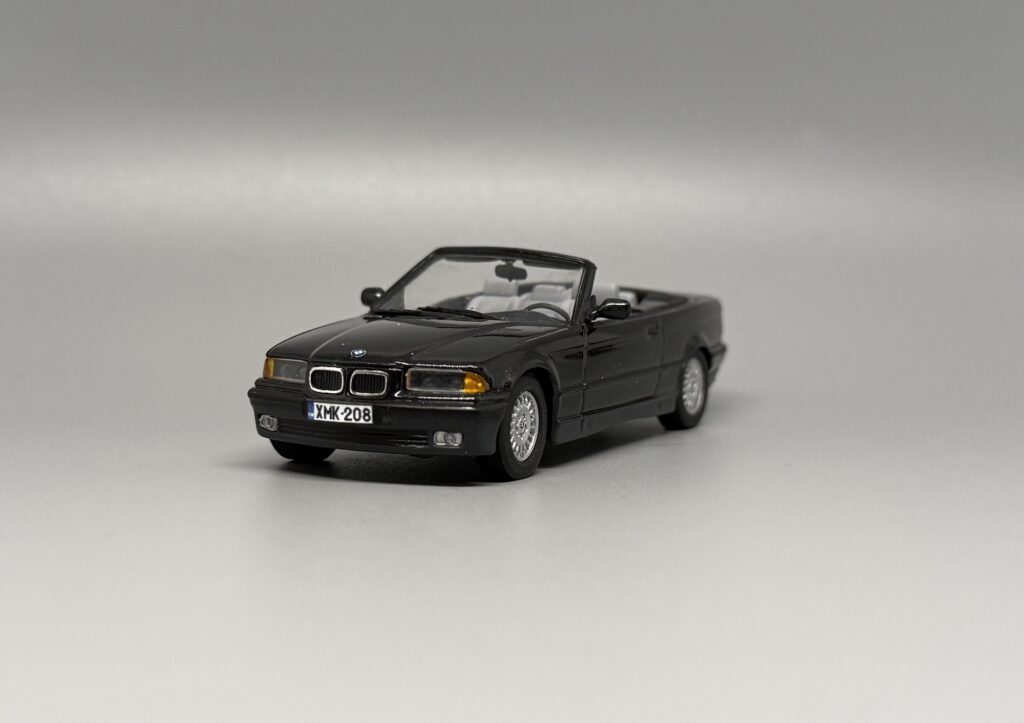
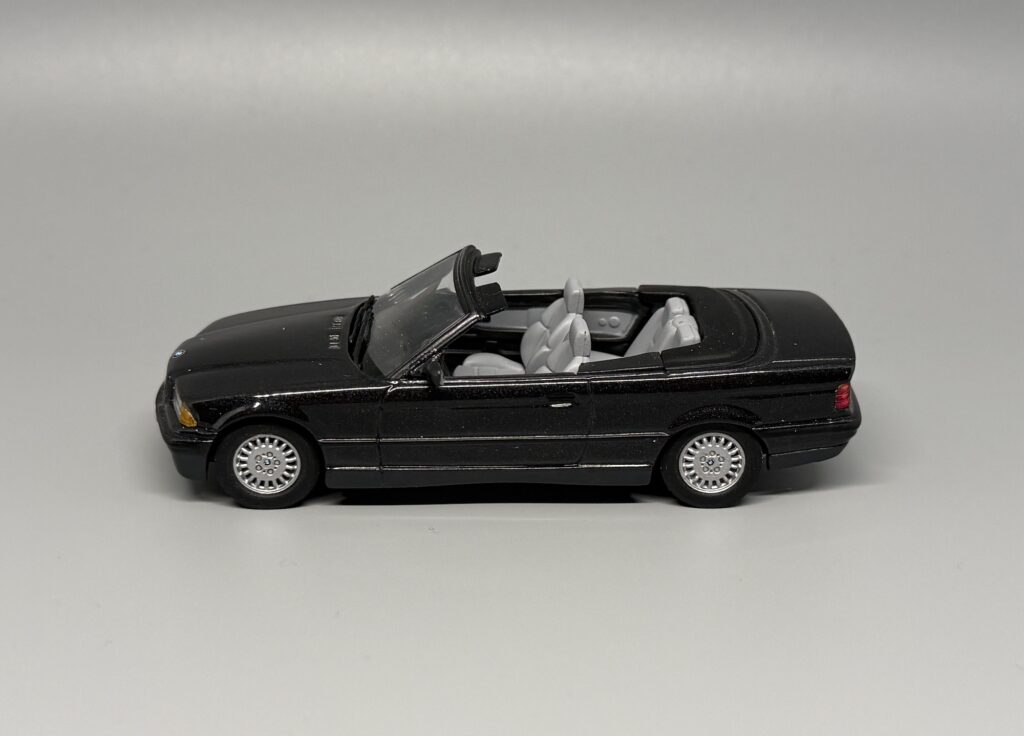
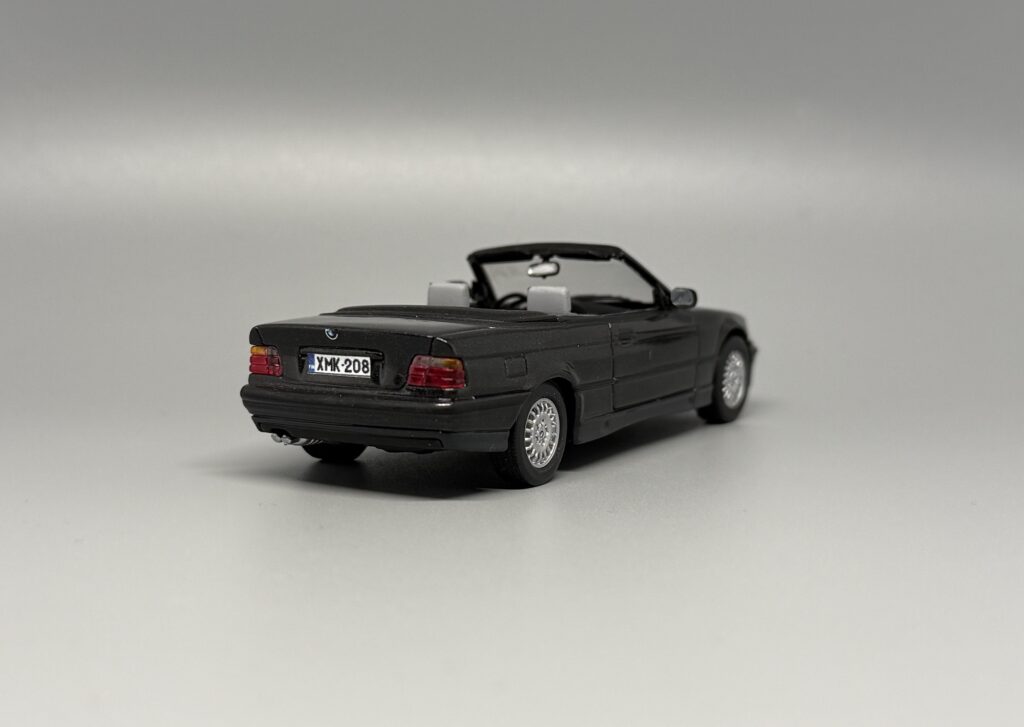
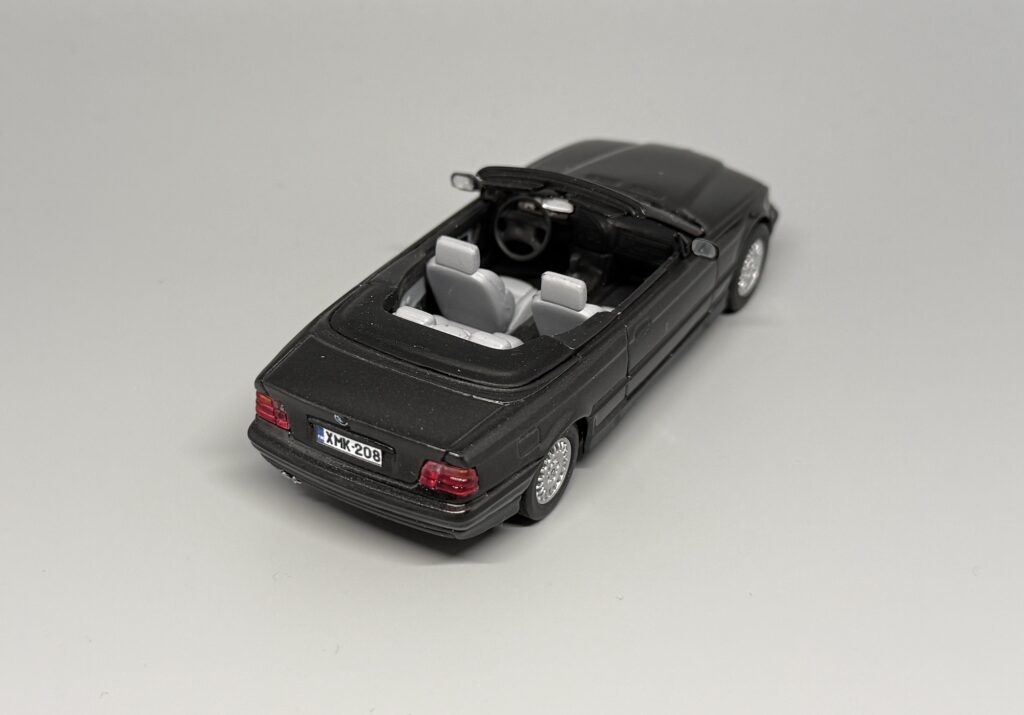
The 1:43-scale BMW 3 Series Convertible (E36) in my collection was produced by Minichamps.
Minichamps catalogues the miniature as representing a 1992 car. BMW Group Classic, however, lists series production of the E36 Convertible as beginning in March 1993, so the model is best regarded as representing the very early development period of the E36 Convertible rather than a normal 1992 series-production car.
Technical data
Production: 03/1993–09/1999
Body style: two-door four-seat Convertible
Roof: insulated fabric soft top, optional removable hardtop
Drive: rear-wheel drive
Engines: four- and six-cylinder petrol engines
Original flagship: BMW 325i Convertible, 192 hp
Later regular flagship: BMW 328i Convertible, 193 hp
BMW 328i Convertible top speed: 230 km/h
Total E36 Convertible production: approximately 196,500 cars according to widely used production statistics
Special feature: elegant four-seat full Convertible that firmly established the open 3 Series as a permanent part of BMW’s model range
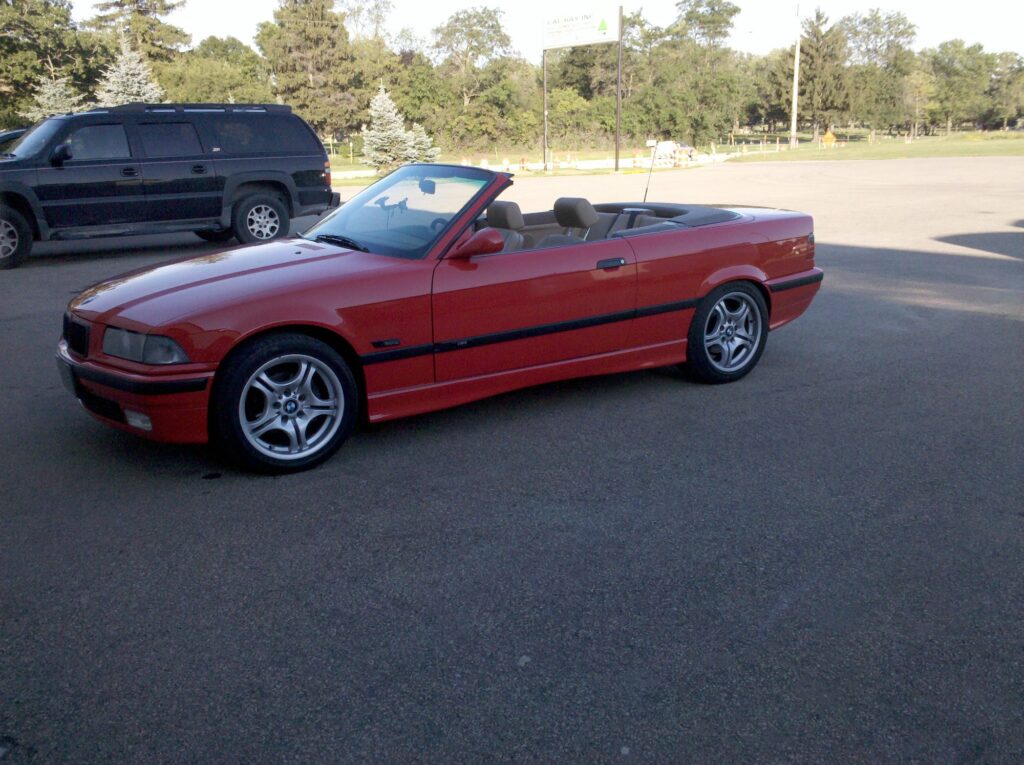
Photo of the real car. Photo: Nepentherockband / Wikimedia Commons, CC BY-SA 3.0