
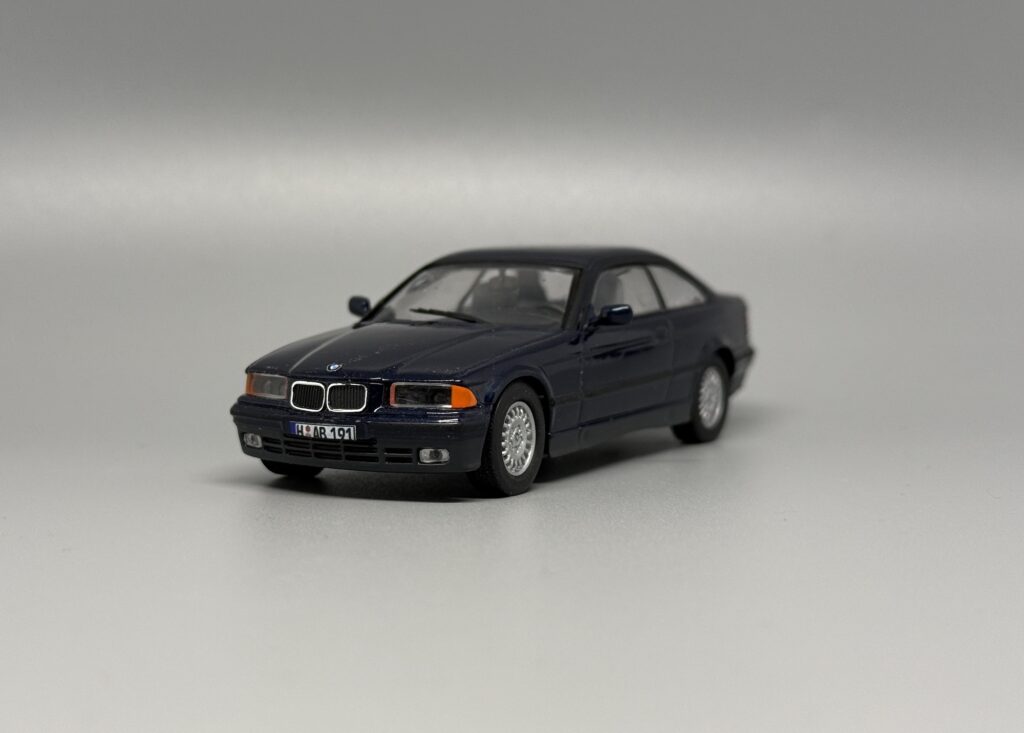
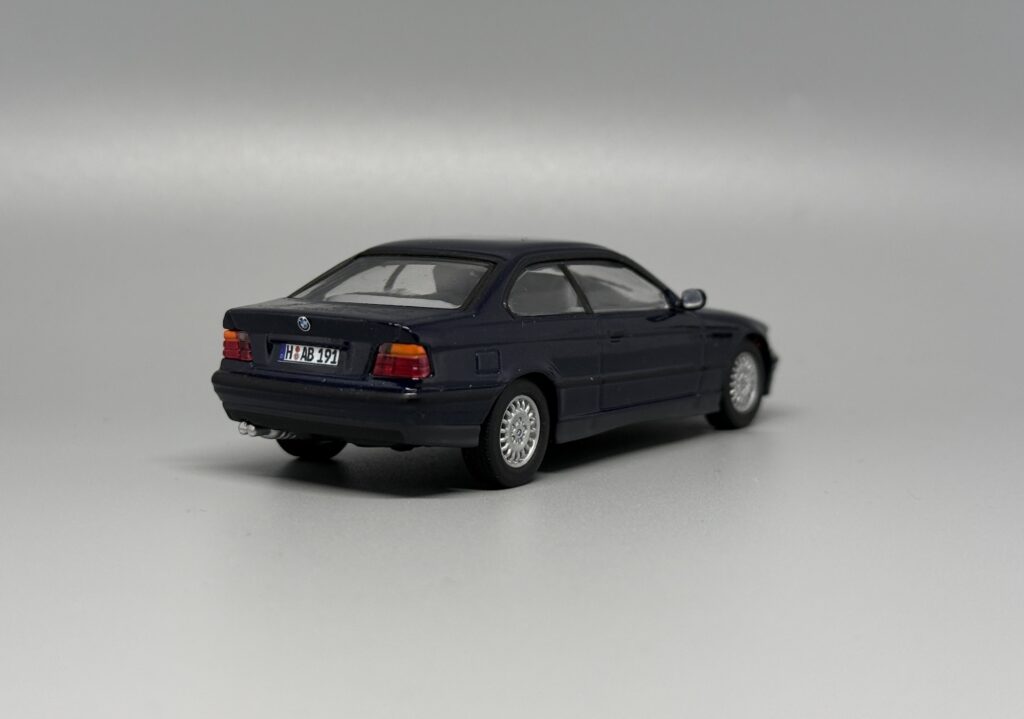
BMW 3 Series Coupé (E36) represented an important change in the history of the 3 Series. Whereas the two-door E21 and E30 models had essentially been two-door versions of the sedan, BMW created a clearly distinct Coupé for the E36 generation. Presented in 1991 and launched on the market in 1992, approximately one year after the four-door E36 Sedan, the new model combined compact dimensions and driver-focused engineering with a lower, more elegant and distinctly sporting body.
Although the relationship between the Sedan and Coupé was immediately recognisable, their bodies were considerably more different than they appeared at first glance.
The first truly independent 3 Series Coupé
With the E36, BMW officially treated the two-door model as a Coupé rather than a two-door sedan for the first time. This was much more than a change in terminology. According to BMW’s own historical material, the four-door Sedan and two-door Coupé shared only a small number of body components.
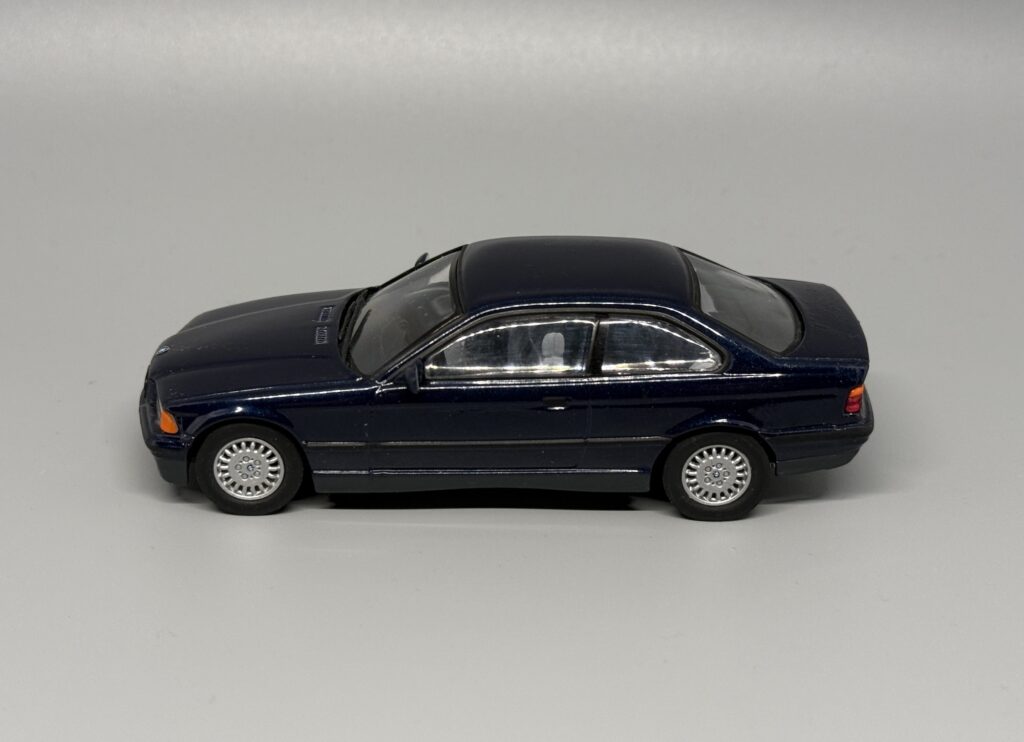
The Coupé sat around three centimetres lower, while its front section was almost eight centimetres longer. The bonnet was lower and flatter, the roof nearly three centimetres lower, the boot lid shorter and lower, and the long doors featured frameless windows.
These changes gave the Coupé a significantly longer and lower appearance despite its close mechanical relationship with the Sedan. The E36 therefore established the idea of the two-door 3 Series as a model with its own visual identity and market position.
A sporting and elegant body
The E36 Coupé retained classic BMW proportions, with a long bonnet, relatively rearward passenger compartment, short overhangs and rear-wheel drive. Its lower roofline and frameless side windows, however, gave it a clearly more elegant character than the Sedan.
BMW positioned the Coupé as both sporting and slightly more luxurious. Several versions received more generous standard equipment than their Sedan equivalents, helping give the model a more exclusive position within the 3 Series range.
Despite the lower roof, the car remained a genuine four-seater and provided surprisingly useful rear-seat accommodation, making the E36 Coupé a sporting car that could still be used comfortably on an everyday basis.
Four- and six-cylinder petrol engines
The E36 Coupé was initially introduced in 318is, 320i and 325i form. Unlike the Sedan, Touring and Compact, no diesel engine was offered in the Coupé range; all versions used petrol engines.
The sporting 318is used a four-valve four-cylinder engine producing 140 hp. The six-cylinder 320i developed 150 hp, while the original flagship 325i produced 141 kW or 192 hp.
In 1995, the 325i was replaced by the new 323i and 328i. The latter used a 2.8-litre aluminium straight-six producing 142 kW or 193 hp and became the most powerful regular E36 Coupé. BMW Group Classic lists a top speed of 236 km/h for the 328i Coupé.
VANOS and a new generation of straight-six engines
BMW engine technology evolved considerably during the E36 period. The early M50 straight-six engines featured twin overhead camshafts and four valves per cylinder, while VANOS variable camshaft timing was introduced during the early 1990s.
VANOS improved torque at lower engine speeds while maintaining strong high-rpm performance. By the middle of the decade, the lighter M52 aluminium-block straight-six family was introduced in models such as the 323i and 328i Coupé.
A new rear axle and rear-wheel drive
Mechanically, the Coupé shared the E36 Sedan’s sophisticated new multi-link rear suspension, representing an important development from the semi-trailing-arm layout of the E30. The new design improved wheel control, cornering stability and ride comfort.
The engine remained mounted longitudinally at the front and drove the rear wheels in classic BMW fashion. Combined with the lower body and broad engine range, this layout helped make the E36 one of the defining compact sporting coupés of the 1990s.
The basis for the new M3
The importance of the E36 Coupé was reinforced by the fact that it provided the basis for the second-generation BMW M3. Unlike the E30 M3, the E36 M3 was not a radically reworked homologation special but a much more discreet high-performance Coupé.
This demonstrated how inherently sporting the standard E36 Coupé already was. Its lower body, frameless doors and longer front section provided an appropriate technical and visual foundation for the M3 without fundamentally altering the car’s basic character.
A long production life
BMW presented the E36 Coupé in 1991 and launched it on the market in 1992. Production records include pre-production cars from 1990 and 1991, while the final E36 Coupé versions continued until April 1999 as the succeeding E46 Coupé was arriving.
Production statistics derived from BMW TIS data record a total of 487,249 E36 Coupé-bodied cars. The figure covers the various Coupé derivatives and demonstrates that the two-door model became an important, although more exclusive, part of the E36 family.
An important change in BMW’s model strategy
The importance of the E36 Coupé extended beyond a single generation. It established a clear distinction between the four-door Sedan and two-door Coupé within the 3 Series, a principle continued with the E46 and E92 generations.
In the longer term, the same development eventually led BMW to separate the two-door model from the 3 Series entirely. With the F32 generation it became the BMW 4 Series. The E36 Coupé can therefore be regarded as an important early step towards BMW’s modern separation of sedan and coupé model lines.
Model in the collection
My collection includes a Minichamps model representing the 1992 car.
The Minichamps models reproduce the principal differences between the Coupé and Sedan particularly well, including the lower roofline, longer doors, frameless side windows and more elongated sporting proportions.
Technical data
Presented: 1991
Market launch: 1992
Production: until 04/1999
Body style: two-door four-seat Coupé
Drive: rear-wheel drive
Engines: four- and six-cylinder petrol engines
Original flagship: BMW 325i Coupé, 192 hp
Later regular flagship: BMW 328i Coupé, 193 hp
BMW 328i Coupé top speed: 236 km/h
Total E36 Coupé production: 487,249 cars according to production data derived from BMW TIS records
Special feature: the first BMW 3 Series Coupé developed as a clearly distinct model from the Sedan