
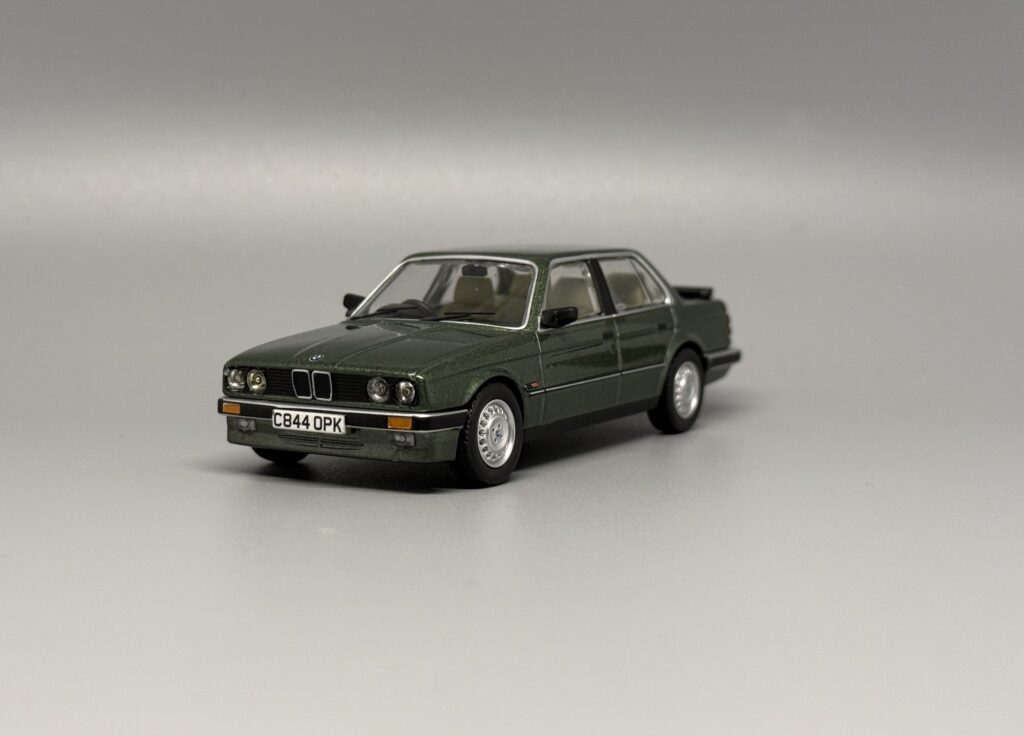
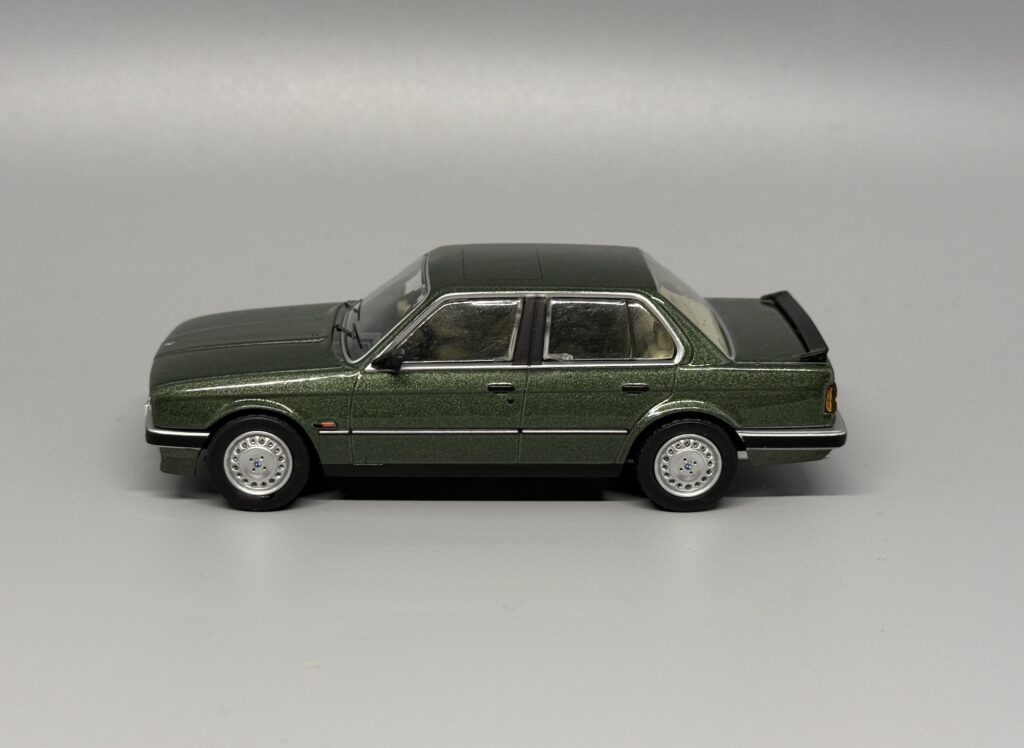
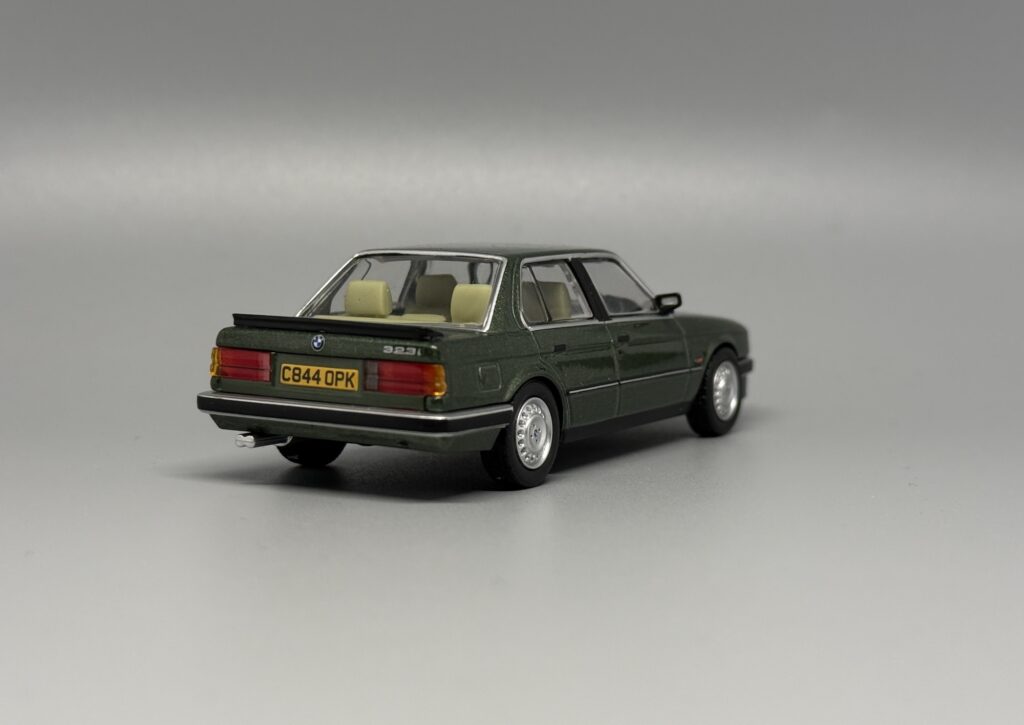
BMW 323i (E30) was the most sporting model in the second-generation 3 Series range when the E30 was launched and played an important role in establishing the straight-six engine as a defining part of BMW’s compact model line. Introduced in 1982, the 323i combined the lighter and more aerodynamic body of the new E30 with BMW’s 2.3-litre straight-six engine, creating a fast, refined and driver-focused car that remained at the top of the regular range until the arrival of the more powerful 325i.
The sporting flagship of the early E30 range
The second-generation 3 Series developed the basic concept of the E21 while becoming more modern, spacious and versatile. The two-door sedan arrived first, and in 1983 BMW added a four-door body to the 3 Series range for the first time.
The 323i occupied the top of the range. BMW Group Classic describes it as the sportiest E30 at launch and highlights its higher standard of equipment together with optional sports seats, sports suspension and ABS. Its performance and mechanical specification also made the 323i a popular basis for several ALPINA conversions.
The 2.3-litre M20 straight-six
The BMW 323i was powered by the M20B23 straight-six engine. BMW Group Classic lists a displacement of 2,316 cc and an output of 102 kW or 139 hp at 5,300 rpm.
The compact M20 straight-six was valued for its smoothness, willingness to rev and characteristic BMW six-cylinder sound. These qualities clearly distinguished the 323i from the smaller four-cylinder E30 models and made it a genuinely sporting compact sedan by the standards of its time.
BMW’s official figure for maximum speed was 202 km/h. Corgi’s documentation for the specific British car represented by the model lists 139 bhp, 151 lb-ft of torque, a 0–60 mph time of 8.1 seconds and a maximum speed of 124 mph.
The four-door E30
The car represented in the collection is particularly interesting because it is a four-door 323i. The E30 was the first generation of the 3 Series to be offered as a four-door sedan, substantially increasing the practicality of the model while retaining the mechanical layout and driver-focused character of the two-door version.
The four-door 323i therefore combined the six-cylinder flagship powertrain with a more practical body. The long bonnet, rearward passenger compartment, rear-wheel drive and characteristic Hofmeister kink remained, while the additional pair of doors made the car considerably more versatile for everyday use.
From 323i to 325i
The 323i’s position at the top of the E30 range was relatively short-lived. In 1985 BMW introduced the new 325i, whose 2.5-litre straight-six produced 171 hp. The new model took over the flagship role and the 323i was gradually phased out.
BMW Group Classic lists the production period of the 323i as September 1982 to December 1986, meaning that the 323i and the new 325i overlapped for a period. The 1985 car represented in the collection comes from precisely this transitional stage in E30 history.
The unusual history of the actual car
Corgi Vanguards did not base its miniature on a generic 323i. Instead, the model reproduces a specific surviving British-market car that was purchased new from Cronk BMW in Redhill, Surrey, in August 1985.
Its first owner specified an unusual green-on-green combination, with BMW Plane Tree Green exterior paint, green fabric comfort seats and green carpeting. Optional equipment included a Pioneer radio/cassette player, four electric windows, an electric sunroof, automatic transmission and a boot spoiler. Alloy wheels were deliberately not specified.
The first owner covered approximately 44,000 miles in just over three years. The car was then taken over by her nephew, who drove it for a further 5,000 miles before putting it into storage.
Rescued after years in storage
The BMW was initially stored in a garage, but by 2008 it was being kept outside behind business premises near Gatwick Airport, where it remained for another two years.
In 2010, Warwickshire-based BMW enthusiast James Coleman rescued the car. Attracted by its relatively low mileage and unusual specification, he recommissioned it by rebuilding the brakes and suspension and repairing the cylinder head after a suspected head-gasket leak.
Once the mechanical work was completed, the small amount of welding required for an MOT was carried out and the lower half of the body was repainted in its original colour. The automatic gearbox subsequently failed and was rebuilt by specialist company Topp Gear Transmissions.
A rare surviving early E30
Following its recommissioning, the 323i was exhibited at the NEC Classic Car Show. Corgi particularly noted that unmodified early “chrome bumper” or Series 1 E30s have become relatively rare in the United Kingdom.
This history gives the real car behind the miniature particular interest. It is not simply an anonymous example of the 323i but a relatively low-mileage E30 with unusual original specification, a long period of storage and a documented return to use.
Model in the collection
The 1:43-scale BMW 323i (E30) in my collection was produced by Corgi Vanguards. The model was released in 2020 as a limited edition of 1,000 pieces. My example is individually numbered 383/1000.
The Corgi miniature represents the specific four-door 1985 BMW 323i described above, originally sold new in the United Kingdom. It is accompanied by a numbered certificate on which Corgi documents the actual car’s original specification, ownership history, years in storage and subsequent recommissioning.
This makes the model somewhat different from a conventional generic miniature in the collection: it represents not only the BMW 323i as a model type, but an identifiable surviving E30 with its own documented history.
Technical data
Production: 09/1982–12/1986
Year represented by the model: 1985
Body style: four-door sedan
Engine: M20B23 naturally aspirated straight-six petrol engine
Displacement: 2,316 cc
Power output: 102 kW / 139 hp at 5,300 rpm
Torque: approximately 205 Nm at 4,000 rpm for the specific car documented by Corgi
Transmission: automatic on the car represented by the miniature
Drive: rear-wheel drive
Top speed: 202 km/h
Special feature: the sporting six-cylinder flagship of the early E30 range; the miniature represents a specific surviving four-door 1985 car with documented history
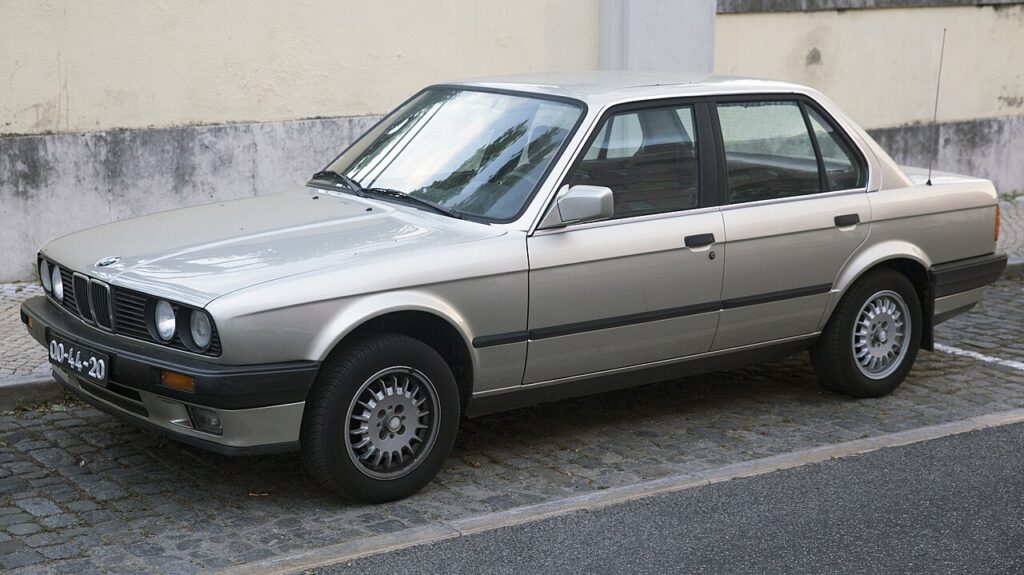
Photo of the real car. Photo: Mr.choppers / Wikimedia Commons, CC BY-SA 3.0