
Background
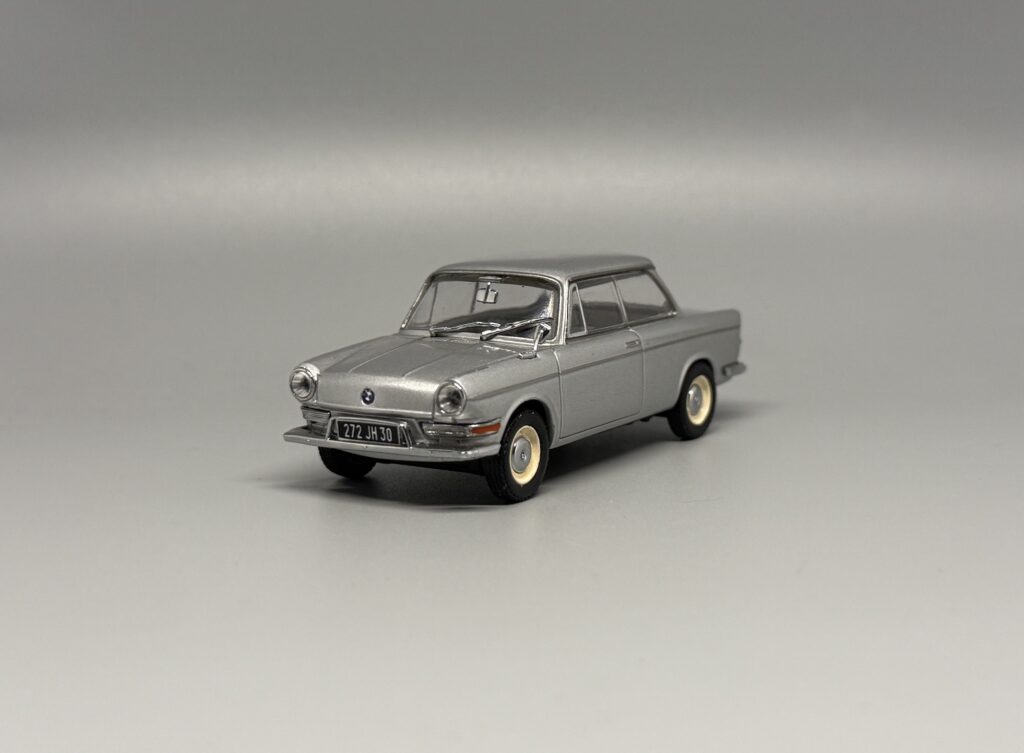
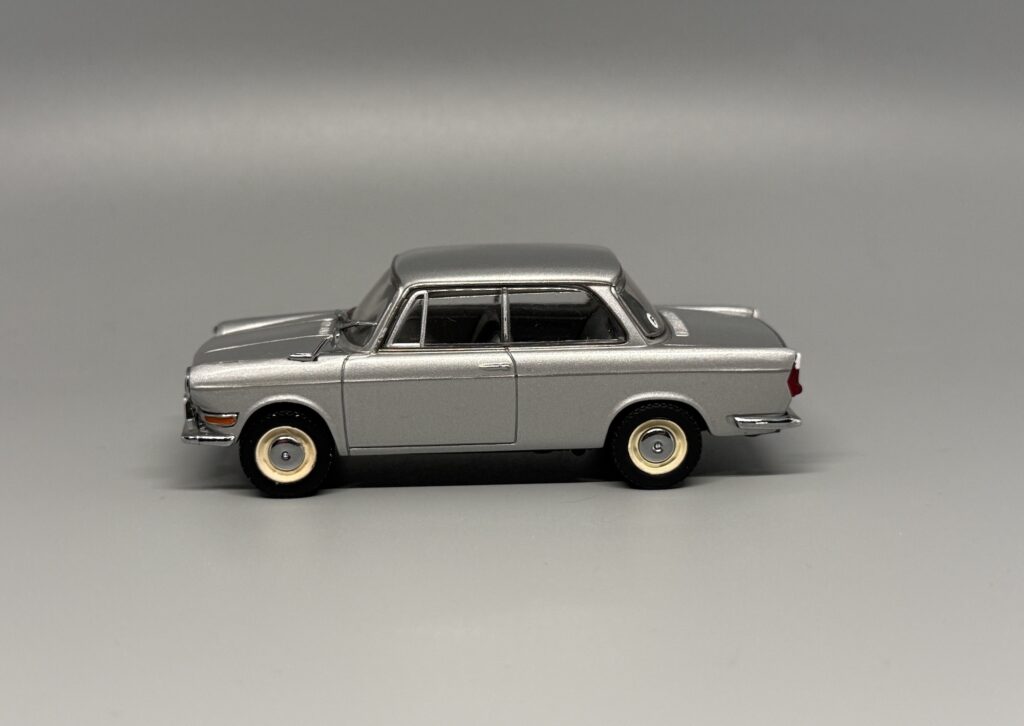
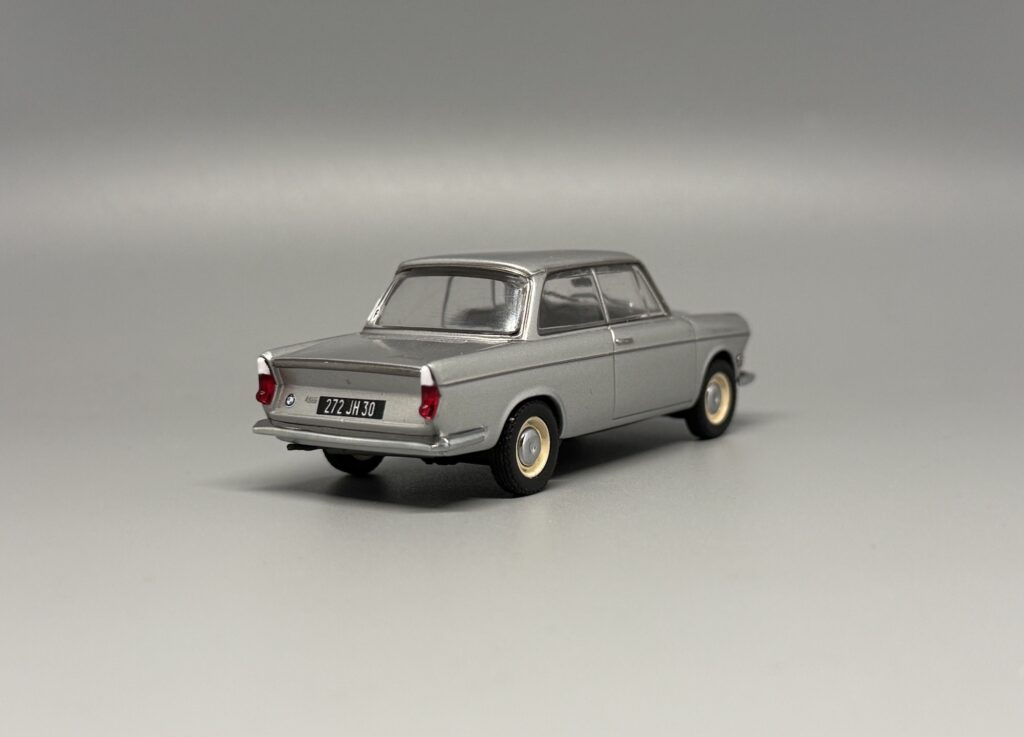
BMW LS was the larger and more spacious development of the BMW 700 model family, introduced in the spring of 1962. The model arrived at a time when BMW had begun to recover from the difficult financial situation of the late 1950s thanks in large part to the success of the BMW 700. The 700 had provided the company with much-needed sales volume and demonstrated that there was strong demand for a small, economical BMW with the appearance of a conventional passenger car. The LS developed the same idea further, offering a longer wheelbase, a larger body and more space for passengers.
Development of the BMW 700
The BMW 700 saloon had entered the market in 1959 and became an extremely important model for the company. At the beginning of 1962, BMW substantially revised the saloon. The wheelbase increased from 2,120 millimetres to 2,280 millimetres, while the overall length grew from 3,540 millimetres to 3,860 millimetres. The rear section of the car was extended in particular, improving rear-seat space and overall comfort. The revised saloon was marketed under the new name BMW LS.
LS and LS Luxus
The better-equipped BMW LS Luxus reached the market first, in January 1962. The more simply equipped BMW LS followed in April and offered the same larger body and essentially the same engineering at a price around 250 Deutsche Mark lower. The LS cost 4,990 DM, while the LS Luxus cost 5,240 DM. To achieve the lower price, the LS omitted some of the additional chrome trim and comfort features of the Luxus version. It therefore offered the same improved interior space in a simpler and more practical form.
Giovanni Michelotti’s design legacy
The original shape of the BMW 700 model family was based on a design created by Italian stylist Giovanni Michelotti. BMW’s Vienna importer Wolfgang Denzel presented a prototype based on Michelotti’s concept to BMW in 1958, after which BMW’s design team under Wilhelm Hofmeister developed the idea into the production Coupé and saloon. The LS retained the simple and modern trapezoidal styling of the 700, but its larger body and longer wheelbase gave the car a more mature and balanced appearance.
BMW’s first unitary-body model family
The BMW 700 was technically important because it was the company’s first series-production model to use a fully unitary, or monocoque, body structure. Instead of a separate chassis frame, the body itself carried the structural loads of the vehicle. This helped reduce weight, allowed a lower body design and made production more efficient. The BMW LS continued to use the same unitary construction and therefore represented an important transition from BMW’s earlier engineering approach towards more modern automobile construction.
A rear-engined BMW
Like the BMW 700, the LS was rear-engined and rear-wheel drive. The engine was mounted at the rear, while luggage space was located at the front. This layout was relatively common among European small cars of the 1950s and 1960s and allowed the passenger compartment to be used efficiently within a compact body. The larger LS body improved interior space further and made the car better suited to carrying four people over longer distances than the earlier BMW 700 saloon.
697 cm³ boxer engine
The BMW LS used a 697 cm³ air-cooled two-cylinder boxer engine with its roots in BMW motorcycle engineering. The same basic power unit had already been used in earlier BMW 700 models. Initially, the engine produced 30 hp at 5,000 rpm. From February 1963, output was increased to 32 hp. Despite its modest displacement, the engine was well suited to the lightweight small car and offered simple construction, low running costs and adequate performance for the period.
120 km/h
The BMW LS had a top speed of 120 km/h. Power was transmitted to the rear wheels through a four-speed manual gearbox. With the later 32 hp engine, acceleration from 0 to 100 km/h still took around half a minute, so the LS was not intended as a sporting car. Its strengths were instead economy, simplicity, lightweight construction and the improved space and comfort offered by its larger body.
An important part of BMW’s recovery
The significance of the BMW LS cannot be separated from that of the wider BMW 700 model family. In 1959, BMW’s financial situation had become so serious that the future of the company itself was under threat. The BMW 700 proved highly successful, however, and total production of the model family eventually reached around 190,000 cars. It was not the only factor in BMW’s survival, but the 700 family played an important role in helping the company through its crisis years and in laying the foundations for the later success of the Neue Klasse.
A short-lived LS
The BMW LS itself remained in production for a relatively short period. It was built from April 1962 until October 1963, with slightly fewer than 6,000 cars produced. The reason was not so much a failure of the larger body design as a change in the model range: the better-equipped LS Luxus proved considerably more popular with buyers and remained in production until 1965.
LS Luxus continued
When production of the standard BMW LS ended in 1963, the BMW LS Luxus remained in the range for almost another two years. It was produced until July 1965, with approximately 86,000 examples built. In 1964, the longer body concept was also adopted for the Coupé, resulting in the BMW LS Coupé. The larger LS body therefore became the dominant form of the BMW 700 model family during its final years.
Historical significance
The BMW LS is not one of the best-known models in BMW history, but its role is an interesting one. It was a more practical and mature development of the BMW 700 saloon and one of the last small rear-engined BMWs before the company shifted its focus towards larger and more sporting models. Its longer wheelbase, larger body, unitary construction and economical boxer engine made the LS a distinctive transitional model between the era of the Isetta and BMW 600 microcars and the world of the Neue Klasse and 02 Series that followed in the 1960s.
Model in the collection
The model in my collection was produced by Minichamps and represents the BMW LS saloon.
Technical data in brief
Production period: April 1962 – October 1963
Body style: two-door four-seat saloon
Body construction: unitary body
Engine: air-cooled two-cylinder boxer
Displacement: 697 cm³
Power: 30 hp, from February 1963 32 hp @ 5,000 rpm
Transmission: 4-speed manual
Drivetrain: rear engine, rear-wheel drive
Wheelbase: 2,280 mm
Length: 3,860 mm
Top speed: 120 km/h
Price when new: 4,990 Deutsche Mark
Production: slightly fewer than 6,000 cars
Special feature: larger, long-wheelbase and more simply equipped LS version of the BMW 700 saloon
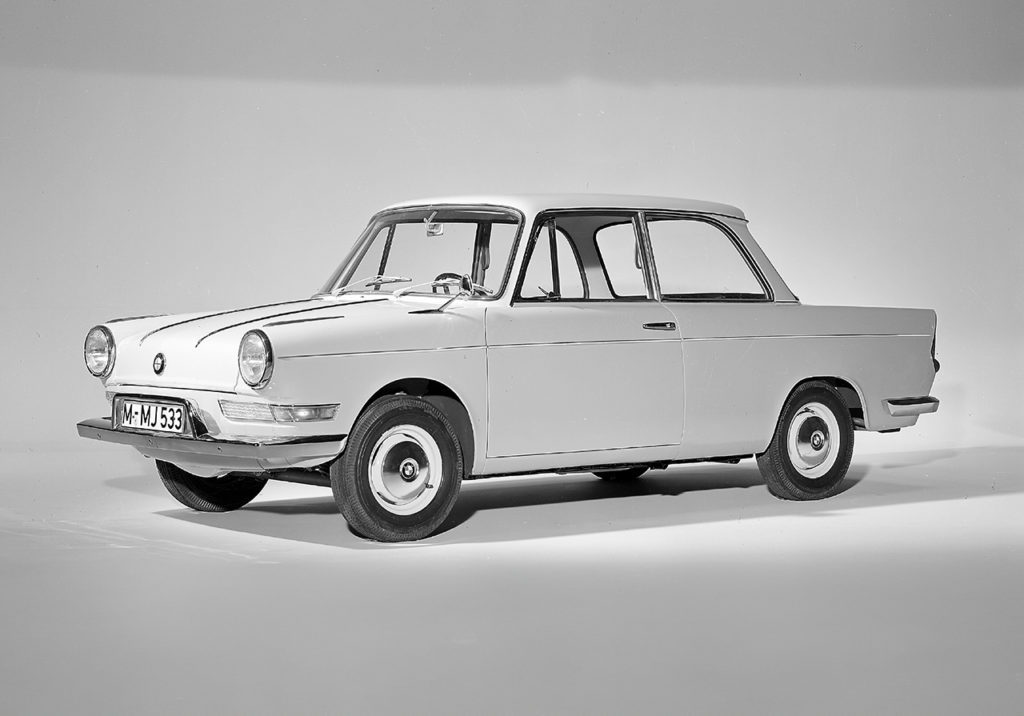
Photo of the real car. Source: bmwgroup-classic.com