
Background
BMW 700 Sport was the more powerful and sporting version of the BMW 700 Coupé, introduced in August 1960. By this time, the BMW 700 had already become an extremely important model for the company and was helping BMW recover from the severe financial difficulties of the late 1950s. While the standard Coupé combined elegant styling with a modest 30 hp engine, the 700 Sport added considerably stronger performance and a more sporting chassis to the same compact car.
The sporting BMW 700 Coupé
The BMW 700 Sport was not a separate body style but rather the sporting version of the BMW 700 Coupé. The standard Coupé’s 697 cm³ boxer engine produced 30 hp and gave the car a top speed of 125 km/h. In the Sport version, output was increased to 40 hp and further technical modifications gave the small BMW a noticeably more energetic character. Visually, the differences remained modest and the 700 Sport retained the elegant, low body of the Coupé.
Giovanni Michelotti’s design
The basic shape of the BMW 700 Coupé originated with Italian designer Giovanni Michelotti. The concept reached BMW through Wolfgang Denzel and was developed into the production car by BMW’s design department under Wilhelm Hofmeister. Its low roofline, large glass areas and clean trapezoidal styling represented a clear departure from BMW’s earlier small cars. The 700 Sport retained the same Coupé body, whose sporting proportions were particularly well suited to the more powerful version.
BMW’s first unitary-body model family
The BMW 700 was the company’s first series-production model family to use a fully unitary body structure. Eliminating the separate chassis frame helped reduce weight and made it possible to create a lower and more modern body. The Coupé measured only 3,540 millimetres in length and had a wheelbase of 2,120 millimetres, yet offered surprisingly usable interior space for its compact dimensions. Lightweight construction was also an important factor in the improved performance of the 700 Sport.
697 cm³ boxer engine
The BMW 700 Sport used a 697 cm³ air-cooled two-cylinder boxer engine whose engineering roots lay in BMW motorcycle technology. The engine was mounted at the rear and drove the rear wheels. For the Sport version, the compression ratio was increased to 9:1, a more sporting camshaft was fitted and fuel was supplied by twin Solex carburettors. These changes increased output from the standard model’s 30 hp to 40 hp at 5,700 rpm.
135 km/h
The 40 hp engine gave the BMW 700 Sport a top speed of 135 km/h. Acceleration from 0 to 100 km/h took just under 20 seconds, an impressive figure for a car with an engine of less than 700 cm³ in the early 1960s. Power was transmitted to the rear wheels through a four-speed manual gearbox, while a sports transmission was also available as an option.
A sportier chassis
BMW did not limit the Sport version to a more powerful engine. A firmer suspension, stronger dampers and an anti-roll bar gave the car more sporting handling than the standard BMW 700 Coupé. Combined with its low weight, rear-mounted engine and compact dimensions, these changes gave the 700 Sport agile handling and made it a natural basis for competition use.
Success in motorsport
The sporting potential of the BMW 700 became clear even before the Sport version reached the market. BMW 700 Coupés were competing from 1959, and in 1960 Hans Stuck, then 60 years old, won the German Hill-Climbing Championship at the wheel of a BMW 700. Competition success created customer demand for a more powerful production version, and the 700 Sport was a direct response. During the early 1960s, the model became a popular basis for circuit-racing and hill-climb cars, with BMW 700s achieving numerous class victories.
The little fighter
The BMW 700 Sport earned a reputation as a “little fighter” through its competition successes. It fought closely with small sporting cars from manufacturers such as Steyr-Puch and Abarth. BMW also developed considerably more powerful competition versions, but even the 40 hp road car demonstrated how effectively lightweight construction and a well-developed chassis could make use of a modestly sized engine.
BMW 700 CS
At the beginning of 1963, the sporting Coupé received a new model designation and the BMW 700 Sport became the BMW 700 CS. There were no significant engineering or visual differences between the two versions, and the 700 CS continued the same 40 hp sporting concept. Production of the BMW 700 CS continued until 1964, making the Sport and CS essentially two stages of the same sporting development within the BMW 700 family.
An important part of BMW’s recovery
The significance of the BMW 700 family extends far beyond that of a small sports coupé. BMW sold more than 35,000 examples of the 700 in 1960, with the model accounting for around 58 per cent of the company’s total revenues that year. Total production of the entire model family eventually reached approximately 188,000 cars. The success of the 700 helped stabilise BMW’s financial position and provided an important foundation for the Neue Klasse models that transformed the company during the 1960s.
Historical significance
The BMW 700 Sport was a small car, but its role in the development of BMW’s sporting models was significant. Even before the arrival of the Neue Klasse and 02 Series, it demonstrated a principle that would later become closely associated with BMW: taking a regular production car and combining it with a more powerful engine and a more sporting chassis. Its rear engine, two-cylinder boxer and displacement of only 697 cm³ make it very different from later sporting BMWs, but that is precisely what makes the 700 Sport such an interesting part of the brand’s history.
Model in the collection
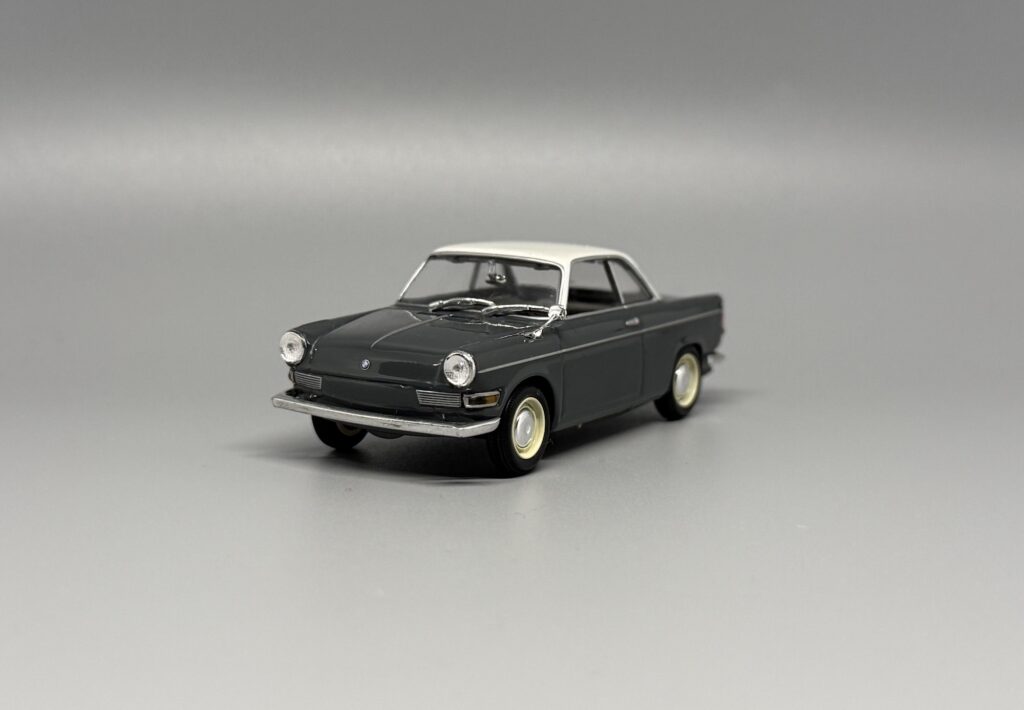
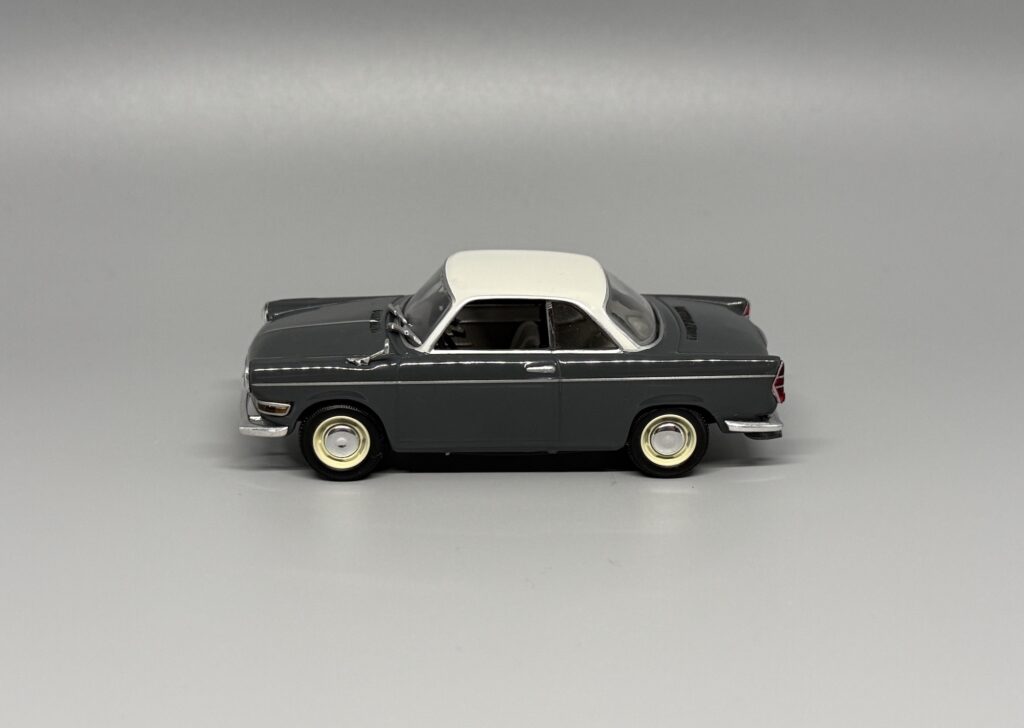
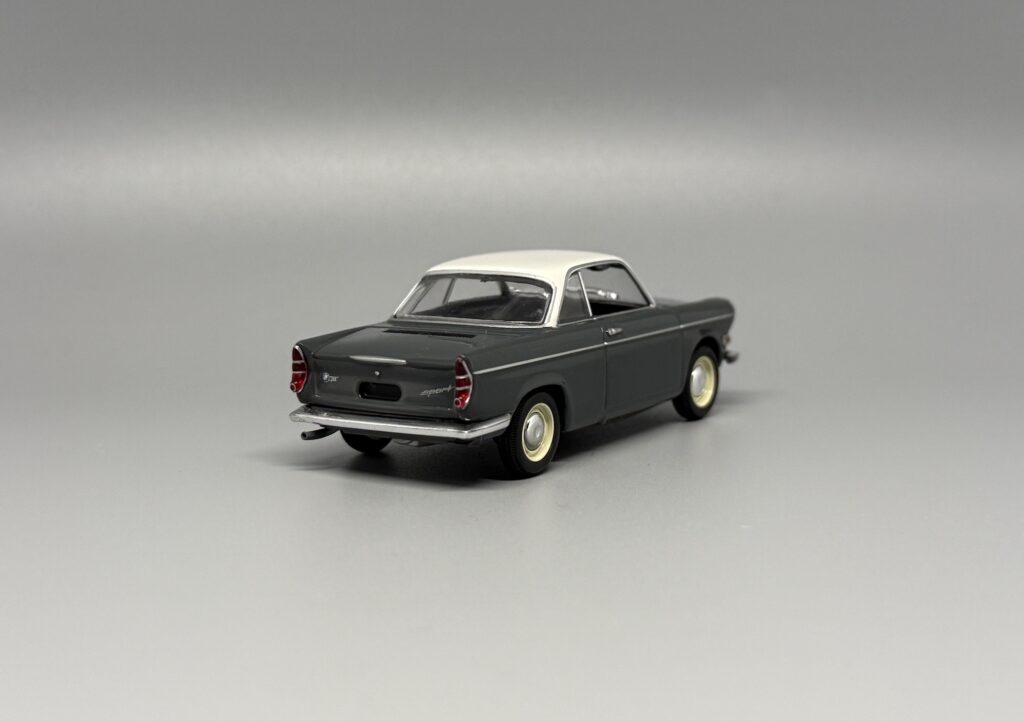
The BMW 700 Sport in my collection was produced by Minichamps and represents a 1960 car. The base of the model is marked BMW 700 Coupé, referring to the underlying body version – the BMW 700 Sport was the more powerful sporting derivative of the Coupé. It is a limited-edition model, with a total production run of 3,024 examples.
Technical data in brief
Production period: August 1960 – January 1963
Body style: two-door 2+2-seat coupé
Body construction: unitary body
Engine: air-cooled two-cylinder boxer
Displacement: 697 cm³
Power: 40 hp @ 5,700 rpm
Fuel system: twin Solex carburettors
Transmission: 4-speed manual, optional sports transmission
Drivetrain: rear engine, rear-wheel drive
Wheelbase: 2,120 mm
Length: 3,540 mm
Top speed: 135 km/h
0–100 km/h: just under 20 seconds
Price when new: 5,650 Deutsche Mark
Design: Giovanni Michelotti, further developed by BMW’s design department
Special feature: 40 hp sporting version of the BMW 700 Coupé and a successful basis for motorsport
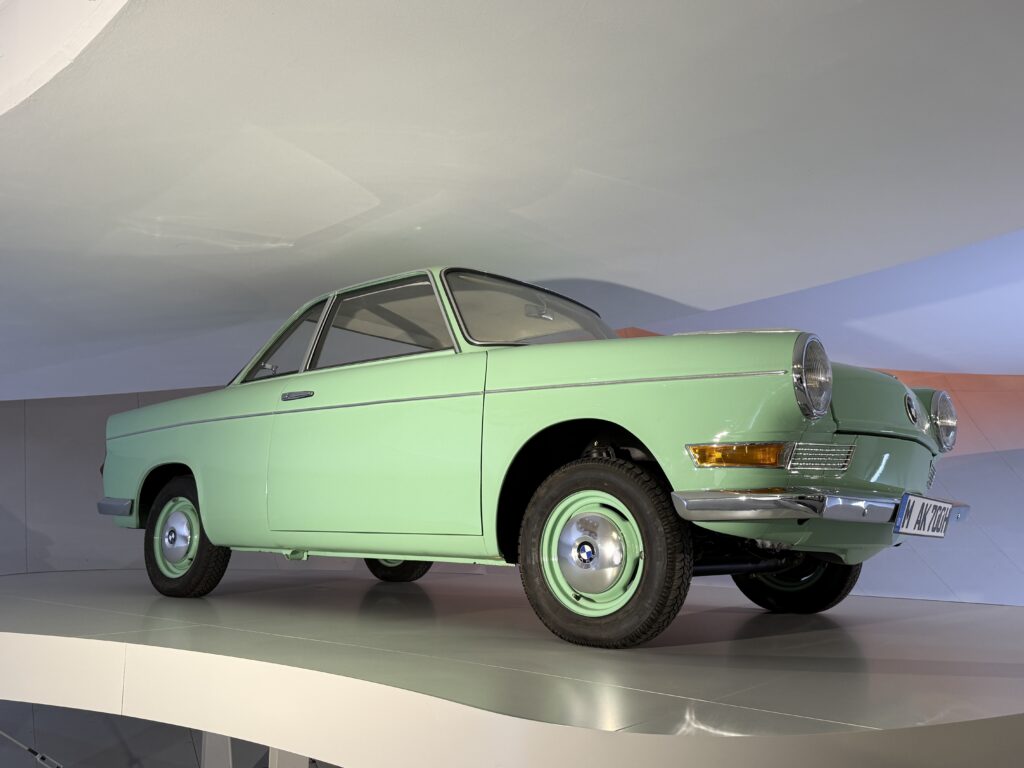
Photo of the real car, BMW Museum. Photo: Sten-Patrick Kreek