
Background
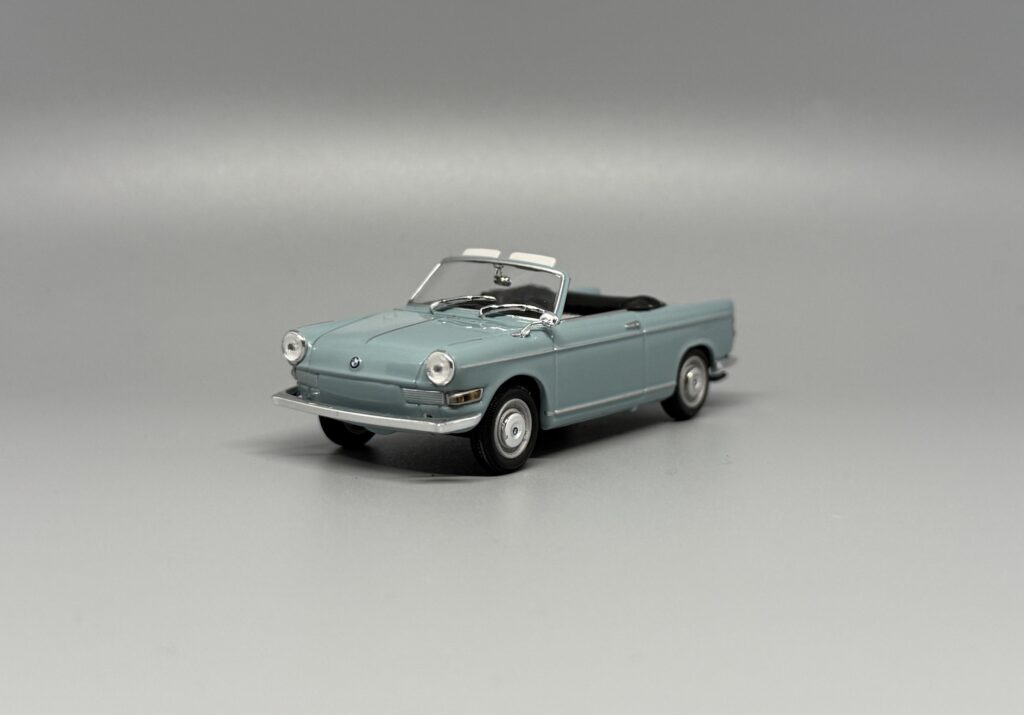
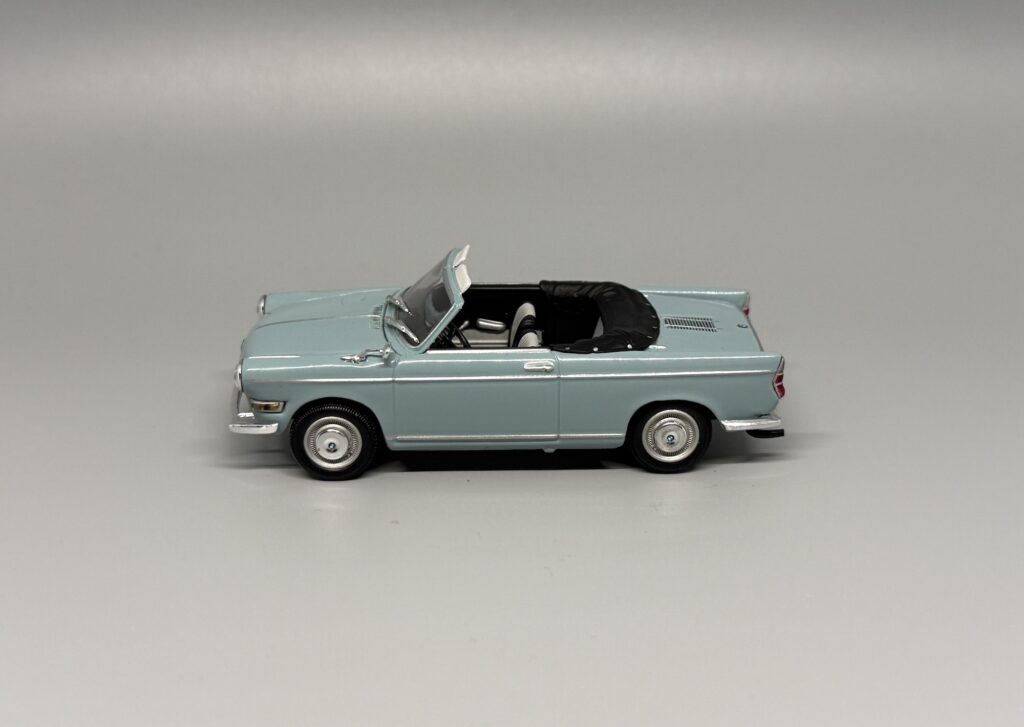
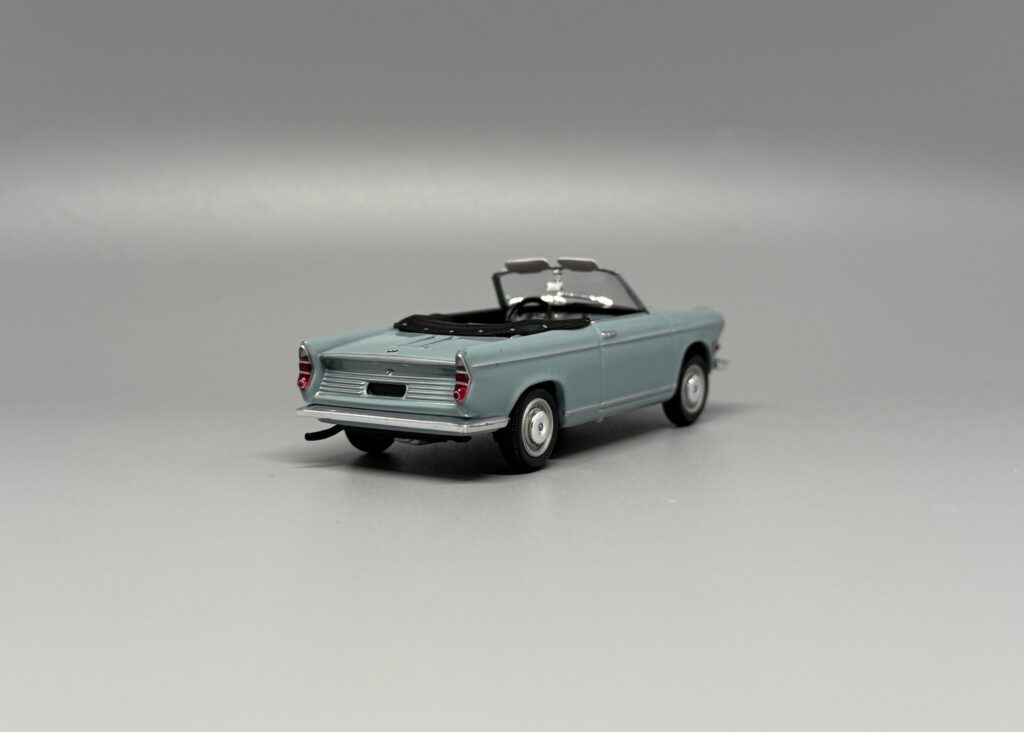
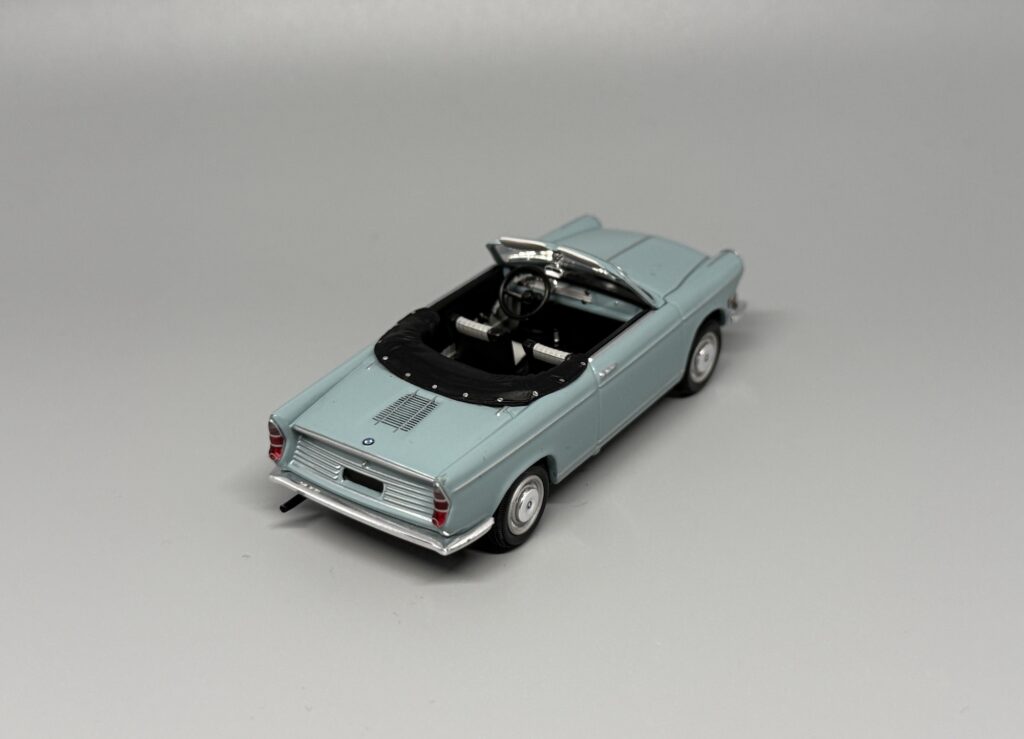
BMW 700 Convertible was the most exclusive version of the BMW 700 model family. The open-top model entered production in the autumn of 1961, by which time the BMW 700 had already proved to be an extremely important sales success for the company. While the saloon offered practicality and the Coupé a sportier appearance, the Convertible combined the compact engineering of the 700 with an elegant open body and the more powerful engine. It became a low-volume and expensive range-topping version that stood apart from the rest of the BMW 700 line-up.
The BMW 700 model family
The BMW 700 was introduced in 1959 and became one of the most important models in the company’s history. Its engineering was partly based on the earlier BMW 600, but the 700 received an entirely new unitary body and a much more modern appearance. The model quickly became successful and helped BMW recover from the difficult financial situation of the late 1950s. The 700 range gradually expanded to include the saloon, Coupé, sporting versions and eventually the Convertible.
An open body by Baur
The idea for the BMW 700 Convertible came from the well-known Stuttgart coachbuilder Baur, which already had a long history of cooperation with BMW. BMW commissioned Baur to develop and manufacture the open version. Removing the fixed roof required the load-bearing elements of the body to be strengthened, while Baur also redesigned the rear section of the car. The Convertible received a straightforward folding soft-top mechanism that made the car relatively easy to use in everyday driving.
Giovanni Michelotti’s design legacy
The basic shape of the BMW 700 model family originated with Italian designer Giovanni Michelotti. His clean and modern styling represented a major departure from BMW’s earlier small cars. The Convertible retained the familiar proportions and simple trapezoidal design language of the 700, but the low windscreen and open body gave it an even more elegant and sporting appearance. Baur’s redesigned rear section blended naturally with Michelotti’s original design, making the Convertible look as though it had been conceived as an open car from the beginning.
A 2+2-seat open BMW
The BMW 700 Convertible was a compact 2+2-seater. With the engine located at the rear, the front of the car could be used for luggage, while the compact body still provided additional seating behind the front occupants. The Convertible was not a large luxury touring car but rather a lightweight and compact open BMW that offered an unusual combination of small-car practicality and sporting lifestyle appeal in the early 1960s.
Unitary construction
Like the rest of the BMW 700 family, the Convertible used a unitary body structure. The BMW 700 was BMW’s first series-production model family without a separate chassis frame. For the Convertible, the absence of a fixed roof created an additional engineering challenge because the roof could no longer contribute to structural rigidity. Baur therefore reinforced the load-bearing elements to maintain sufficient strength and good driving characteristics with the roof removed.
697 cm³ boxer engine
The BMW 700 Convertible used a 697 cm³ air-cooled two-cylinder boxer engine whose origins lay in BMW motorcycle engineering. The engine was mounted at the rear and drove the rear wheels. Unlike the standard BMW 700, the Convertible was not fitted with the less powerful 30 hp engine. Instead, it received the more powerful unit from the BMW 700 Sport as standard.
40 horsepower
The Convertible’s boxer engine produced 40 hp at 5,700 rpm. The more powerful specification used a higher compression ratio and twin Solex carburettors. The same engine helped make the BMW 700 Sport one of the livelier small cars of its class, and in the Convertible it provided stronger performance without compromising the more elegant and relaxed character of the open model.
135 km/h
The BMW 700 Convertible had a top speed of 135 km/h, an impressive figure for a car with an engine of less than 700 cm³ in the early 1960s. Power was transmitted to the rear wheels through a four-speed manual gearbox. The Convertible was not intended as a racing car, but the BMW 700 Sport engine gave it a noticeably more energetic character than the standard 700 saloon.
The most expensive version of the range
The BMW 700 Convertible cost 6,950 Deutsche Mark when new, making it one of the most expensive and exclusive versions of the 700 family. By comparison, the standard BMW 700 saloon cost less than 5,000 DM. The difference reflected both the more labour-intensive Baur body conversion and the stronger engine, as well as the Convertible’s special position within the model range.
A symbol of BMW’s recovery
The significance of the BMW 700 Convertible cannot be separated from the importance of the wider BMW 700 family. In 1959, BMW was in an extremely difficult financial position and the future of the company was uncertain. The BMW 700 became a major success, with total sales of the model family eventually reaching around 190,000 cars. The Convertible represented only a small proportion of that total, but it showed that BMW was once again able to offer distinctive and emotional sporting models alongside practical everyday cars.
Only 2,600 cars
The BMW 700 Convertible was produced from September 1961 until November 1964. According to the BMW Group Archive, only 2,600 cars were built. Compared with total BMW 700 family sales of around 190,000 cars, the Convertible was therefore a genuine rarity. Its low production volume, Baur-built open body and more powerful BMW 700 Sport engine have made it one of the most interesting and desirable versions of the BMW 700 today.
Historical significance
The BMW 700 Convertible represents a fascinating transitional period in BMW history. Its engineering roots lay in the company’s small rear-engined cars and motorcycle technology, while its styling and sporting character already pointed towards the direction BMW would take in the following decade. The Neue Klasse and 02 Series would soon come to define the brand, but the 700 Convertible remains a reminder of the small two-cylinder BMW that helped the company overcome its crisis years and prepared the way for later success.
Model in the collection
The BMW 700 Convertible in my collection was produced by Minichamps and represents a 1961 car. It is a limited-edition model, with a total production run of 3,024 examples.
Technical data in brief
Production period: September 1961 – November 1964
Body style: 2+2-seat convertible
Body construction: unitary body, reinforced and adapted by Baur
Engine: air-cooled two-cylinder boxer
Displacement: 697 cm³
Power: 40 hp @ 5,700 rpm
Transmission: 4-speed manual
Drivetrain: rear engine, rear-wheel drive
Top speed: 135 km/h
Price when new: 6,950 Deutsche Mark
Production: 2,600 cars
Coachbuilder: Baur, Stuttgart
Special feature: the most exclusive open-top version of the BMW 700 model family
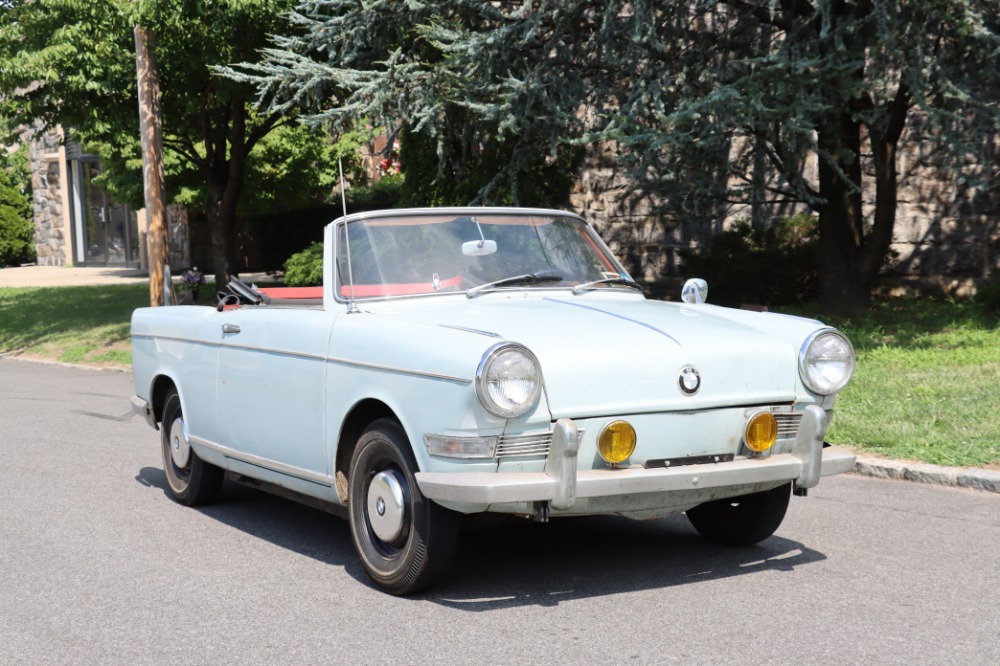
Photo of the real car. Source: gullwingmotorcars.com