
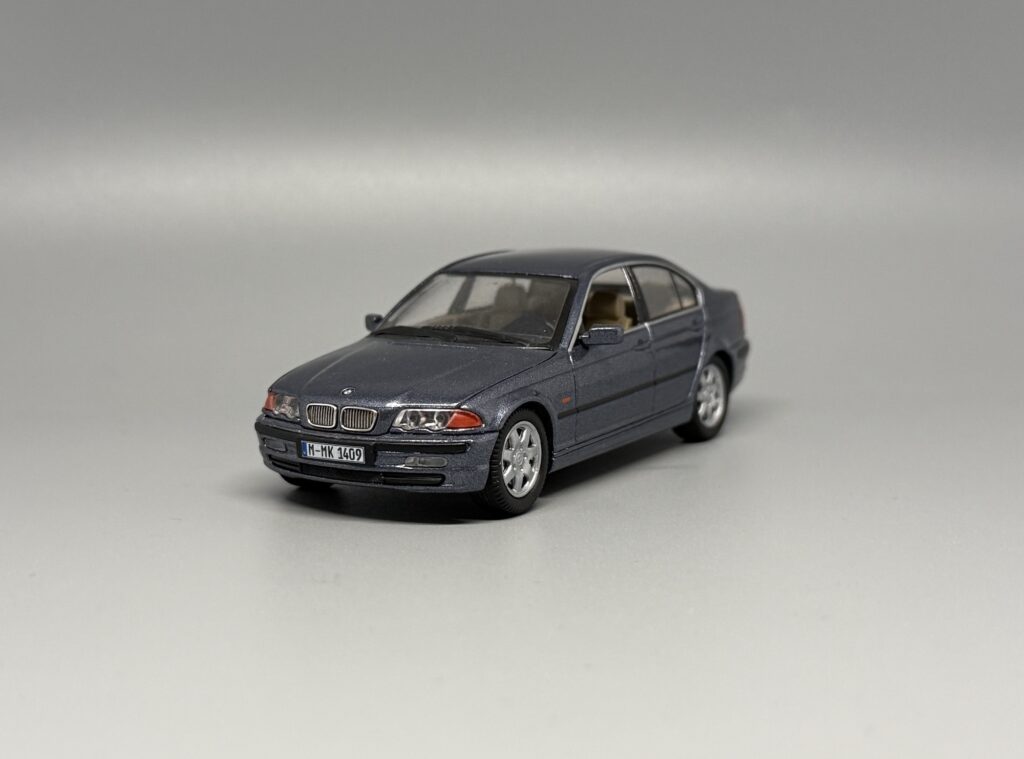
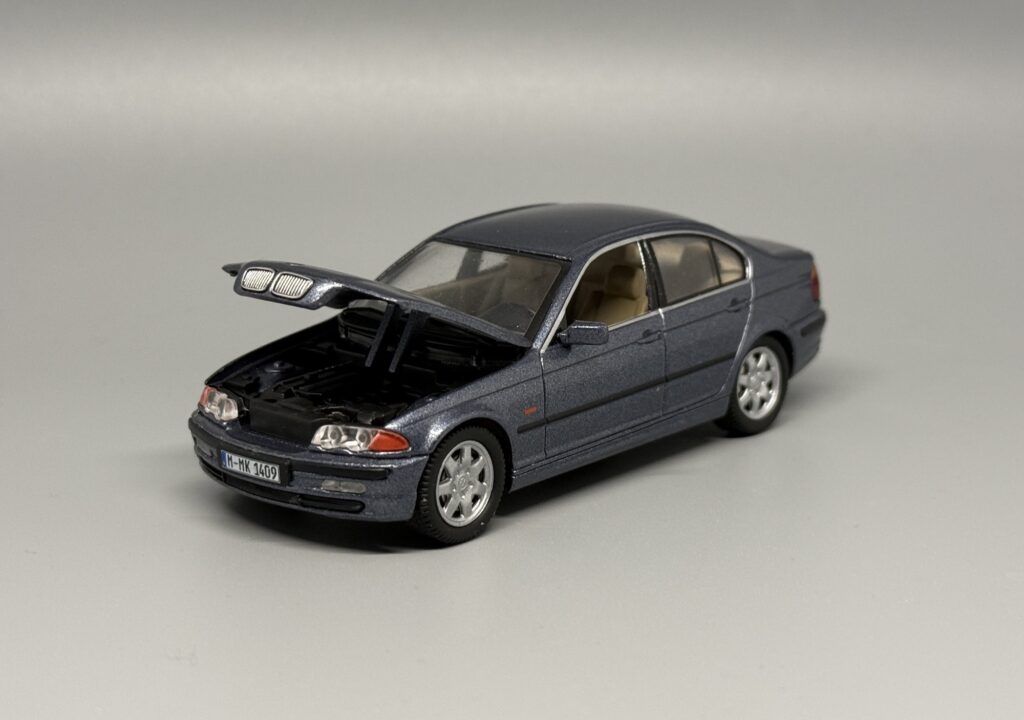
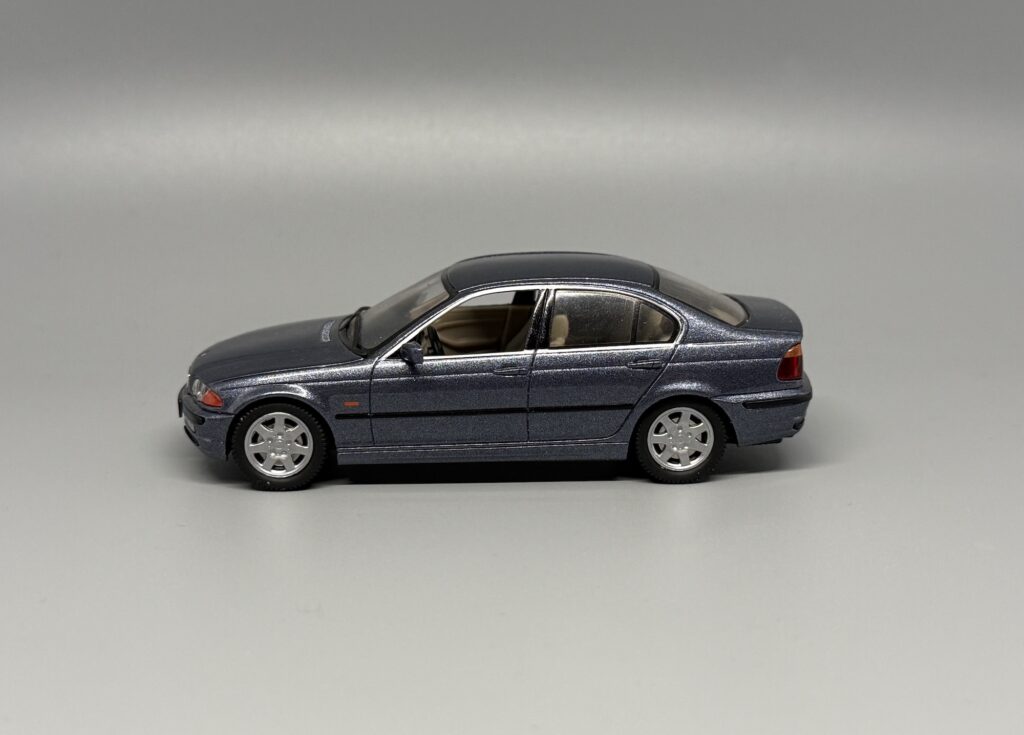
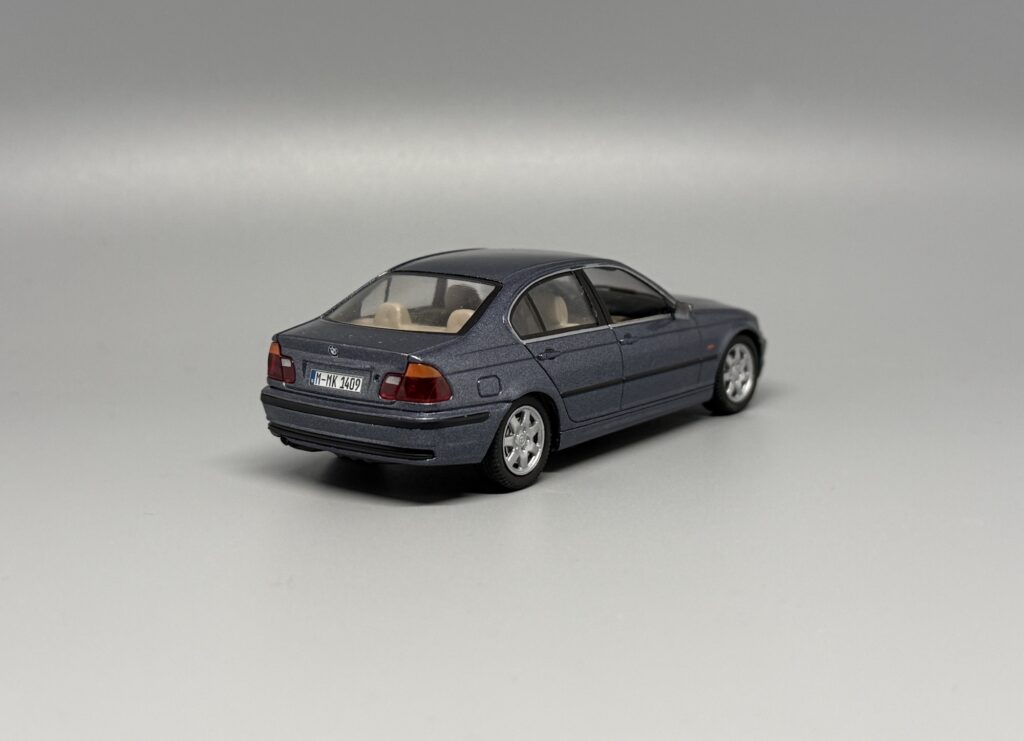
BMW 3 Series Sedan (E46) introduced the fourth generation of the 3 Series in 1998 and further developed the concept of the sporting four-door premium car established by the E36. The new model was more mature, better finished and more spacious than its predecessor, yet retained the fundamental qualities traditionally associated with BMW – a longitudinally mounted engine, rear-wheel drive, precise handling and a distinctly driver-focused character.
The E46 became one of the most successful 3 Series generations in BMW history. The Sedan formed the core of the model family and was also the first E46 body style to reach the market. Coupé, Touring, Convertible and Compact versions followed progressively.
The fourth generation of the 3 Series
Production of the E46 Sedan began in December 1997, with the model reaching customers in 1998. BMW Group Classic describes the four-door Sedan as the standard body style of the E46 family, and its success was exceptional – almost two million were produced.
Compared with the E36, the car grew by approximately four centimetres in length, while rear passengers gained around ten millimetres of additional knee room. Despite the increase in size, the E46 remained clearly identifiable as a compact sporting sedan rather than developing into a smaller luxury saloon.
The design was created under the direction of BMW design chief Chris Bangle. The more geometric form of the E36 evolved into a smoother and more flowing shape. Distinctive features included the kidney grilles integrated more closely into the bonnet and the characteristic wave-shaped lower edges of the headlamp units.
A sporting sedan with greater maturity
The E46 retained the classic BMW architecture of a longitudinally mounted front engine and, in most versions, rear-wheel drive. This helped preserve favourable weight distribution while allowing the front wheels to concentrate primarily on steering rather than also transmitting engine power.
The chassis further developed the multi-link rear-suspension principles introduced with the E36. Improvements to the suspension, steering and body structure made the E46 more stable and refined than its predecessor while retaining the precise handling expected from a 3 Series.
This balance became one of the defining characteristics of the E46. It could serve comfortably as an everyday family or long-distance car while the more powerful versions remained highly capable driver-focused sports sedans.
A broad range of petrol engines
The E46 Sedan was offered with an exceptionally broad selection of engines. The early range included the four-cylinder 316i and 318i together with the six-cylinder 320i, 323i and 328i. BMW therefore continued to offer the same basic body with everything from economical four-cylinder power to significantly more powerful straight-six engines.
The early flagship was the 328i. Its 2.8-litre M52TU straight-six produced 193 hp and 280 Nm and was capable of a maximum speed of 240 km/h.
In 2000, the 328i was replaced by the new 330i. Its 2,979 cc M54B30 straight-six produced 170 kW or 231 hp and 300 Nm. According to BMW Group Classic, the 330i Sedan accelerated from 0–100 km/h in only 6.5 seconds and reached 250 km/h. It became the most powerful regular petrol version of the E46 Sedan.
New technology for the four-cylinder engines
The smaller petrol engines also developed significantly during the E46 production period. With the 2001 model update, for example, the 318i received the new N42 engine incorporating BMW’s VALVETRONIC system together with Double VANOS.
VALVETRONIC varied intake-valve lift and allowed engine load to be controlled with less dependence on a conventional throttle valve. The aim was to reduce fuel consumption and emissions while maintaining strong performance. The output of the 318i increased from 118 hp to 143 hp as part of the update.
Major advances in diesel technology
The E46 was also an important generation in the development of BMW diesel engines. The 320d arrived in 1998 and combined direct injection with turbocharging. It initially produced 136 hp, with output later increasing to 150 hp.
Even more significant was the 330d introduced in 1999. Its M57 six-cylinder turbo-diesel used common-rail injection and initially developed 184 hp and 390 Nm. A major revision in 2003 increased displacement to 2,993 cc, output to 204 hp and maximum torque to 410 Nm.
The revised 330d could reach 242 km/h, demonstrating how the diesel engine had evolved by the E46 era from merely an economical alternative into a genuinely high-performance BMW power unit.
All-wheel drive returns to the 3 Series
The E46 also marked the return of all-wheel drive to the 3 Series after an absence of almost ten years. The Sedan range gained the 325xi and 330xi, using engines corresponding to those in the rear-wheel-drive 325i and 330i.
The E46 all-wheel-drive system retained a distinctly BMW character. According to BMW Group Classic, 62 percent of the drive force was directed to the rear axle in order to preserve as much as possible of the agility of the conventional rear-wheel-drive 3 Series. Electronic DSC and ADB systems replaced conventional mechanical differential locks.
The 330xi used the same 231 hp 3.0-litre M54 straight-six as the 330i and was capable of 247 km/h.
The 2001 model update
The E46 Sedan received a substantial model update in 2001. The headlights, indicators, kidney grilles, bonnet, bumpers and a number of other exterior details were redesigned. The engine range and technology were also updated.
The facelift did not alter the fundamental character of the car but gave the E46 a fresher and slightly more assertive appearance. Today, early and facelift E46 Sedans can be distinguished relatively easily by their front-end details.
One of BMW’s greatest sales successes
The E46 became an exceptional commercial success. BMW’s historical figures show that sales of the complete fourth-generation 3 Series eventually exceeded 3.2 million cars, making it one of the most successful BMW model families of its era.
The Sedan was by far its most important body style. BMW Group Classic describes it as a model with almost two million units sold. Production statistics based on BMW Group Archive figures record 1,918,984 E46 Sedans, including 54,528 CKD kits supplied for local assembly.
E46 production was international. Depending on model and specification, Sedans were manufactured in Munich, Regensburg and Dingolfing in Germany, while the Rosslyn plant in South Africa was another important production location. Approximately 269,000 E46-generation 3 Series cars were produced at Rosslyn alone.
The legacy of the E46
Today, the E46 Sedan is valued particularly for its well-balanced character. It was modern enough to provide good safety, comfort and increasingly sophisticated electronics while retaining a more mechanical and direct driving feel than many later generations.
Naturally aspirated straight-six petrol engines, rear-wheel drive, relatively compact dimensions and a clearly driver-oriented interior have made the E46 one of the best-known modern-classic BMWs. It represents a period in which the original sporting-sedan philosophy of the 3 Series and early 21st-century technology came together particularly successfully.
Model in the collection
The BMW 3 Series Sedan (E46) model in my collection was produced by Schuco. It was produced as an official BMW dealer model commissioned by BMW and was intended for sales and presentation purposes within the BMW dealer network.
Technical data
Production: 12/1997–05/2005
Market launch: 1998
Body style: four-door sedan
Production locations: depending on version, Munich, Regensburg, Dingolfing and Rosslyn, with additional CKD assembly in other markets
Engines: four- and six-cylinder petrol and diesel engines
Most powerful regular petrol version: BMW 330i, 231 hp
Most powerful regular diesel version: BMW 330d, 204 hp
Drive: rear-wheel drive or all-wheel drive on xi models
Total E46 Sedan production: 1,918,984 cars, including 54,528 CKD kits
Special feature: the core body style of the E46 family and one of the most successful 3 Series Sedans in BMW history