
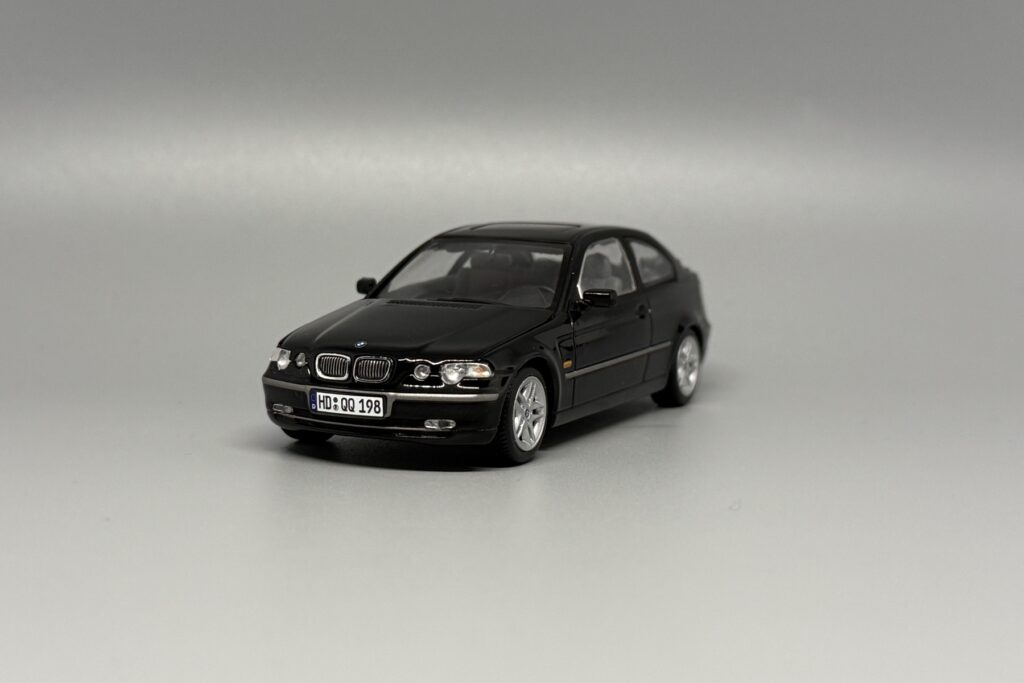
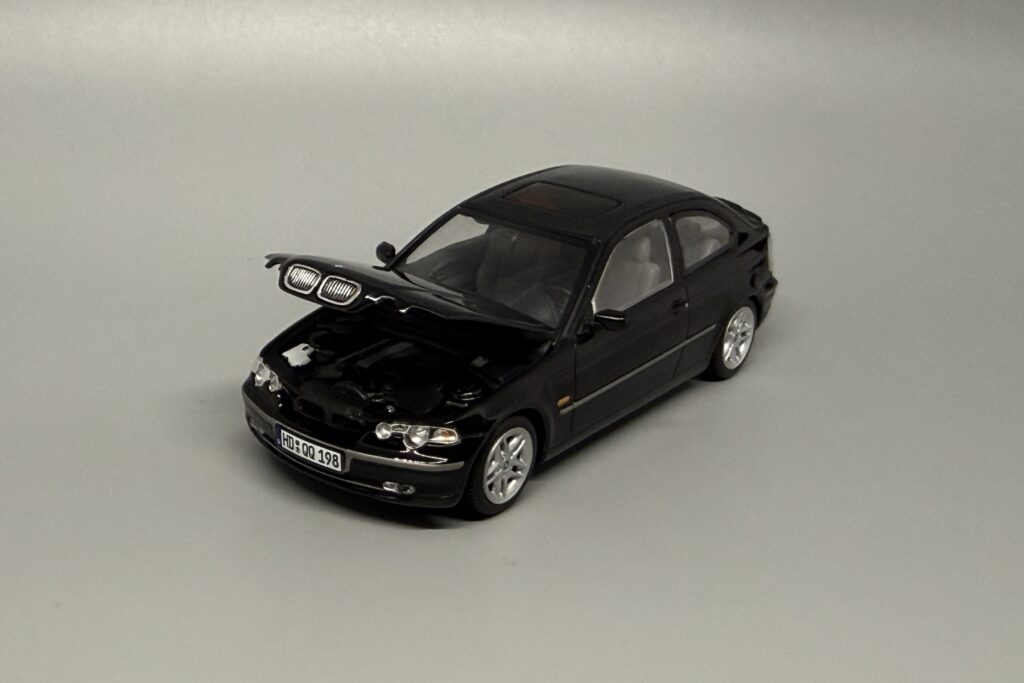
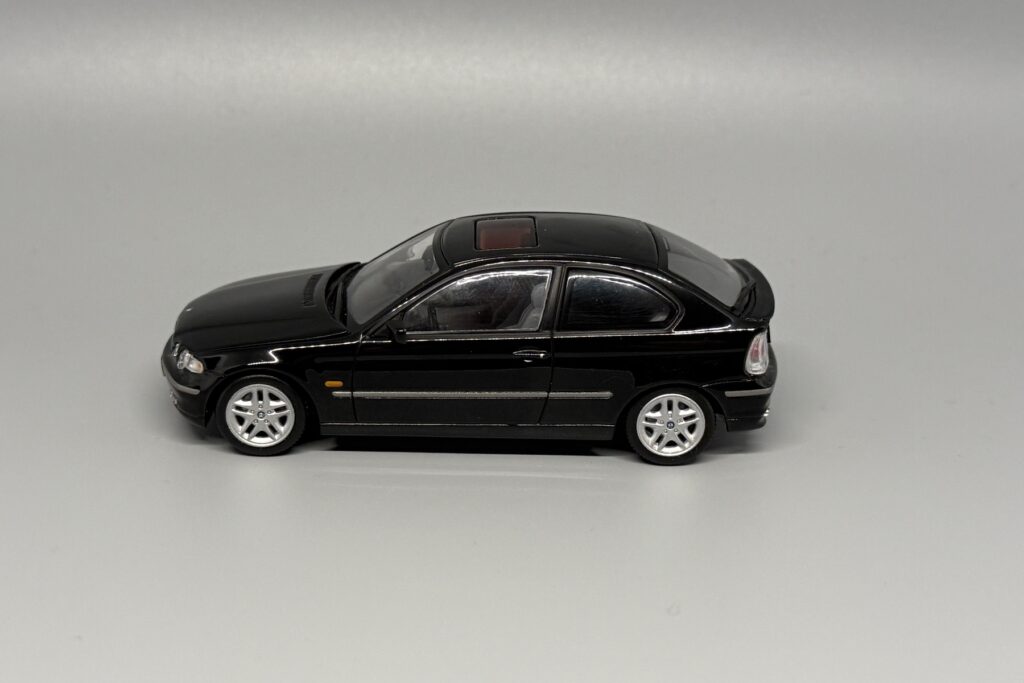
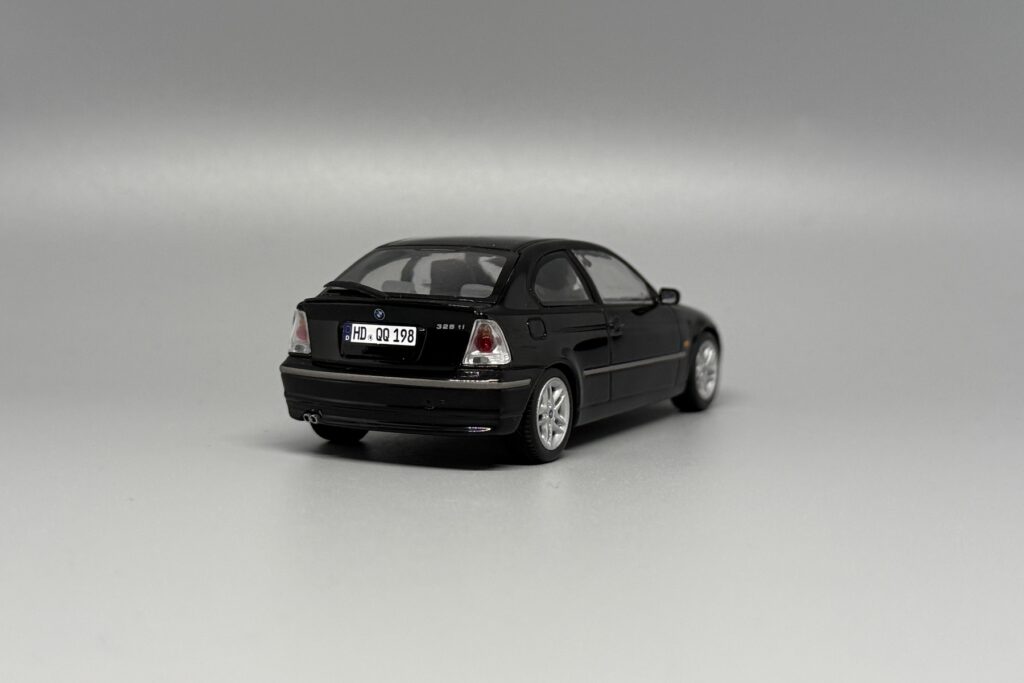
BMW 325ti Compact (E46/5) was the most powerful and sporting version of the second-generation 3 Series Compact. The new Compact differed from the rest of the E46 family through its shorter three-door body, large rear hatch and distinctive front and rear styling. The 325ti added a 2.5-litre straight-six engine to this package, giving the practical hatchback a considerably more sporting character.
The 325ti reached the market in the summer of 2001 together with the 316ti and occupied the top of the Compact range from the outset. For BMW, it represented an unusual combination: a relatively small body, traditional rear-wheel drive and the same 192 hp straight-six engine used in the larger E46 325i models.
The second-generation Compact
BMW had introduced the first 3 Series Compact with the E36 generation in 1994. Its success encouraged the company to continue the concept, and an entirely new E46-based Compact was presented towards the end of 2000.
According to BMW’s contemporary press material, the new Compact was 21 centimetres shorter than the Sedan. At the same time, it retained the same 2,725 mm wheelbase, allowing useful passenger accommodation despite its significantly shorter overall body.
The new Compact was more than simply a shortened Sedan. Its front end featured a distinctive design with four individual headlamps, while the rear was also clearly different from the rest of the E46 family. BMW deliberately gave the model a younger and more independent identity.
Practical yet sporting
The Compact’s large rear hatch and folding rear seats made it a practical everyday car. Luggage capacity was 310 litres, increasing to approximately 1,100 litres with the rear seats folded.
BMW did not, however, intend the Compact to be merely a small family hatchback. The chassis was given a sportier set-up than the Sedan and rear-wheel drive was retained. This clearly distinguished the E46 Compact from most rivals of a similar size, which predominantly used front-wheel drive.
325ti – the six-cylinder flagship
When the new Compact reached the market in June 2001, the initial range consisted of two petrol models. The 316ti used BMW’s new four-cylinder VALVETRONIC engine, while the flagship 325ti received a 2.5-litre straight-six.
BMW Group Classic specifically describes the 325ti as the flagship of the second Compact generation. The straight-six engine gave the smaller and agile body a level of performance that clearly separated it from a conventional compact hatchback.
The 2.5-litre M54 straight-six
The BMW 325ti Compact was powered by the naturally aspirated M54B25 straight-six petrol engine. Displacement was 2,494 cc and maximum output was 141 kW or 192 hp at 6,000 rpm.
Maximum torque was 245 Nm at 3,500 rpm. The M54 featured four valves per cylinder and Double VANOS variable camshaft timing, combining good torque delivery, smoothness and the free-revving character traditionally associated with BMW straight-six engines.
The same 2.5-litre engine was also used in the E46 325i Sedan, Touring, Coupé and Convertible. In the smaller Compact body, however, it produced a particularly sporting combination.
235 km/h
With the manual transmission, the 325ti accelerated from 0–100 km/h in approximately 7.1 seconds and reached a top speed of 235 km/h. These figures made it one of the quickest compact hatchbacks of its era.
BMW emphasised the combination of six-cylinder performance and the compact body. Power was delivered to the rear wheels, while the sportingly tuned chassis gave the car a more agile character than the larger E46 Sedans.
Five speeds initially, six later
The 325ti was originally fitted with a five-speed manual gearbox. As part of the 2003 model update, a six-speed manual transmission became standard.
The sixth gear primarily acted as an overdrive ratio. The car still achieved its 235 km/h maximum speed in fifth gear, while sixth reduced engine speed, noise and fuel consumption during faster cruising.
An automatic transmission was also available, while an SMG transmission was later offered as an option.
Rear-wheel drive in a compact hatchback
One of the most important characteristics of the 325ti was its retention of traditional BMW engineering. The engine was mounted longitudinally at the front and drove the rear wheels.
This made the car unusual in its segment. Most premium and mainstream compact cars used front-wheel drive, while BMW retained its traditional architecture even for its smallest 3 Series derivative.
The compact body, straight-six engine and rear-wheel drive gave the 325ti a distinctive character and later made it popular in amateur motorsport. BMW Group Classic specifically notes that modified 325ti models were frequently used in competition.
Fewer than 11,000 cars
The 325ti never became a major sales success. BMW Group Classic notes that its higher purchase price and greater fuel consumption limited its appeal as an everyday compact car.
Just under 11,000 examples of the 325ti Compact were produced. This represented only a small proportion of total E46 Compact production, which approached 200,000 cars.
Its relatively small production volume together with the unusual combination of straight-six power and rear-wheel drive has made the 325ti one of the most interesting and desirable versions of the E46 Compact today.
The end of the Compact era
The E46 Compact remained in production until the end of 2004. By that stage BMW was preparing a new model that would take over the Compact’s role completely.
The BMW 1 Series (E87), introduced in 2004, established BMW’s smaller car as a separate model family. Like the 325ti, the first-generation 1 Series retained rear-wheel drive. The E46 Compact, and particularly the six-cylinder 325ti, can therefore be regarded as an important link between the 3 Series Compact concept and the later BMW 1 Series.
Model in the collection
The BMW 325ti Compact (E46/5) model in my collection was produced by Minichamps. The manufacturer identifies the represented car as a 2000 model, and the miniature was released as a limited edition of 1,824 pieces.
The 2000 designation is interesting because the production model did not officially reach the market until June 2001. BMW Group Classic’s production data nevertheless begin in April 2000, and BMW publicly presented the new Compact towards the end of that year. The Minichamps model can therefore be regarded as representing the very early, pre-launch phase of the 325ti.
Technical data
BMW Group Archive production period: 04/2000–12/2004
Market launch: 06/2001
Body style: three-door Compact
Engine: M54B25 naturally aspirated straight-six petrol engine
Displacement: 2,494 cc
Power output: 141 kW / 192 hp at 6,000 rpm
Maximum torque: 245 Nm at 3,500 rpm
Valve timing: Double VANOS
Transmission: initially 5-speed, 6-speed manual from 2003; automatic also available
Drive: rear-wheel drive
0–100 km/h: approximately 7.1 seconds
Top speed: 235 km/h
Luggage capacity: 310–1,100 litres
Original German price: DM 46,900
Production total: just under 11,000 cars according to BMW Group Classic
Special feature: six-cylinder flagship of the second-generation 3 Series Compact
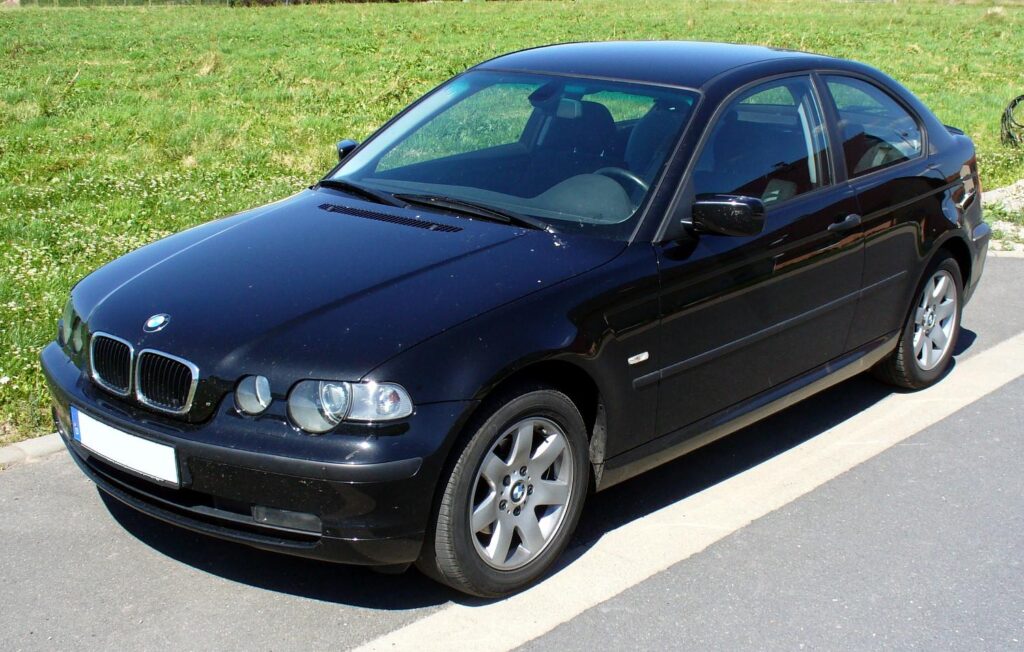
Photo of the real car. Photo: Thomas doerfer / Wikimedia Commons, CC BY-SA 3.0