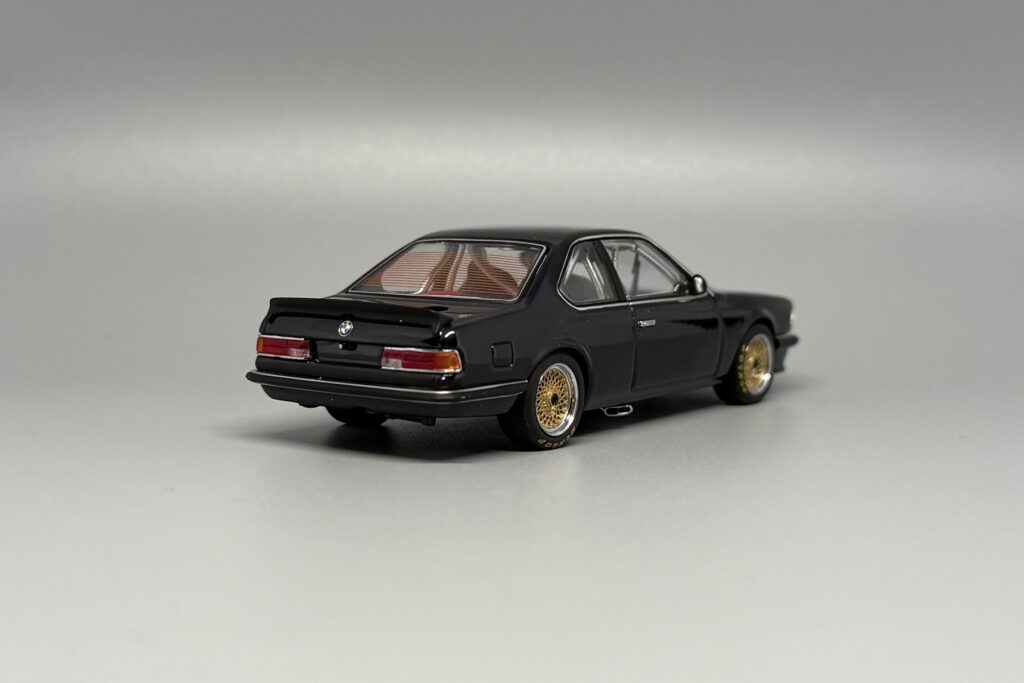
BMW 635 CSi Group A (E24) was one of BMW’s most successful and recognisable touring cars of the 1980s. Developed from the elegant 6 Series Coupé, the competition version combined a large 3.5-litre straight-six engine, rear-wheel drive and the strong production-car connection required by Group A regulations. The result was a car that achieved major success in the European Touring Car Championship, in Germany, at the 24 Hours of Spa and in numerous other international races.
The 6 Series enters Group A racing
The BMW 635 CSi had already been used in motorsport before the Group A era, but in 1983 the model was homologated under the new FIA Group A regulations. The BMW 635 CSi received homologation number 5118, with approval taking effect on 2 March 1983.
The homologation car used a 3430 cc straight-six engine and rear-wheel drive. Group A regulations required the competition car to retain a close relationship with the production model, while still allowing carefully defined modifications to the suspension, brakes, transmission, engine and body components.
BMW Motorsport and Schnitzer
BMW Motorsport played an important role in the development of the Group A 635 CSi, while Schnitzer Motorsport became one of the most important teams associated with the car. In early Group A specification, the 3.5-litre straight-six competition engine produced approximately 285 hp, while the car weighed around 1185 kilograms.
Exact figures varied according to season, race and team specification, but these numbers give a good impression of the Group A 635 CSi’s character. Compared with the 218 hp road car, the competition version offered significantly more power, while much of the interior equipment was removed and replaced by a roll cage and racing hardware.
European champion in 1983
Success came quickly. In 1983, Dieter Quester won the European Touring Car Championship driving a Schnitzer BMW 635 CSi. The achievement demonstrated that the large and comparatively heavy 6 Series Coupé could compete successfully under Group A regulations against much smaller touring cars.
The 635 CSi’s strength did not rely on engine power alone. Its long-wheelbase chassis, robust straight-six engine and well-developed suspension made it particularly competitive on fast circuits and in endurance racing.
Success in Germany and Europe
In 1984, the 635 CSi also secured an important place in German touring-car history. Volker Strycek won the inaugural Deutsche Produktionswagen-Meisterschaft championship in a BMW 635 CSi, in the series that later developed into the DTM.
The BMW 635 CSi remained competitive at international level for several more years. In 1986, Roberto Ravaglia won the European Touring Car Championship with the 635 CSi. From the following season, BMW’s leading touring-car role increasingly passed to the smaller and more purpose-developed E30 M3.
Success in endurance racing
The 635 CSi also achieved notable results in endurance racing. The model became one of the most successful cars in the 24 Hours of Spa during the 1980s, with Group A versions of the 635 CSi achieving both overall victories and strong podium finishes.
One of the best-known results came in 1986, when Dieter Quester, Altfrid Heger and Thierry Tassin won the 24 Hours of Spa in a BMW 635 CSi. Another 635 CSi finished second in the same race.
From road car to racing car
The Group A 635 CSi retained the basic shape of the production model, which is one of the reasons the competition version remains so immediately recognisable today. The E24’s characteristic long bonnet, low glasshouse and forward-sloping “shark nose” remained, while the racing car received lowered suspension, larger wheels, stronger brakes and competition-oriented aerodynamic details.
The body was not radically redesigned in the manner of some later purpose-built homologation specials. Group A regulations required the car to remain clearly identifiable as a 635 CSi, creating an appealing contrast between the elegant grand tourer body and the specialised racing technology beneath it.
Transition to the E30 M3 era
The 635 CSi Group A represented an important transitional period in BMW touring-car history. It continued the tradition established by the 3.0 CSL as a large six-cylinder racing coupé, while competing under the newer Group A regulations.
In 1987, its role was taken over by the BMW M3 (E30), a much smaller car designed from the outset with competition requirements in mind. The achievements of the 635 CSi had already demonstrated, however, how competitive BMW could be in the Group A touring-car era.
Plain Body Version
“Plain Body Version” was not an official BMW production or competition designation. In the model-car world, the term refers to a neutral version of a racing car without the livery of a specific team, sponsor or race number. This allows the form and competition details of the car itself to stand out without linking the model to a particular event or driver.
AUTOart based its Plain Body Version on the BMW 635 CSi Group A racing car. The manufacturer also produced several fully liveried competition versions using the same body, including cars in BMW Original Teile and Jägermeister colours.
Model in the collection
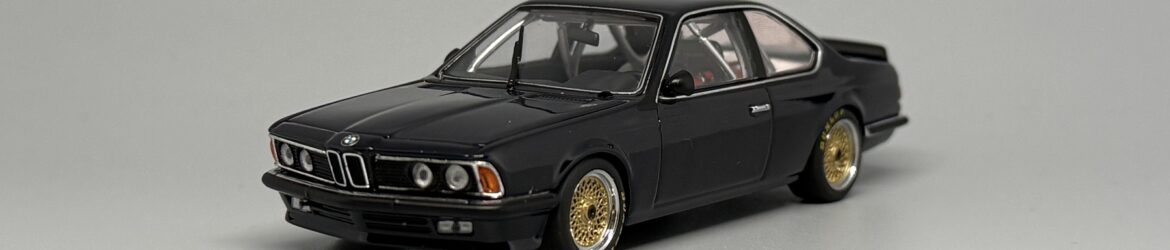
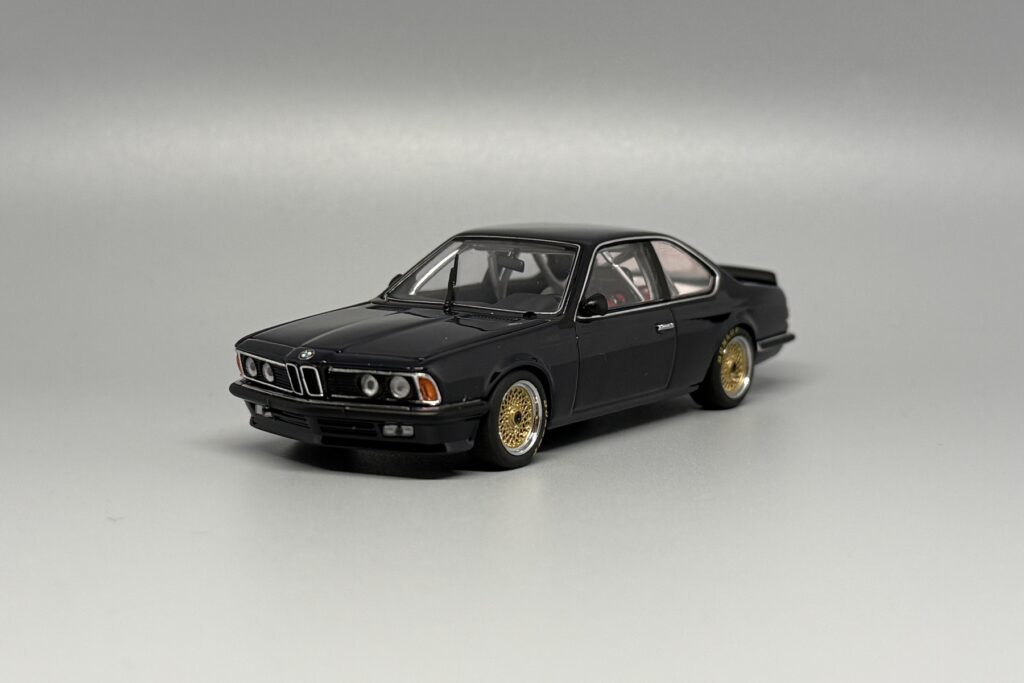
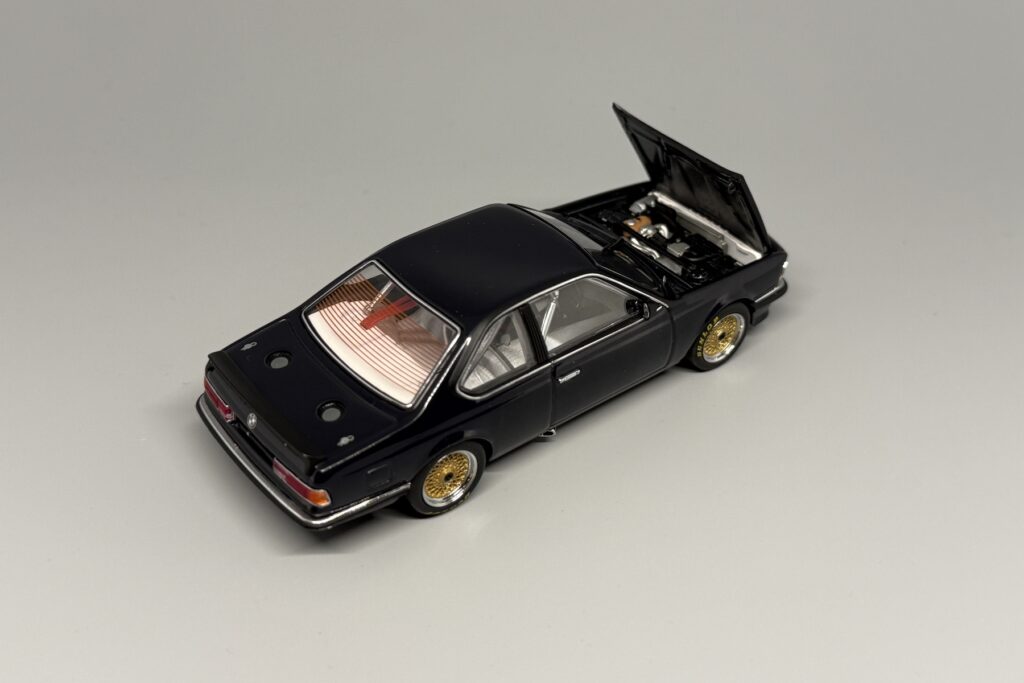
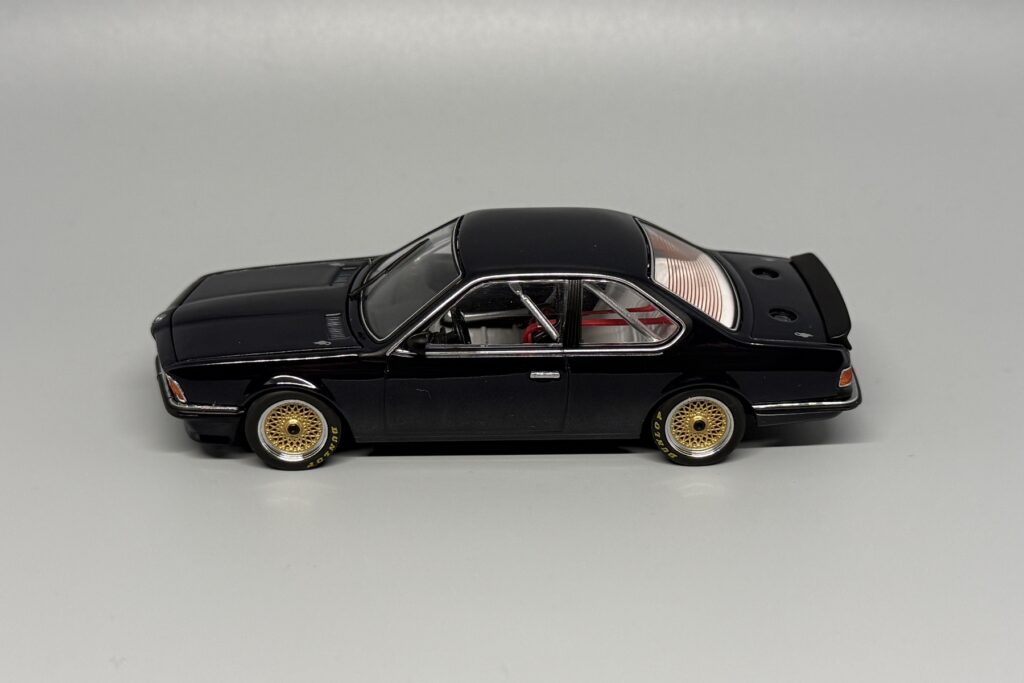
The BMW 635 CSi Group A (E24) model in my collection was produced by AUTOart. The manufacturer identifies it as the Plain Body Version.
The model therefore does not represent one specific team, driver or race. Instead, it depicts the 635 CSi Group A competition car in a neutral form, allowing the distinctive E24 racing bodywork and technical details to remain clearly visible without sponsor graphics or race numbers.
Technical data
FIA Group A homologation: 02.03.1983
Homologation number: 5118
Body style: two-door racing coupé
Engine: naturally aspirated straight-six petrol engine
Displacement: 3430 cc according to homologation data
Power output: approximately 285 hp in Schnitzer’s 1983 Group A specification
Weight: approximately 1185 kg in Schnitzer’s 1983 Group A specification
Drive: rear-wheel drive
Major achievements: European Touring Car Championship titles in 1983 and 1986, German touring-car championship title in 1984
Special feature: FIA Group A touring car developed from the E24 BMW 635 CSi production model