
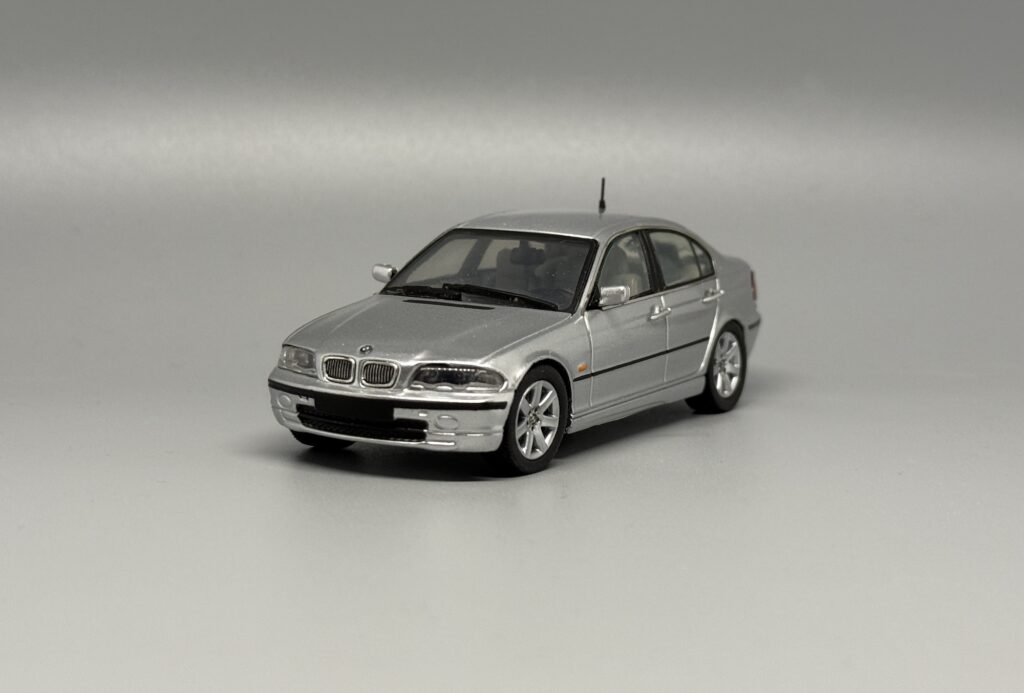
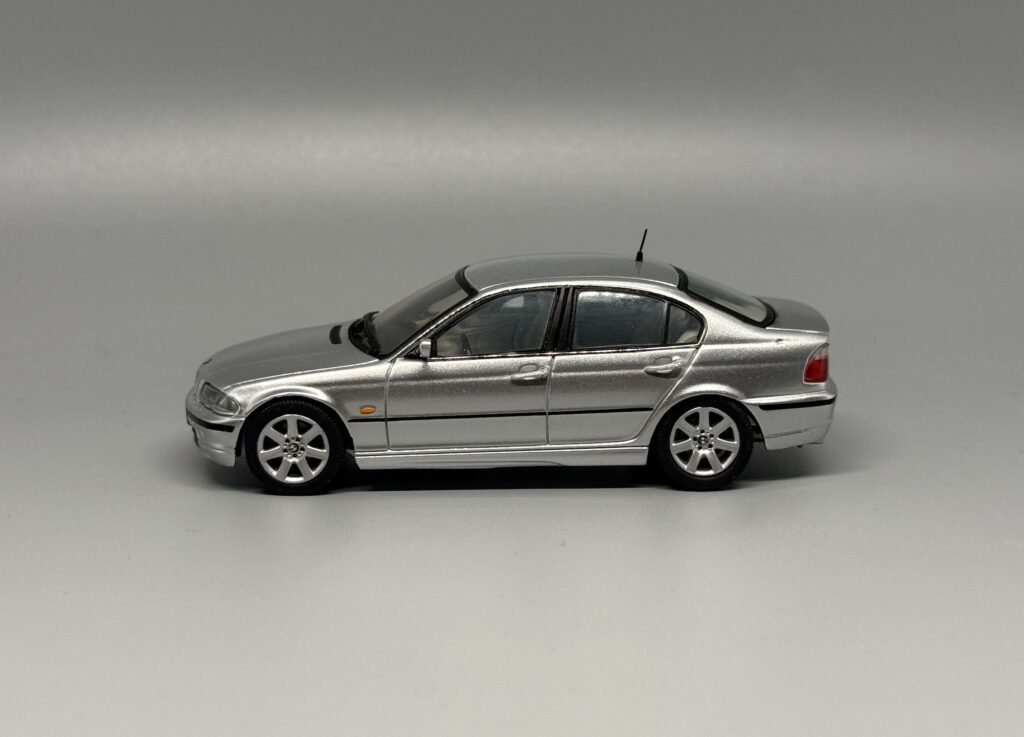
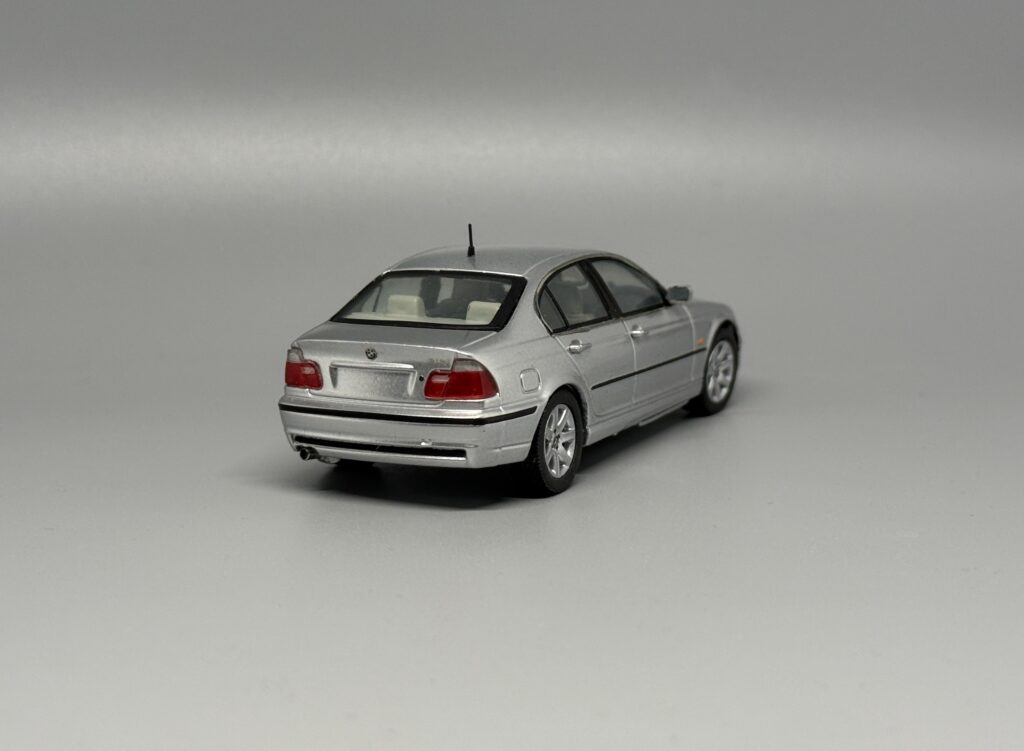
BMW 318i (E46) was one of the most important four-cylinder models of the fourth-generation 3 Series. Production of the E46 Sedan began at the end of 1997, and the 318i was among the first versions available to customers when the new generation was launched. It combined the E46’s more modern design, improved comfort and higher quality with BMW’s traditional rear-wheel-drive architecture and driver-focused character.
The 318i was not the sporting flagship of the range, but models such as this formed an important part of the everyday success of the 3 Series. It offered adequate performance, reasonable fuel consumption and the practicality of a sedan while retaining the same fundamental chassis concept and rear-wheel drive as the more powerful six-cylinder versions.
One of the first E46 models
According to BMW Group Classic, the 318i Sedan was introduced in 1997, with production beginning in December. The E46 gradually replaced the preceding E36 generation and brought a more mature and refined character, improved interior space and an increasing range of electronic comfort and safety systems.
Compared with the E36, the new car was slightly larger while retaining the proportions of a compact sporting sedan. A longitudinally mounted engine, rear-wheel drive and a well-balanced chassis remained central to the technical identity of the 3 Series.
The 1.9-litre M43TÜ four-cylinder
The original BMW 318i used the M43TÜ-family four-cylinder petrol engine. Displacement was 1,895 cc and maximum output was 87 kW or 118 hp at 5,500 rpm.
Maximum torque was 180 Nm. Compared with the more sophisticated four-valve engines that followed, the M43TÜ was a relatively conventional power unit, but its strengths were a sensible balance of everyday performance, reliability and running costs.
BMW Group Classic lists a top speed of 206 km/h for the early 318i. Customers could choose between a five-speed manual transmission and an automatic.
The 318i’s position within the range
Within the E46 petrol Sedan range, the 318i sat between the smaller 316i and the six-cylinder 320i. It occupied an important position, offering lower running costs than the larger-engine models while providing more performance than the entry-level version.
Unlike many competitors of a similar size, even the four-cylinder 318i retained rear-wheel drive. This allowed BMW’s characteristic steering and handling philosophy to remain present even towards the more practical end of the model range.
A major technical change in 2001
With the E46 model update in 2001, the 318i changed much more extensively beneath the surface than its model designation suggested. The previous 1.9-litre M43TÜ was replaced by the completely new 2.0-litre N42-family four-cylinder engine.
Displacement increased to 1,995 cc and output rose to 105 kW or 143 hp at 6,000 rpm. Maximum torque increased to 200 Nm, reached at 3,750 rpm.
The improvement in performance was substantial. Top speed increased to 218 km/h and acceleration from 0–100 km/h improved to 9.3 seconds, while fuel consumption was reduced at the same time.
VALVETRONIC and Double VANOS
The N42 was technically very different from the earlier M43. It featured four valves per cylinder, Double VANOS variable camshaft timing and BMW’s new VALVETRONIC system.
VALVETRONIC varied the lift of the intake valves and allowed engine load to be controlled with much less reliance on a conventional throttle butterfly. BMW’s objective was to reduce pumping losses under partial load and thereby lower both fuel consumption and emissions.
According to BMW’s contemporary 2001 technical information, the new engine provided more than 20 percent additional power and 20 Nm more torque than its predecessor while improving fuel economy by approximately 11 percent.
The 2001 model update
The engine change coincided with a substantial facelift of the E46 Sedan. The headlights, indicators, kidney grilles, bonnet and bumpers were redesigned, while suspension and steering settings were also revised.
The history of the E46 318i can therefore be divided quite clearly into two main phases. Cars produced from 1997 until 2001 used the 1.9-litre 118 hp M43TÜ, while cars built from the autumn of 2001 received the new-generation 2.0-litre 143 hp engine.
The later N46 engine
Towards the end of E46 production, the four-cylinder powertrain was developed further and the N42 was replaced by the N46 engine family. The basic technical concept of four-valve cylinder heads, Double VANOS and VALVETRONIC was retained, and the 318i remained in the 143 hp performance class.
The E46 318i therefore illustrates particularly well how rapidly BMW’s four-cylinder petrol technology developed between the late 1990s and the middle of the following decade.
Almost 400,000 Sedans
The BMW 318i was an important volume model within the E46 family. According to BMW Group Classic, almost 398,037 E46 318i Sedans were produced by 2005. BMW identifies Munich, Regensburg and South Africa as the principal production locations.
This volume demonstrates the role of the 318i particularly clearly. It was not a rare special edition but one of the models through which a very large number of customers experienced the E46-generation 3 Series in everyday use.
An everyday BMW
The importance of the 318i did not lie in record-breaking performance. Its strength was balance: sufficient power, rear-wheel drive, precise handling, four-door practicality and lower running costs than the larger six-cylinder versions.
Cars such as the 318i helped make the E46 one of the most successful 3 Series generations in BMW history. Today, the early 318i is also a good example of an era when even a relatively modestly powered BMW still retained the traditional combination of a longitudinal engine and rear-wheel drive.
Model in the collection
The BMW 318i (E46) model in my collection was produced by Spark. The model represents a 1999 car and therefore depicts the early version of the E46 318i powered by the 1.9-litre M43TÜ engine.
Technical data
Production: 12/1997–02/2005
Body style: four-door sedan
Engine until 08/2001: M43TÜ naturally aspirated inline-four petrol engine
Displacement until 08/2001: 1,895 cc
Power output until 08/2001: 87 kW / 118 hp at 5,500 rpm
Torque until 08/2001: 180 Nm
Top speed until 08/2001: 206 km/h
Engine from 09/2001: N42 naturally aspirated inline-four petrol engine
Displacement from 09/2001: 1,995 cc
Power output from 09/2001: 105 kW / 143 hp at 6,000 rpm
Torque from 09/2001: 200 Nm at 3,750 rpm
Top speed from 09/2001: 218 km/h
Transmission: 5-speed manual or automatic
Drive: rear-wheel drive
Production total: almost 398,037 cars according to BMW Group Classic
Special feature: important four-cylinder E46 Sedan that evolved significantly during its production life from the M43TÜ engine to the VALVETRONIC-equipped N42