
BMW M635 CSi (E24) was the most powerful and exclusive version of the first-generation 6 Series and one of the defining BMW M cars of the 1980s. Introduced in 1984, it combined the elegant E24 coupé body with high-performance engineering developed by BMW Motorsport GmbH. At its heart was a further development of the M88 engine originally created for the BMW M1, transforming the luxurious four-seat grand tourer into one of the fastest production cars of its era. The M635 CSi helped establish a formula that would later become central to BMW M – combining motorsport-derived technology and performance with genuine everyday usability.
The new flagship of the 6 Series
The E24 6 Series had already been on the market since 1976, with the 635 CSi becoming its best-known high-performance version. In 1984, BMW Motorsport took the range to an entirely new level. The M635 CSi was far more than a 635 CSi with a more powerful engine: it also received a reinforced five-speed sports transmission, extensively revised suspension, larger brakes and a limited-slip differential. BMW M has since described it as its first luxury sports car, combining the comfort of a large coupé with performance that was exceptional for the period.
M88/3 straight-six derived from the M1
The defining feature of the M635 CSi was its naturally aspirated 3,453 cc M88/3 straight-six engine. The power unit was based on the M88 used in the mid-engined BMW M1 but was adapted for installation in the 6 Series. With four valves per cylinder, twin overhead camshafts and individual intake runners, the engine produced 210 kW, or 286 hp, at 6,500 rpm and 340 Nm of torque at 4,500 rpm. It actually delivered slightly more power than the original road-going M1.
6.4 seconds and 255 km/h
The 286 hp engine gave the approximately 1,500-kilogram coupé outstanding performance for its time. The M635 CSi accelerated from 0 to 100 km/h in around 6.4 seconds and reached a top speed of 255 km/h. In the mid-1980s, this allowed a large four-seat BMW to compete in performance terms with many dedicated sports cars while still offering considerably greater comfort and practicality.
BMW Motorsport chassis
BMW Motorsport extensively revised the chassis to handle the additional performance. The M635 CSi received reinforced anti-roll bars, firmer dampers and a more powerful braking system. A limited-slip differential at the rear provided a locking effect of up to 40 percent. Together with the five-speed manual gearbox and rear-wheel drive, these changes preserved the classic BMW driving character while giving the M635 CSi noticeably sharper responses than the regular 635 CSi.
A discreetly distinctive M car
Visually, the M635 CSi remained surprisingly restrained considering its performance. It could be distinguished from the regular 635 CSi by its deeper front spoiler, rear spoiler, M badges and sporting wheels, while retaining the elegant basic form of Paul Bracq’s E24 design. Its long bonnet, low waistline, forward-leaning “sharknose” front with four round headlights and flowing roofline made it one of BMW’s most recognisable coupés of the 1980s.
Luxury and performance combined
Unlike many earlier competition-inspired BMWs, the M635 CSi was not a stripped-out machine. Its four-seat cabin, sports seats, M steering wheel and generous equipment made it equally suitable for long-distance travel. This contrast became one of the model’s defining characteristics: a car powered by an engine derived from the M1 could deliver exceptional performance while remaining a fully usable luxury grand tourer.
5,855 cars
The BMW M635 CSi remained an exclusive model throughout its production life. According to BMW, a total of 5,855 cars were built between 1984 and 1989. Its original German price was DM 89,500, placing it among the most expensive BMW models of the period. In North America and Japan, a later catalytic-converter-equipped derivative was marketed as the BMW M6, while the European car retained the now historic M635 CSi designation.
The legacy of the M635 CSi
The M635 CSi became an important link between the BMW M1 and the high-performance M road cars that followed. It demonstrated that a motorsport-derived engine and highly developed chassis could be combined with a luxurious production car without sacrificing everyday usability. The combination of the M88/3 engine, classic rear-wheel drive and elegant E24 body has made the M635 CSi one of the most highly regarded early BMW M models and a defining BMW classic of the 1980s.
Model in the collection
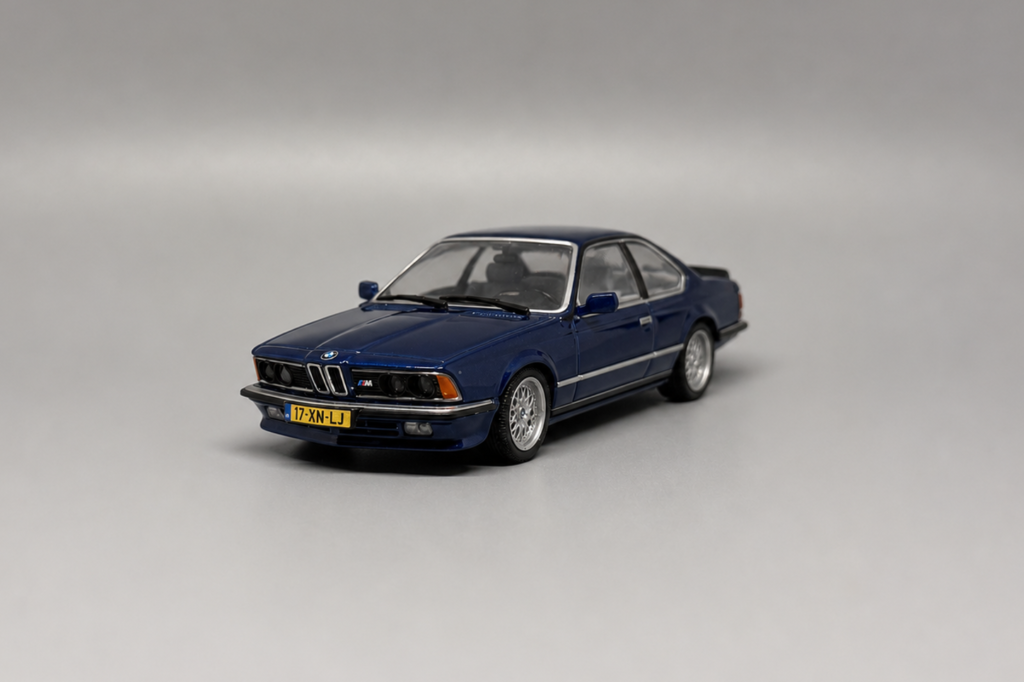
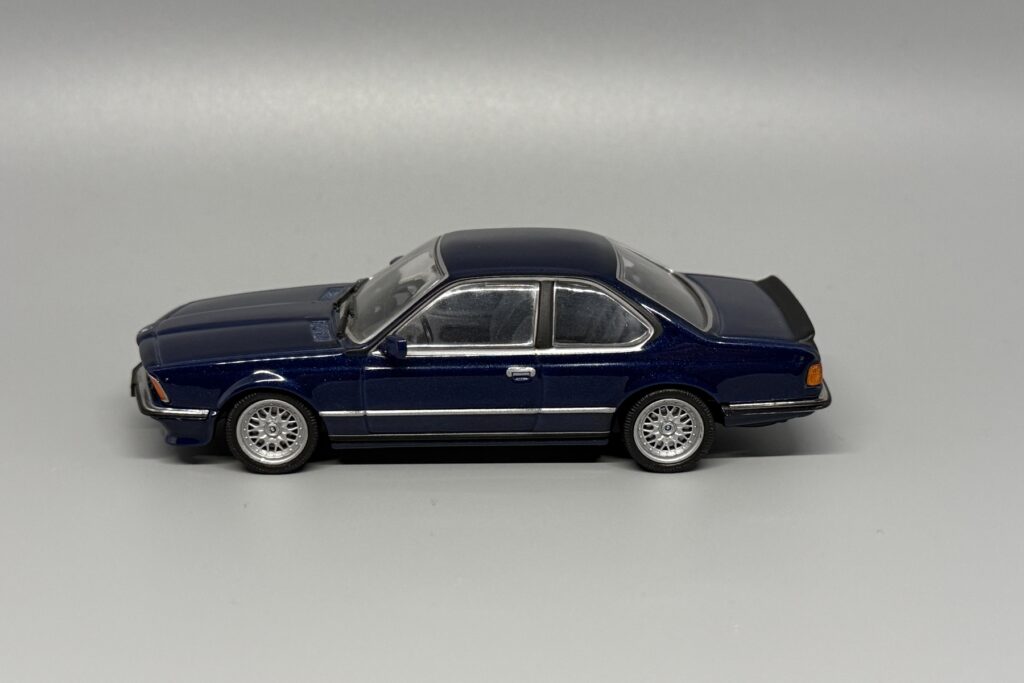
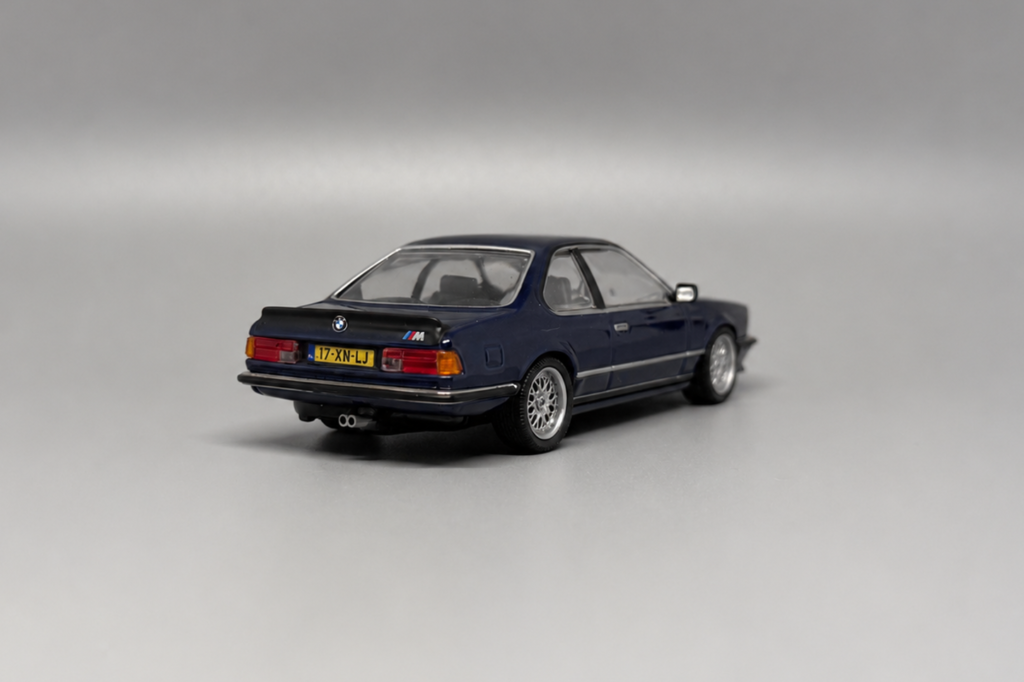
The BMW M635 CSi (E24) model in my collection was produced by Minichamps. It represents a 1984 car and is an official BMW commissioned dealer and promotional model that formed part of the BMW Collection. Production was limited to a total of 5,000 pieces.
Technical data at a glance
Production period: 04/1984–02/1989
Body style: two-door, four-seat Coupé
Production location: BMW Plant Dingolfing, Germany
Engine: naturally aspirated M88/3 straight-six petrol engine
Displacement: 3,453 cc
Power output: 210 kW / 286 hp @ 6,500 rpm
Maximum torque: 340 Nm @ 4,500 rpm
Valvetrain: DOHC, 4 valves per cylinder
Transmission: 5-speed manual
Drive: rear-wheel drive
Differential: limited-slip differential, up to 40% locking effect
Weight: approximately 1,500 kg
Acceleration 0–100 km/h: 6.4 s
Top speed: 255 km/h
Original price in Germany: DM 89,500
Production total: 5,855 cars
Special feature: the range-topping E24 powered by the M88/3 engine derived from the BMW M1 and one of BMW M’s earliest luxury high-performance models
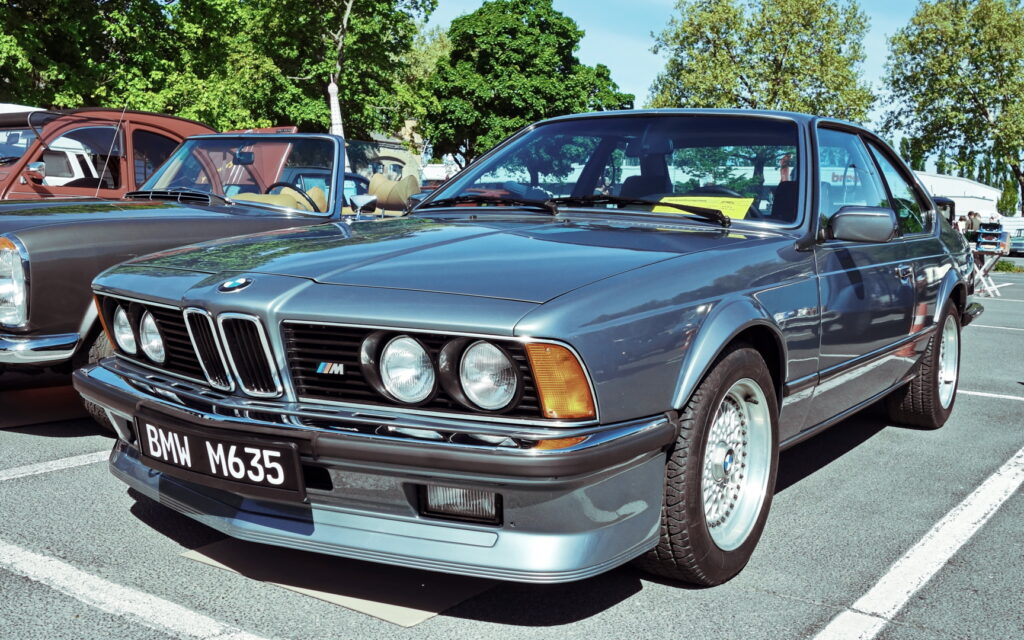
Photo of the real car. Photo: More Cars / Flickr / Wikimedia Commons, CC BY 2.0