
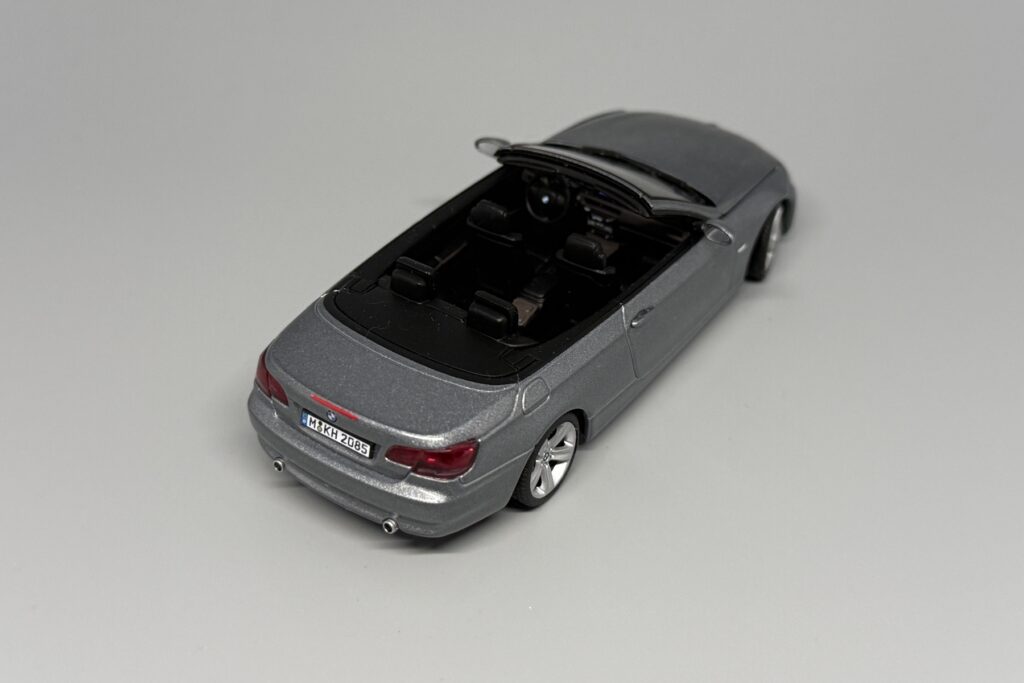
BMW 3 Series Convertible (E93) brought BMW’s open-top 3 Series into an entirely new era in 2007. For the first time, the fourth generation of the 3 Series Convertible replaced the traditional fabric roof with an electrically retractable three-piece metal hardtop. This fundamentally changed the character of the car: with the roof closed, the E93 offered much of the refinement and quietness of a coupé, while with the roof lowered it retained the classic character of a four-seat BMW Convertible. Elegant styling, rear-wheel drive and a broad engine range made it one of the most distinctive members of the fifth-generation 3 Series family.
BMW’s first retractable-hardtop Convertible
The defining technical feature of the E93 was its power-operated three-piece metal hardtop. It marked the first use of such a roof on an open BMW production model. Made from lightweight steel, the roof opened fully in 22 seconds and closed in 23 seconds, disappearing completely into the upper section of the luggage compartment when lowered. Compared with a traditional fabric roof, the hardtop improved noise insulation, security and visibility, allowing the E93 to perform the roles of both Convertible and coupé.
The fourth-generation 3 Series Convertible
The E93 made its world debut at the Detroit motor show in January 2007 and reached the European market on 24 March that year. It continued the tradition established by the E30, E36 and E46 open-top 3 Series models but was considerably more sophisticated than its predecessors. The body was engineered to provide exceptional rigidity for an open car, with BMW describing it at launch as the stiffest Convertible body the company had yet produced.
A coupé and Convertible in one car
The E93 was designed to retain elegant proportions with the roof either raised or lowered. Its low shoulder line, long bonnet and broad rear section emphasised classic BMW sporting proportions. Large glass areas and relatively slender C-pillars gave the closed car a convincing coupé-like profile while also improving visibility. With the roof lowered, the body retained the clean and low silhouette traditionally associated with the 3 Series Convertible.
A broad range of engines
Throughout its production life, the E93 was offered with a variety of four- and six-cylinder petrol and diesel engines. The flagship of the regular European range was the 335i Convertible, whose 3.0-litre twin-turbocharged straight-six produced 225 kW, or 306 hp, and 400 Nm of torque. The range also included naturally aspirated six-cylinder 325i and 330i models, later four-cylinder 318i and 320i versions, as well as the 320d, 325d and 330d diesels. This allowed the E93 to serve equally well as a relaxed open-top tourer or a genuinely rapid sporting Convertible.
335i – 306 hp in an open 3 Series
The 335i demonstrated the performance potential of the E93 particularly well. Its 3.0-litre N54 Twin Turbo straight-six produced 306 hp and delivered 400 Nm across a broad engine-speed range. Despite the additional weight of the reinforced open body and complex roof mechanism, the 335i offered impressive performance. At the same time, it retained four full-sized seats, generous equipment and everyday usability, making it more of a rapid grand tourer than a stripped-out sports car.
Rear-wheel drive and a reinforced body
The E93 retained the classic 3 Series layout, with its engine mounted longitudinally at the front and power sent to the rear wheels. The Convertible was heavier than the Coupé because of its roof mechanism and additional body reinforcement, but BMW placed particular emphasis on structural rigidity and chassis tuning. It used the E90/E92 generation’s double-pivot front axle and five-link rear suspension, retaining much of the precise and balanced handling expected of a 3 Series.
The 2010 model update
In 2010, the E93 received a model update alongside the E92 Coupé. Changes included revised front and rear styling, updated lighting details, new equipment and further-developed powertrains. The 335i replaced its original twin-turbo N54 engine with the single TwinScroll-turbocharged N55 while retaining an output of 306 hp. The fundamental concept – a four-seat 3 Series Convertible with a retractable metal hardtop – remained unchanged until the end of production.
254,051 cars
The E93 was manufactured at BMW Plant Regensburg. According to BMW’s official plant production figures, a total of 254,051 E93 Convertibles were produced between 2005 and 2013; the earlier years include development and pre-series production, while the official market launch took place in 2007. The E93 became the final Convertible to carry the 3 Series name, as its successor arrived in 2014 as the BMW 4 Series Convertible.
The legacy of the E93
The E93 occupies a unique place in 3 Series history. It was the first and ultimately the only 3 Series Convertible to use a retractable metal hardtop. Its successor continued the hardtop concept for a time under the 4 Series name, while later BMW Convertibles returned to fabric roofs. The E93 therefore represents a distinctive period in BMW design and engineering, combining the technological ambition of its era with the traditional rear-wheel-drive character of an open BMW.
Model in the collection
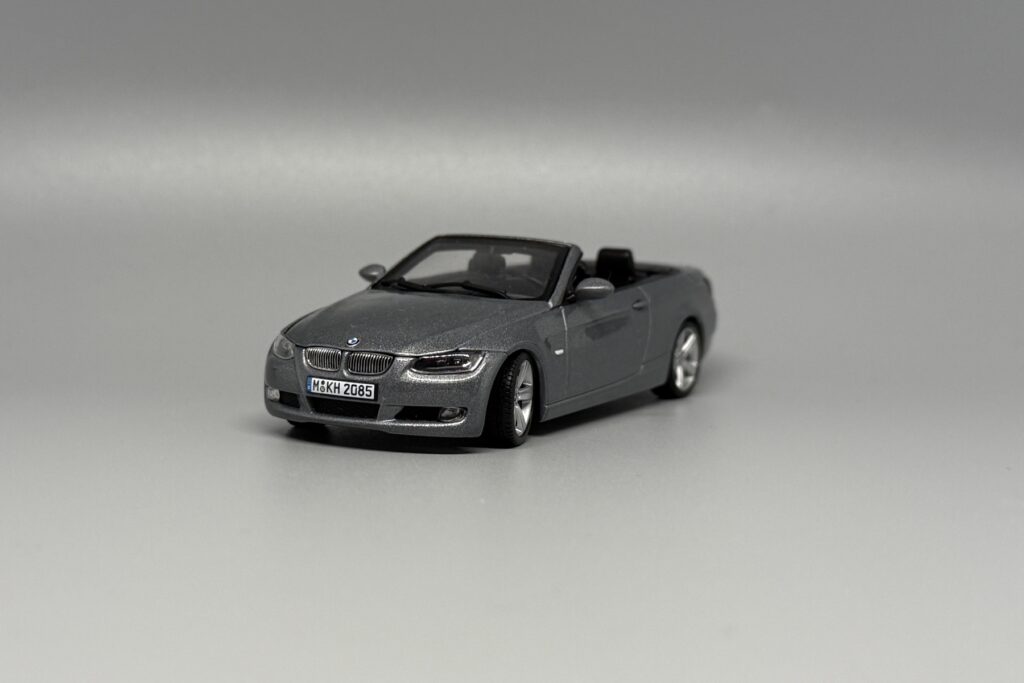
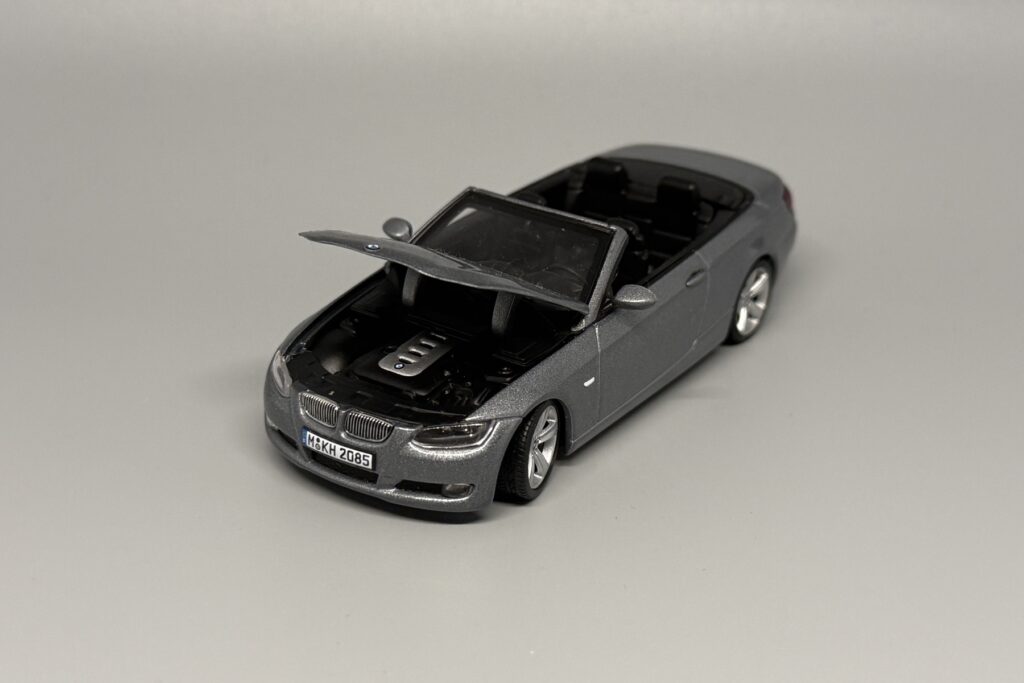
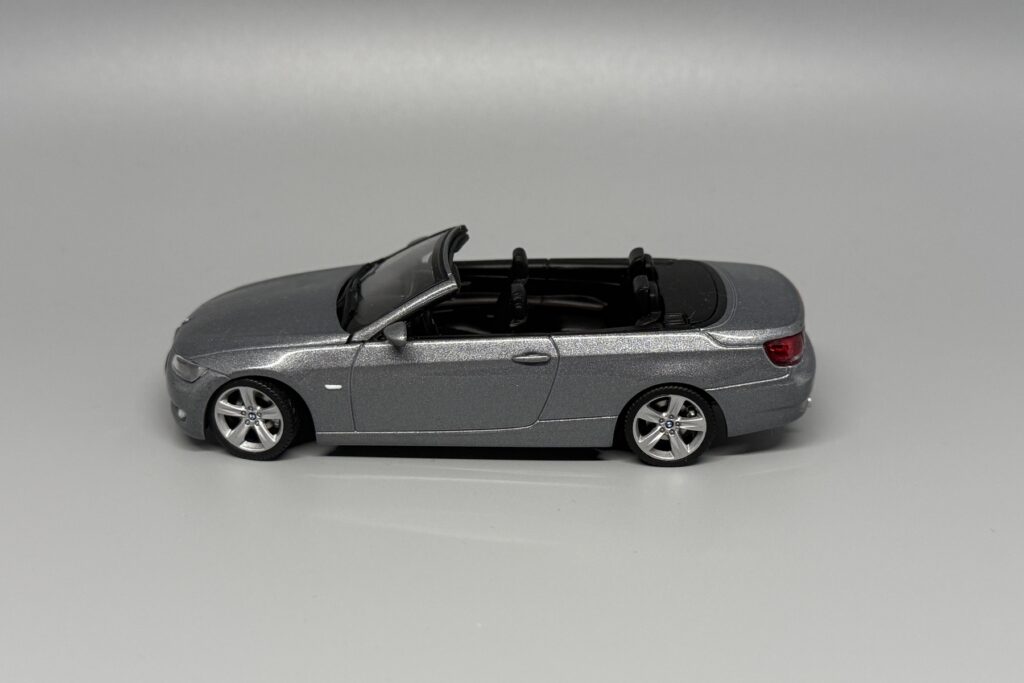
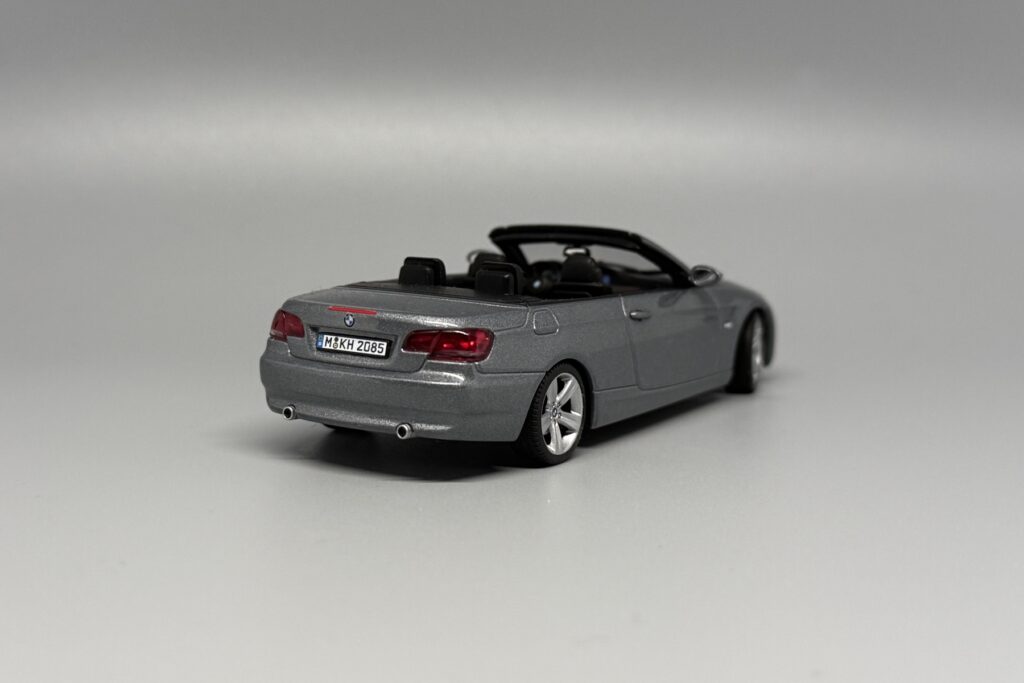
The BMW 3 Series Convertible (E93) model in my collection was produced by AUTOart. It represents a 2007 car and is an official BMW commissioned dealer and promotional model released for the BMW Collection.
Technical data at a glance
Production period: 2005–2013; official market launch in 2007
Body style: two-door, four-seat Convertible
Production location: BMW Plant Regensburg, Germany
Roof: power-operated three-piece retractable metal hardtop
Roof opening time: 22 sec
Roof closing time: 23 sec
Engines: four- and six-cylinder petrol and diesel engines
Power output: 143–306 hp depending on version, excluding the M3
Regular range-topper: 335i, 225 kW / 306 hp
Drive: rear-wheel drive
Maximum luggage capacity: 350 litres
Production total: 254,051 cars
Special feature: BMW’s first Convertible with a retractable metal hardtop and the final Convertible sold under the 3 Series name
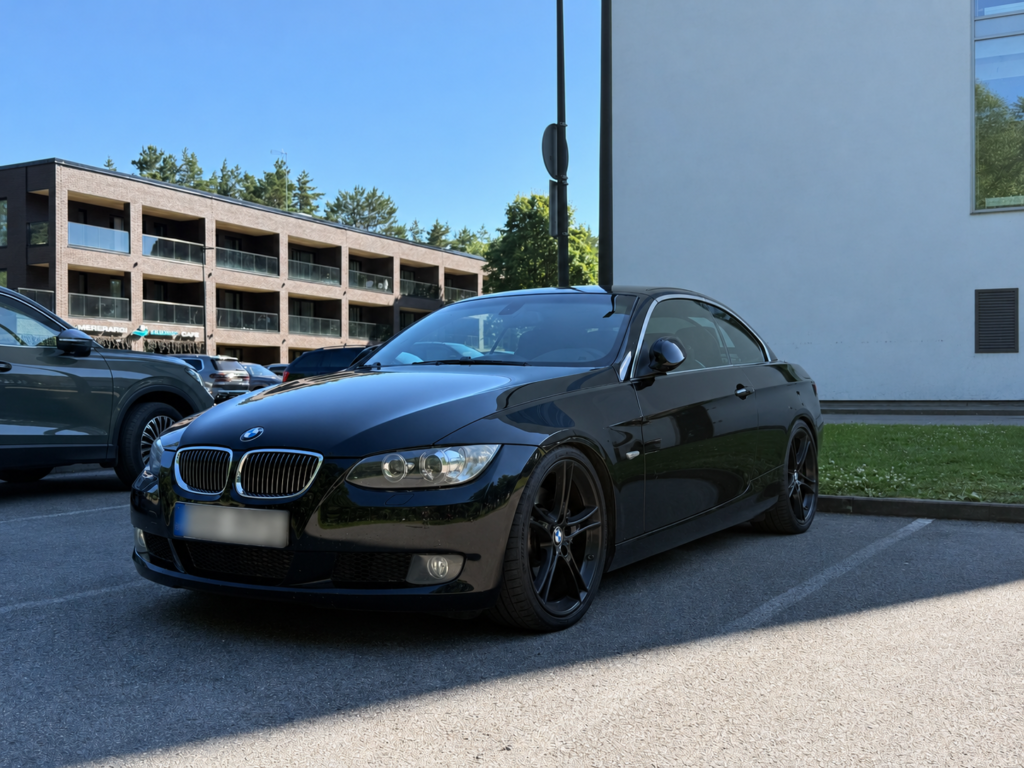
Photo of the real car. Photo: Sten-Patrick Kreek