
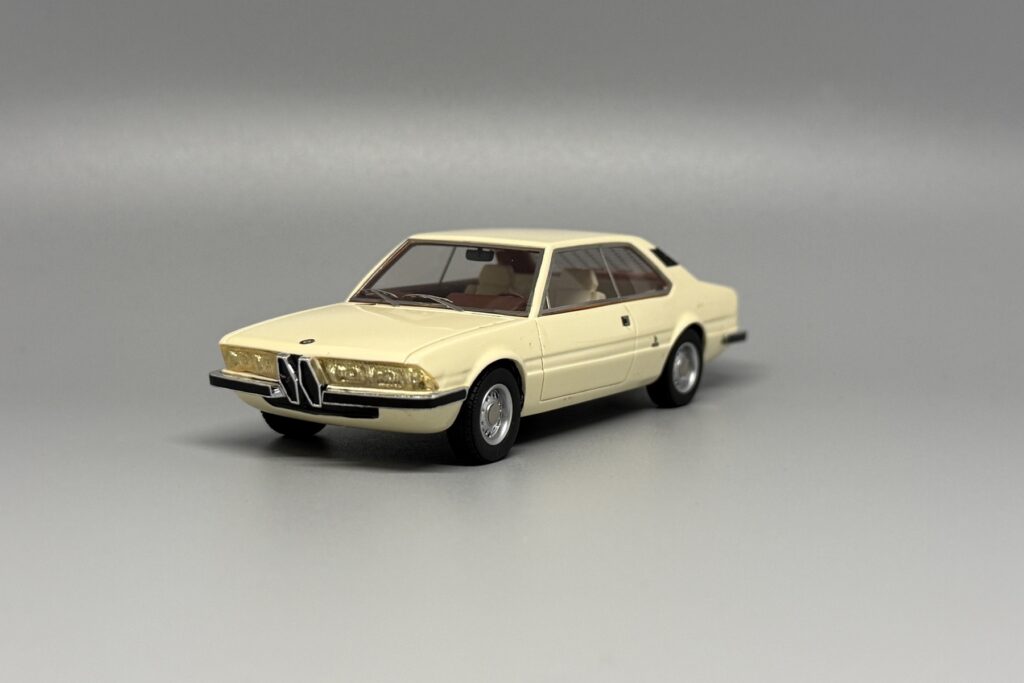
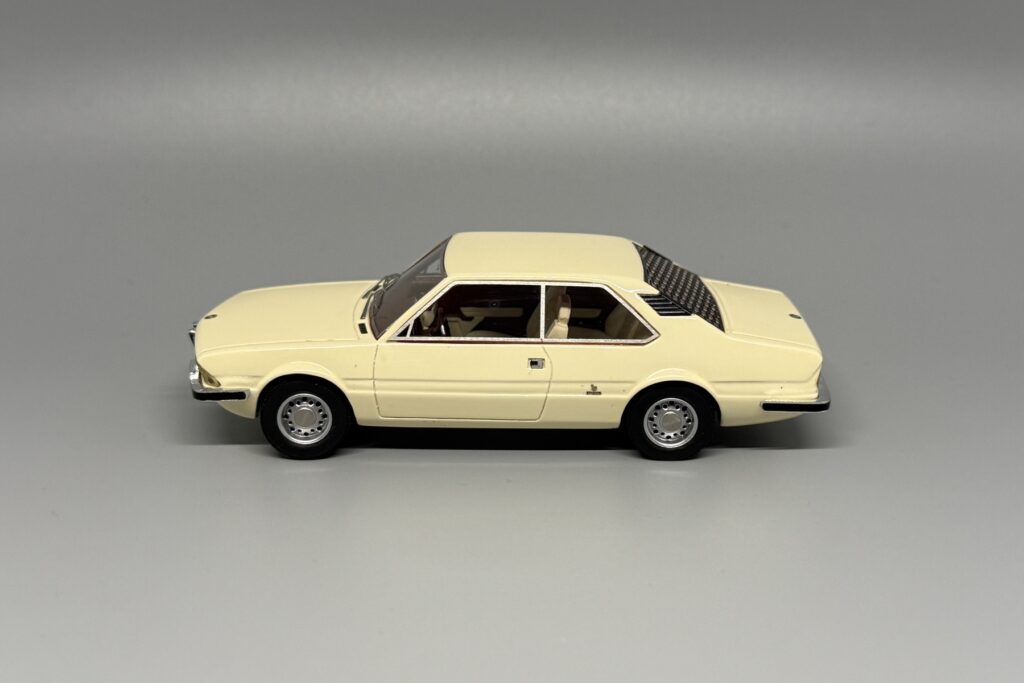
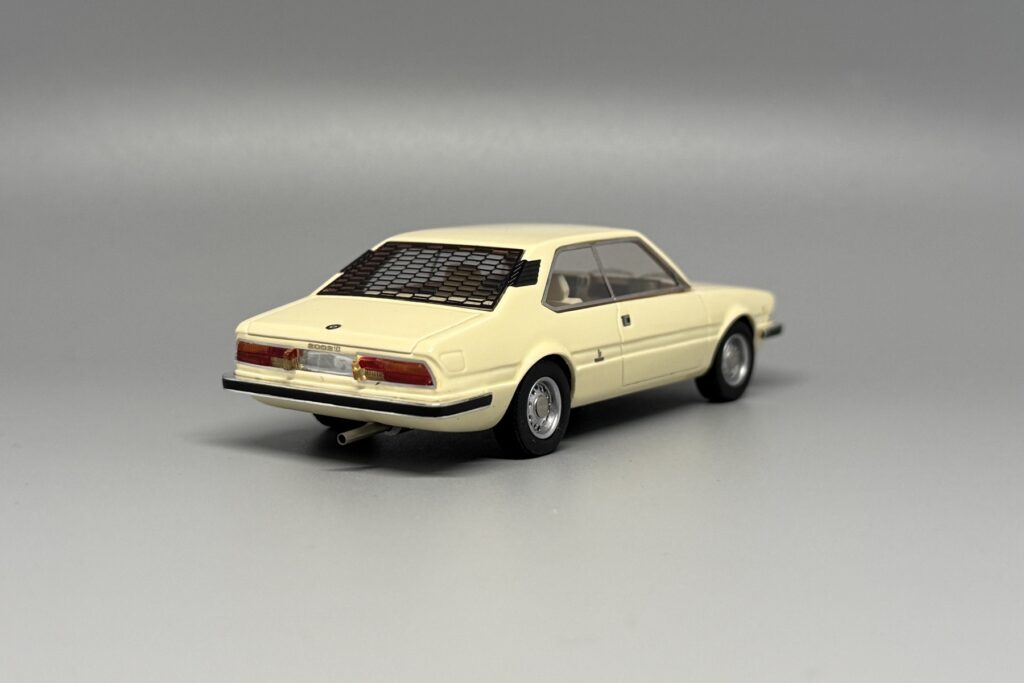
BMW 2200ti Garmisch Bertone was a unique concept car unveiled in 1970, representing the Italian design house Bertone’s vision of how a new generation of mid-sized BMW coupé could look. The car was designed by Marcello Gandini, one of the most influential automotive designers of the 20th century, and its clean geometric lines differed noticeably from the more conservative forms of contemporary BMW models. Although the Garmisch remained a one-off prototype, several elements of its design anticipated themes that would appear on BMW models during the 1970s.
Bertone’s surprise for BMW
The Garmisch was not created as an official BMW commission but as an independent design proposal from Bertone. Nuccio Bertone wanted to strengthen the company’s relationship with BMW and decided to produce a surprise show car for the 1970 Geneva Motor Show. Marcello Gandini set out to create a modern mid-sized coupé that remained faithful to BMW’s identity while appearing more dynamic and provocative. The car was developed in only a few months and made its public debut in Geneva in the spring of 1970.
Gandini’s geometric BMW
The most striking feature of the Garmisch was its unusual vertical and almost angular interpretation of BMW’s kidney grille, flanked by square headlights behind large glass covers. In contrast, the side profile was exceptionally clean and restrained. Sports car-like louvres in the C-pillars and the honeycomb-patterned mesh covering the rear window were characteristic elements of Gandini’s design language and appeared in various forms on several of his other Bertone concepts.
An unconventional interior
The interior was equally distinctive. An unusually vertical radio was positioned in the centre console, while a large fold-out mirror was hidden in front of the passenger. Light colours and fashionable Italian materials gave the cabin a far more extravagant character than contemporary BMW production cars. Even the Garmisch name was carefully chosen: according to Gandini, it evoked skiing, the Alps and the elegant leisure culture associated with the Bavarian resort.
Influence on later BMW design
Although the Garmisch never entered production, the influence of Bertone and Gandini on subsequent BMW design was significant. BMW itself has described the car as an important missing chapter in its design history, while Gandini and the Bertone team later contributed to the first-generation BMW 5 Series under the direction of BMW design chief Paul Bracq. The Garmisch’s clean surfaces, geometric forms and distinctive front end reflected many of the ideas that became increasingly visible in BMW design during the 1970s.
The original disappeared
Following its appearance at the 1970 Geneva Motor Show, the original Garmisch vanished without trace. Only a small number of drawings and period photographs survived in the Bertone archives, many of them in black and white. There is no definitive record of what subsequently happened to the car, and for decades the Garmisch could only be seen in historical images. This makes it an unusually intriguing part of BMW history – an influential design study whose original physical prototype has not survived.
Recreated in 2019
In 2019, the BMW Group decided to recreate the Garmisch and unveiled the completed car at the Concorso d’Eleganza Villa d’Este. Because very little original documentation had survived, specialists from BMW Group Design and BMW Classic reconstructed the exterior and interior largely from period photographs and surviving drawings, assisted by modern 3D modelling technology. Marcello Gandini himself participated in the project, helping to determine details including the exterior finish, interior materials and trim. Like the original, the recreated car was coach-built by hand in Turin.
Recreated on a BMW 2002 TI basis
According to the information displayed at the BMW Museum, the 2019 recreation was built on the technical basis of a BMW 2002 TI. Its four-cylinder engine has a displacement of 1,990 cc, produces 88 kW or 120 hp and gives the car a top speed of 185 km/h. These specifications refer to the recreation now displayed by BMW rather than necessarily describing the exact mechanical specification of the lost 1970 prototype. The historical concept is nevertheless widely known as the BMW 2200ti Garmisch.
A second life in the BMW Museum
The 2019 recreation made it possible to see the Garmisch again as a full-size automobile almost half a century after the original disappeared. BMW described the project as an opportunity to restore a missing chapter in the company’s design history and to pay tribute to Marcello Gandini. The car displayed today is therefore not the original shown in Geneva in 1970, but BMW Group’s carefully researched recreation. It is this recreated Garmisch that is shown in my photograph taken at the BMW Museum.
Model in the collection
The BMW 2200ti Garmisch Bertone model in my collection was produced by Avenue43. It represents the 1970 Bertone concept car designed by Marcello Gandini. Production was limited to a total of 333 pieces.
Technical data at a glance
Original debut: 1970 Geneva Motor Show
Body style: two-door, four-seat concept coupé
Design: Marcello Gandini, Bertone
Original production: 1 car
Fate of the original: disappeared after its 1970 debut
Recreation: BMW Group, 2019
Basis of the recreation: BMW 2002 TI
Engine in the recreation: four-cylinder in-line petrol engine
Displacement: 1,990 cc
Power output: 88 kW / 120 hp
Top speed: 185 km/h
Special feature: a Marcello Gandini-designed Bertone concept whose lost 1970 original was recreated by BMW Group in 2019
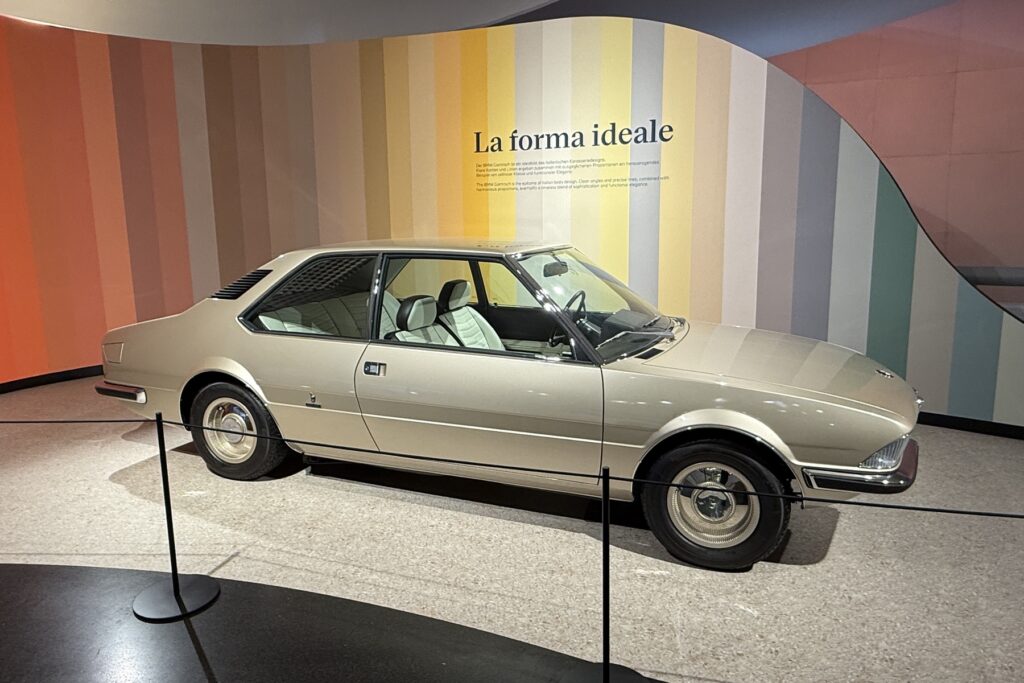
2019 reconstruction of the BMW Garmisch, BMW Museum. Photo: Sten-Patrick Kreek