
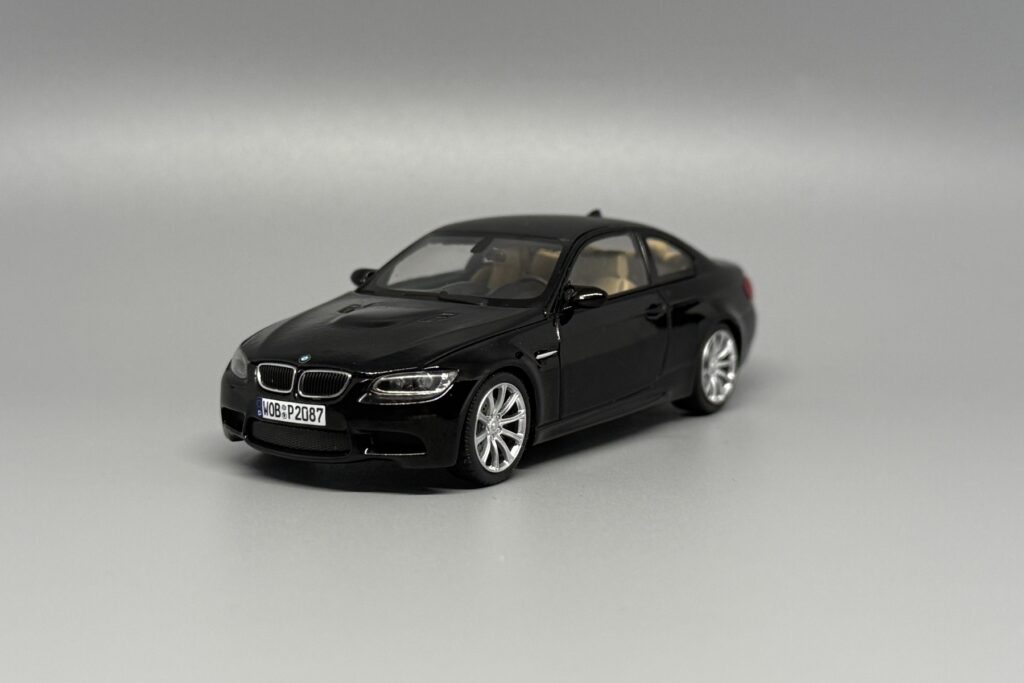
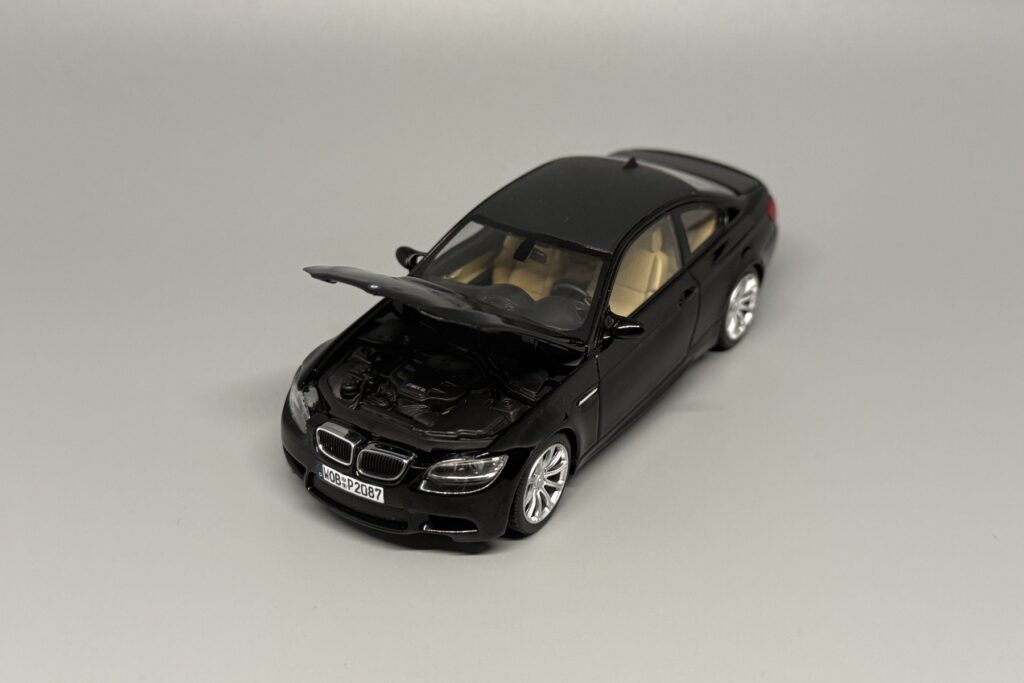
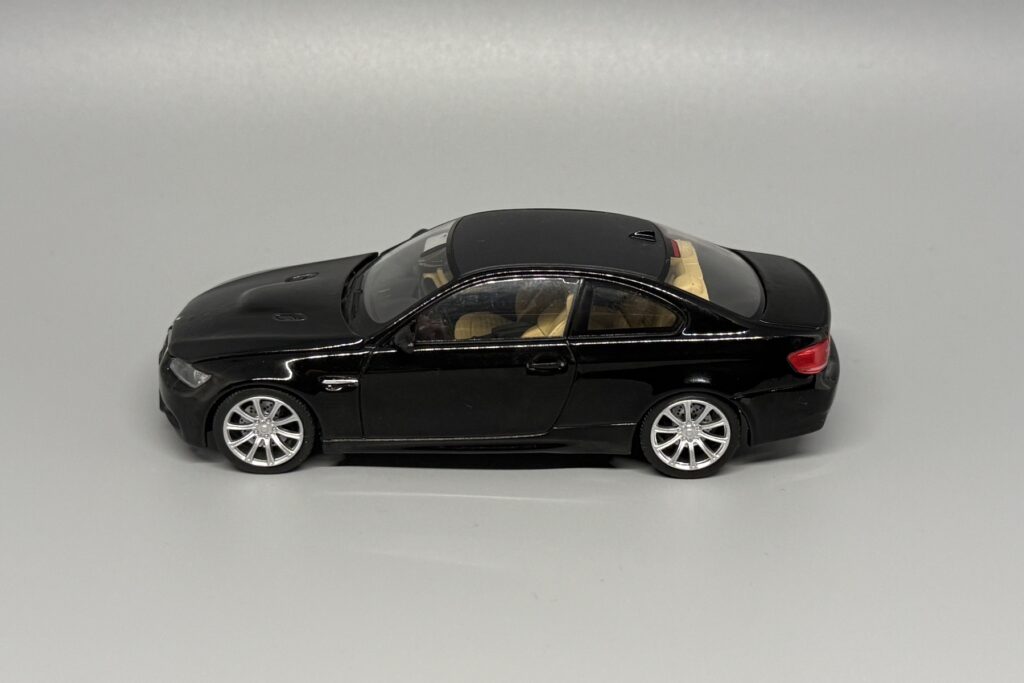
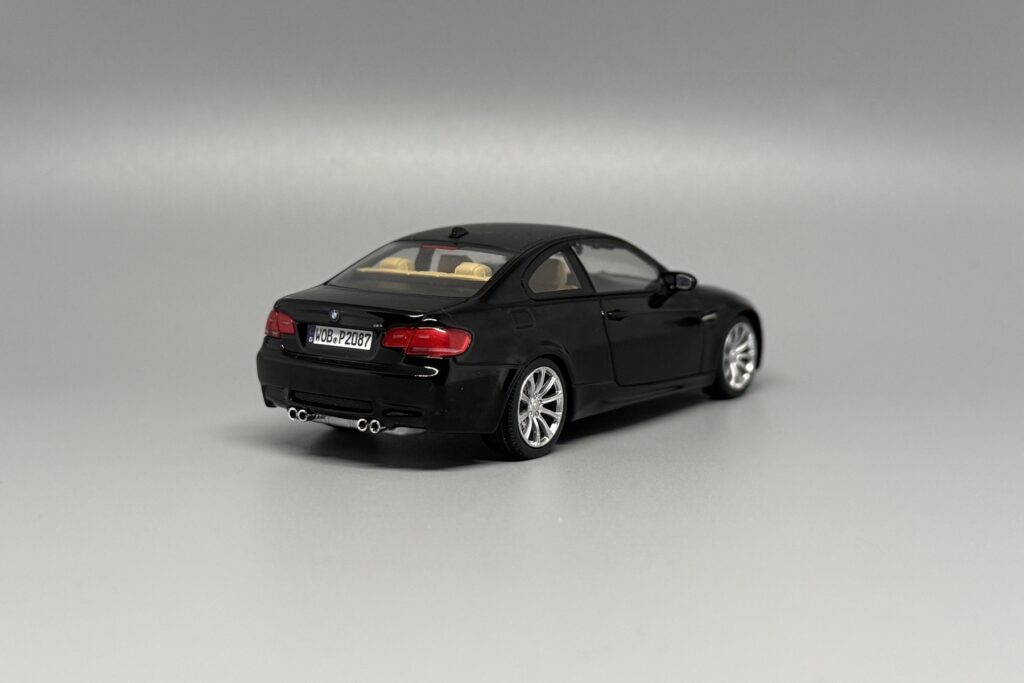
BMW M3 Coupé (E92) took the M3 in an entirely new direction in 2007. For the first time in the model’s history, the familiar six-cylinder engine was replaced by a high-revving naturally aspirated V8, fundamentally changing the character of the fourth-generation M3. The E92 combined a 420 hp engine, rear-wheel drive and a chassis developed specifically by BMW M with an elegant four-seat coupé body. The result was a sports car capable of serious performance on a circuit while remaining entirely usable in everyday driving.
The fourth generation and the first V8-powered M3
The E92 M3 reached the market in the autumn of 2007 as the fourth generation of the M3. It was distinguished from the regular E92 Coupé by wider wheel arches, more aggressive bumpers, an aluminium bonnet with a prominent power dome, M side gills and four exhaust outlets. Almost all exterior body panels were designed specifically for the M3, giving it a considerably more muscular appearance than the standard 3 Series Coupé.
High-revving S65 V8
At the heart of the M3 was the new naturally aspirated S65B40 V8 with a displacement of 3,999 cc. It produced 309 kW, or 420 hp, at 8,300 rpm and maximum torque of 400 Nm at 3,900 rpm, with the engine capable of reaching 8,400 rpm. The S65 shared its fundamental engineering philosophy with the V10 used in the E60 M5 and E63 M6 and weighed only 202 kilograms – 15 kilograms less than the six-cylinder engine of the preceding E46 M3.
Eight individual throttle butterflies
In traditional BMW M fashion, the S65 used an individual throttle butterfly for each cylinder together with Double VANOS variable camshaft timing. Its high compression ratio and exceptionally light internal components allowed the engine to respond rapidly to throttle inputs. Much of its engineering reflected BMW M’s experience with racing and high-revving engines. The S65 also proved highly successful internationally, winning its displacement category in the International Engine of the Year awards for five consecutive years.
Six-speed manual or M DCT
The M3 was initially offered with a six-speed manual transmission. In 2008, BMW added the seven-speed M Double Clutch Transmission, or M DCT, allowing extremely rapid gear changes without interruption of power delivery. With the manual gearbox, the Coupé accelerated from 0 to 100 km/h in 4.8 seconds, while M DCT reduced the figure to 4.6 seconds. Top speed was electronically limited to 250 km/h as standard.
Carbon-fibre roof
One of the E92 M3’s most distinctive technical features was its standard carbon-fibre-reinforced plastic roof. Its purpose was not merely to reduce overall weight but also to lower the car’s centre of gravity. The bonnet was made from lightweight aluminium, while extensive use of aluminium was also made in the front axle. BMW M placed particular emphasis on weight distribution and lightweight construction, with the manual Coupé weighing 1,580 kilograms to DIN specification.
M chassis and variable M differential
Although the basic suspension concept originated from the regular E92, most components were extensively revised for the M3. The front axle featured purpose-designed forged aluminium components, while the five-link rear suspension was specifically adapted for the higher performance. A variable M limited-slip differential was standard, and Electronic Damper Control was available as an option. MDrive allowed the driver to store preferred settings for engine response, steering, DSC and suspension.
A sports car for everyday use
Despite its high-revving V8 and circuit-capable chassis, the E92 M3 remained a four-seat car suitable for everyday use. It retained a practical luggage compartment, climate control and normal comfort equipment rather than adopting a stripped-out racing-car interior. This dual personality was one of the M3’s greatest strengths: in relaxed driving it could behave much like a regular 3 Series Coupé, while at higher engine speeds and on a demanding road its character changed dramatically.
Competition Package and special editions
The E92 M3 concept continued to evolve during its production life. The Competition Package introduced lower suspension, distinctive 19-inch wheels and revised EDC and DSC settings. The most radical factory derivative was the M3 GTS, whose enlarged 4.4-litre V8 produced 450 hp and whose reduced weight and equipment were clearly focused on circuit use. Several other limited editions followed, but the naturally aspirated 420 hp S65 remained at the heart of the standard M3 Coupé throughout production.
40,092 Coupés
Production of the E92 M3 Coupé continued from 2007 until 2013. A total of 40,092 E92 M3 Coupés were produced, including special versions based on the E92 body. The Coupé was by far the most popular body style of the fourth-generation M3. It was also the final two-door model to carry the M3 Coupé name, as its successor moved into the newly created 4 Series range and became the BMW M4.
The legacy of the E92 M3
Today, the E92 M3 occupies a unique position in BMW M history. It remains the only series-production M3 generation powered by a naturally aspirated V8 and was also the final model to carry the M3 Coupé designation. The combination of the high-revving S65, traditional rear-wheel drive, an available manual gearbox and a carbon-fibre roof created a formula that later turbocharged M models would never repeat. For this reason, the E92 has become one of the most distinctive modern BMW M cars.
Model in the collection
The BMW M3 Coupé (E92) model in my collection was produced by Minichamps. It represents a 2008 car from the early production period of the E92 M3. Production was limited to a total of 2,352 pieces.
Technical data at a glance
Production period: 2007–2013
Body style: two-door, four-seat Coupé
Production location: BMW Plant Regensburg, Germany
Engine: naturally aspirated S65B40 V8 petrol engine
Displacement: 3,999 cc
Power output: 309 kW / 420 hp @ 8,300 rpm
Maximum torque: 400 Nm @ 3,900 rpm
Maximum engine speed: 8,400 rpm
Transmission: 6-speed manual or 7-speed M DCT
Drive: rear-wheel drive
Differential: variable M limited-slip differential
Weight: 1,580 kg DIN with manual transmission
Acceleration 0–100 km/h: 4.8 sec manual / 4.6 sec M DCT
Top speed: 250 km/h, electronically limited
Production total: 40,092 E92 M3 Coupés including special versions
Special feature: the only series-production M3 generation powered by a naturally aspirated V8 and the final model to carry the M3 Coupé name
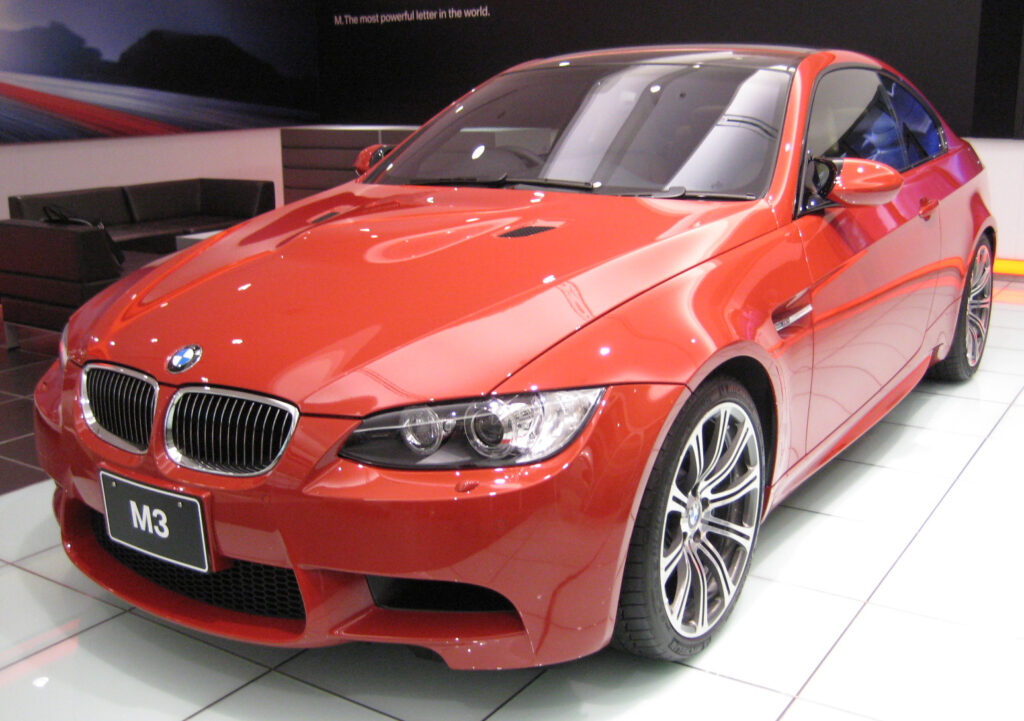
hoto of the real car. Photo: Journalcar / Wikimedia Commons, public domain