
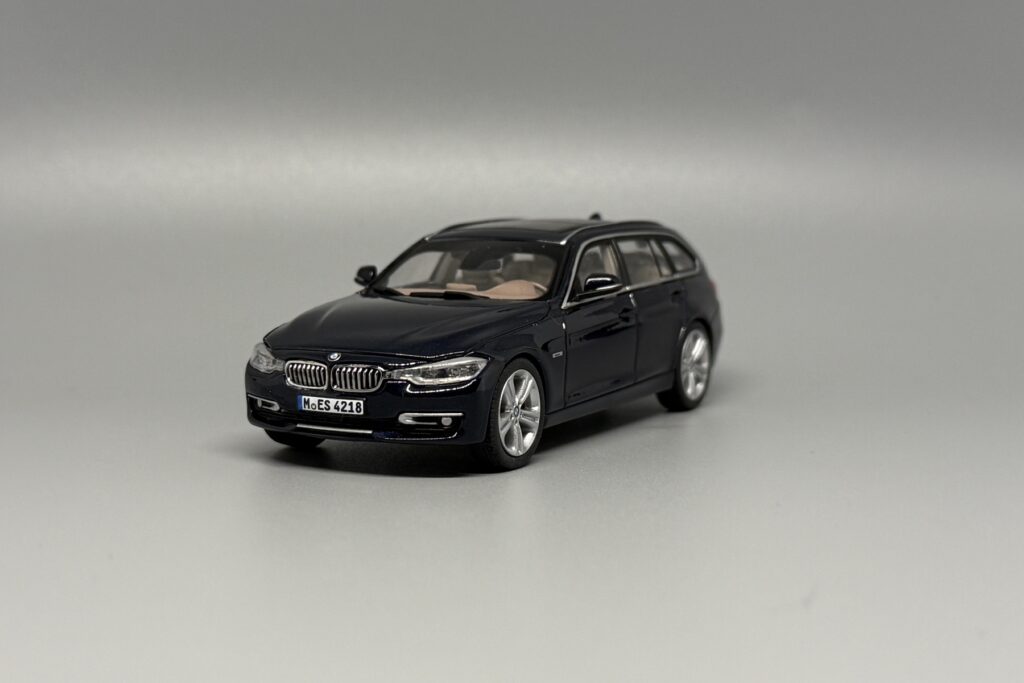
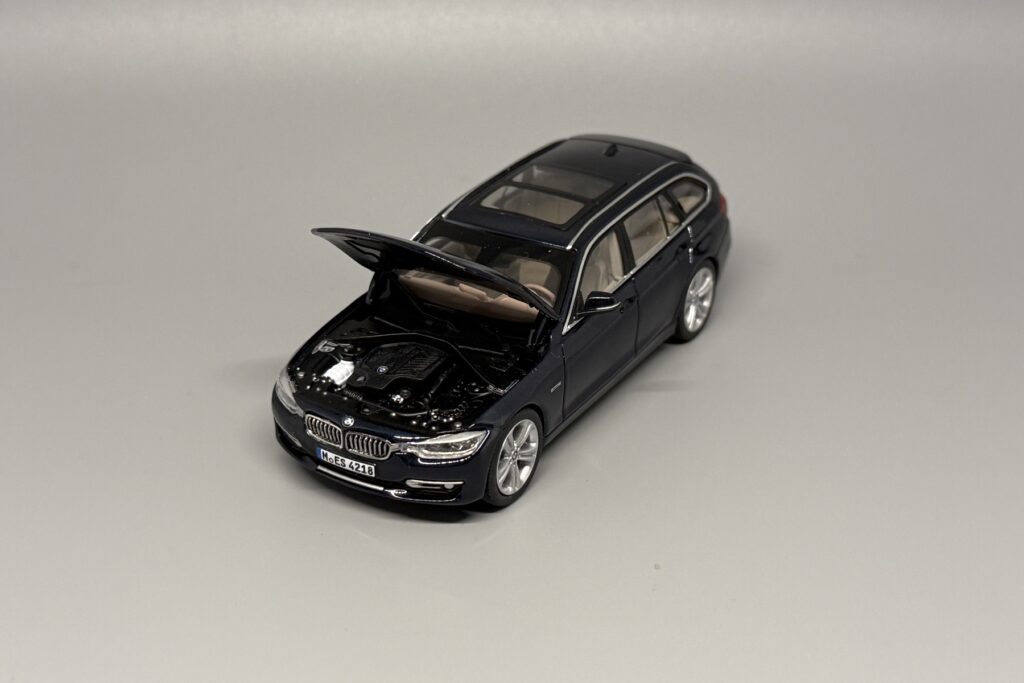
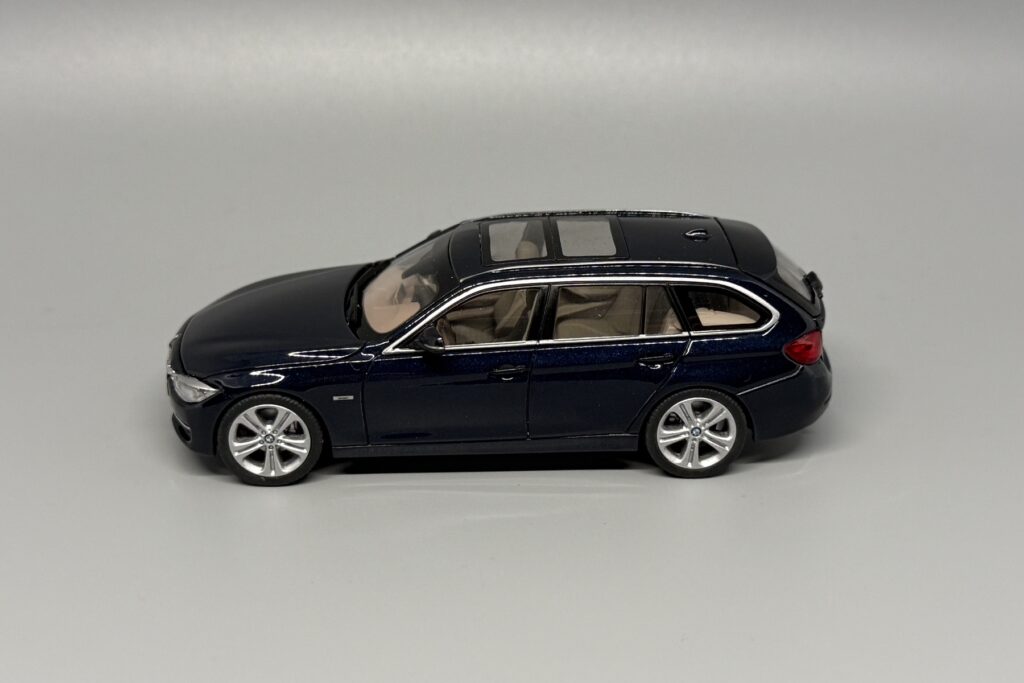
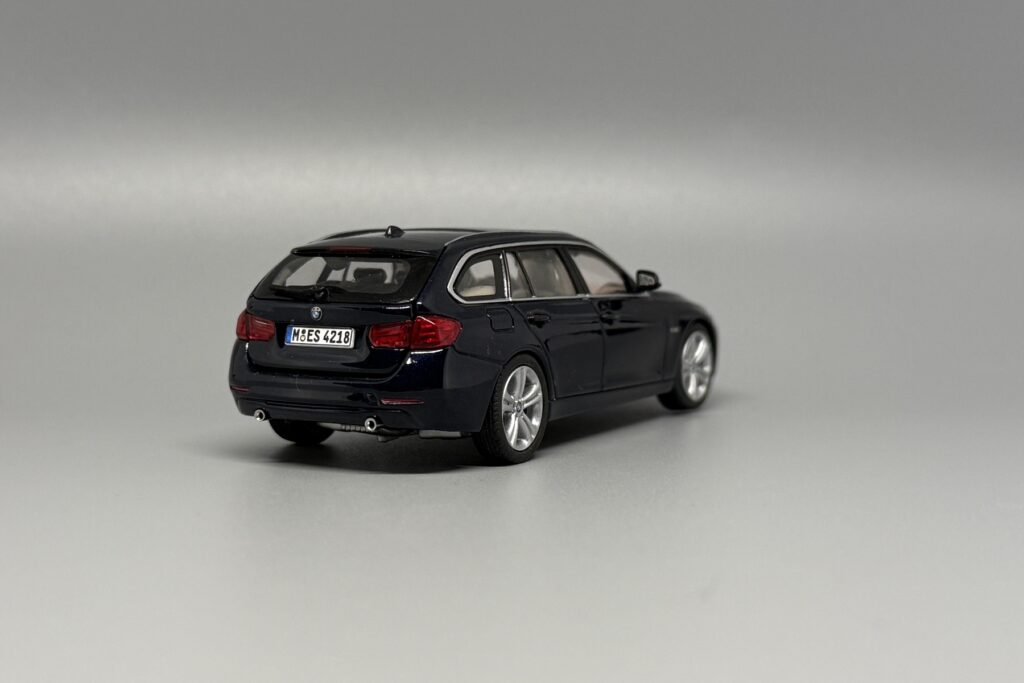
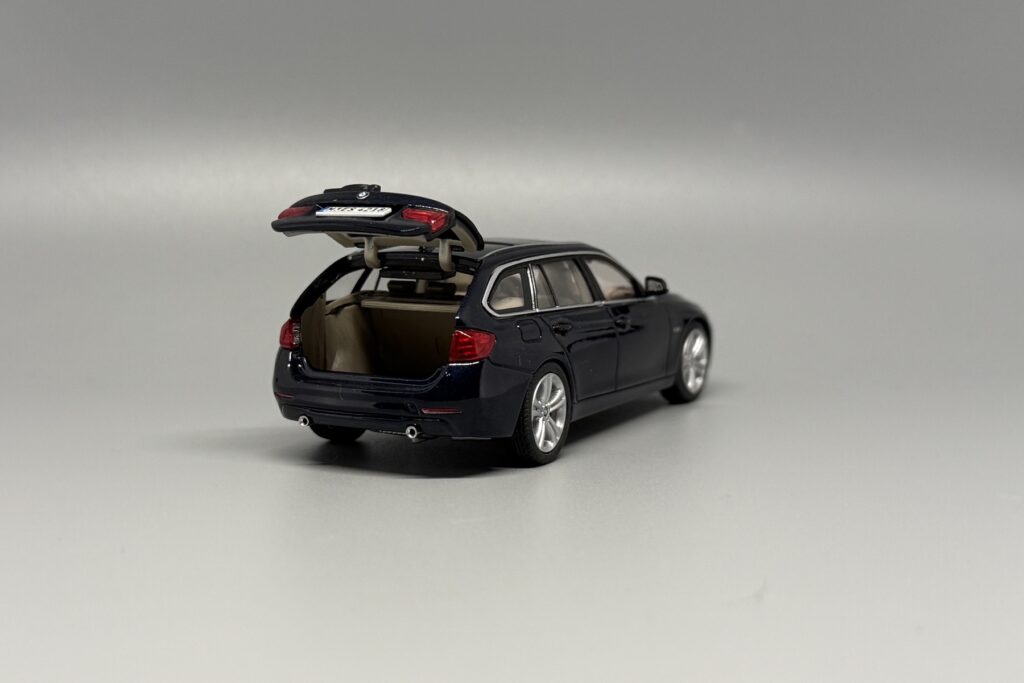
BMW 3 Series Touring (F31) introduced the more practical body style of the sixth-generation 3 Series in 2012, combining increased versatility with BMW’s traditional sporting driving character. Compared with the preceding E91, the new Touring was longer, more spacious and considerably more technologically advanced, yet intelligent lightweight construction allowed it to be up to around 40 kilograms lighter. The F31 retained the classic BMW formula of a longitudinally mounted engine, predominantly rear-wheel drive and a balanced chassis, while adding the everyday versatility of an estate body.
The fifth 3 Series Touring
The F31 was the fifth generation of the 3 Series Touring after the E30, E36, E46 and E91 and formed part of the sixth-generation 3 Series family. It reached the European market in September 2012. Compared with the E91, overall length increased by 97 millimetres and the wheelbase by 50 millimetres, providing additional space for both rear passengers and luggage. Despite its larger dimensions, the Touring retained a low and sporting silhouette that distinguished it from more utility-focused estate cars.
495 to 1,500 litres of luggage space
The F31 offered 495 litres of luggage capacity with the rear seats in place, 35 litres more than its predecessor. Folding the rear seats increased capacity to 1,500 litres. The rear seat backrest was split 40:20:40 as standard, allowing long items to be carried without sacrificing all of the rear seating. In traditional BMW Touring fashion, the rear window could be opened independently of the tailgate, while the electrically operated tailgate was standard. These features made the F31 one of the most versatile estates in its class.
TwinPower Turbo throughout the range
The F31 was offered with a broad range of engines throughout its production life. The initial line-up included the 245 hp 328i, 184 hp 320d and six-cylinder 258 hp 330d. Lower-powered petrol and diesel models and more powerful range-topping versions followed. All engines used BMW TwinPower Turbo technology. After the model update, the entry-level 318i received a three-cylinder engine, while the petrol range was topped by the six-cylinder 340i Touring with 326 hp.
Rear-wheel drive and xDrive
Most F31 models retained BMW’s traditional rear-wheel-drive layout, while xDrive all-wheel drive was available with numerous engines. Depending on the model, transmission choices included a six-speed manual and an eight-speed Steptronic automatic, with the automatic becoming increasingly common during the production run. On the more powerful six-cylinder and diesel models it was often standard. The broad drivetrain range allowed the Touring to serve equally well as an economical family car or a very rapid long-distance vehicle.
A sporting chassis despite the estate body
The F31 shared its fundamental chassis design with the F30 Sedan, using a double-joint strut front axle and a five-link rear suspension. Electromechanical power steering helped improve efficiency, while M Sport suspension and Adaptive M Sport suspension were available as options. BMW placed particular emphasis on ensuring that the larger luggage compartment and estate body did not compromise the character of the 3 Series, and the F31 retained the precise and balanced handling for which the model range was known.
The 2015 model update
In 2015, the F31 received a model update alongside the F30 Sedan. The headlights, rear lights, bumpers and various interior details were revised, while navigation and driver-assistance systems were also improved. More significantly, a new generation of engines was introduced. The petrol range gained the three-cylinder 318i, the 252 hp 330i and the new six-cylinder 326 hp 340i, while diesels ranged from the 116 hp 316d to the 313 hp 335d xDrive.
More than half a million F31 Tourings
The F31 Touring was manufactured throughout its production life at BMW Plant Munich, from where cars were supplied to markets around the world. When introducing its successor in 2019, BMW stated that more than 500,000 examples of the F31 had been produced. VIN-range-based production data compiled by RealOEM gives a more precise estimate of approximately 511,493 cars, comprising 258,779 pre-facelift F31s and 252,714 facelift F31 LCI models. As this figure is derived from VIN ranges, it may differ slightly from BMW’s internal factory statistics.
The legacy of the F31 Touring
Production of the F31 ended in 2019 as it was replaced by the G21-generation 3 Series Touring. The F31 became one of the most successful premium estates of its generation and demonstrated why the Touring concept had remained an important part of the BMW range since the 1980s. It combined a spacious luggage compartment and genuine five-seat practicality with a broad engine range, a sporting chassis and the traditional rear-wheel-drive character of the 3 Series.
Model in the collection
The BMW 3 Series Touring (F31) model in my collection was produced by iScale. It is an official BMW dealer model representing the sixth-generation 3 Series Touring.
Technical data at a glance
Production period: 2012–2019
Body style: five-door, five-seat Touring
Production location: BMW Plant Munich, Germany
Engines: three-, four- and six-cylinder petrol and diesel engines
Power output: 116–326 hp depending on version
Transmission: 6-speed manual or 8-speed Steptronic automatic
Drive: rear-wheel drive; xDrive all-wheel drive available on numerous versions
Wheelbase: 2,810 mm
Luggage capacity: 495–1,500 litres
Production total: approximately 511,493 cars (VIN-based estimate; officially more than 500,000 according to BMW)
Special feature: the sixth-generation 3 Series Touring, combining increased practicality with traditional BMW sporting driving characteristics
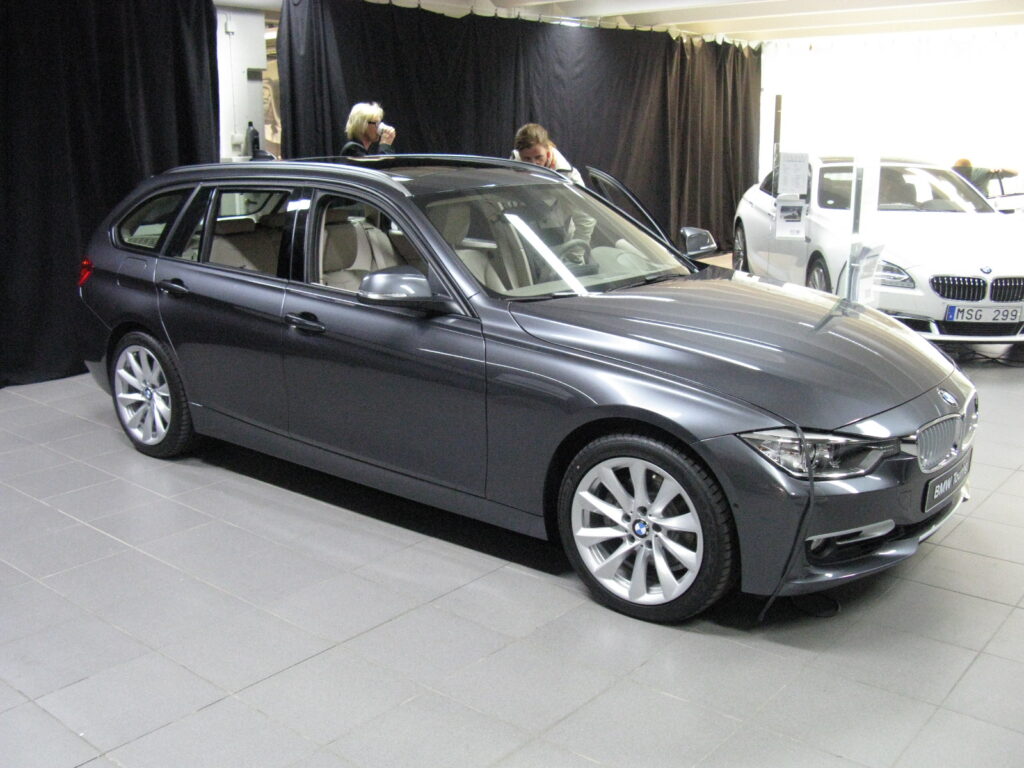
Photo of the real car. Photo: nakhon100 / Flickr / Wikimedia Commons, CC BY 2.0