
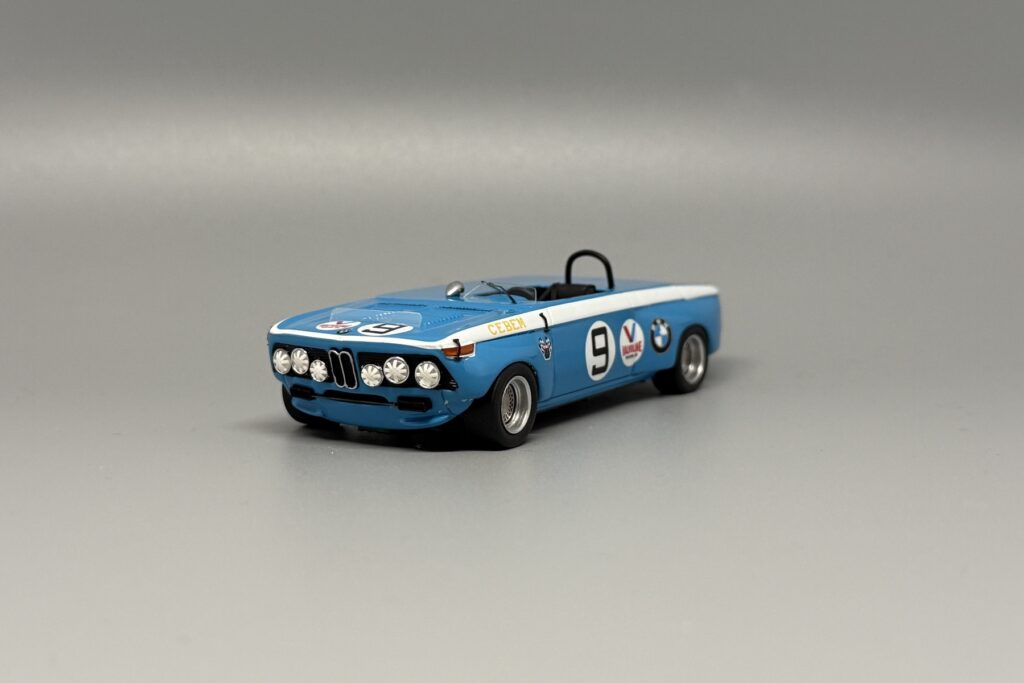
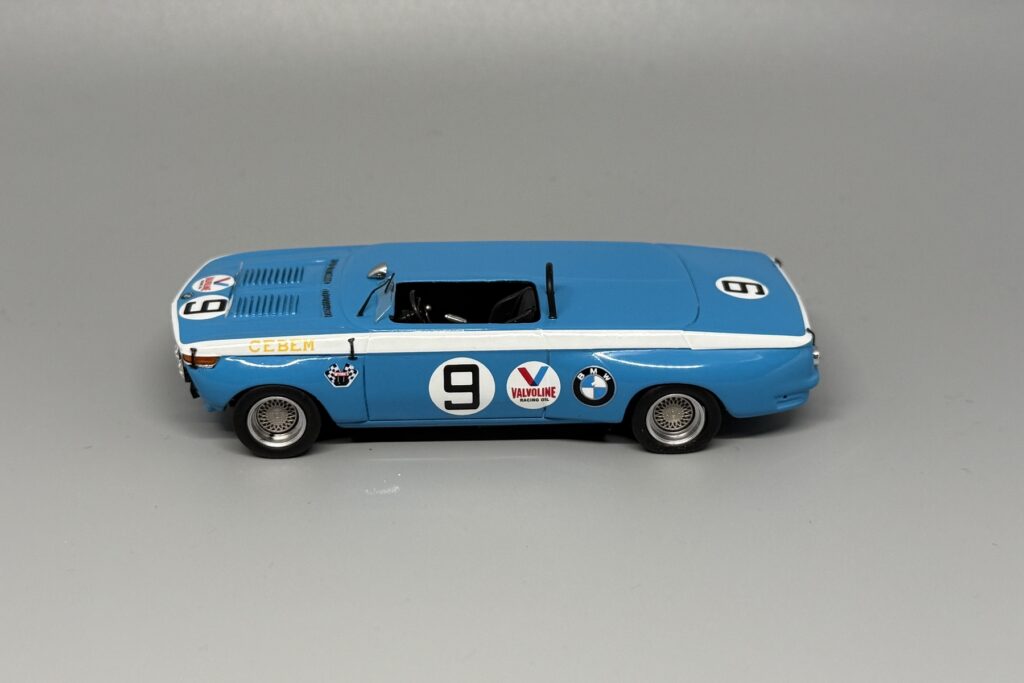
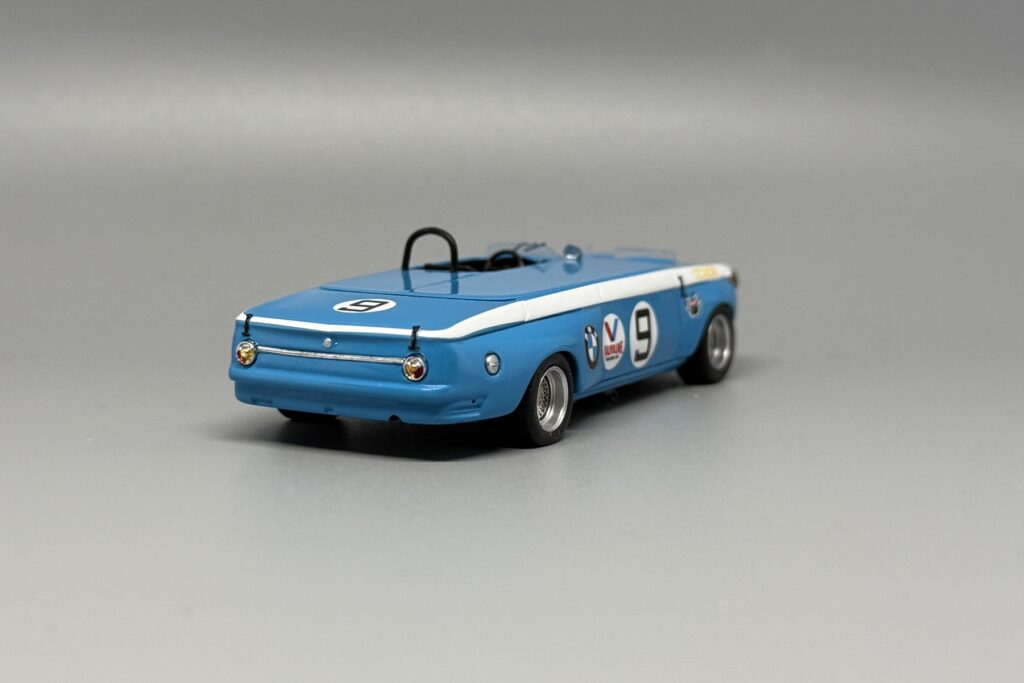
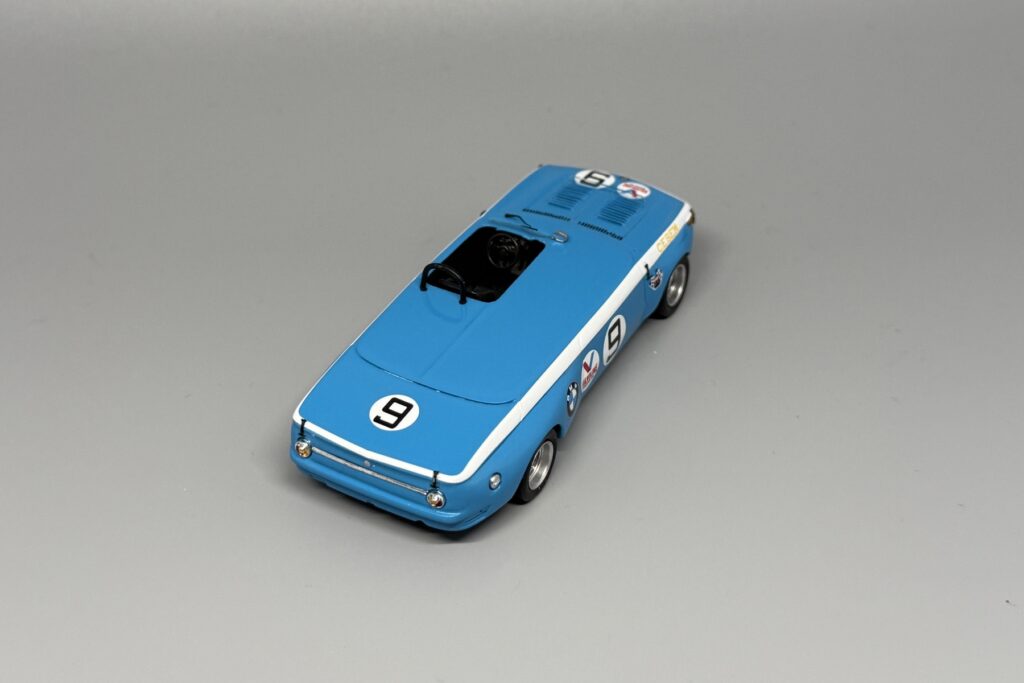
BMW 2002 Esquife Voador was one of the most unusual racing versions of the BMW 02 Series, gaining fame in Brazil in 1970. Originally a competition-prepared BMW 2002 ti, the car had its roof removed and its body transformed into a low, open racing machine. Its unconventional appearance earned it the nickname Esquife Voador, Portuguese for “Flying Coffin”. Despite its unusual construction and relatively improvised origins, the car proved highly successful on the circuit. On 8 March 1970, Jan Balder and Ciro Cayres drove the BMW carrying racing number 9 to overall victory in the 1500 km Interlagos endurance race. This achievement made the Esquife Voador one of the most memorable BMW racing cars in Brazilian motorsport history.
The BMW 2002 in motor racing
Introduced in 1968, the BMW 2002 quickly became one of the models most closely associated with BMW’s sporting reputation. Its compact two-door body, rear-wheel drive, balanced handling and powerful four-cylinder engine made it suitable for both everyday driving and competition. The more powerful BMW 2002 ti, equipped with a 1,990 cc engine producing 120 hp in standard form, offered an even better starting point for motorsport. During the late 1960s, the BMW 02 Series achieved considerable success in European circuit racing and rallying, with specialist companies such as Alpina and Schnitzer developing high-performance versions. At the same time, BMW cars were becoming increasingly common in South American motorsport. In Brazil, they provided an interesting alternative to locally developed racing machines and powerful European sports cars. It was in this competitive environment that one of the most unconventional versions of the BMW 2002 was created.
CEBEM and BMW racing in Brazil
BMW’s racing activities in Brazil were closely associated with the CEBEM team, managed by former racing driver Agnaldo de Góes Filho. The team operated several BMW 2002 ti competition cars, including vehicles associated with Schnitzer’s German racing preparation. CEBEM competed in Brazilian circuit races and endurance events, where extensively modified production cars often raced alongside purpose-built prototypes. Contemporary regulations provided considerable freedom for technical modifications, and the ingenuity of local racing teams played an important role in developing competitive machinery. Several notable Brazilian drivers competed in CEBEM BMWs, including Jan Balder and Ciro Cayres. The Esquife Voador emerged from the team’s desire to transform an existing BMW 2002 racing car into a lighter and more sporting machine through an unusually radical modification of its bodywork.
How the “Flying Coffin” was born
The creation of the Esquife Voador became one of the most memorable stories of Brazilian motorsport ingenuity. The car began life as a conventional closed-body BMW 2002 ti prepared for competition. However, team manager Agnaldo de Góes Filho decided to remove its roof, an idea enthusiastically supported by driver Ciro Cayres. Rather than beginning with an elaborate engineering design, Agnaldo personally started cutting through the roof pillars using an ordinary hacksaw. He then left the remaining work to the team’s mechanics, who completed the transformation. The upper bodywork was removed, the cockpit area was reshaped, and the surrounding openings were covered with aluminium panels. A small windscreen and protective roll bar were fitted behind the driver’s position. The result was a remarkably low and elongated open racing car, more reminiscent of a long, shallow box than a conventional BMW saloon. Its distinctive appearance soon gave rise to the nickname Esquife Voador.
An unconventional open body
The defining feature of the BMW 2002 Esquife Voador was its unusual body construction. Unlike a purpose-built tubular-frame racing prototype, the car retained the basic load-bearing structure of the BMW 2002, although its upper body was extensively modified. Removing the roof and much of the window framework lowered the overall profile and reduced weight high in the structure. However, the conversion also required additional reinforcement to maintain sufficient rigidity. Aluminium panels formed a long, relatively flat body surface surrounding the small open cockpit. A roll bar behind the driver’s position provided an important element of competition safety. The elongated rear bodywork gave the car a completely different appearance from the original BMW 2002. Although the modifications may have reduced weight and aerodynamic drag, reliable measured figures for the aerodynamic performance of this particular car have not been documented.
A two-litre engine with Schnitzer racing preparation
The Esquife Voador was based on a competition-prepared BMW 2002 ti associated with Schnitzer racing modifications in contemporary Brazilian motorsport accounts. The production BMW 2002 ti used a 1,990 cc four-cylinder inline engine belonging to the BMW M10 family, producing 88 kW or 120 hp in standard specification. Racing versions of the engine were developed to achieve higher performance through modified settings and specialised competition components. However, the exact power output of the Esquife Voador has not been reliably established in surviving public records. Brazilian competition databases also give differing engine capacities, listing both 1,971 cc and 1,990 cc. What can be established is that the car used an approximately two-litre BMW four-cylinder racing engine driving the rear wheels. Its most distinctive feature was therefore not an entirely new power unit, but the combination of proven BMW racing engineering with a radically modified body.
Chassis and competition preparation
Removing the roof altered the structural rigidity and weight distribution of the BMW 2002, requiring additional attention to its suspension and body construction. Brazilian historical accounts indicate that the car received structural reinforcement together with revised spring and damper settings. The standard BMW 2002 already featured a chassis well suited to sporting driving, including independent front suspension, semi-trailing-arm rear suspension and rear-wheel drive. However, a racing car with a substantially modified body faced different demands, particularly under the sustained loads experienced during circuit competition. The conversion was complemented by racing wheels, a low windscreen and a protective roll bar behind the driver’s cockpit. The Esquife Voador was therefore much more than a BMW with its roof cut off: it was a competition-prepared vehicle whose engineering had to be adapted to its unconventional body. Precise figures for its weight, suspension geometry and other racing specifications have not been reliably documented.
The reopening of Interlagos in 1970
The Esquife Voador achieved its greatest success at the historic Interlagos circuit in São Paulo. Opened in 1940, Interlagos had become one of the most important venues in Brazilian motorsport, but it was closed for extensive reconstruction during 1968 and 1969. The 1500 km endurance race held in March 1970 marked the circuit’s return to major competition, attracting numerous leading Brazilian drivers and a wide variety of racing machines. The field included locally built prototypes, powerful sports cars and extensively modified production vehicles. Endurance racing demanded not only speed but also mechanical reliability, as competitors had to maintain a competitive pace over a considerable distance. CEBEM entered its unusually modified BMW 2002, whose low, open bodywork attracted attention even before the race began.
8 March 1970 – a remarkable victory
The greatest achievement of the BMW 2002 Esquife Voador came on 8 March 1970, when Jan Balder and Ciro Cayres won the 1500 km Interlagos endurance race. Carrying racing number 9, the BMW defeated a field that included considerably more powerful and purpose-built competition cars. Tyre selection also played an important role in the team’s preparations. According to a historical account published by Brazilian motorsport journalist Rodrigo Mattar, CEBEM had only a limited supply of imported Dunlop racing tyres. Through his contacts at Pirelli, where he was employed, Jan Balder helped obtain locally produced Cinturato tyres that proved useful during the event. The victory was particularly memorable because of both the car’s extraordinary construction and the significance of the race celebrating the return of Interlagos. Balder and Cayres demonstrated that a carefully prepared, relatively small-capacity BMW could triumph over much more powerful competition in a demanding endurance event.
Another victory and further racing appearances
The Esquife Voador’s success was not limited to its famous 1500 km victory. Just two weeks later, on 22 March 1970, Ciro Cayres won the Prêmio Tufic Scaff event at Interlagos in the same BMW 2002 Spyder. On 19 April, Cayres and Jan Balder competed in the 1000 km Brasília race, finishing twentieth overall and twelfth in their class. The BMW carrying racing number 9 continued appearing in other events throughout the year. In September, Balder finished fifteenth in the 500 km Interlagos race, while an appearance at a two-hour event near Curitiba in October ended in retirement. These results demonstrate that the Esquife Voador was not merely a one-race experiment but a competition car used actively at several Brazilian circuits. Its varying results also illustrated the importance of mechanical preparation, reliability and race conditions when competing with such an unconventional machine.
Jan Balder and Ciro Cayres
The successful driving partnership brought together two generations of Brazilian motorsport experience. Born in 1946, Jan Balder belonged to a younger generation of rising drivers and had already achieved success in rallying and circuit racing before 1970. He also worked for Pirelli and the motoring magazine Autoesporte, gaining valuable technical knowledge of tyres and automotive engineering. Ciro Cayres was a considerably more experienced competitor whose racing career had begun during the 1950s and included a wide variety of sports cars and racing prototypes. Balder had admired Cayres since his youth, making the opportunity to compete alongside him particularly meaningful. Their shared victory at Interlagos in March 1970 became a memorable achievement in both careers and permanently associated their names with the unusual BMW Esquife Voador.
One of Brazil’s most unusual racing BMWs
The BMW 2002 Esquife Voador was neither an official BMW factory special edition nor a production racing car with a fixed technical specification. It was an individual conversion created by the CEBEM team, combining the engineering of a Schnitzer-prepared BMW 2002 ti with the improvisation and ingenuity characteristic of Brazilian motorsport during the period. Its unusual creation, distinctive open bodywork and victory in the 1970 Interlagos 1500 km race made it a memorable part of the country’s racing history. Precise figures for its competition weight and engine output, as well as its eventual fate, have not been conclusively established. Nevertheless, the historical significance of the Esquife Voador is clear. It demonstrated how extensively the BMW 2002 could be modified and how a relatively small-capacity racing car could achieve remarkable success through inventive preparation, mechanical reliability and skilled driving.
Model in the collection
The BMW 2002 Esquife Voador model in my collection was produced by Spark. It represents the winning car of the 1970 Interlagos 1500 km endurance race, driven by Jan Balder and Ciro Cayres. The model reproduces the unusual low bodywork, small open cockpit, protective roll bar and historic racing number 9.
Technical data
Year of conversion: 1970
Base vehicle: BMW 2002 ti with Schnitzer racing preparation
Body style: specially modified open racing car (Spyder)
Base vehicle origin: BMW, Germany
Conversion: CEBEM racing team, Brazil
Team manager: Agnaldo de Góes Filho
Engine: competition-prepared inline-four from the BMW M10 engine family
Displacement: approximately 2.0 litres; racing sources list 1,971 and 1,990 cc
Standard base vehicle output: 88 kW / 120 hp at 5,500 rpm
Competition engine output: exact figure unconfirmed
Engine layout: longitudinal front engine
Drive: rear-wheel drive
Body construction: modified BMW 2002 unitary body with roof removed and aluminium-covered sections
Safety equipment: protective roll bar behind the open cockpit
Suspension: BMW 2002 chassis modified for competition
Racing season: 1970
Team: CEBEM
Racing number: 9
Drivers: Jan Balder and Ciro Cayres
Major achievement: overall victory in the 1500 km Interlagos race, 8 March 1970
Other results: Prêmio Tufic Scaff victory on 22 March 1970; 20th overall in the 1000 km Brasília race on 19 April 1970
Production total: one documented conversion known as the Esquife Voador
Special feature: unconventional open racing car converted from a BMW 2002 ti in Brazil, driven by Jan Balder and Ciro Cayres to victory in the 1970 Interlagos 1500 km endurance race