BMW Isetta 250 Export kuulub nende mudelite hulka, mis aitasid BMW-l 1950. aastatel keerulisest majanduslikust olukorrast välja tulla. Isetta oli üks tuntumaid mikrosõidukeid oma ajastul ning sellest kujunes kiiresti sõjajärgse Euroopa motorizatsiooni sümbol. Mudeli algne kontseptsioon pärines Itaalia ettevõttelt Iso, kuid BMW omandas tootmisõigused ja kohandas väikese sõiduki oma tehnilistele nõuetele vastavaks. Nii sündis BMW Isetta, millest sai margi ajaloos väga oluline peatükk.
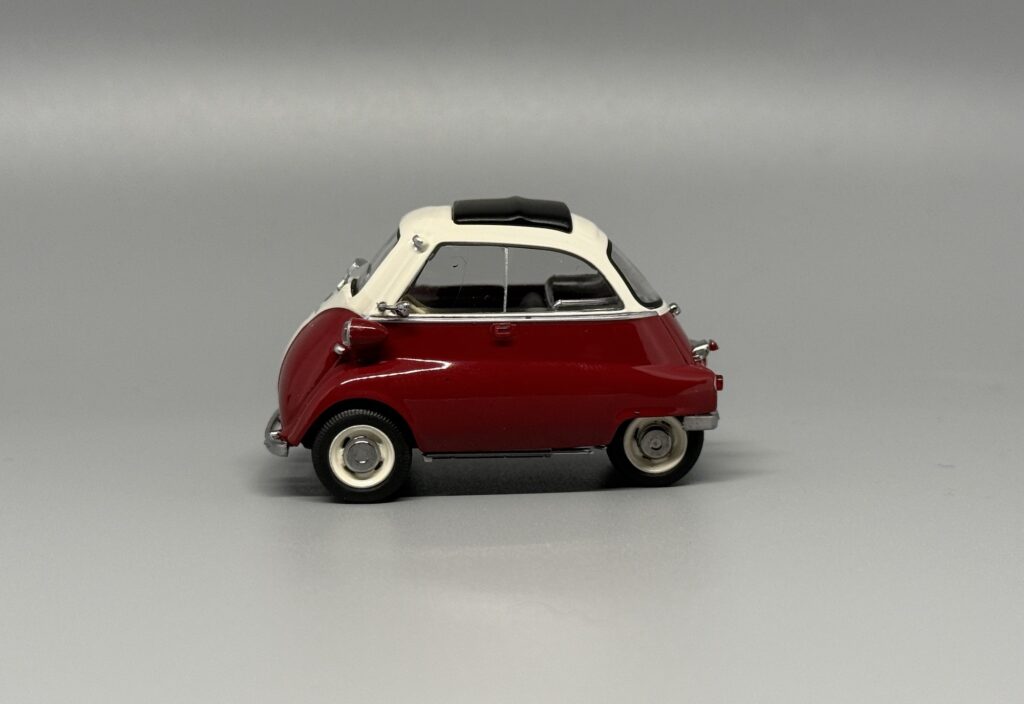
Isetta 250 Export erines varasemast Standard-versioonist mitme hästi märgatava detaili poolest. Kui Standardil oli kere küljeosas kolmeosaline aknalahendus, siis Export-versioon sai ühtsema ja voolujoonelisema küljejoonega kere, mille juurde kuulusid suuremad lükandaknad. See andis autole modernsema üldilme ja muutis selle visuaalselt varasemast teostusest selgelt erinevaks. Just sellised muudatused teevad Export-versiooni huvitavaks näiteks sellest, kuidas BMW väikest mikrosõidukit tootmise käigus edasi arendas.
Tehniliselt jäi Isetta truuks oma lihtsale ja ökonoomsele põhimõttele. Väike kahe inimese jaoks mõeldud auto oli vaid umbes 2,3 meetrit pikk ning selle kõige iseloomulikumaks tunnuseks oli eesmine uks, mis avanes koos rooliga. Isetta 250 kasutas ühesilindrilist neljataktilist mootorrattamootorit töömahuga 245 cm³, mille võimsus oli 12 hobujõudu. Tänu väikesele kaalule ja tagasihoidlikule kütusekulule sobis Isetta suurepäraselt ajastu vajadustega ning kujunes üheks tuntumaks mikrosõidukiks BMW ajaloos.
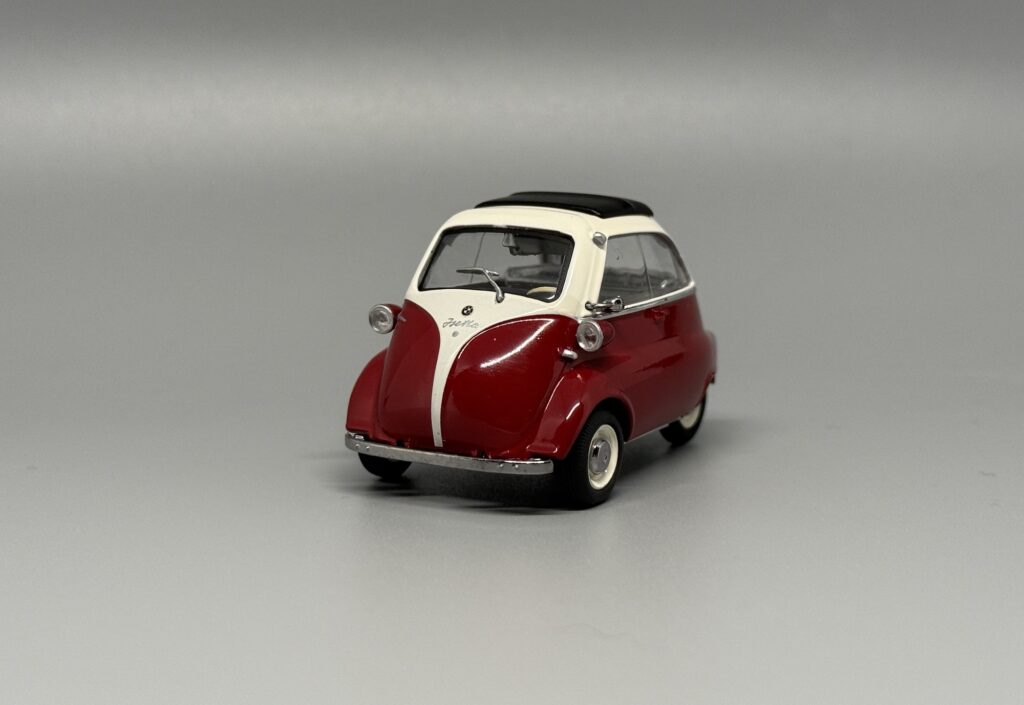
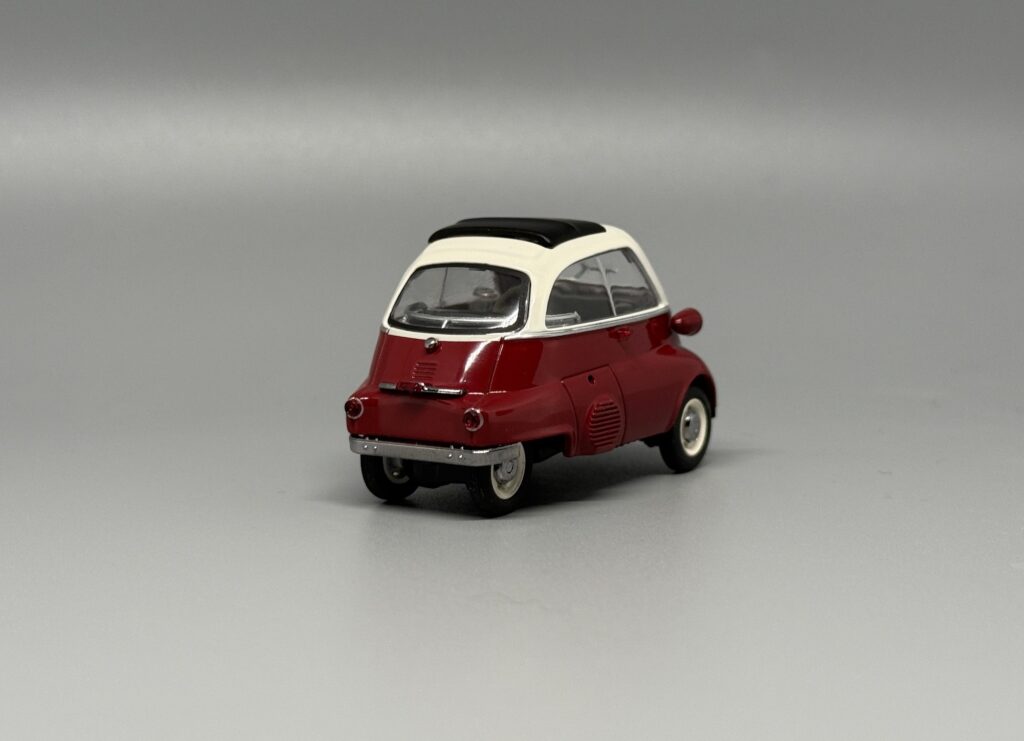
Minu kollektsioonis olev mudel on Schuco toodang.
Tehnilised andmed lühidalt:
Tootmisaeg: november 1956 kuni mai 1962
Tootmiskoht: München, Saksamaa
Mootor: 245 cm³ ühesilindriline neljataktiline mootor
Võimsus: 12 hj
Tootmisarv: 47 636 autot
Eripära: voolujoonelisema kere ja suuremate küljeakendega Isetta 250 edasiarendus
The BMW Isetta 250 Export belongs to the group of models that helped BMW recover from a difficult economic situation during the 1950s. The Isetta was one of the best-known microcars of its era and quickly became a symbol of post-war European mobility. The original concept of the model came from the Italian company Iso, but BMW acquired the production rights and adapted the small vehicle to meet its own technical requirements. This led to the creation of the BMW Isetta, which became a very important chapter in the brand’s history.
The Isetta 250 Export differed from the earlier Standard version in several clearly noticeable details. While the Standard had a three-part side window arrangement, the Export version received a more unified and streamlined side profile with larger sliding windows. This gave the car a more modern overall appearance and made it visually distinct from the earlier version. It is precisely these changes that make the Export version an interesting example of how BMW continued to develop its small microcar during production.
Technically, the Isetta remained true to its simple and economical concept. This small two-seater was only about 2.3 metres long, and its most distinctive feature was the front door, which opened together with the steering wheel. The Isetta 250 used a single-cylinder four-stroke motorcycle engine with a displacement of 245 cc and an output of 12 horsepower. Thanks to its low weight and modest fuel consumption, the Isetta was perfectly suited to the needs of its era and became one of the best-known microcars in BMW history.
The model in my collection is produced by Schuco.
Technical details at a glance:
Production period: November 1956 to May 1962
Production location: Munich, Germany
Engine: 245 cc single-cylinder four-stroke engine
Power output: 12 hp
Production quantity: 47,636 cars
Special feature: further-developed Isetta 250 with a more streamlined body and larger side windows

BMW Isetta 250 Export kuulub nende mudelite hulka, mis aitasid BMW-l 1950. aastatel keerulisest majanduslikust olukorrast välja tulla. Isetta oli üks tuntumaid mikrosõidukeid oma ajastul ning sellest kujunes kiiresti sõjajärgse Euroopa motorizatsiooni sümbol. Mudeli algne kontseptsioon pärines Itaalia ettevõttelt Iso, kuid BMW omandas tootmisõigused ja kohandas väikese sõiduki oma tehnilistele nõuetele vastavaks. Nii sündis BMW Isetta, millest sai margi ajaloos väga oluline peatükk.
Isetta 250 Export erines varasemast Standard-versioonist mitme hästi märgatava detaili poolest. Kui Standardil oli kere küljeosas kolmeosaline aknalahendus, siis Export-versioon sai ühtsema ja voolujoonelisema küljejoonega kere, mille juurde kuulusid suuremad lükandaknad. See andis autole modernsema üldilme ja muutis selle visuaalselt varasemast teostusest selgelt erinevaks. Just sellised muudatused teevad Export-versiooni huvitavaks näiteks sellest, kuidas BMW väikest mikrosõidukit tootmise käigus edasi arendas.
Tehniliselt jäi Isetta truuks oma lihtsale ja ökonoomsele põhimõttele. Väike kahe inimese jaoks mõeldud auto oli vaid umbes 2,3 meetrit pikk ning selle kõige iseloomulikumaks tunnuseks oli eesmine uks, mis avanes koos rooliga. Isetta 250 kasutas ühesilindrilist neljataktilist mootorrattamootorit töömahuga 245 cm³, mille võimsus oli 12 hobujõudu. Tänu väikesele kaalule ja tagasihoidlikule kütusekulule sobis Isetta suurepäraselt ajastu vajadustega ning kujunes üheks tuntumaks mikrosõidukiks BMW ajaloos.
Minu kollektsioonis olev mudel on Schuco toodang.
Tehnilised andmed lühidalt:
Tootmisaeg: november 1956 kuni mai 1962
Tootmiskoht: München, Saksamaa
Mootor: 245 cm³ ühesilindriline neljataktiline mootor
Võimsus: 12 hj
Tootmisarv: 47 636 autot
Eripära: voolujoonelisema kere ja suuremate küljeakendega Isetta 250 edasiarendus
The BMW Isetta 250 Export belongs to the group of models that helped BMW recover from a difficult economic situation during the 1950s. The Isetta was one of the best-known microcars of its era and quickly became a symbol of post-war European mobility. The original concept of the model came from the Italian company Iso, but BMW acquired the production rights and adapted the small vehicle to meet its own technical requirements. This led to the creation of the BMW Isetta, which became a very important chapter in the brand’s history.
The Isetta 250 Export differed from the earlier Standard version in several clearly noticeable details. While the Standard had a three-part side window arrangement, the Export version received a more unified and streamlined side profile with larger sliding windows. This gave the car a more modern overall appearance and made it visually distinct from the earlier version. It is precisely these changes that make the Export version an interesting example of how BMW continued to develop its small microcar during production.
Technically, the Isetta remained true to its simple and economical concept. This small two-seater was only about 2.3 metres long, and its most distinctive feature was the front door, which opened together with the steering wheel. The Isetta 250 used a single-cylinder four-stroke motorcycle engine with a displacement of 245 cc and an output of 12 horsepower. Thanks to its low weight and modest fuel consumption, the Isetta was perfectly suited to the needs of its era and became one of the best-known microcars in BMW history.
The model in my collection is produced by Schuco.
Technical details at a glance:
Production period: November 1956 to May 1962
Production location: Munich, Germany
Engine: 245 cc single-cylinder four-stroke engine
Power output: 12 hp
Production quantity: 47,636 cars
Special feature: further-developed Isetta 250 with a more streamlined body and larger side windows
Foto päris autost, BMW muuseum. Foto: Sten-Patrick Kreek
Photo of the real car, BMW Museum. Photo: Sten-Patrick Kreek