BMW 850i Cabrio (E31) on üks kõige huvitavamaid ja haruldasemaid BMW 8. seeria kõrvalharusid. Tegemist ei olnud kunagi seeriatootmisse jõudnud mudeliga, vaid tootmisvalmiduseni arendatud prototüübiga, mis näitab, et BMW kaalus E31 põlvkonna puhul tõsiselt ka avatud kerega luksusliku grand tourer’i loomist. Kui BMW 850i Coupé jõudis turule väga tehnilise, madala ja jõulise tippkupeena, siis Cabrio oleks andnud samale platvormile hoopis emotsionaalsema ja veelgi eksklusiivsema iseloomu.
BMW 8. seeria esitleti 1989. aasta Frankfurdi IAA autonäitusel ning 850i Coupé oli BMW jaoks tõeline tehnoloogiline tippmudel. Juba algusest peale oli kaalumisel ka kabriolettversioon. BMW muuseumi info järgi arendati BMW 850i Cabrio isegi seeriatootmise valmiduseni, kuid lõpuks otsustas BMW juhtkond mudelit tootmisse mitte viia. Põhjuseks oli kartus, et selline auto ei suuda saavutada vajalikku kasumlikkust.
E31 8. seeria oli juba kupeekujul väga eriline auto: madal kere, pikk kapott, peidetud esituled ja V12-mootor andsid sellele tugeva tehnoloogilise ning luksusliku kuvandi. Cabrio-versioon oleks säilitanud suure osa sellest iseloomust, kuid lisanud avatud sõidu elamuse. Selline auto oleks asunud BMW mudelivaliku tipus ning pakkunud väga haruldast kombinatsiooni V12-mootorist, luksusest ja avatud kerega grand tourer’i olemusest.
Kabrioleti loomine E31 platvormile ei olnud lihtne ülesanne. Suure ja madala kupee katuse eemaldamine tähendas vajadust kere tugevdamise, jäikuse säilitamise ja ohutuse ümberhindamise järele. Samal ajal pidi auto säilitama 8. seeriale omase luksusliku, sportliku ja tehniliselt kõrgel tasemel iseloomu. Just see teeb BMW 850i Cabrio eriti huvitavaks: tegemist ei olnud lihtsalt lahtise katusega 8. seeriaga, vaid väga keeruka tehnilise ja konstruktsioonilise arendusega.
Tehniliselt põhines BMW 850i Cabrio E31 850i Coupé V12-versioonil. Auto kasutas 5,0-liitrist kaheteistsilindrilist V-mootorit töömahuga 4988 cm³. Mootori võimsus oli 220 kW ehk 300 hobujõudu 5200 p/min juures ning tippkiiruseks oli märgitud 250 km/h. Need näitajad vastasid 850i Coupé tehnilisele tasemele ja kinnitavad, et kabriolettprototüüp ei olnud pelgalt disainiharjutus, vaid tõsiseltvõetav luksuslik tippmudel.
BMW 850i Cabrio tähtsus seisneb eelkõige selles, et see näitab, millises suunas oleks 8. seeria võinud areneda. Seeriatootmises jäi E31 ainult kupeeks, kuid Cabrio prototüüp tõestab, et BMW uuris võimalust muuta 8. seeria veelgi eksklusiivsemaks ja emotsionaalsemaks mudelipereks. Kui see auto oleks tootmisse jõudnud, oleks sellest saanud üks BMW 1990. aastate kõige erilisemaid ja kallimaid avatud kerega autosid.
Tänapäeval sobib BMW 850i Cabrio hästi nende BMW mudelite hulka, mida võib kirjeldada kui „mis oleks võinud olla“. See ei saanud kunagi ametlikuks seeriamudeliks, kuid just seetõttu on selle lugu eriti põnev. E31 Cabrio on haruldane näide BMW prototüübist, mis oli arendatud tootmisvalmiduseni, kuid jäi ärilistel põhjustel tootmata.
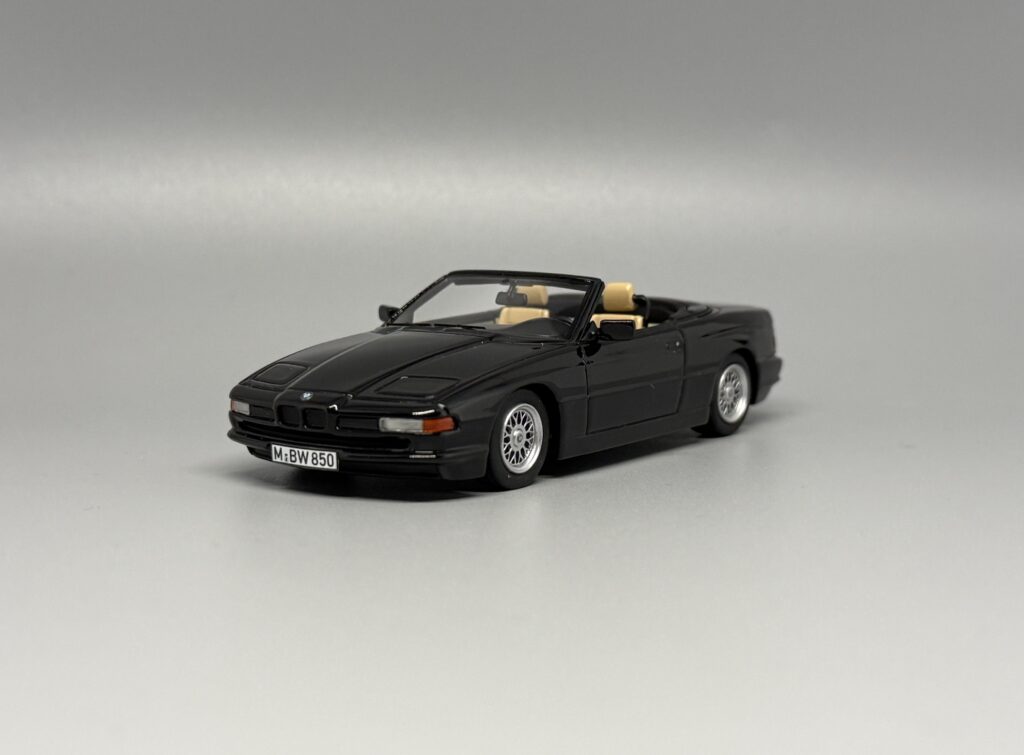
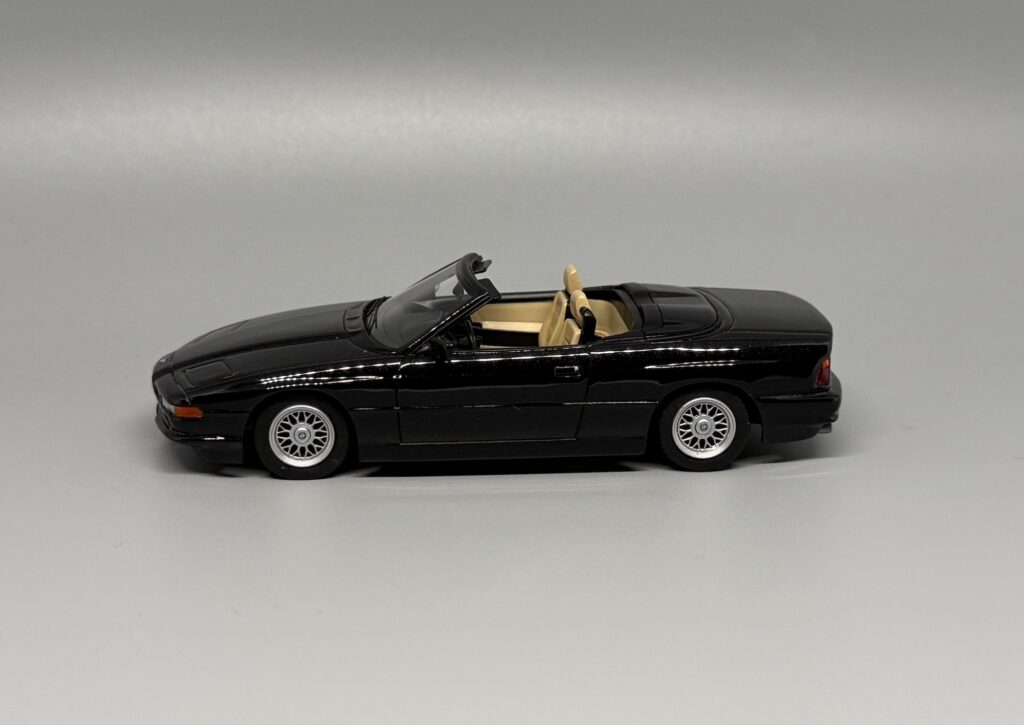
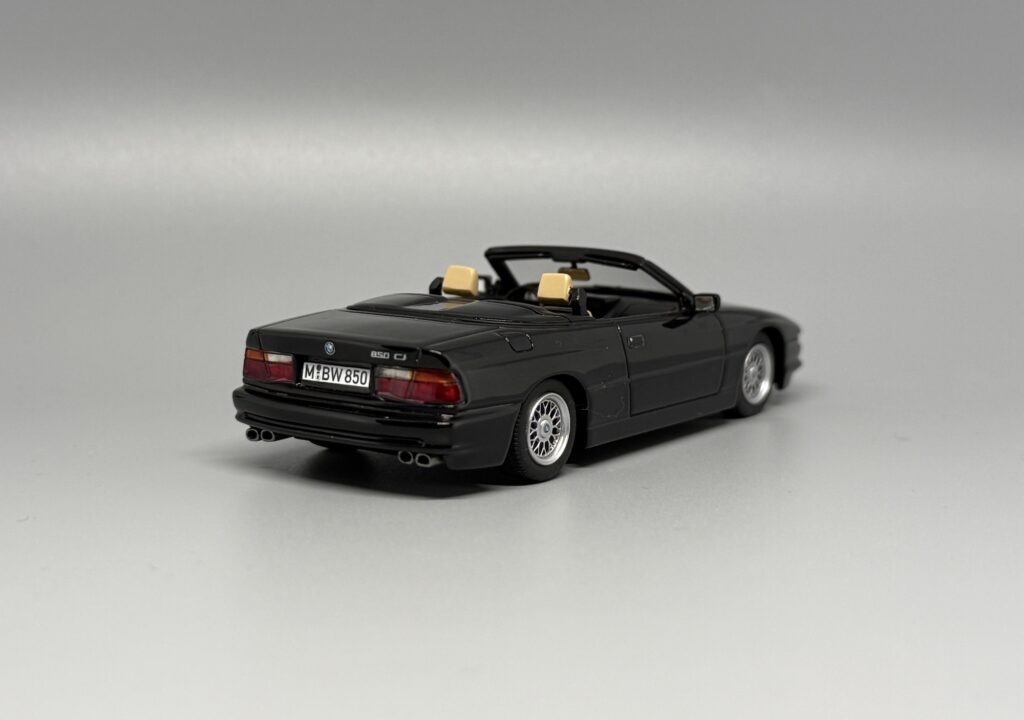
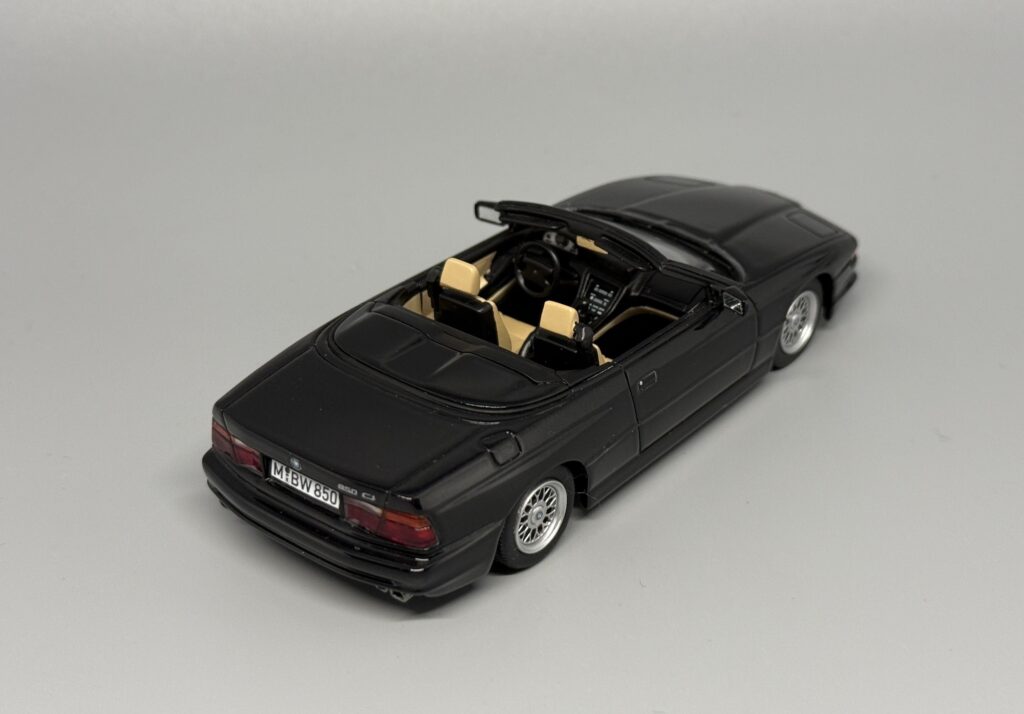
Minu kollektsioonis olev mudel on Schuco PRO.R43 seeria toodang. Tegemist on piiratud tiraažiga mudeliga, mida toodeti kokku 500 eksemplari. Mudeli nimetuses kasutatakse kuju BMW 850Ci Cabriolet, kuid BMW muuseumis on vastav prototüüp esitletud nimega BMW 850i Cabrio. Seetõttu on auto kodulehel käsitletud ajalooliselt täpsema nimetusega BMW 850i Cabrio (E31).
Tehnilised andmed lühidalt:
Aasta: 1990
Alus: BMW 850i Coupé / 8. seeria Coupé (E31)
Keretüüp: kaheukseline luksuslik kabriolettprototüüp
Mootor: 5,0 l V12
Töömaht: 4988 cm³
Võimsus: 300 hj
Veoskeem: tagavedu
Tippkiirus: 250 km/h
Tootmisarv: prototüüp, seeriatootmisse ei jõudnud
Eripära: tootmisvalmiduseni arendatud E31 kabriolett, mille BMW juhtkond jättis tootmisse viimata ebapiisava ärilise tasuvuse tõttu
BMW 850i Cabrio (E31) is one of the most interesting and rare side branches of the BMW 8 Series story. It was never a production model, but a prototype developed to series-production readiness, showing that BMW seriously considered creating an open-top luxury grand tourer based on the E31 generation. While the BMW 850i Coupé reached the market as a highly technical, low and powerful flagship coupé, the Cabrio would have given the same platform a more emotional and even more exclusive character.
The BMW 8 Series was presented at the 1989 Frankfurt IAA Motor Show, and the 850i Coupé represented a true technological flagship for BMW. From the beginning, a convertible version was also under consideration. According to the information displayed at the BMW Museum, the BMW 850i Cabrio was even developed to series-production readiness, but BMW management ultimately decided not to put the model into production. The reason was concern that the car would not generate the necessary profit margin.
The E31 8 Series was already a very special car in coupé form: its low body, long bonnet, pop-up headlights and V12 engine gave it a strong technological and luxury image. The Cabrio version would have preserved much of this character while adding the experience of open-air driving. Such a car would have sat at the top of the BMW model range and offered a very rare combination of a V12 engine, luxury and open-top grand tourer character.
Creating a Cabrio on the E31 platform was not a simple task. Removing the roof from a large and low coupé meant that body reinforcement, rigidity and safety all had to be reconsidered. At the same time, the car still had to retain the luxurious, sporting and technically advanced character of the 8 Series. This is what makes the BMW 850i Cabrio especially interesting: it was not merely an open-top 8 Series, but a complex technical and structural development.
Technically, the BMW 850i Cabrio was based on the V12 version of the E31 850i Coupé. The car used a 5.0-litre twelve-cylinder V engine with a displacement of 4988 cc. Output was 220 kW, or 300 hp, at 5200 rpm, and top speed was given as 250 km/h. These figures matched the technical level of the 850i Coupé and confirm that the cabriolet prototype was not just a design exercise, but a serious luxury flagship model.
The significance of the BMW 850i Cabrio lies above all in the way it shows how the 8 Series might have developed. In series production, the E31 remained a coupé, but the Cabrio prototype proves that BMW explored the possibility of turning the 8 Series into an even more exclusive and emotional model family. Had this car reached production, it would have become one of BMW’s most special and expensive open-top cars of the 1990s.
Today, the BMW 850i Cabrio fits well among those BMW models that can be described as “what might have been”. It never became an official production model, but that is exactly what makes its story so fascinating. The E31 Cabrio is a rare example of a BMW prototype that was developed to production readiness, but remained unbuilt for commercial reasons.
The model in my collection is produced by the Schuco PRO.R43 series. It is a limited-edition model, with a total of 500 pieces produced. The model name uses the form BMW 850Ci Cabriolet, but at the BMW Museum the corresponding prototype is presented as the BMW 850i Cabrio. For this reason, the car is presented on the website under the historically more accurate name BMW 850i Cabrio (E31).
Technical data in brief:
Year: 1990
Basis: BMW 850i Coupé / 8 Series Coupé (E31)
Body style: two-door luxury cabriolet prototype
Engine: 5.0-litre V12
Displacement: 4988 cc
Power: 300 hp
Drivetrain: rear-wheel drive
Top speed: 250 km/h
Production number: prototype, not put into series production
Special feature: E31 cabriolet developed to series-production readiness, but cancelled by BMW management due to insufficient expected profitability

BMW 850i Cabrio (E31) on üks kõige huvitavamaid ja haruldasemaid BMW 8. seeria kõrvalharusid. Tegemist ei olnud kunagi seeriatootmisse jõudnud mudeliga, vaid tootmisvalmiduseni arendatud prototüübiga, mis näitab, et BMW kaalus E31 põlvkonna puhul tõsiselt ka avatud kerega luksusliku grand tourer’i loomist. Kui BMW 850i Coupé jõudis turule väga tehnilise, madala ja jõulise tippkupeena, siis Cabrio oleks andnud samale platvormile hoopis emotsionaalsema ja veelgi eksklusiivsema iseloomu.
BMW 8. seeria esitleti 1989. aasta Frankfurdi IAA autonäitusel ning 850i Coupé oli BMW jaoks tõeline tehnoloogiline tippmudel. Juba algusest peale oli kaalumisel ka kabriolettversioon. BMW muuseumi info järgi arendati BMW 850i Cabrio isegi seeriatootmise valmiduseni, kuid lõpuks otsustas BMW juhtkond mudelit tootmisse mitte viia. Põhjuseks oli kartus, et selline auto ei suuda saavutada vajalikku kasumlikkust.
E31 8. seeria oli juba kupeekujul väga eriline auto: madal kere, pikk kapott, peidetud esituled ja V12-mootor andsid sellele tugeva tehnoloogilise ning luksusliku kuvandi. Cabrio-versioon oleks säilitanud suure osa sellest iseloomust, kuid lisanud avatud sõidu elamuse. Selline auto oleks asunud BMW mudelivaliku tipus ning pakkunud väga haruldast kombinatsiooni V12-mootorist, luksusest ja avatud kerega grand tourer’i olemusest.
Kabrioleti loomine E31 platvormile ei olnud lihtne ülesanne. Suure ja madala kupee katuse eemaldamine tähendas vajadust kere tugevdamise, jäikuse säilitamise ja ohutuse ümberhindamise järele. Samal ajal pidi auto säilitama 8. seeriale omase luksusliku, sportliku ja tehniliselt kõrgel tasemel iseloomu. Just see teeb BMW 850i Cabrio eriti huvitavaks: tegemist ei olnud lihtsalt lahtise katusega 8. seeriaga, vaid väga keeruka tehnilise ja konstruktsioonilise arendusega.
Tehniliselt põhines BMW 850i Cabrio E31 850i Coupé V12-versioonil. Auto kasutas 5,0-liitrist kaheteistsilindrilist V-mootorit töömahuga 4988 cm³. Mootori võimsus oli 220 kW ehk 300 hobujõudu 5200 p/min juures ning tippkiiruseks oli märgitud 250 km/h. Need näitajad vastasid 850i Coupé tehnilisele tasemele ja kinnitavad, et kabriolettprototüüp ei olnud pelgalt disainiharjutus, vaid tõsiseltvõetav luksuslik tippmudel.
BMW 850i Cabrio tähtsus seisneb eelkõige selles, et see näitab, millises suunas oleks 8. seeria võinud areneda. Seeriatootmises jäi E31 ainult kupeeks, kuid Cabrio prototüüp tõestab, et BMW uuris võimalust muuta 8. seeria veelgi eksklusiivsemaks ja emotsionaalsemaks mudelipereks. Kui see auto oleks tootmisse jõudnud, oleks sellest saanud üks BMW 1990. aastate kõige erilisemaid ja kallimaid avatud kerega autosid.
Tänapäeval sobib BMW 850i Cabrio hästi nende BMW mudelite hulka, mida võib kirjeldada kui „mis oleks võinud olla“. See ei saanud kunagi ametlikuks seeriamudeliks, kuid just seetõttu on selle lugu eriti põnev. E31 Cabrio on haruldane näide BMW prototüübist, mis oli arendatud tootmisvalmiduseni, kuid jäi ärilistel põhjustel tootmata.
Minu kollektsioonis olev mudel on Schuco PRO.R43 seeria toodang. Tegemist on piiratud tiraažiga mudeliga, mida toodeti kokku 500 eksemplari. Mudeli nimetuses kasutatakse kuju BMW 850Ci Cabriolet, kuid BMW muuseumis on vastav prototüüp esitletud nimega BMW 850i Cabrio. Seetõttu on auto kodulehel käsitletud ajalooliselt täpsema nimetusega BMW 850i Cabrio (E31).
Tehnilised andmed lühidalt:
Aasta: 1990
Alus: BMW 850i Coupé / 8. seeria Coupé (E31)
Keretüüp: kaheukseline luksuslik kabriolettprototüüp
Mootor: 5,0 l V12
Töömaht: 4988 cm³
Võimsus: 300 hj
Veoskeem: tagavedu
Tippkiirus: 250 km/h
Tootmisarv: prototüüp, seeriatootmisse ei jõudnud
Eripära: tootmisvalmiduseni arendatud E31 kabriolett, mille BMW juhtkond jättis tootmisse viimata ebapiisava ärilise tasuvuse tõttu
BMW 850i Cabrio (E31) is one of the most interesting and rare side branches of the BMW 8 Series story. It was never a production model, but a prototype developed to series-production readiness, showing that BMW seriously considered creating an open-top luxury grand tourer based on the E31 generation. While the BMW 850i Coupé reached the market as a highly technical, low and powerful flagship coupé, the Cabrio would have given the same platform a more emotional and even more exclusive character.
The BMW 8 Series was presented at the 1989 Frankfurt IAA Motor Show, and the 850i Coupé represented a true technological flagship for BMW. From the beginning, a convertible version was also under consideration. According to the information displayed at the BMW Museum, the BMW 850i Cabrio was even developed to series-production readiness, but BMW management ultimately decided not to put the model into production. The reason was concern that the car would not generate the necessary profit margin.
The E31 8 Series was already a very special car in coupé form: its low body, long bonnet, pop-up headlights and V12 engine gave it a strong technological and luxury image. The Cabrio version would have preserved much of this character while adding the experience of open-air driving. Such a car would have sat at the top of the BMW model range and offered a very rare combination of a V12 engine, luxury and open-top grand tourer character.
Creating a Cabrio on the E31 platform was not a simple task. Removing the roof from a large and low coupé meant that body reinforcement, rigidity and safety all had to be reconsidered. At the same time, the car still had to retain the luxurious, sporting and technically advanced character of the 8 Series. This is what makes the BMW 850i Cabrio especially interesting: it was not merely an open-top 8 Series, but a complex technical and structural development.
Technically, the BMW 850i Cabrio was based on the V12 version of the E31 850i Coupé. The car used a 5.0-litre twelve-cylinder V engine with a displacement of 4988 cc. Output was 220 kW, or 300 hp, at 5200 rpm, and top speed was given as 250 km/h. These figures matched the technical level of the 850i Coupé and confirm that the cabriolet prototype was not just a design exercise, but a serious luxury flagship model.
The significance of the BMW 850i Cabrio lies above all in the way it shows how the 8 Series might have developed. In series production, the E31 remained a coupé, but the Cabrio prototype proves that BMW explored the possibility of turning the 8 Series into an even more exclusive and emotional model family. Had this car reached production, it would have become one of BMW’s most special and expensive open-top cars of the 1990s.
Today, the BMW 850i Cabrio fits well among those BMW models that can be described as “what might have been”. It never became an official production model, but that is exactly what makes its story so fascinating. The E31 Cabrio is a rare example of a BMW prototype that was developed to production readiness, but remained unbuilt for commercial reasons.
The model in my collection is produced by the Schuco PRO.R43 series. It is a limited-edition model, with a total of 500 pieces produced. The model name uses the form BMW 850Ci Cabriolet, but at the BMW Museum the corresponding prototype is presented as the BMW 850i Cabrio. For this reason, the car is presented on the website under the historically more accurate name BMW 850i Cabrio (E31).
Technical data in brief:
Year: 1990
Basis: BMW 850i Coupé / 8 Series Coupé (E31)
Body style: two-door luxury cabriolet prototype
Engine: 5.0-litre V12
Displacement: 4988 cc
Power: 300 hp
Drivetrain: rear-wheel drive
Top speed: 250 km/h
Production number: prototype, not put into series production
Special feature: E31 cabriolet developed to series-production readiness, but cancelled by BMW management due to insufficient expected profitability
Foto päris autost, BMW muuseum. Foto: Sten-Patrick Kreek
Photo of the real car, BMW Museum. Photo: Sten-Patrick Kreek