BMW 2000 A kuulus Neue Klasse sedaanide perekonda ning oli BMW 2000 automaatkäigukastiga versioon. Mudel esindas Neue Klasse’i mugavamat ja sujuvamale sõidule suunatud külge, näidates, kuidas BMW ühendas 1960. aastate teisel poolel sportliku sedaani omadused kasvava nõudlusega suurema sõidumugavuse järele. Kui Neue Klasse kujundas BMW mainet juhikesksete ja hea juhitavusega sedaanide tootjana, lisas BMW 2000 A sellele rahulikuma ning esinduslikuma mõõtme.
BMW 2000 jõudis Neue Klasse’i mudelivalikusse 1966. aasta alguses. See paiknes neljaukseliste sedaanide valiku kõrgemas otsas ning eristus varasematest Neue Klasse’i mudelitest ristkülikukujuliste esitulede, laiemate tagatulede ja rikkalikuma viimistlusega. Mudelinimes kasutatud täht „A” tähistas automaatkäigukasti, mis pakkus neljakäigulise manuaalkäigukastiga BMW 2000 kõrval mugavamat alternatiivi.
Tehniliselt kasutas BMW 2000 A 1990 cm³ töömahuga neljasilindrilist M10 bensiinimootorit, mille võimsus oli 100 hobujõudu. Mootor ühendati kolmeastmelise ZF-automaatkäigukastiga. Automaatversioon ei olnud suunatud niivõrd sportlikule sõidule kui manuaalkäigukastiga BMW 2000, kuid säilitas Neue Klasse’ile omase hea juhitavuse, tagaveolise ülesehituse ja tasakaalustatud sõiduomadused.
BMW 2000 tootmine kestis 1966. aastast kuni 1972. aasta alguseni, mil Neue Klasse sedaanide asemele tuli esimese põlvkonna BMW 5. seeria. BMW 2000 põhimudelit toodeti kokku 119 767 eksemplari, kuid selles arvus ei ole automaatkäigukastiga BMW 2000 A eraldi välja toodud. Seetõttu ei ole selle konkreetse versiooni tootmismahtu võimalik usaldusväärselt määrata.
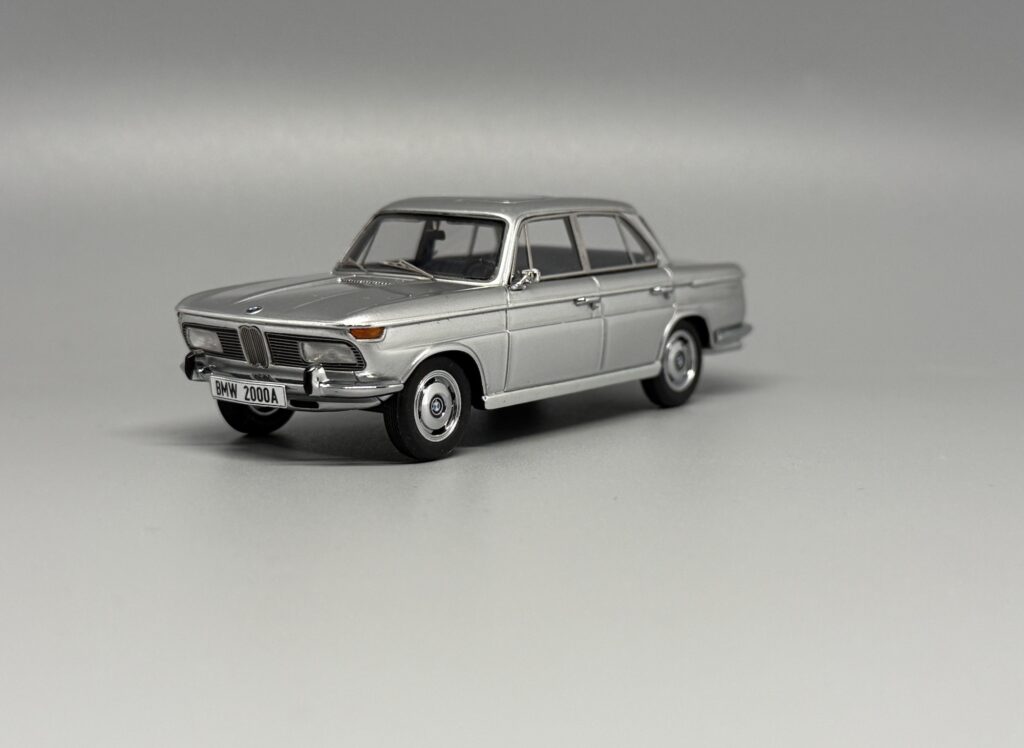
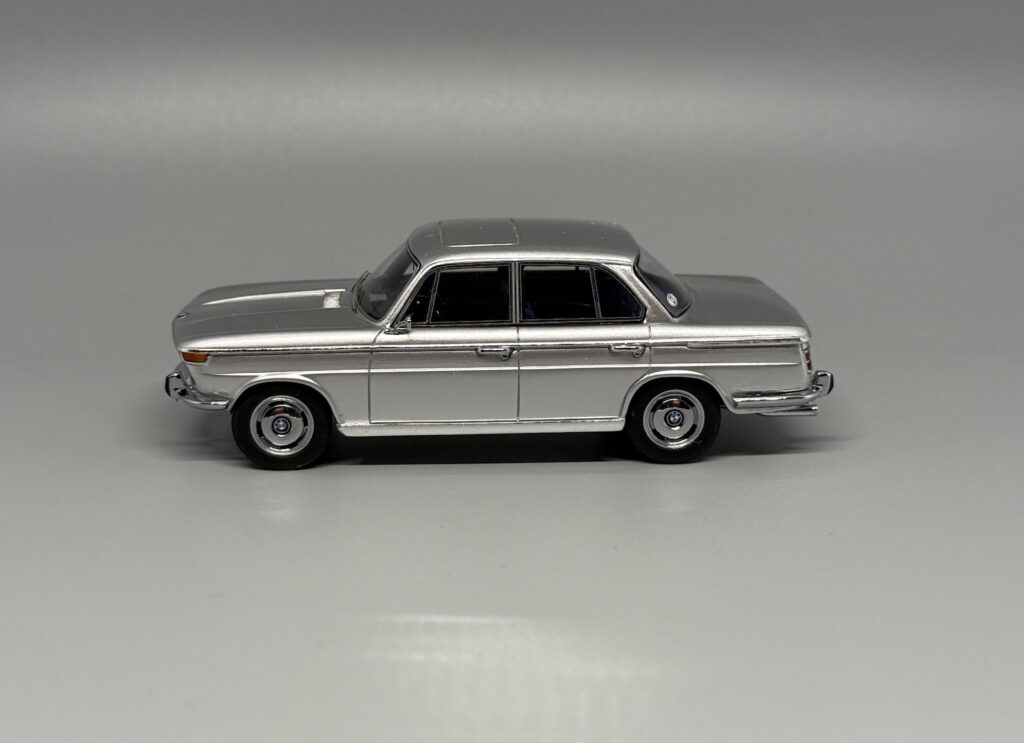
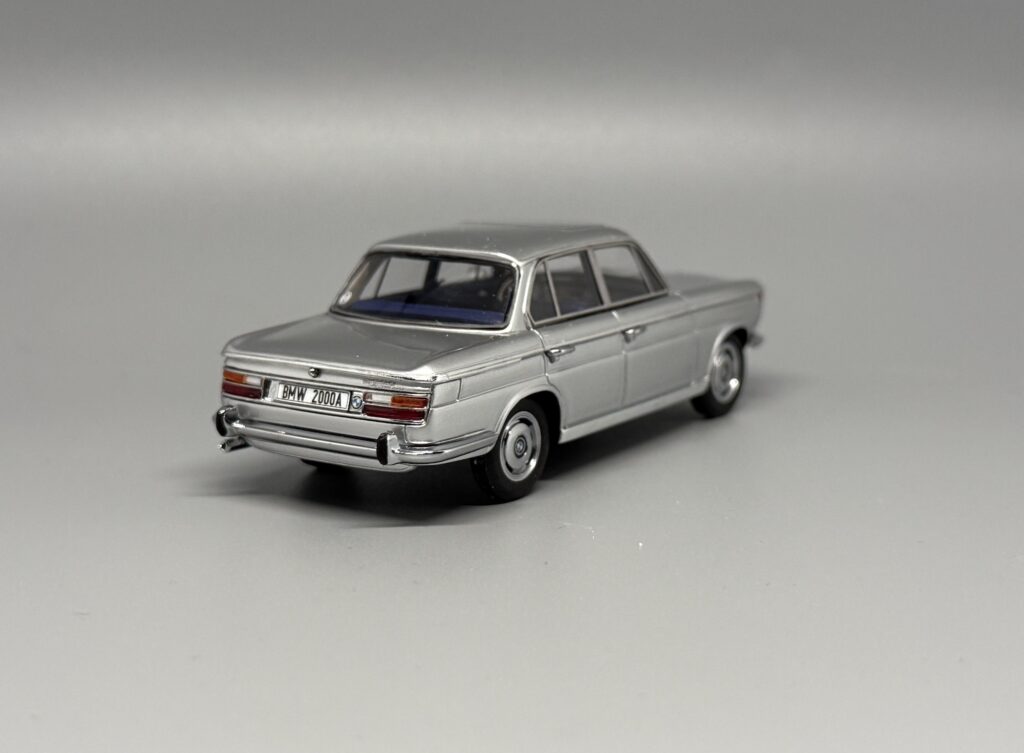
Minu kollektsioonis olev mudel on Minichampsi toodang. Tegemist on piiratud tiraažiga mudeliga, mida toodeti 600 eksemplari. Minichamps on karbil märkinud kujutatava auto aastaks 1962, kuid see ei saa olla korrektne, sest BMW 2000 jõudis tootmisse alles 1966. aastal. Mudeli õigeks ajaliseks määratluseks tuleb seetõttu pidada 1966. aastat.
Tehnilised andmed lühidalt:
Tootmisaeg: 1966–1972
Tootmiskoht: München, Saksamaa
Mootor: 2,0 l ridaneli (M10), 1990 cm³
Võimsus: 100 hj
Käigukast: 3-käiguline ZF-automaat
Veoskeem: tagavedu
Tootmisarv: 119 767 BMW 2000 põhimudelit; automaatkäigukastiga BMW 2000 A eraldi tootmisarv ei ole teada
Eripära: Neue Klasse’i 2,0-liitrise sedaani automaatkäigukastiga mugavusversioon
BMW 2000 A belonged to the Neue Klasse family of saloons and was the automatic-transmission version of the BMW 2000. The model represented the more comfortable and refined side of the Neue Klasse, demonstrating how BMW combined the qualities of a sporting saloon with the growing demand for greater driving comfort during the second half of the 1960s. While the Neue Klasse established BMW’s reputation for driver-focused saloons with excellent handling, the BMW 2000 A added a calmer and more prestigious dimension.
The BMW 2000 joined the Neue Klasse range at the beginning of 1966. It occupied the upper end of the four-door saloon range and differed from earlier Neue Klasse models through its rectangular headlights, wider rear lights and more luxurious trim. The letter “A” in the model name indicated the automatic transmission, which provided a more comfortable alternative to the four-speed manual BMW 2000.
Technically, the BMW 2000 A used a four-cylinder M10 petrol engine with a displacement of 1,990 cm³ and an output of 100 hp. The engine was paired with a three-speed ZF automatic transmission. The automatic version was less focused on sporting driving than the manual BMW 2000, but retained the good handling, rear-wheel-drive layout and balanced driving characteristics associated with the Neue Klasse.
Production of the BMW 2000 continued from 1966 until the beginning of 1972, when the Neue Klasse saloons were replaced by the first-generation BMW 5 Series. A total of 119,767 examples of the basic BMW 2000 model were produced, but this figure does not identify the automatic BMW 2000 A separately. The production volume of this particular version therefore cannot be reliably determined.
The model in my collection is produced by Minichamps. It is a limited-edition model, with only 600 pieces produced. Minichamps states on the packaging that the model represents a 1962 car, but this cannot be correct because the BMW 2000 did not enter production until 1966. The model should therefore be dated to 1966.
Technical data in brief:
Production period: 1966–1972
Production location: Munich, Germany
Engine: 2.0-litre inline-four (M10), 1,990 cm³
Power: 100 hp
Transmission: 3-speed ZF automatic
Drivetrain: rear-wheel drive
Production number: 119,767 examples of the basic BMW 2000; the separate production number for the automatic BMW 2000 A is not known
Special feature: comfort-oriented automatic-transmission version of the 2.0-litre Neue Klasse saloon
BMW 2000 A kuulus Neue Klasse sedaanide perekonda ning oli BMW 2000 automaatkäigukastiga versioon. Mudel esindas Neue Klasse’i mugavamat ja sujuvamale sõidule suunatud külge, näidates, kuidas BMW ühendas 1960. aastate teisel poolel sportliku sedaani omadused kasvava nõudlusega suurema sõidumugavuse järele. Kui Neue Klasse kujundas BMW mainet juhikesksete ja hea juhitavusega sedaanide tootjana, lisas BMW 2000 A sellele rahulikuma ning esinduslikuma mõõtme.
BMW 2000 jõudis Neue Klasse’i mudelivalikusse 1966. aasta alguses. See paiknes neljaukseliste sedaanide valiku kõrgemas otsas ning eristus varasematest Neue Klasse’i mudelitest ristkülikukujuliste esitulede, laiemate tagatulede ja rikkalikuma viimistlusega. Mudelinimes kasutatud täht „A” tähistas automaatkäigukasti, mis pakkus neljakäigulise manuaalkäigukastiga BMW 2000 kõrval mugavamat alternatiivi.
Tehniliselt kasutas BMW 2000 A 1990 cm³ töömahuga neljasilindrilist M10 bensiinimootorit, mille võimsus oli 100 hobujõudu. Mootor ühendati kolmeastmelise ZF-automaatkäigukastiga. Automaatversioon ei olnud suunatud niivõrd sportlikule sõidule kui manuaalkäigukastiga BMW 2000, kuid säilitas Neue Klasse’ile omase hea juhitavuse, tagaveolise ülesehituse ja tasakaalustatud sõiduomadused.
BMW 2000 tootmine kestis 1966. aastast kuni 1972. aasta alguseni, mil Neue Klasse sedaanide asemele tuli esimese põlvkonna BMW 5. seeria. BMW 2000 põhimudelit toodeti kokku 119 767 eksemplari, kuid selles arvus ei ole automaatkäigukastiga BMW 2000 A eraldi välja toodud. Seetõttu ei ole selle konkreetse versiooni tootmismahtu võimalik usaldusväärselt määrata.
Minu kollektsioonis olev mudel on Minichampsi toodang. Tegemist on piiratud tiraažiga mudeliga, mida toodeti 600 eksemplari. Minichamps on karbil märkinud kujutatava auto aastaks 1962, kuid see ei saa olla korrektne, sest BMW 2000 jõudis tootmisse alles 1966. aastal. Mudeli õigeks ajaliseks määratluseks tuleb seetõttu pidada 1966. aastat.
Tehnilised andmed lühidalt:
Tootmisaeg: 1966–1972
Tootmiskoht: München, Saksamaa
Mootor: 2,0 l ridaneli (M10), 1990 cm³
Võimsus: 100 hj
Käigukast: 3-käiguline ZF-automaat
Veoskeem: tagavedu
Tootmisarv: 119 767 BMW 2000 põhimudelit; automaatkäigukastiga BMW 2000 A eraldi tootmisarv ei ole teada
Eripära: Neue Klasse’i 2,0-liitrise sedaani automaatkäigukastiga mugavusversioon
BMW 2000 A belonged to the Neue Klasse family of saloons and was the automatic-transmission version of the BMW 2000. The model represented the more comfortable and refined side of the Neue Klasse, demonstrating how BMW combined the qualities of a sporting saloon with the growing demand for greater driving comfort during the second half of the 1960s. While the Neue Klasse established BMW’s reputation for driver-focused saloons with excellent handling, the BMW 2000 A added a calmer and more prestigious dimension.
The BMW 2000 joined the Neue Klasse range at the beginning of 1966. It occupied the upper end of the four-door saloon range and differed from earlier Neue Klasse models through its rectangular headlights, wider rear lights and more luxurious trim. The letter “A” in the model name indicated the automatic transmission, which provided a more comfortable alternative to the four-speed manual BMW 2000.
Technically, the BMW 2000 A used a four-cylinder M10 petrol engine with a displacement of 1,990 cm³ and an output of 100 hp. The engine was paired with a three-speed ZF automatic transmission. The automatic version was less focused on sporting driving than the manual BMW 2000, but retained the good handling, rear-wheel-drive layout and balanced driving characteristics associated with the Neue Klasse.
Production of the BMW 2000 continued from 1966 until the beginning of 1972, when the Neue Klasse saloons were replaced by the first-generation BMW 5 Series. A total of 119,767 examples of the basic BMW 2000 model were produced, but this figure does not identify the automatic BMW 2000 A separately. The production volume of this particular version therefore cannot be reliably determined.
The model in my collection is produced by Minichamps. It is a limited-edition model, with only 600 pieces produced. Minichamps states on the packaging that the model represents a 1962 car, but this cannot be correct because the BMW 2000 did not enter production until 1966. The model should therefore be dated to 1966.
Technical data in brief:
Production period: 1966–1972
Production location: Munich, Germany
Engine: 2.0-litre inline-four (M10), 1,990 cm³
Power: 100 hp
Transmission: 3-speed ZF automatic
Drivetrain: rear-wheel drive
Production number: 119,767 examples of the basic BMW 2000; the separate production number for the automatic BMW 2000 A is not known
Special feature: comfort-oriented automatic-transmission version of the 2.0-litre Neue Klasse saloon
Foto päris autost. Allikas: Wikipedia
Photo of the real car. Source: Wikipedia