BMW 3.5 CSL Le Mans 1976 oli mudel, mis kuulus BMW 1970. aastate keskpaiga kõige agressiivsemate ja tuntumate võidusõiduautode hulka. E9 Coupé baasil arendatud 3.5 CSL oli selleks ajaks kujunenud juba selgelt rajale suunatud masinaks, milles tavapärase kupee elegantne joonekasvus oli asendunud laiade poritiibade, jõulise aerodünaamika ja palju radikaalsema üldmuljega. 1976. aasta Le Mansi 24 tunni sõidul kandis BMW Motorsport GmbH auto võidusõidunumbrit 42 ning selle meeskonda kuulusid Sam Posey, Harald Grohs ja Hughes de Fierlant. See konkreetne auto lõpetas võistluse üldarvestuses kümnendal kohal, mis annab sellele kindla koha BMW sõja järgse kestvussõiduajaloo tähtsate autode seas.
Tehniliselt kasutas BMW 3.5 CSL 3,5-liitrist ridakuues mootorit töömahuga 3498 cm³. 1976. aasta Le Mansi Group 5 versioonid erinesid märgatavalt varasematest CSL-idest, sest võidusõidureeglid lubasid palju ulatuslikumaid keremuudatusi ja aerodünaamilisi lahendusi. Just sellest ajast pärineb ka 3.5 CSL-i kõige kuulsam ja dramaatilisem võistlusilme, mis tegi sellest ühe BMW kõige meeldejäävama touring car’i ja kestvussõiduauto. Sponsorvärvides musta, punase ja sinise kujundusega auto number 42 esindab hästi seda perioodi, mil BMW Motorsporti identiteet muutus rajal üha nähtavamaks ja enesekindlamaks.
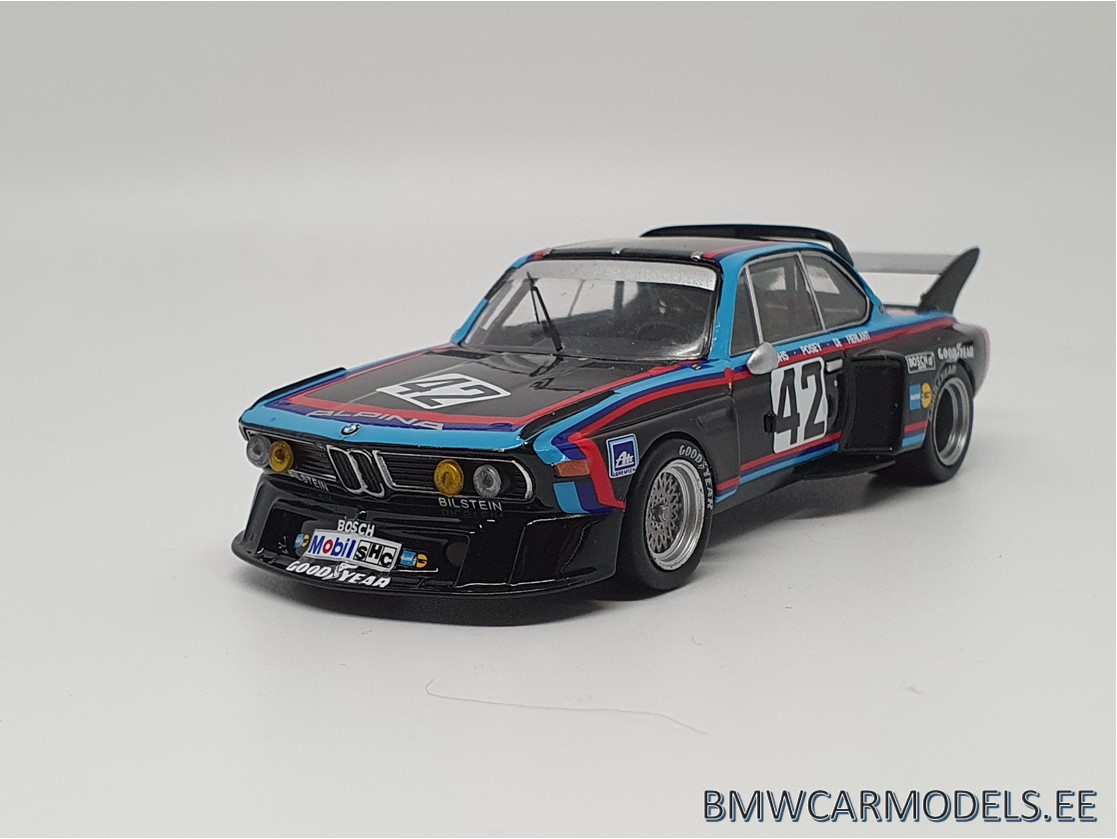
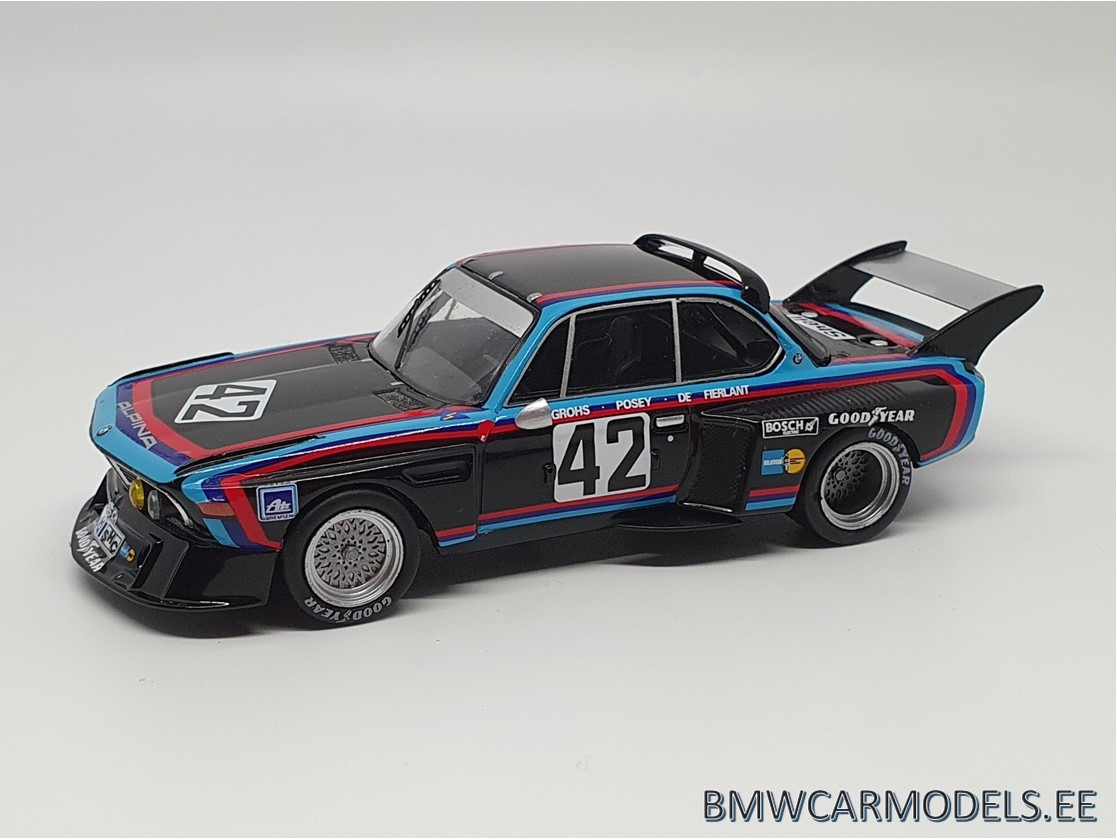
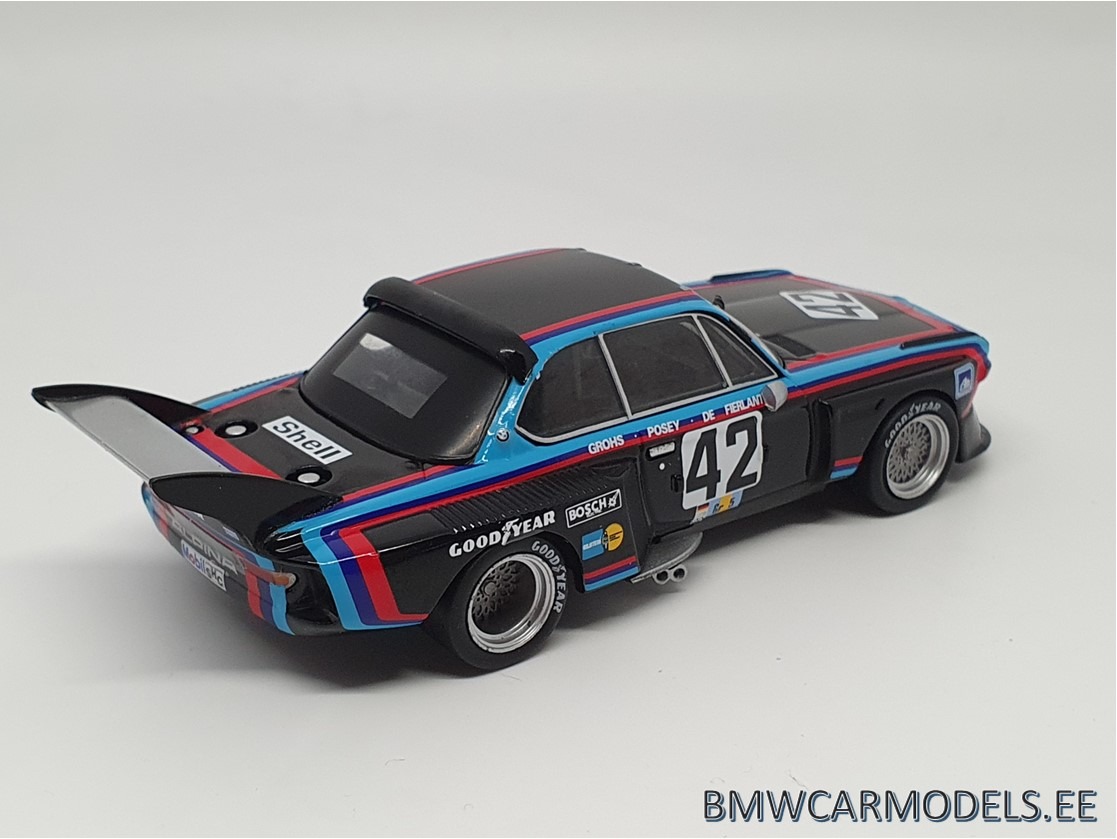
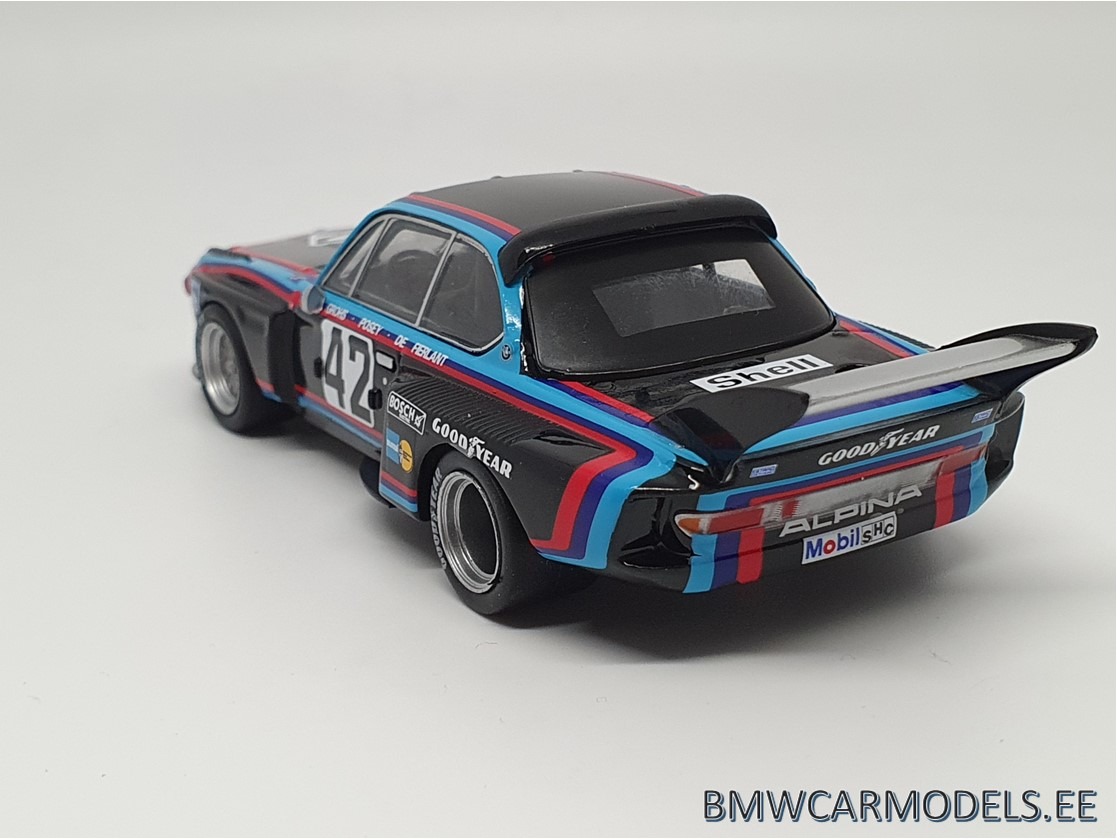
Minu kollektsioonis olev Sparki mudelauto kujutab 1976. aasta autot.
Tehnilised andmed lühidalt:
Tootmisaeg: 1976
Tootmiskoht: Saksamaa
Mootor: 3,5 l ridakuues, 3498 cm³
Võimsus: täpne näit vajab täiendavat kinnitust
Tootmisarv: üksikud võistlusautod / täpne arv vajab täiendavat kinnitust
Eripära: 1976. aasta Le Mansi 24 tunni sõidu BMW Motorsport GmbH auto võidusõidunumbriga 42, mis lõpetas üldarvestuses 10. kohal
The BMW 3.5 CSL Le Mans 1976 belonged to the most aggressive and best-known BMW racing cars of the mid-1970s. Developed from the E9 coupé, the 3.5 CSL had by this time become a machine clearly focused on the track, with the elegant lines of the original coupé transformed into widened fenders, dramatic aerodynamic elements and a far more radical overall appearance. At the 1976 24 Hours of Le Mans, BMW Motorsport GmbH entered car number 42, driven by Sam Posey, Harald Grohs and Hughes de Fierlant. This particular car finished 10th overall, giving it a secure place among the important BMW endurance-racing cars of the post-war era.
Technically, the BMW 3.5 CSL used a 3.5-litre inline-six engine with a displacement of 3498 cc. The 1976 Le Mans Group 5 versions differed significantly from earlier CSLs, because the regulations allowed much more extensive body modifications and aerodynamic development. It was precisely from this period that the 3.5 CSL gained its most dramatic and iconic racing appearance, making it one of BMW’s most memorable touring and endurance racing cars. In its black, red and blue sponsor livery, car number 42 represents very well the era in which BMW Motorsport’s identity became increasingly visible and self-assured on the track.
The Spark model car in my collection represents a 1976 car.
Technical data at a glance:
Production period: 1976
Production location: Germany
Engine: 3.5-litre inline-six, 3498 cc
Power output: exact figure requires further confirmation
Production total: a very small number of racing cars / exact figure requires further confirmation
Special feature: BMW Motorsport GmbH car number 42 from the 1976 24 Hours of Le Mans, finishing 10th overall
BMW 3.5 CSL Le Mans 1976 oli mudel, mis kuulus BMW 1970. aastate keskpaiga kõige agressiivsemate ja tuntumate võidusõiduautode hulka. E9 Coupé baasil arendatud 3.5 CSL oli selleks ajaks kujunenud juba selgelt rajale suunatud masinaks, milles tavapärase kupee elegantne joonekasvus oli asendunud laiade poritiibade, jõulise aerodünaamika ja palju radikaalsema üldmuljega. 1976. aasta Le Mansi 24 tunni sõidul kandis BMW Motorsport GmbH auto võidusõidunumbrit 42 ning selle meeskonda kuulusid Sam Posey, Harald Grohs ja Hughes de Fierlant. See konkreetne auto lõpetas võistluse üldarvestuses kümnendal kohal, mis annab sellele kindla koha BMW sõja järgse kestvussõiduajaloo tähtsate autode seas.
Tehniliselt kasutas BMW 3.5 CSL 3,5-liitrist ridakuues mootorit töömahuga 3498 cm³. 1976. aasta Le Mansi Group 5 versioonid erinesid märgatavalt varasematest CSL-idest, sest võidusõidureeglid lubasid palju ulatuslikumaid keremuudatusi ja aerodünaamilisi lahendusi. Just sellest ajast pärineb ka 3.5 CSL-i kõige kuulsam ja dramaatilisem võistlusilme, mis tegi sellest ühe BMW kõige meeldejäävama touring car’i ja kestvussõiduauto. Sponsorvärvides musta, punase ja sinise kujundusega auto number 42 esindab hästi seda perioodi, mil BMW Motorsporti identiteet muutus rajal üha nähtavamaks ja enesekindlamaks.
Minu kollektsioonis olev Sparki mudelauto kujutab 1976. aasta autot.
Tehnilised andmed lühidalt:
Tootmisaeg: 1976
Tootmiskoht: Saksamaa
Mootor: 3,5 l ridakuues, 3498 cm³
Võimsus: täpne näit vajab täiendavat kinnitust
Tootmisarv: üksikud võistlusautod / täpne arv vajab täiendavat kinnitust
Eripära: 1976. aasta Le Mansi 24 tunni sõidu BMW Motorsport GmbH auto võidusõidunumbriga 42, mis lõpetas üldarvestuses 10. kohal
The BMW 3.5 CSL Le Mans 1976 belonged to the most aggressive and best-known BMW racing cars of the mid-1970s. Developed from the E9 coupé, the 3.5 CSL had by this time become a machine clearly focused on the track, with the elegant lines of the original coupé transformed into widened fenders, dramatic aerodynamic elements and a far more radical overall appearance. At the 1976 24 Hours of Le Mans, BMW Motorsport GmbH entered car number 42, driven by Sam Posey, Harald Grohs and Hughes de Fierlant. This particular car finished 10th overall, giving it a secure place among the important BMW endurance-racing cars of the post-war era.
Technically, the BMW 3.5 CSL used a 3.5-litre inline-six engine with a displacement of 3498 cc. The 1976 Le Mans Group 5 versions differed significantly from earlier CSLs, because the regulations allowed much more extensive body modifications and aerodynamic development. It was precisely from this period that the 3.5 CSL gained its most dramatic and iconic racing appearance, making it one of BMW’s most memorable touring and endurance racing cars. In its black, red and blue sponsor livery, car number 42 represents very well the era in which BMW Motorsport’s identity became increasingly visible and self-assured on the track.
The Spark model car in my collection represents a 1976 car.
Technical data at a glance:
Production period: 1976
Production location: Germany
Engine: 3.5-litre inline-six, 3498 cc
Power output: exact figure requires further confirmation
Production total: a very small number of racing cars / exact figure requires further confirmation
Special feature: BMW Motorsport GmbH car number 42 from the 1976 24 Hours of Le Mans, finishing 10th overall
Foto päris autost. Allikas: internet.
Photo of the actual car. Source: internet.