BMW M3 Cabrio (E30) oli esimene BMW M poolt toodetud kabriolett ning ühtlasi üks kõige haruldasemaid E30 põlvkonna M3 versioone. Mudel esitleti 1987. aastal Frankfurdi autonäitusel ning seeriatootmine algas 1988. aastal. Võrreldes tavalise E30 M3 kupeega ühendas M3 Cabrio sama agressiivse motorspordist inspireeritud tehnika elegantse avatud kerega, andes autole väga erilise iseloomu. Just see kombinatsioon tegi sellest juba omal ajal väga eksklusiivse mudeli, mis eristus selgelt nii tavalisest 3. seeria kabrioletist kui ka suletud kerega M3-st.
Tehniliselt kasutas BMW M3 Cabrio 2,3-liitrist neljasilindrilist S14 mootorit, mille võimsus ulatus alguses 195 hobujõuni katalüsaatoriga versioonis ja 200 hobujõuni katalüsaatorita versioonis. Alates 1989. aasta sügisest tõusis võimsus 215 hobujõuni, mis tegi sellest oma aja kõige võimsama seeriatootmises neljakohalise kabrioleti. Tootmine kestis 1988. aasta juunist kuni 1991. aasta juunini ning kokku valmis vaid 786 autot. See teeb E30 M3 Cabrio tänapäeval väga hinnatud kollektsioneerimisobjektiks ja üheks BMW M ajaloo tähtsamaks varajaseks erimudeliks.
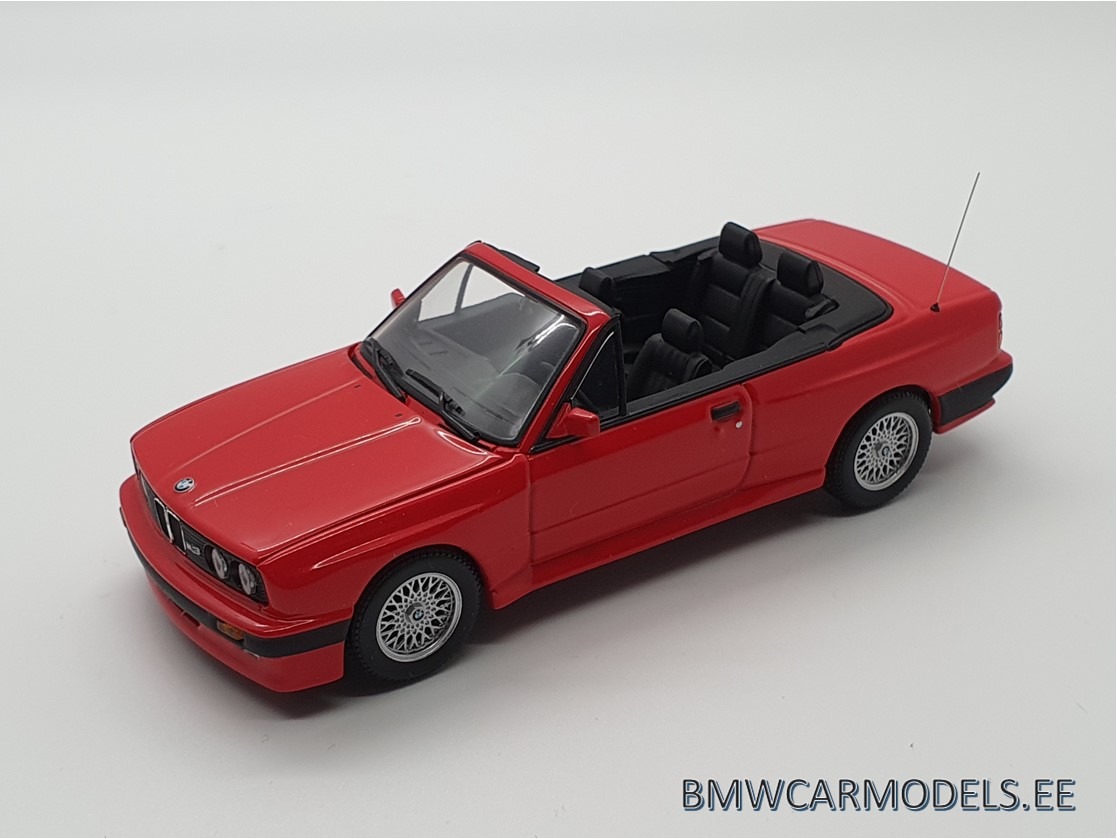
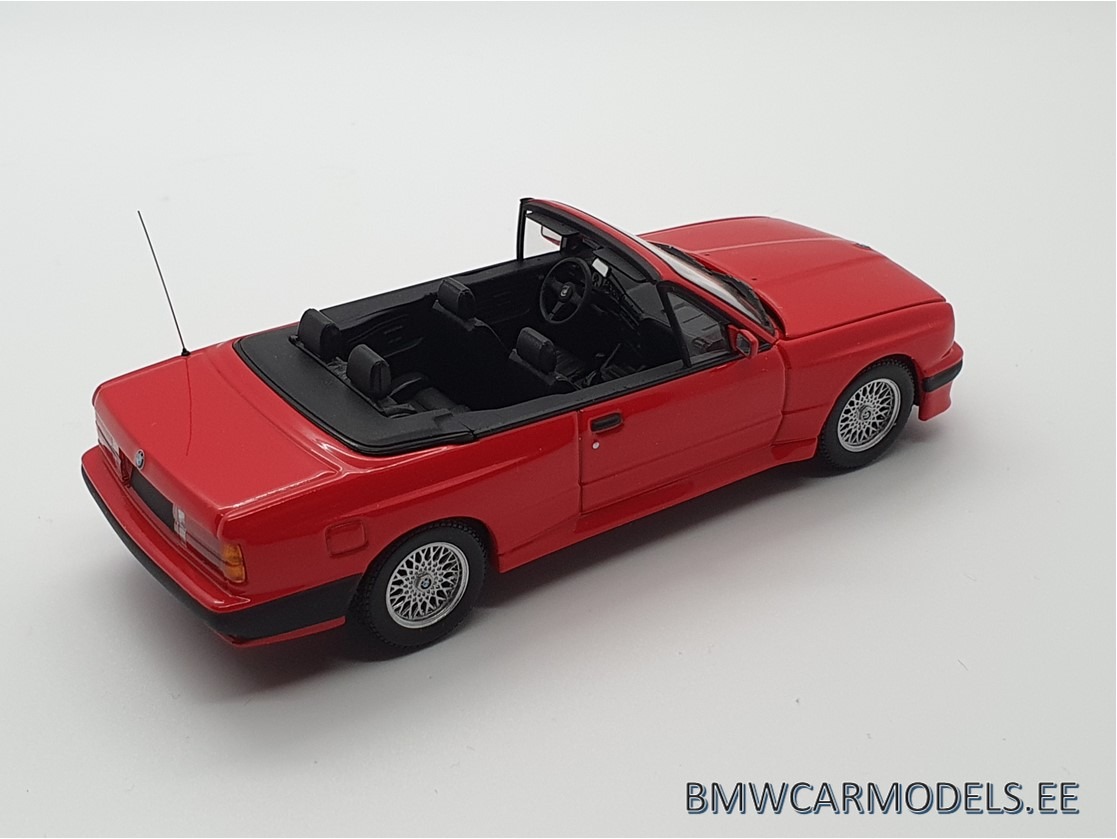
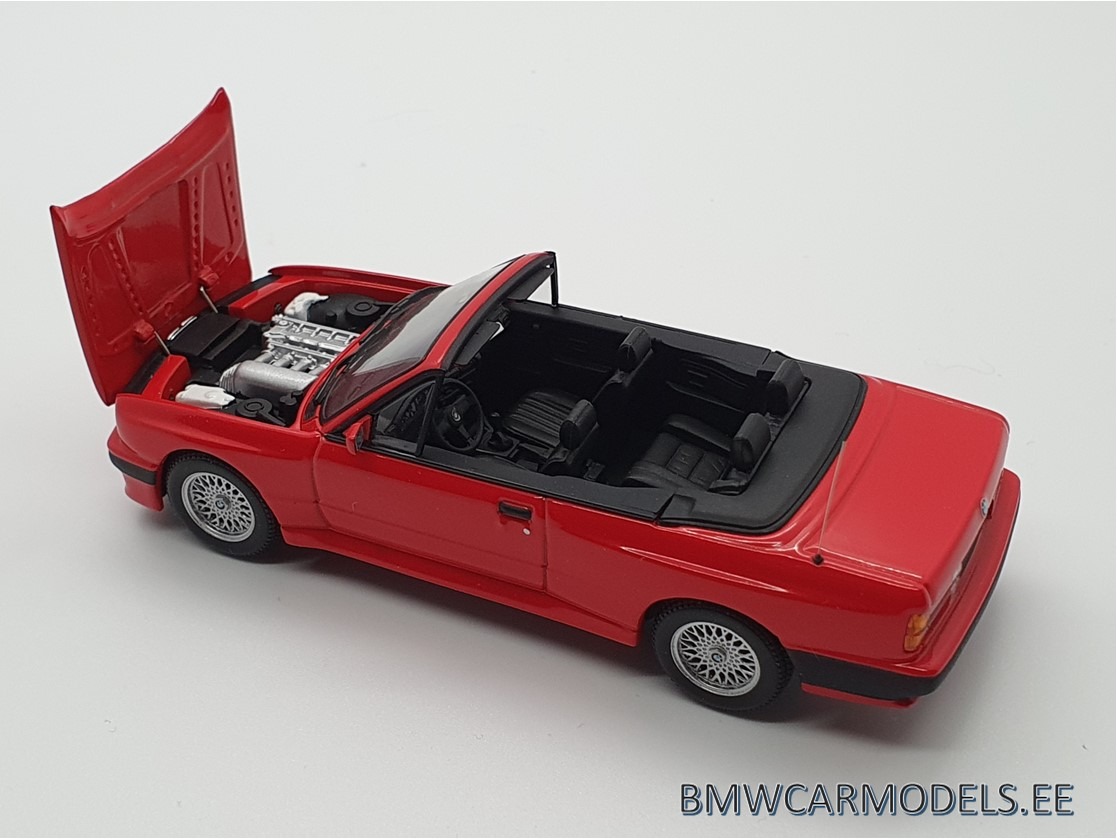
Minu kollektsioonis olev mudel on Minichampsi toodang. Tegemist on piiratud tiraažiga ning mudelit toodeti 2016 eksemplari. Mudel kujutab 1988. aasta autot.
Tehnilised andmed lühidalt:
Tootmisaeg: 06/1988–06/1991
Tootmiskoht: Saksamaa
Mootor: 2,3 l ridaneli (S14)
Võimsus: 195–215 hj sõltuvalt versioonist
Tootmisarv: 786 autot
Eripära: esimene BMW M kabriolett ja üks haruldasemaid E30 M3 versioone
The BMW M3 Cabrio (E30) was the first convertible produced by BMW M and at the same time one of the rarest versions of the E30-generation M3. The model was presented at the 1987 Frankfurt Motor Show, and series production began in 1988. Compared with the regular E30 M3 coupé, the M3 Cabrio combined the same aggressive motorsport-inspired engineering with an elegant open body, giving the car a very distinctive character. It was precisely this combination that made it an exclusive model even when new, clearly setting it apart from both the standard 3 Series convertible and the closed-body M3.
Technically, the BMW M3 Cabrio used the 2.3-litre S14 four-cylinder engine, producing initially 195 horsepower in catalyst-equipped form and 200 horsepower without a catalyst. From autumn 1989 onward, output rose to 215 horsepower, making it the most powerful series-produced four-seat convertible of its time. Production lasted from June 1988 to June 1991, and only 786 cars were built. That makes the E30 M3 Cabrio a highly sought-after collector’s car today and one of the most important early special models in BMW M history.
The model in my collection is produced by Minichamps. It is a limited edition of 2,016 pieces and represents a 1988 car.
Technical data at a glance:
Production period: 06/1988–06/1991
Production location: Germany
Engine: 2.3-litre inline-four (S14)
Power output: 195–215 hp depending on version
Production total: 786 cars
Special feature: the first BMW M convertible and one of the rarest E30 M3 versions
BMW M3 Cabrio (E30) oli esimene BMW M poolt toodetud kabriolett ning ühtlasi üks kõige haruldasemaid E30 põlvkonna M3 versioone. Mudel esitleti 1987. aastal Frankfurdi autonäitusel ning seeriatootmine algas 1988. aastal. Võrreldes tavalise E30 M3 kupeega ühendas M3 Cabrio sama agressiivse motorspordist inspireeritud tehnika elegantse avatud kerega, andes autole väga erilise iseloomu. Just see kombinatsioon tegi sellest juba omal ajal väga eksklusiivse mudeli, mis eristus selgelt nii tavalisest 3. seeria kabrioletist kui ka suletud kerega M3-st.
Tehniliselt kasutas BMW M3 Cabrio 2,3-liitrist neljasilindrilist S14 mootorit, mille võimsus ulatus alguses 195 hobujõuni katalüsaatoriga versioonis ja 200 hobujõuni katalüsaatorita versioonis. Alates 1989. aasta sügisest tõusis võimsus 215 hobujõuni, mis tegi sellest oma aja kõige võimsama seeriatootmises neljakohalise kabrioleti. Tootmine kestis 1988. aasta juunist kuni 1991. aasta juunini ning kokku valmis vaid 786 autot. See teeb E30 M3 Cabrio tänapäeval väga hinnatud kollektsioneerimisobjektiks ja üheks BMW M ajaloo tähtsamaks varajaseks erimudeliks.
Minu kollektsioonis olev mudel on Minichampsi toodang. Tegemist on piiratud tiraažiga ning mudelit toodeti 2016 eksemplari. Mudel kujutab 1988. aasta autot.
Tehnilised andmed lühidalt:
Tootmisaeg: 06/1988–06/1991
Tootmiskoht: Saksamaa
Mootor: 2,3 l ridaneli (S14)
Võimsus: 195–215 hj sõltuvalt versioonist
Tootmisarv: 786 autot
Eripära: esimene BMW M kabriolett ja üks haruldasemaid E30 M3 versioone
The BMW M3 Cabrio (E30) was the first convertible produced by BMW M and at the same time one of the rarest versions of the E30-generation M3. The model was presented at the 1987 Frankfurt Motor Show, and series production began in 1988. Compared with the regular E30 M3 coupé, the M3 Cabrio combined the same aggressive motorsport-inspired engineering with an elegant open body, giving the car a very distinctive character. It was precisely this combination that made it an exclusive model even when new, clearly setting it apart from both the standard 3 Series convertible and the closed-body M3.
Technically, the BMW M3 Cabrio used the 2.3-litre S14 four-cylinder engine, producing initially 195 horsepower in catalyst-equipped form and 200 horsepower without a catalyst. From autumn 1989 onward, output rose to 215 horsepower, making it the most powerful series-produced four-seat convertible of its time. Production lasted from June 1988 to June 1991, and only 786 cars were built. That makes the E30 M3 Cabrio a highly sought-after collector’s car today and one of the most important early special models in BMW M history.
The model in my collection is produced by Minichamps. It is a limited edition of 2,016 pieces and represents a 1988 car.
Technical data at a glance:
Production period: 06/1988–06/1991
Production location: Germany
Engine: 2.3-litre inline-four (S14)
Power output: 195–215 hp depending on version
Production total: 786 cars
Special feature: the first BMW M convertible and one of the rarest E30 M3 versions
Foto päris autost. Allikas: classic.com.
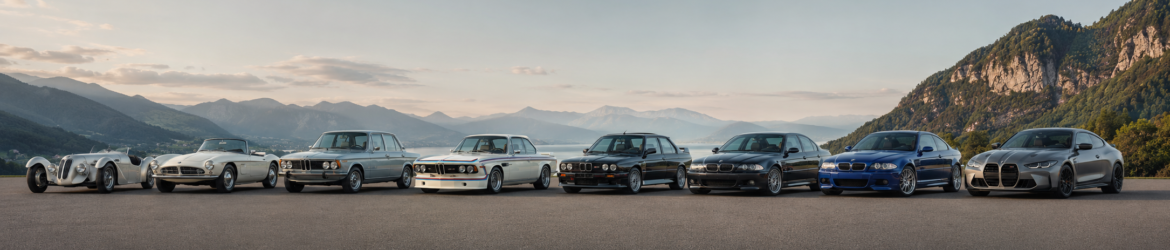
Photo of the actual car. Source: classic.com.