BMW 7. seeria (E32) oli mudel, millega BMW viis oma luksussedaani 1980. aastate lõpus täiesti uuele tasemele. 1986. aastal esitletud E32 oli teise põlvkonna 7. seeria ning kujunes kiiresti üheks olulisemaks BMW esindusmudeliks. Võrreldes eelkäija E23-ga mõjus E32 modernsemalt, aerodünaamilisemalt ja tehnoloogiliselt palju arenenumalt, säilitades samal ajal BMW-le omase juhikeskse iseloomu. Just see põlvkond aitas 7. seerial kinnistada oma kohta Euroopa luksussedaanide tipus ning näitas, et BMW suudab ühendada kõrge mugavuse, tehnilise uuenduslikkuse ja sportlikuma sõidutunnetuse üheks tervikuks.
Tehniliselt tõi E32 BMW luksusautodesse mitmeid uusi lahendusi ning sellest sai esimene 7. seeria, mida pakuti nii V12-mootori kui ka pika kerevariandiga. Mudelivalikusse kuulusid erinevad ridakuuesed, V8- ja hiljem ka V12-jõuallikad, mille võimsus ulatus sõltuvalt versioonist umbes 188 kuni 300 hobujõuni. E32 kujutas endast ajastu luksussedaani, mille puhul pöörati suurt tähelepanu nii sõidumugavusele, salongi kvaliteedile kui ka moodsale elektroonikale. Tänapäeval peetakse seda üheks klassikalisemaks 7. seeria põlvkonnaks, mis ühendas väga hästi väärika välimuse ja tugeva tehnilise sisu.
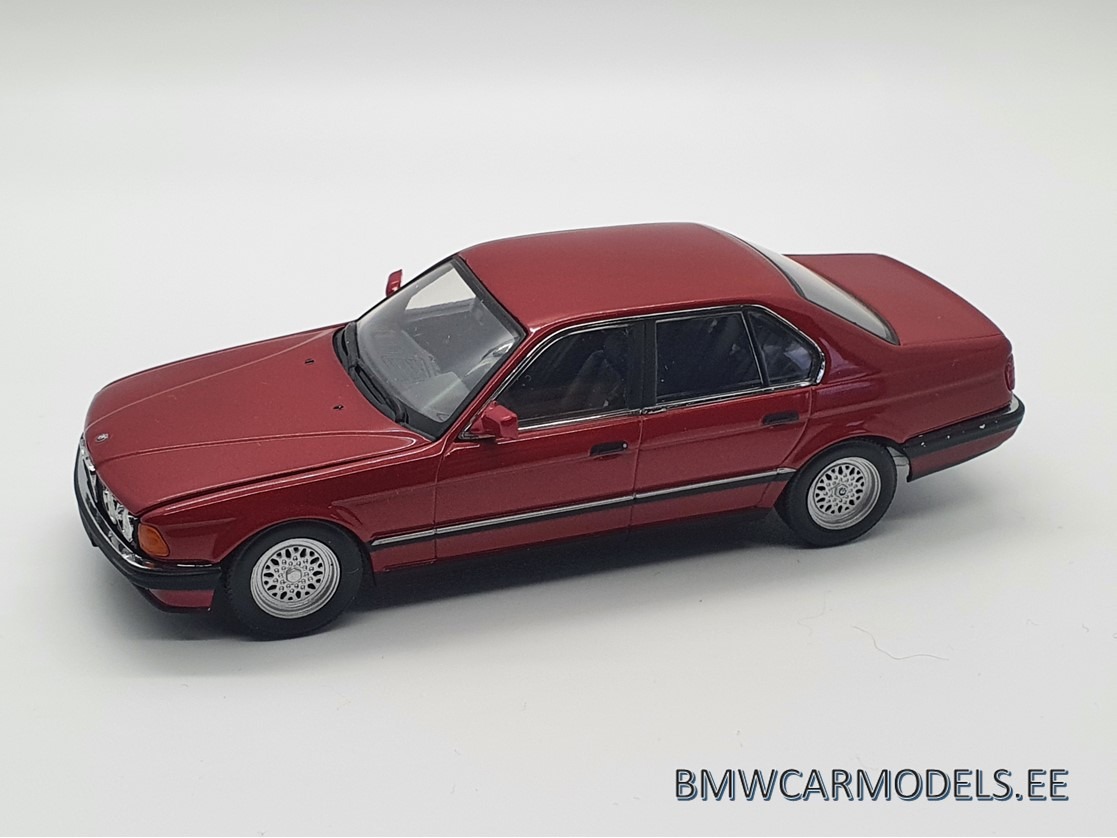
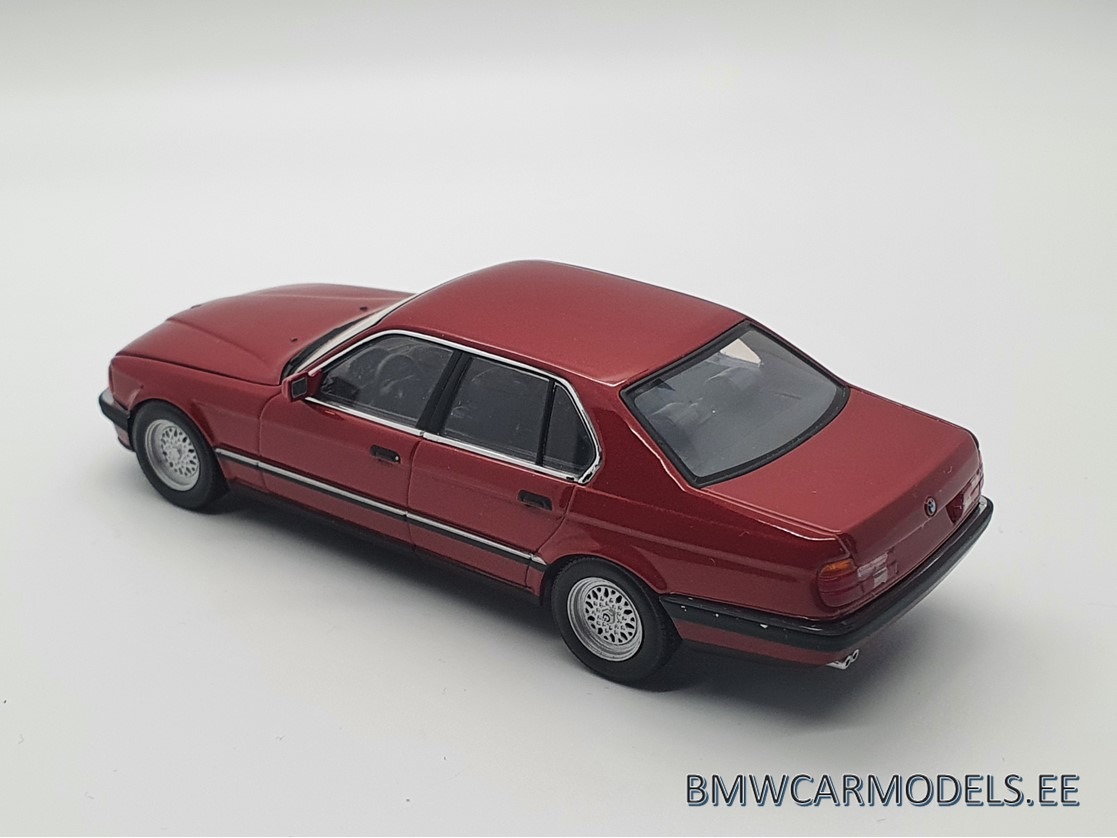
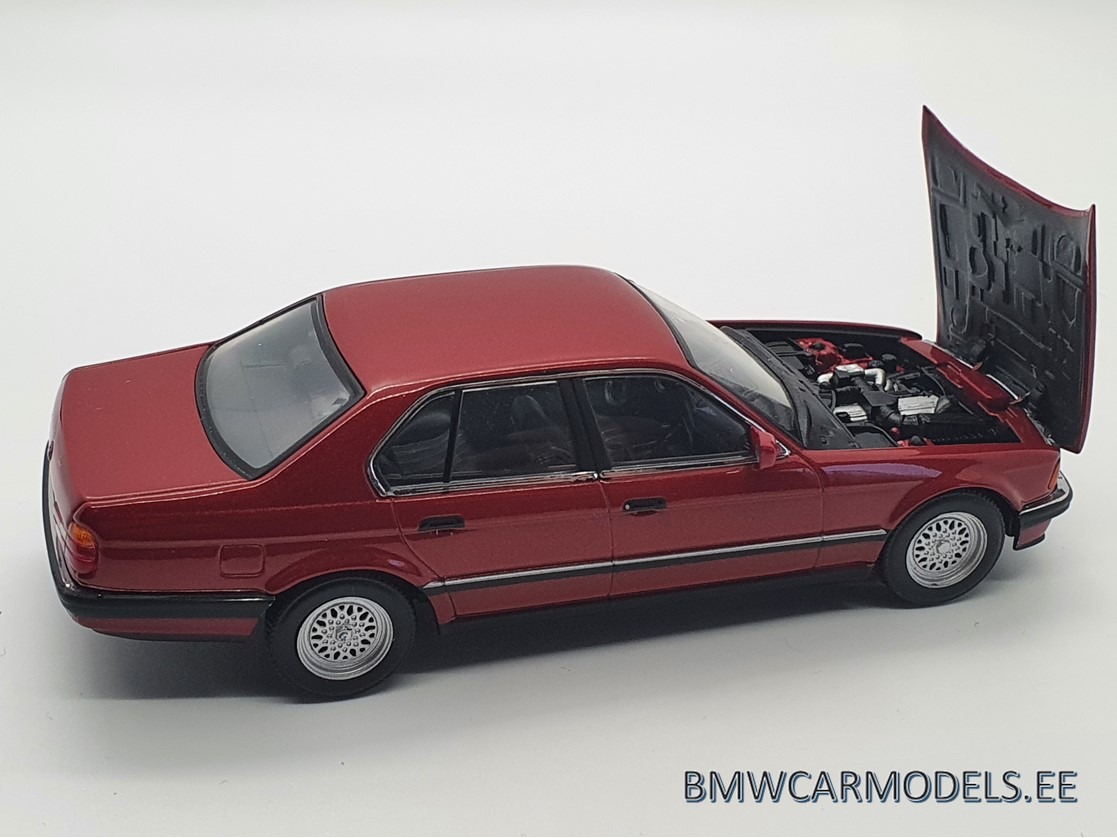
Minu kollektsioonis olev Minichampsi mudelauto pärineb piiratud tiraažist, kokku toodeti 3024 eksemplari.
Tehnilised andmed lühidalt:
Tootmisaeg: 1986–1994
Tootmiskoht: Saksamaa
Mootorid: erinevad ridakuuesed, V8- ja V12-mootorid
Võimsus: sõltuvalt versioonist umbes 188–300 hj
Tootmisarv: 311 068 autot
Eripära: esimene 7. seeria põlvkond, mida pakuti nii V12-mootori kui ka pika kerevariandiga
The BMW 7 Series (E32) was the model with which BMW took its luxury sedan into a completely new era in the late 1980s. Introduced in 1986, the E32 was the second generation of the 7 Series and quickly became one of BMW’s most important flagship models. Compared with its predecessor, the E23, the E32 appeared more modern, more aerodynamic and much more advanced technologically, while still preserving the driver-focused character typical of BMW. It was this generation that helped firmly establish the 7 Series among Europe’s leading luxury sedans and showed that BMW could combine high comfort, technical innovation and a more sporting driving feel in one complete package.
Technically, the E32 brought a number of new solutions into BMW luxury cars and became the first 7 Series to be offered with both a V12 engine and a long-wheelbase version. The range included various inline-six, V8 and later V12 engines, with outputs ranging from approximately 188 to 300 horsepower depending on version. The E32 represented the luxury sedan of its era, with great attention paid to ride comfort, interior quality and modern electronics. Today, it is regarded as one of the most classic generations of the 7 Series, combining dignified design with strong technical substance extremely well.
The Minichamps model car in my collection comes from a limited production run, with 3,024 pieces produced in total.
Technical data at a glance:
Production period: 1986–1994
Production location: Germany
Engines: various inline-six, V8 and V12 engines
Power output: approximately 188–300 hp depending on version
Production total: 311,068 cars
Special feature: the first 7 Series generation to be offered with both a V12 engine and a long-wheelbase version
BMW 7. seeria (E32) oli mudel, millega BMW viis oma luksussedaani 1980. aastate lõpus täiesti uuele tasemele. 1986. aastal esitletud E32 oli teise põlvkonna 7. seeria ning kujunes kiiresti üheks olulisemaks BMW esindusmudeliks. Võrreldes eelkäija E23-ga mõjus E32 modernsemalt, aerodünaamilisemalt ja tehnoloogiliselt palju arenenumalt, säilitades samal ajal BMW-le omase juhikeskse iseloomu. Just see põlvkond aitas 7. seerial kinnistada oma kohta Euroopa luksussedaanide tipus ning näitas, et BMW suudab ühendada kõrge mugavuse, tehnilise uuenduslikkuse ja sportlikuma sõidutunnetuse üheks tervikuks.
Tehniliselt tõi E32 BMW luksusautodesse mitmeid uusi lahendusi ning sellest sai esimene 7. seeria, mida pakuti nii V12-mootori kui ka pika kerevariandiga. Mudelivalikusse kuulusid erinevad ridakuuesed, V8- ja hiljem ka V12-jõuallikad, mille võimsus ulatus sõltuvalt versioonist umbes 188 kuni 300 hobujõuni. E32 kujutas endast ajastu luksussedaani, mille puhul pöörati suurt tähelepanu nii sõidumugavusele, salongi kvaliteedile kui ka moodsale elektroonikale. Tänapäeval peetakse seda üheks klassikalisemaks 7. seeria põlvkonnaks, mis ühendas väga hästi väärika välimuse ja tugeva tehnilise sisu.
Minu kollektsioonis olev Minichampsi mudelauto pärineb piiratud tiraažist, kokku toodeti 3024 eksemplari.
Tehnilised andmed lühidalt:
Tootmisaeg: 1986–1994
Tootmiskoht: Saksamaa
Mootorid: erinevad ridakuuesed, V8- ja V12-mootorid
Võimsus: sõltuvalt versioonist umbes 188–300 hj
Tootmisarv: 311 068 autot
Eripära: esimene 7. seeria põlvkond, mida pakuti nii V12-mootori kui ka pika kerevariandiga
The BMW 7 Series (E32) was the model with which BMW took its luxury sedan into a completely new era in the late 1980s. Introduced in 1986, the E32 was the second generation of the 7 Series and quickly became one of BMW’s most important flagship models. Compared with its predecessor, the E23, the E32 appeared more modern, more aerodynamic and much more advanced technologically, while still preserving the driver-focused character typical of BMW. It was this generation that helped firmly establish the 7 Series among Europe’s leading luxury sedans and showed that BMW could combine high comfort, technical innovation and a more sporting driving feel in one complete package.
Technically, the E32 brought a number of new solutions into BMW luxury cars and became the first 7 Series to be offered with both a V12 engine and a long-wheelbase version. The range included various inline-six, V8 and later V12 engines, with outputs ranging from approximately 188 to 300 horsepower depending on version. The E32 represented the luxury sedan of its era, with great attention paid to ride comfort, interior quality and modern electronics. Today, it is regarded as one of the most classic generations of the 7 Series, combining dignified design with strong technical substance extremely well.
The Minichamps model car in my collection comes from a limited production run, with 3,024 pieces produced in total.
Technical data at a glance:
Production period: 1986–1994
Production location: Germany
Engines: various inline-six, V8 and V12 engines
Power output: approximately 188–300 hp depending on version
Production total: 311,068 cars
Special feature: the first 7 Series generation to be offered with both a V12 engine and a long-wheelbase version
Foto päris autost. Allikas: Wikipedia.
Photo of the actual car. Source: Wikipedia.