BMW 3. seeria sedaan (E21) oli esimene 3. seeria põlvkond ning mudel, millega BMW pani aluse oma kõige olulisemale mudeliperekonnale. Auto esitleti 1975. aastal 02-seeria järeltulijana ning seda pakuti alguses ainult ühe kerevariandina: kaheukselise sedaanina. E21 tõi BMW kompaktklassi uue, selgelt sportlikuma ja juhikesksema suuna ning aitas kujundada 3. seeria kui sportliku keskklassi etaloni.
E21 disain järgis BMW peadisaineri Paul Bracqi uut kujundusjoont, mida oli juba kasutatud BMW 5. seeria puhul. Samas oli 3. seeria sedaan omaette selge iseloomuga auto: kompaktsem, kergem ja sportlikuma olemusega. Üheks E21 kõige olulisemaks eripäraks oli juhile suunatud armatuurlaud, millest sai hiljem üks BMW interjööride iseloomulikke tunnuseid.
Tehniliselt pakuti BMW E21 alguses neljasilindriliste bensiinimootoritega. 1977. aastal lisandusid kuuesilindrilised versioonid, mis andsid mudeliperekonnale veelgi sportlikuma iseloomu. Eriti 320/6 ja 323i näitasid, et väike 3. seeria võis olla mitte ainult praktiline ja kvaliteetne igapäevaauto, vaid ka tõsiseltvõetav juhile suunatud sportlik sedaan.
E21 oli oluline ka seetõttu, et see pani paika paljud põhimõtted, mis jäid 3. seeriat iseloomustama ka hilisemates põlvkondades: kompaktne mõõt, tagavedu, juhikeskne salong, hea kaalujaotus ja sportlik, kuid igapäevaselt kasutatav iseloom. Alates 1983. aastast pakkus Stuttgardis tegutsenud keretootja Baur ka Topcabriolet-versiooni, mida müüdi BMW edasimüüjate võrgus. See laiendas E21 mudeliperekonna võimalusi, kuigi põhimudelina jäi E21 siiski eelkõige kaheukseliseks sedaaniks.
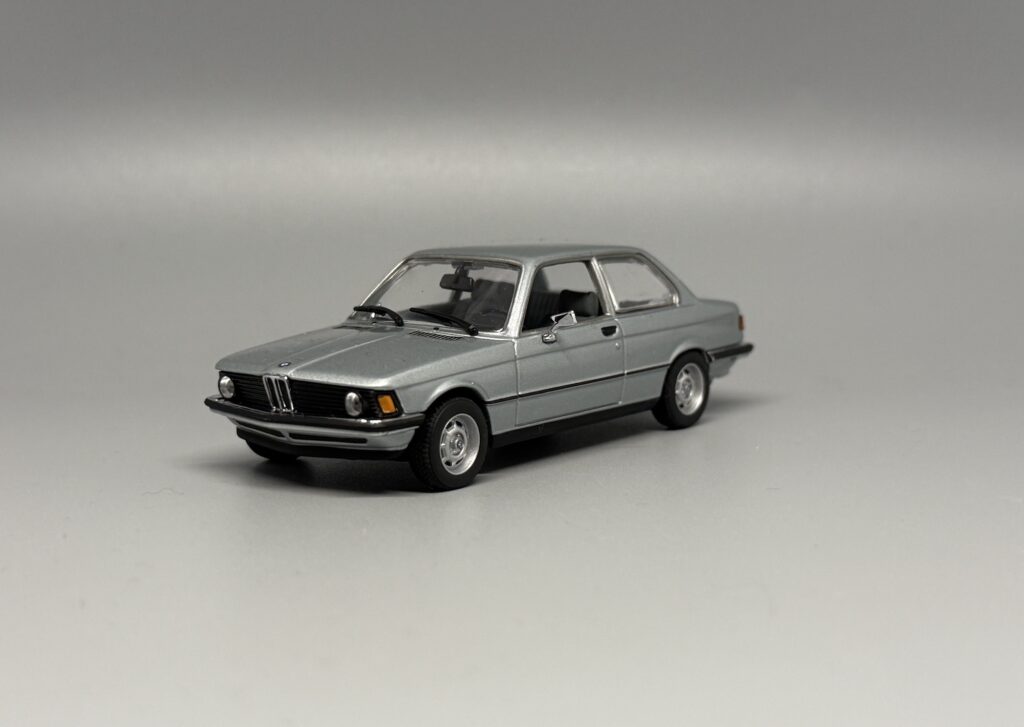
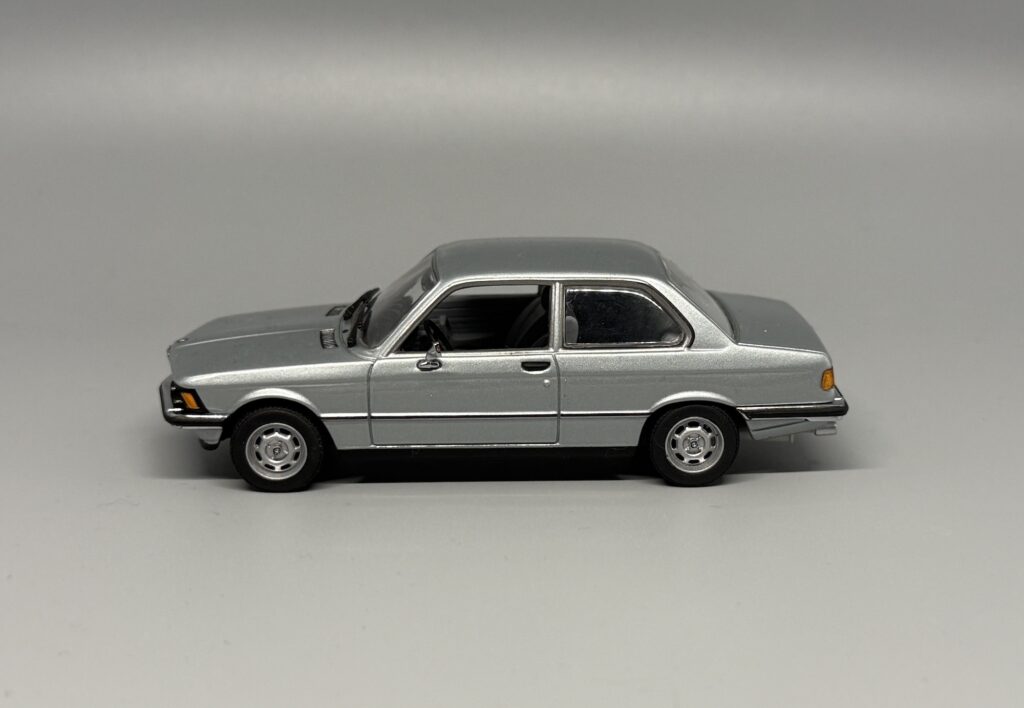
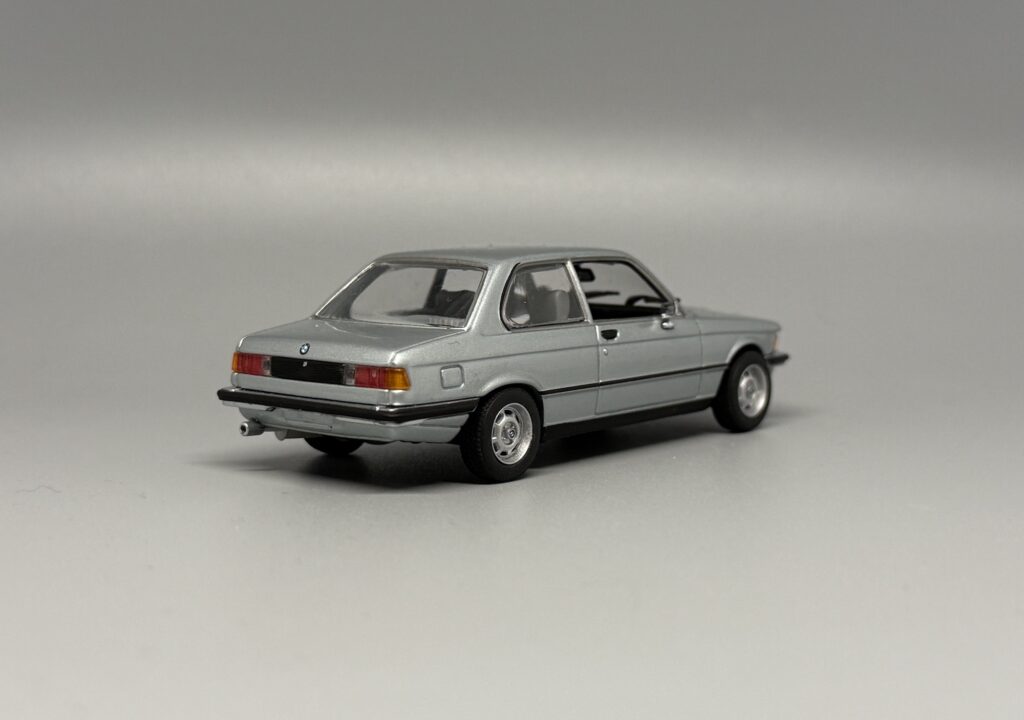
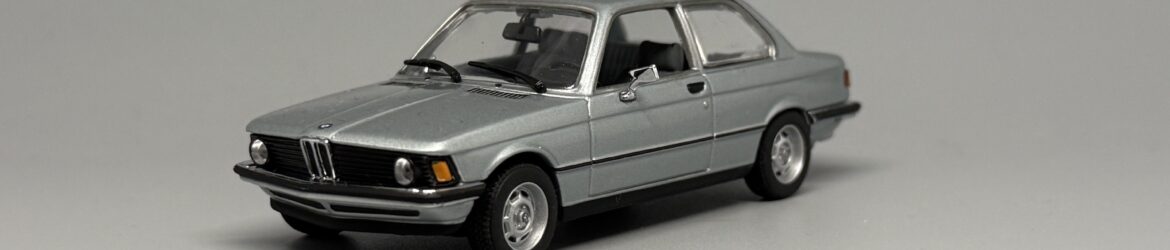
Minu kollektsioonis olev mudel on Minichampsi toodang. Mudel kujutab 1975. aasta autot.
Tehnilised andmed lühidalt:
Tootmisaeg: 06/1975–12/1983
Tootmiskoht: Saksamaa
Keretüüp: kaheukseline sedaan
Mootorid: neljasilindrilised ja hiljem ka kuuesilindrilised bensiinimootorid
Võimsus: sõltuvalt versioonist kuni 143 hj 323i puhul
Veoskeem: tagavedu
Tootmisarv: BMW ei ole E21 kogutoodangut neil mudelikaartidel ühes reas välja toonud
Eripära: esimene 3. seeria põlvkond ja kogu mudelipere ajalooline alguspunkt
BMW 3 Series Saloon (E21) was the first generation of the 3 Series and the model with which BMW laid the foundation for its most important model family. The car was introduced in 1975 as the successor to the 02 Series and was initially offered in only one body style: as a two-door saloon. The E21 brought a new, clearly more sporting and driver-focused direction to BMW’s compact class and helped establish the 3 Series as the benchmark for the sporting mid-size segment.
The design of the E21 followed the new styling direction of BMW’s chief designer Paul Bracq, which had already been applied to the BMW 5 Series. At the same time, the 3 Series Saloon was an independent car with its own clear character: more compact, lighter and more sporting in nature. One of the most important features of the E21 was its driver-oriented dashboard, which later became one of the characteristic elements of BMW interiors.
Technically, the BMW E21 was initially offered with four-cylinder petrol engines. In 1977, six-cylinder versions joined the range and gave the model family an even more sporting character. In particular, the 320/6 and 323i showed that the small 3 Series could be not only a practical and well-built everyday car, but also a serious driver-focused sporting saloon.
The E21 was important because it established many of the principles that would continue to characterise the 3 Series in later generations: compact dimensions, rear-wheel drive, a driver-focused interior, good weight distribution and a sporty yet everyday usable character. From 1983, the Stuttgart coachbuilder Baur also offered a Topcabriolet version, which was marketed through the BMW dealer network. This expanded the possibilities of the E21 model family, although the core model remained the two-door saloon.
The model in my collection is produced by Minichamps. The model represents a 1975 car.
Technical data in brief:
Production period: 06/1975–12/1983
Production location: Germany
Body style: two-door saloon
Engines: four-cylinder and later also six-cylinder petrol engines
Power: depending on the version, up to 143 hp in the 323i
Drivetrain: rear-wheel drive
Production total: BMW does not present a single overall E21 total on these model pages
Special feature: first generation of the 3 Series and the historical starting point of the entire model family
BMW 3. seeria sedaan (E21) oli esimene 3. seeria põlvkond ning mudel, millega BMW pani aluse oma kõige olulisemale mudeliperekonnale. Auto esitleti 1975. aastal 02-seeria järeltulijana ning seda pakuti alguses ainult ühe kerevariandina: kaheukselise sedaanina. E21 tõi BMW kompaktklassi uue, selgelt sportlikuma ja juhikesksema suuna ning aitas kujundada 3. seeria kui sportliku keskklassi etaloni.
E21 disain järgis BMW peadisaineri Paul Bracqi uut kujundusjoont, mida oli juba kasutatud BMW 5. seeria puhul. Samas oli 3. seeria sedaan omaette selge iseloomuga auto: kompaktsem, kergem ja sportlikuma olemusega. Üheks E21 kõige olulisemaks eripäraks oli juhile suunatud armatuurlaud, millest sai hiljem üks BMW interjööride iseloomulikke tunnuseid.
Tehniliselt pakuti BMW E21 alguses neljasilindriliste bensiinimootoritega. 1977. aastal lisandusid kuuesilindrilised versioonid, mis andsid mudeliperekonnale veelgi sportlikuma iseloomu. Eriti 320/6 ja 323i näitasid, et väike 3. seeria võis olla mitte ainult praktiline ja kvaliteetne igapäevaauto, vaid ka tõsiseltvõetav juhile suunatud sportlik sedaan.
E21 oli oluline ka seetõttu, et see pani paika paljud põhimõtted, mis jäid 3. seeriat iseloomustama ka hilisemates põlvkondades: kompaktne mõõt, tagavedu, juhikeskne salong, hea kaalujaotus ja sportlik, kuid igapäevaselt kasutatav iseloom. Alates 1983. aastast pakkus Stuttgardis tegutsenud keretootja Baur ka Topcabriolet-versiooni, mida müüdi BMW edasimüüjate võrgus. See laiendas E21 mudeliperekonna võimalusi, kuigi põhimudelina jäi E21 siiski eelkõige kaheukseliseks sedaaniks.
Minu kollektsioonis olev mudel on Minichampsi toodang. Mudel kujutab 1975. aasta autot.
Tehnilised andmed lühidalt:
Tootmisaeg: 06/1975–12/1983
Tootmiskoht: Saksamaa
Keretüüp: kaheukseline sedaan
Mootorid: neljasilindrilised ja hiljem ka kuuesilindrilised bensiinimootorid
Võimsus: sõltuvalt versioonist kuni 143 hj 323i puhul
Veoskeem: tagavedu
Tootmisarv: BMW ei ole E21 kogutoodangut neil mudelikaartidel ühes reas välja toonud
Eripära: esimene 3. seeria põlvkond ja kogu mudelipere ajalooline alguspunkt
BMW 3 Series Saloon (E21) was the first generation of the 3 Series and the model with which BMW laid the foundation for its most important model family. The car was introduced in 1975 as the successor to the 02 Series and was initially offered in only one body style: as a two-door saloon. The E21 brought a new, clearly more sporting and driver-focused direction to BMW’s compact class and helped establish the 3 Series as the benchmark for the sporting mid-size segment.
The design of the E21 followed the new styling direction of BMW’s chief designer Paul Bracq, which had already been applied to the BMW 5 Series. At the same time, the 3 Series Saloon was an independent car with its own clear character: more compact, lighter and more sporting in nature. One of the most important features of the E21 was its driver-oriented dashboard, which later became one of the characteristic elements of BMW interiors.
Technically, the BMW E21 was initially offered with four-cylinder petrol engines. In 1977, six-cylinder versions joined the range and gave the model family an even more sporting character. In particular, the 320/6 and 323i showed that the small 3 Series could be not only a practical and well-built everyday car, but also a serious driver-focused sporting saloon.
The E21 was important because it established many of the principles that would continue to characterise the 3 Series in later generations: compact dimensions, rear-wheel drive, a driver-focused interior, good weight distribution and a sporty yet everyday usable character. From 1983, the Stuttgart coachbuilder Baur also offered a Topcabriolet version, which was marketed through the BMW dealer network. This expanded the possibilities of the E21 model family, although the core model remained the two-door saloon.
The model in my collection is produced by Minichamps. The model represents a 1975 car.
Technical data in brief:
Production period: 06/1975–12/1983
Production location: Germany
Body style: two-door saloon
Engines: four-cylinder and later also six-cylinder petrol engines
Power: depending on the version, up to 143 hp in the 323i
Drivetrain: rear-wheel drive
Production total: BMW does not present a single overall E21 total on these model pages
Special feature: first generation of the 3 Series and the historical starting point of the entire model family
Foto päris autost, BMW muuseum. Foto: Sten-Patrick Kreek
Photo of the real car, BMW Museum. Photo: Sten-Patrick Kreek