BMW 3 Series Compact (E36/5) oli kolmanda põlvkonna 3. seeria kõige kompaktsem kerevariant ning mudel, millega BMW sisenes 1990. aastatel selgemalt väiksemate premium-luukpärade segmenti. Compact jõudis turule 1994. aastal ning eristus ülejäänud E36 mudeliperest lühema kere, suure tagaluugi ja nooruslikuma iseloomu poolest. Samal ajal säilitas see BMW jaoks väga olulise tehnilise põhimõtte – tagaveolise arhitektuuri –, mis andis sellele oma klassis erilise ja juhikeskse sõidutunde.
Tehniliselt kasutas BMW 3 Series Compact (E36/5) mitut nelja- ja kuuesilindrilist mootorit, sõltuvalt versioonist ja turust. Kuigi Compact oli E36 mudelipere kõige praktilisema ja nooruslikuma suunitlusega variant, ei loobunud see BMW-le omasest sportlikust iseloomust. Just see eristas seda paljudest tolle aja konkurentidest, mis kasutasid esivedu ja olid rohkem suunatud pelgale praktilisusele.
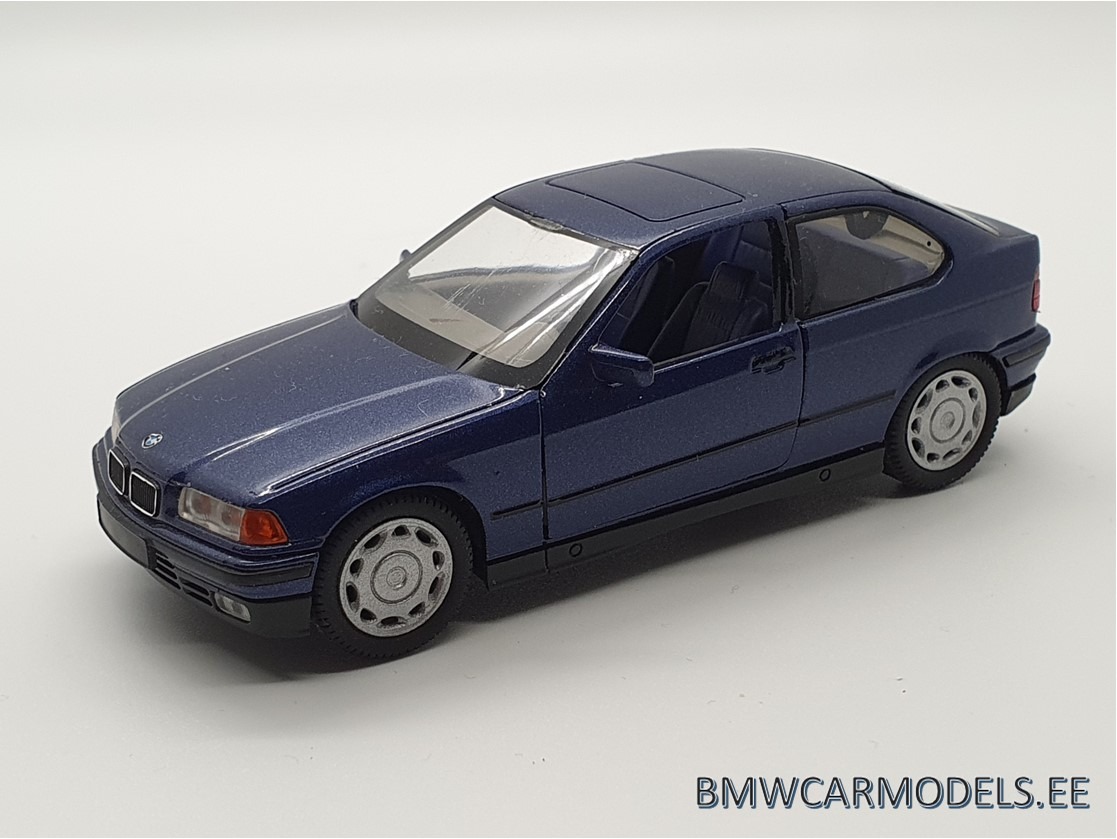
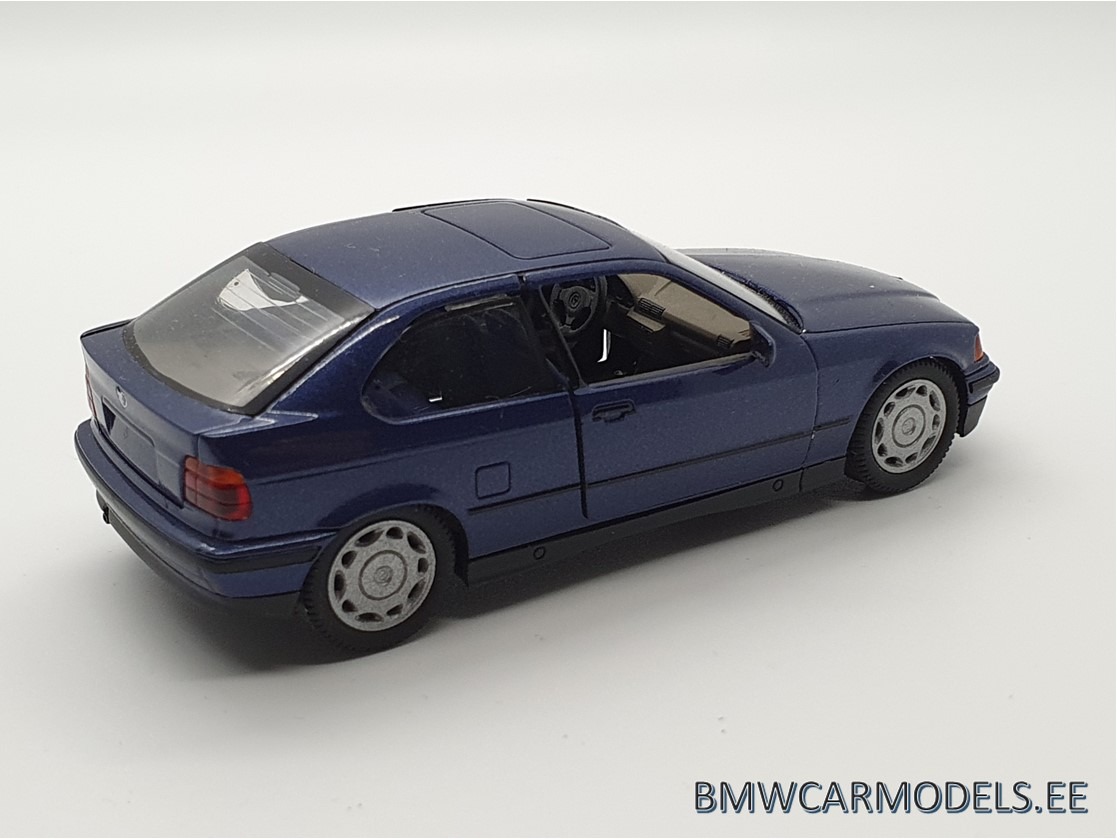
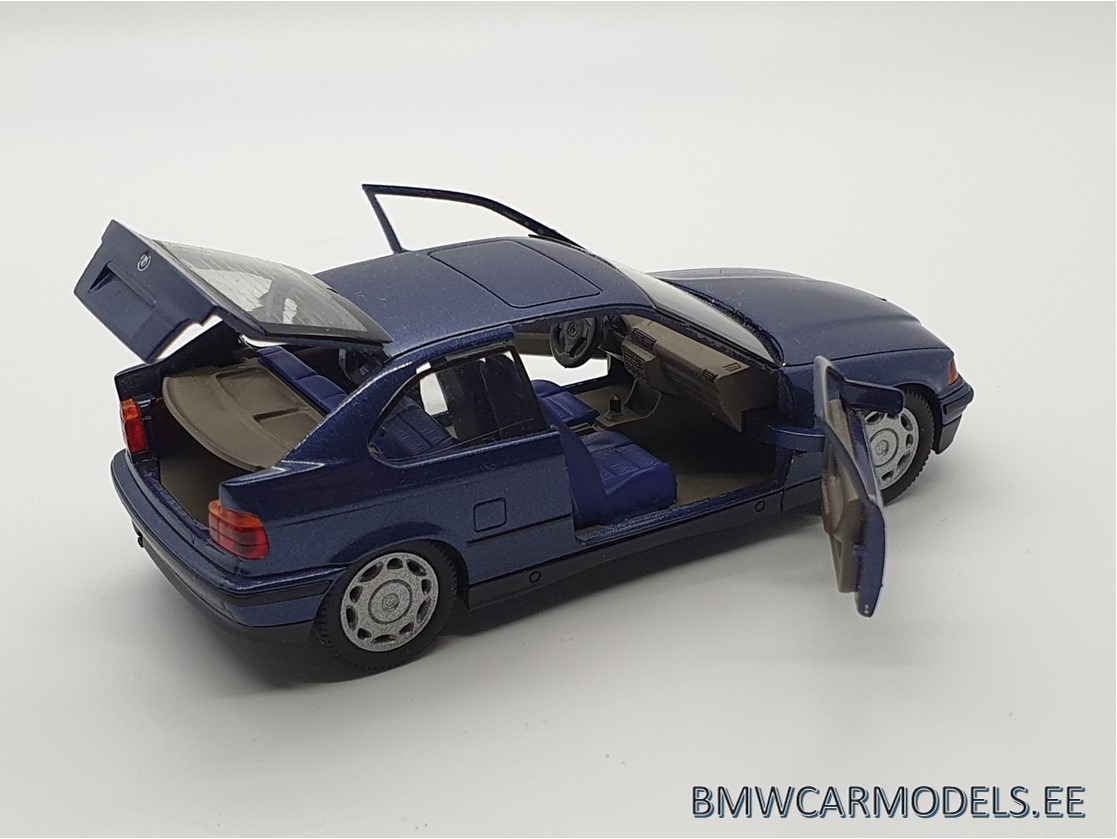
Minu kollektsioonis olev mudel on Schuco toodang ning kujutab 1994. aasta autot.
Tehnilised andmed lühidalt:
Tootmisaeg: 1994–2000
Tootmiskoht: Saksamaa
Mootor: 4- ja 6-silindrilised bensiini- ja diiselmootorid
Võimsus: sõltuvalt versioonist kuni 170 hj 323ti puhul
Tootmisarv: E36 Compacti toodeti kokku 371 498 autot
Eripära: kompaktne tagaveoline 3. seeria luukpära, mis tõi BMW väiksemate premium-autode segmenti
The BMW 3 Series Compact (E36/5) was the most compact body style of the third-generation 3 Series and the model with which BMW entered the smaller premium hatchback segment more clearly in the 1990s. The Compact reached the market in 1994 and stood apart from the rest of the E36 family through its shorter body, large tailgate and more youthful character. At the same time, it retained one of BMW’s most important technical principles – rear-wheel-drive architecture – which gave it a distinctive and driver-focused feel in its class.
Technically, the BMW 3 Series Compact (E36/5) used a range of four- and six-cylinder engines, depending on version and market. Although the Compact was the most practical and youth-oriented member of the E36 family, it did not give up the sporting character traditionally associated with BMW. That is exactly what set it apart from many rivals of the period, which used front-wheel drive and were aimed more purely at practicality.
The model in my collection is produced by Schuco and represents a 1994 car.
Technical data at a glance:
Production period: 1994–2000
Production location: Germany
Engine: 4- and 6-cylinder petrol and diesel engines
Power output: depending on version, up to 170 hp in the 323ti
Production total: total E36 Compact production reached 371,498 cars
Special feature: compact rear-wheel-drive 3 Series hatchback that brought BMW into the smaller premium-car segment
BMW 3 Series Compact (E36/5) oli kolmanda põlvkonna 3. seeria kõige kompaktsem kerevariant ning mudel, millega BMW sisenes 1990. aastatel selgemalt väiksemate premium-luukpärade segmenti. Compact jõudis turule 1994. aastal ning eristus ülejäänud E36 mudeliperest lühema kere, suure tagaluugi ja nooruslikuma iseloomu poolest. Samal ajal säilitas see BMW jaoks väga olulise tehnilise põhimõtte – tagaveolise arhitektuuri –, mis andis sellele oma klassis erilise ja juhikeskse sõidutunde.
Tehniliselt kasutas BMW 3 Series Compact (E36/5) mitut nelja- ja kuuesilindrilist mootorit, sõltuvalt versioonist ja turust. Kuigi Compact oli E36 mudelipere kõige praktilisema ja nooruslikuma suunitlusega variant, ei loobunud see BMW-le omasest sportlikust iseloomust. Just see eristas seda paljudest tolle aja konkurentidest, mis kasutasid esivedu ja olid rohkem suunatud pelgale praktilisusele.
Minu kollektsioonis olev mudel on Schuco toodang ning kujutab 1994. aasta autot.
Tehnilised andmed lühidalt:
Tootmisaeg: 1994–2000
Tootmiskoht: Saksamaa
Mootor: 4- ja 6-silindrilised bensiini- ja diiselmootorid
Võimsus: sõltuvalt versioonist kuni 170 hj 323ti puhul
Tootmisarv: E36 Compacti toodeti kokku 371 498 autot
Eripära: kompaktne tagaveoline 3. seeria luukpära, mis tõi BMW väiksemate premium-autode segmenti
The BMW 3 Series Compact (E36/5) was the most compact body style of the third-generation 3 Series and the model with which BMW entered the smaller premium hatchback segment more clearly in the 1990s. The Compact reached the market in 1994 and stood apart from the rest of the E36 family through its shorter body, large tailgate and more youthful character. At the same time, it retained one of BMW’s most important technical principles – rear-wheel-drive architecture – which gave it a distinctive and driver-focused feel in its class.
Technically, the BMW 3 Series Compact (E36/5) used a range of four- and six-cylinder engines, depending on version and market. Although the Compact was the most practical and youth-oriented member of the E36 family, it did not give up the sporting character traditionally associated with BMW. That is exactly what set it apart from many rivals of the period, which used front-wheel drive and were aimed more purely at practicality.
The model in my collection is produced by Schuco and represents a 1994 car.
Technical data at a glance:
Production period: 1994–2000
Production location: Germany
Engine: 4- and 6-cylinder petrol and diesel engines
Power output: depending on version, up to 170 hp in the 323ti
Production total: total E36 Compact production reached 371,498 cars
Special feature: compact rear-wheel-drive 3 Series hatchback that brought BMW into the smaller premium-car segment
Foto päris autost. Allikas: Wikipedia.
Photo of the actual car. Source: Wikipedia.