BMW 2800 (E3) oli E3 mudelipere teine versioon ja aitas kinnistada BMW positsiooni suuremate, sportliku iseloomuga luksussedaanide tootjana. Mudel jõudis tootmisse 1969. aasta veebruaris ning paigutus BMW 2500-st sammu võrra kõrgemale, pakkudes võimsamat mootorit ja rikkalikumat varustust. 2800 kuulus BMW nn New Six ehk suure sedaani põlvkonda, mis tähistas margi jaoks väga olulist pööret kõrgemasse turusegmenti. Selle elegantne, sirgjooneline disain ja juhikeskne olemus aitasid kujundada BMW kuvandit sportliku luksuse tootjana.
Tehniliselt kasutas BMW 2800 2,8-liitrist ridakuue mootorit, mille võimsus ulatus 170 hobujõuni. Võrreldes 2500 mudeliga sai 2800 lisaks tugevamale jõuallikale ka kõrgema taseme seeriavarustuse, kuhu kuulusid näiteks Nivomat-amordid, piiratud libisemisega diferentsiaal ja soojendusega tagaklaas. Mudel jäi tootmisse kuni 1971. aastani, enne kui selle koha võttis üle 3.0-seeria. E3 mudelipere ajalooline tähtsus seisneb ka selles, et just sellest kasvas hiljem välja BMW 7. seeria.
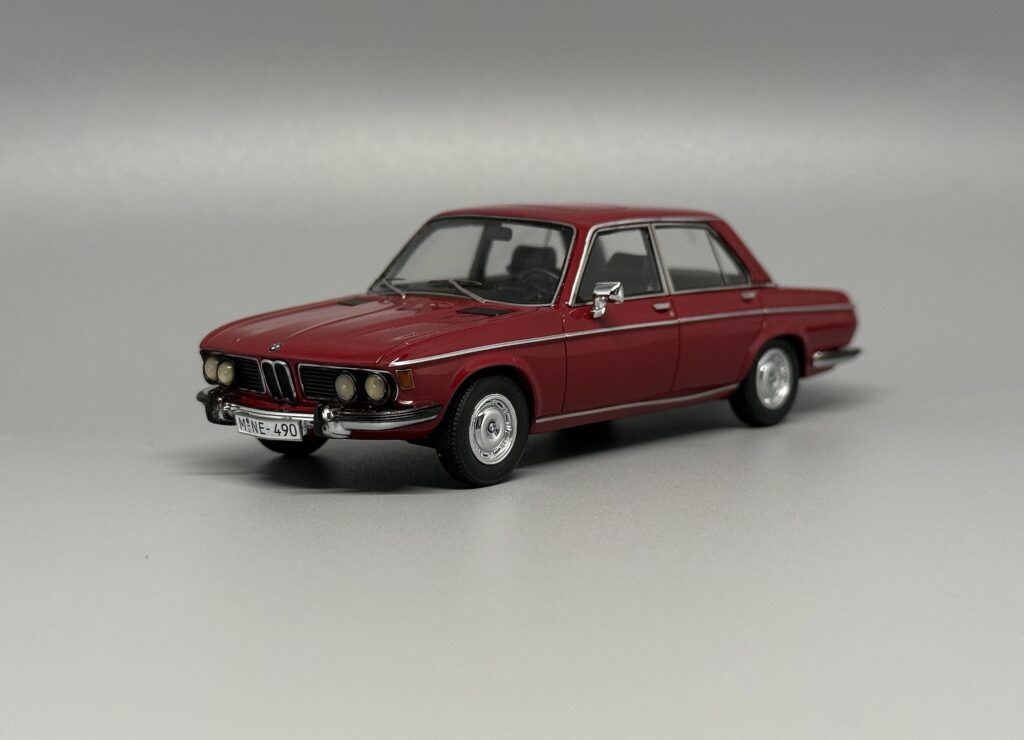
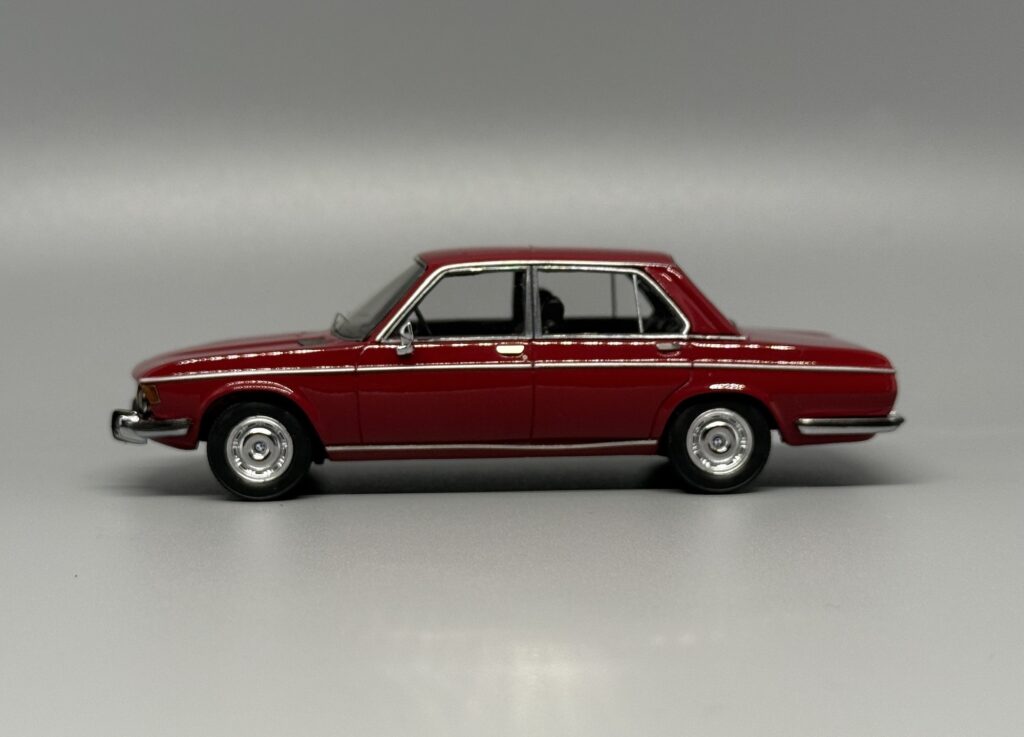
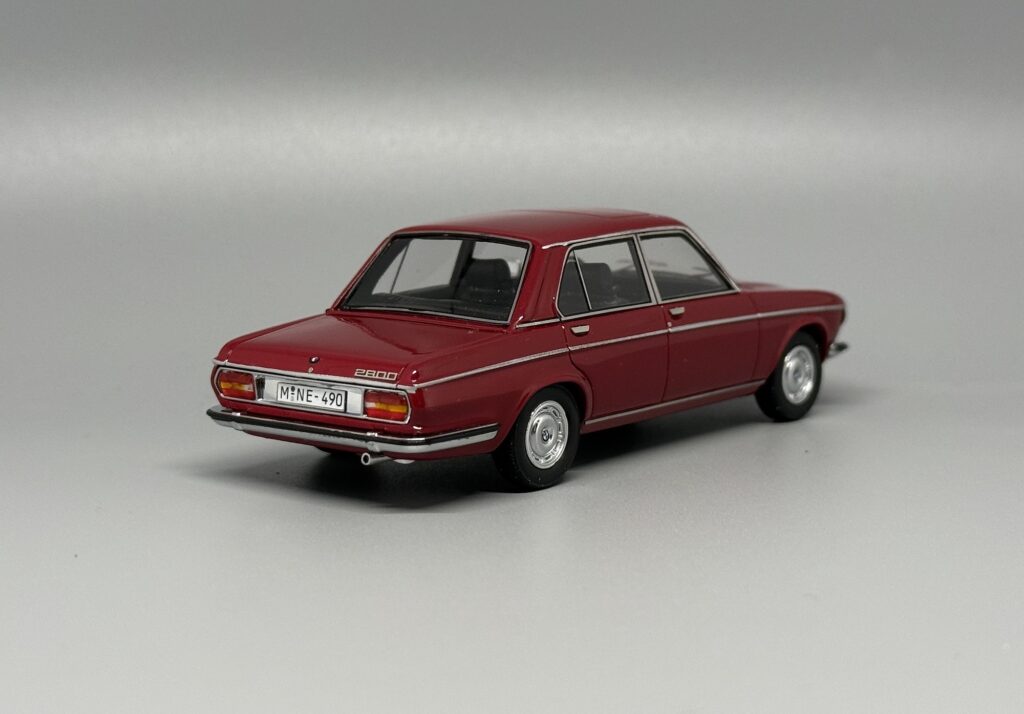
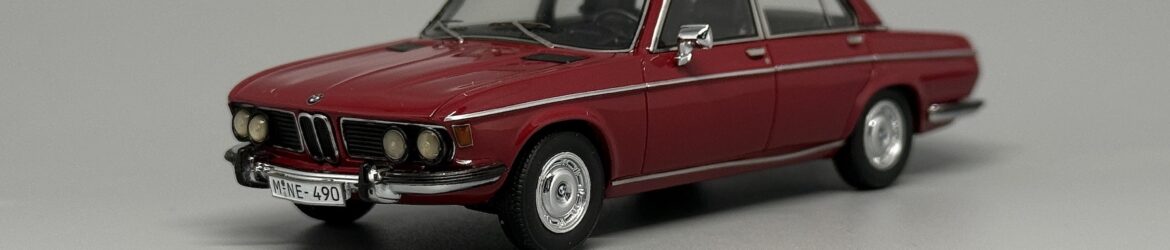
Minu kollektsioonis olev mudel on Neo Scale Modelsi toodang.
Tehnilised andmed lühidalt:
Tootmisaeg: 1969–1971.
Tootmiskoht: Saksamaa, BMW E3 mudelipere.
Mootor: 2,8 l ridakuus.
Võimsus: 170 hj.
Tootmisarv: BMW ei ole 2800 eraldi kogutootmisarvu sellel mudelikaardil välja toonud.
Eripära: võimsam ja paremini varustatud E3 versioon, mis sillutas teed hilisematele 3.0-liitristele mudelitele.
The BMW 2800 (E3) was the second version in the E3 model family and helped establish BMW as a maker of larger luxury sedans with a distinctly sporting character. Production began in February 1969, and the model sat a step above the BMW 2500, offering a more powerful engine and a higher level of standard equipment. The 2800 belonged to BMW’s so-called New Six large-sedan generation, which marked a very important move by the brand into the upper market segment. Its elegant, straight-lined design and driver-focused character helped shape BMW’s reputation for sporty luxury.
Technically, the BMW 2800 used a 2.8-litre inline-six producing 170 horsepower. Compared with the 2500, the 2800 not only had a stronger engine but also more upscale standard equipment, including Nivomat shock absorbers, a limited-slip differential and a heated rear window. The model remained in production until 1971, before being replaced by the 3.0-litre versions. The historical importance of the E3 family also lies in the fact that it later evolved into the BMW 7 Series.
The model in my collection is produced by Neo Scale Models.
Technical data at a glance:
Production period: 1969–1971.
Production location: Germany, BMW E3 model family.
Engine: 2.8-litre inline-six.
Power output: 170 hp.
Production total: BMW does not state a separate overall total for the 2800 on this model page.
Special feature: a more powerful and better-equipped E3 version that paved the way for the later 3.0-litre models.
BMW 2800 (E3) oli E3 mudelipere teine versioon ja aitas kinnistada BMW positsiooni suuremate, sportliku iseloomuga luksussedaanide tootjana. Mudel jõudis tootmisse 1969. aasta veebruaris ning paigutus BMW 2500-st sammu võrra kõrgemale, pakkudes võimsamat mootorit ja rikkalikumat varustust. 2800 kuulus BMW nn New Six ehk suure sedaani põlvkonda, mis tähistas margi jaoks väga olulist pööret kõrgemasse turusegmenti. Selle elegantne, sirgjooneline disain ja juhikeskne olemus aitasid kujundada BMW kuvandit sportliku luksuse tootjana.
Tehniliselt kasutas BMW 2800 2,8-liitrist ridakuue mootorit, mille võimsus ulatus 170 hobujõuni. Võrreldes 2500 mudeliga sai 2800 lisaks tugevamale jõuallikale ka kõrgema taseme seeriavarustuse, kuhu kuulusid näiteks Nivomat-amordid, piiratud libisemisega diferentsiaal ja soojendusega tagaklaas. Mudel jäi tootmisse kuni 1971. aastani, enne kui selle koha võttis üle 3.0-seeria. E3 mudelipere ajalooline tähtsus seisneb ka selles, et just sellest kasvas hiljem välja BMW 7. seeria.
Minu kollektsioonis olev mudel on Neo Scale Modelsi toodang.
Tehnilised andmed lühidalt:
Tootmisaeg: 1969–1971.
Tootmiskoht: Saksamaa, BMW E3 mudelipere.
Mootor: 2,8 l ridakuus.
Võimsus: 170 hj.
Tootmisarv: BMW ei ole 2800 eraldi kogutootmisarvu sellel mudelikaardil välja toonud.
Eripära: võimsam ja paremini varustatud E3 versioon, mis sillutas teed hilisematele 3.0-liitristele mudelitele.
The BMW 2800 (E3) was the second version in the E3 model family and helped establish BMW as a maker of larger luxury sedans with a distinctly sporting character. Production began in February 1969, and the model sat a step above the BMW 2500, offering a more powerful engine and a higher level of standard equipment. The 2800 belonged to BMW’s so-called New Six large-sedan generation, which marked a very important move by the brand into the upper market segment. Its elegant, straight-lined design and driver-focused character helped shape BMW’s reputation for sporty luxury.
Technically, the BMW 2800 used a 2.8-litre inline-six producing 170 horsepower. Compared with the 2500, the 2800 not only had a stronger engine but also more upscale standard equipment, including Nivomat shock absorbers, a limited-slip differential and a heated rear window. The model remained in production until 1971, before being replaced by the 3.0-litre versions. The historical importance of the E3 family also lies in the fact that it later evolved into the BMW 7 Series.
The model in my collection is produced by Neo Scale Models.
Technical data at a glance:
Production period: 1969–1971.
Production location: Germany, BMW E3 model family.
Engine: 2.8-litre inline-six.
Power output: 170 hp.
Production total: BMW does not state a separate overall total for the 2800 on this model page.
Special feature: a more powerful and better-equipped E3 version that paved the way for the later 3.0-litre models.
Foto päris autost. Algne allikas teadmata
Photo of the real car. Original source unknown