BMW 501 tähistas BMW jaoks sõjajärgse autotootmise taaskäivitamist ja margi naasmist luksusautode klassi. Mudelit esitleti esmakordselt 1951. aasta Frankfurdi autonäitusel ning seeriatootmine algas järgmisel aastal. Tegemist oli neljaukselise luksussedaaniga, millest kujunes kiiresti üks BMW sõjajärgse ajastu olulisemaid mudeleid. Just 501 pani aluse margi taastumisele ajal, mil ettevõte pidi pärast sõda oma autotootmise sisuliselt uuesti üles ehitama.
BMW 501 sai rahvasuus hüüdnimeks Barokk-ingel, mis viitas selle voolujoonelisele ja klassikaliselt elegantsele kujundusele. Kere disainis Peter Schimanowski ning auto valmistati BMW Müncheni tehases, kuna varasem tootmisüksus Eisenachis oli jäänud Nõukogude okupatsioonitsooni. Konservatiivse joonega kere toetus tugevale uue konstruktsiooniga raamile ning pakkus rohkelt ruumi kuni kuuele reisijale ja nende pagasile. Oma väljapeetud proportsioonidega eristus 501 selgelt paljudest sama ajastu praktilisematest sõidukitest ning mõjus esindussedaanina väga väärikalt.
Tehniliselt kasutas BMW 501 edasiarendatud kuuesilindrilist mootorit, mille juured ulatusid sõjaeelse BMW 326-ni. Kui enne sõda arendas see mootor 50 hobujõudu, siis 501 puhul tõusis võimsus 65 hobujõuni. Neljakäigulist manuaalkäigukasti juhiti roolisambal paikneva kangi kaudu ning jõud kandus tagaratastele. Tippkiiruseks kujunes ligikaudu 135 km/h, mis oli 1950. aastate alguse luksusautole täiesti arvestatav näitaja. Samas osutus mudel kõrge hinna tõttu raskesti müüdavaks ning enne BMW 501 A ja 501 B versioonide saabumist leidus 15 kuu jooksul veidi alla 2300 ostja.
Kuigi BMW 501 ei saavutanud suurt müügiedu, kujunes sellest oluline sümbol BMW ellujäämisest ja edasisest arengust sõjajärgsel perioodil. Tegemist oli mudeliga, mis näitas, et BMW soovib naasta mitte väikeste tarbeautode, vaid väärikate ja tehniliselt tõsiseltvõetavate sõiduautodega.
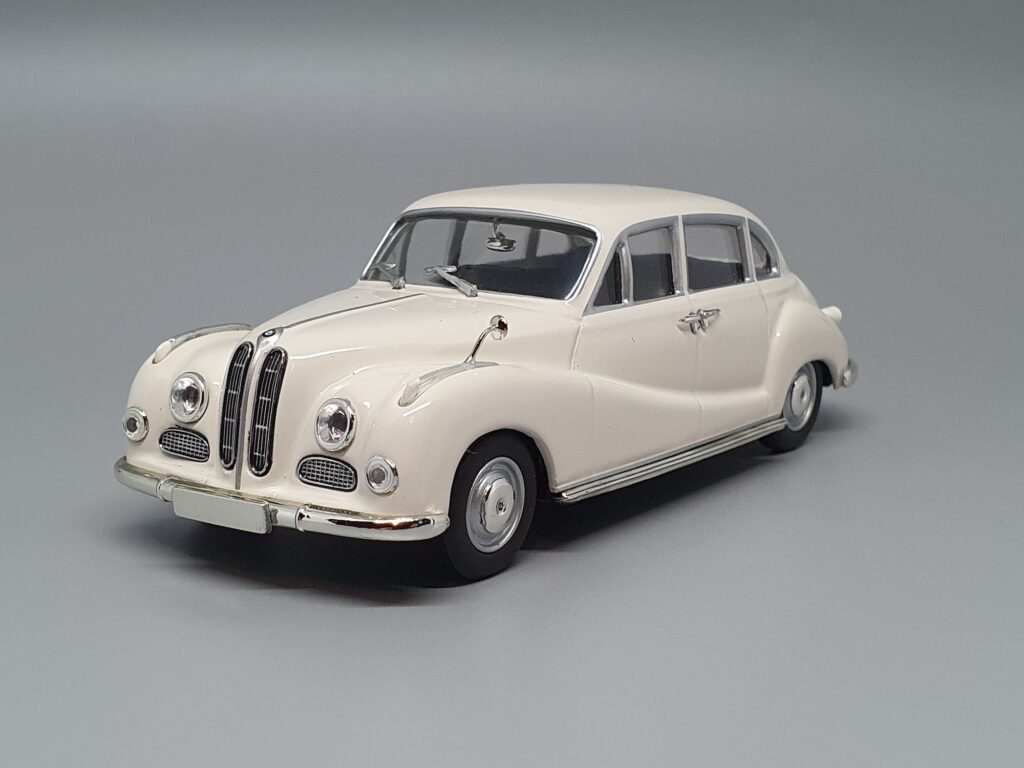
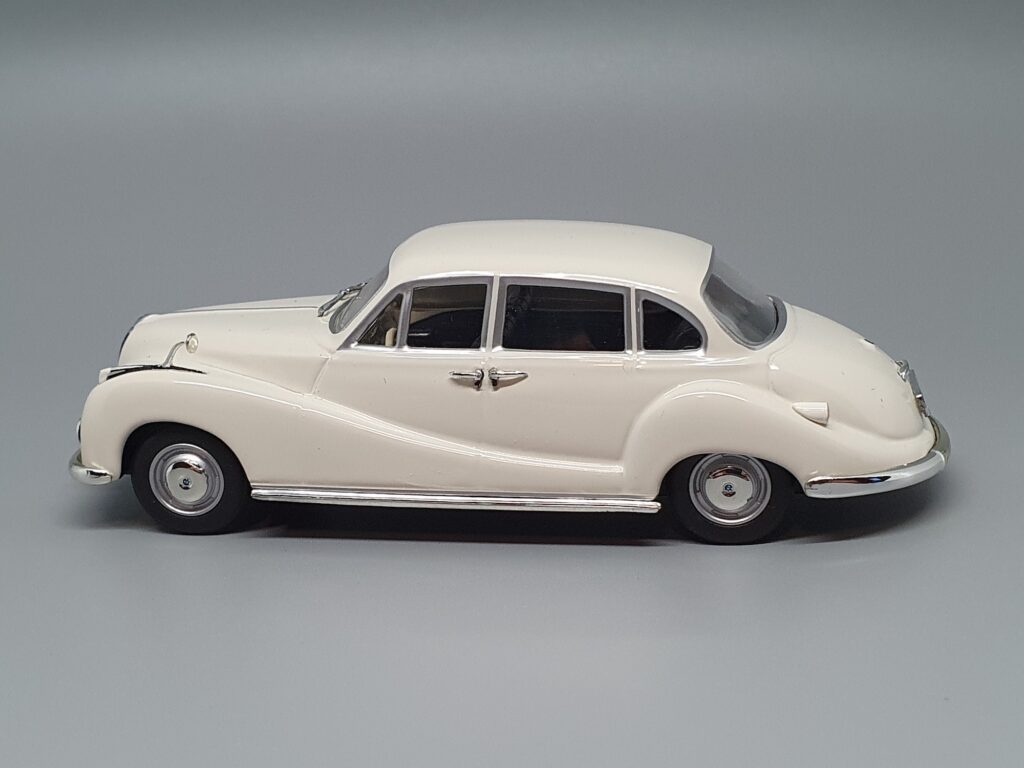
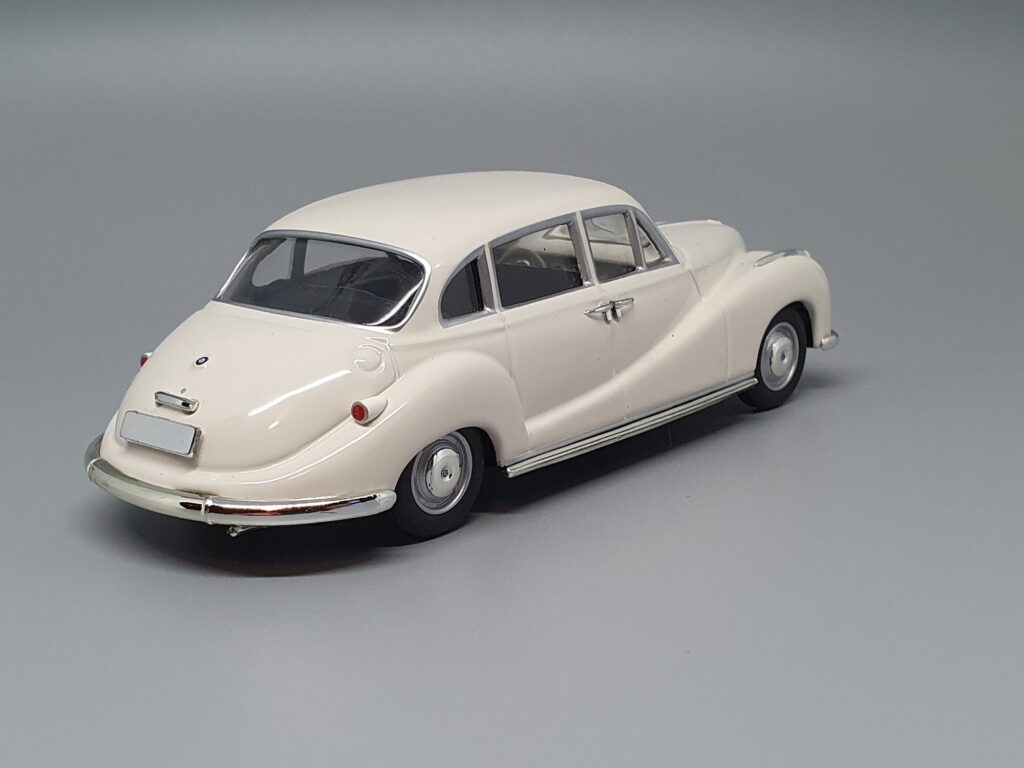
Minu kollektsioonis olev mudel on Minichampsi toodang, piiratud tiraažiga 1008 eksemplari, ja kujutab 1953. aasta BMW 501 autot.
Tehnilised andmed lühidalt:
Tootmisaeg: 1952 kuni 1958
Tootmiskoht: München, Saksamaa
Mootor: 2,0 l ridakuus
Võimsus: 65 hj
Tootmisarv: 14 852 autot
Eripära: sõjajärgse BMW luksussedaan, mis sai tuntuks hüüdnimega Barokk-ingel
The BMW 501 marked the restart of BMW’s post-war automobile production and the brand’s return to the luxury car segment. The model was first presented at the 1951 Frankfurt Motor Show, and series production began the following year. It was a four-door luxury saloon that quickly became one of the most important BMW models of the post-war era. The 501 laid the foundation for the company’s recovery at a time when BMW had to rebuild its car production almost from scratch.
The BMW 501 became popularly known as the Baroque Angel, a nickname referring to its flowing and classically elegant styling. The body was designed by Peter Schimanowski, and the car was built at BMW’s Munich plant, as the former production facility in Eisenach had remained in the Soviet occupation zone. Its conservatively styled body rested on a robust newly designed frame and offered generous space for up to six passengers and their luggage. With its refined proportions and dignified appearance, the 501 stood apart from many of the more utilitarian cars of the same period.
Technically, the BMW 501 used a further-developed six-cylinder engine whose origins went back to the pre-war BMW 326. While this engine had produced 50 horsepower before the war, output in the 501 was increased to 65 horsepower. The four-speed manual gearbox was operated via a column-mounted shifter, and power was sent to the rear wheels. Top speed was around 135 km/h, which was a respectable figure for a luxury car of the early 1950s. At the same time, the model proved difficult to sell because of its high price, and during the 15 months before the arrival of the BMW 501 A and BMW 501 B, fewer than 2,300 customers were willing to pay more than 15,000 Deutsche Marks for it.
Although the BMW 501 was not a major sales success, it became an important symbol of BMW’s survival and дальнейшего development in the post-war period. It was a model that showed BMW intended to return not with small utility cars, but with dignified and technically serious passenger automobiles.
The model in my collection is produced by Minichamps, limited to 1008 pieces, and represents the 1953 BMW 501.
Technical details at a glance:
Production period: 1952 to 1958
Production location: Munich, Germany
Engine: 2.0-litre inline-six
Power output: 65 hp
Production quantity: 14,852 cars
Special feature: post-war BMW luxury saloon that became known by the nickname Baroque Angel
BMW 501 tähistas BMW jaoks sõjajärgse autotootmise taaskäivitamist ja margi naasmist luksusautode klassi. Mudelit esitleti esmakordselt 1951. aasta Frankfurdi autonäitusel ning seeriatootmine algas järgmisel aastal. Tegemist oli neljaukselise luksussedaaniga, millest kujunes kiiresti üks BMW sõjajärgse ajastu olulisemaid mudeleid. Just 501 pani aluse margi taastumisele ajal, mil ettevõte pidi pärast sõda oma autotootmise sisuliselt uuesti üles ehitama.
BMW 501 sai rahvasuus hüüdnimeks Barokk-ingel, mis viitas selle voolujoonelisele ja klassikaliselt elegantsele kujundusele. Kere disainis Peter Schimanowski ning auto valmistati BMW Müncheni tehases, kuna varasem tootmisüksus Eisenachis oli jäänud Nõukogude okupatsioonitsooni. Konservatiivse joonega kere toetus tugevale uue konstruktsiooniga raamile ning pakkus rohkelt ruumi kuni kuuele reisijale ja nende pagasile. Oma väljapeetud proportsioonidega eristus 501 selgelt paljudest sama ajastu praktilisematest sõidukitest ning mõjus esindussedaanina väga väärikalt.
Tehniliselt kasutas BMW 501 edasiarendatud kuuesilindrilist mootorit, mille juured ulatusid sõjaeelse BMW 326-ni. Kui enne sõda arendas see mootor 50 hobujõudu, siis 501 puhul tõusis võimsus 65 hobujõuni. Neljakäigulist manuaalkäigukasti juhiti roolisambal paikneva kangi kaudu ning jõud kandus tagaratastele. Tippkiiruseks kujunes ligikaudu 135 km/h, mis oli 1950. aastate alguse luksusautole täiesti arvestatav näitaja. Samas osutus mudel kõrge hinna tõttu raskesti müüdavaks ning enne BMW 501 A ja 501 B versioonide saabumist leidus 15 kuu jooksul veidi alla 2300 ostja.
Kuigi BMW 501 ei saavutanud suurt müügiedu, kujunes sellest oluline sümbol BMW ellujäämisest ja edasisest arengust sõjajärgsel perioodil. Tegemist oli mudeliga, mis näitas, et BMW soovib naasta mitte väikeste tarbeautode, vaid väärikate ja tehniliselt tõsiseltvõetavate sõiduautodega.
Minu kollektsioonis olev mudel on Minichampsi toodang, piiratud tiraažiga 1008 eksemplari, ja kujutab 1953. aasta BMW 501 autot.
Tehnilised andmed lühidalt:
Tootmisaeg: 1952 kuni 1958
Tootmiskoht: München, Saksamaa
Mootor: 2,0 l ridakuus
Võimsus: 65 hj
Tootmisarv: 14 852 autot
Eripära: sõjajärgse BMW luksussedaan, mis sai tuntuks hüüdnimega Barokk-ingel
The BMW 501 marked the restart of BMW’s post-war automobile production and the brand’s return to the luxury car segment. The model was first presented at the 1951 Frankfurt Motor Show, and series production began the following year. It was a four-door luxury saloon that quickly became one of the most important BMW models of the post-war era. The 501 laid the foundation for the company’s recovery at a time when BMW had to rebuild its car production almost from scratch.
The BMW 501 became popularly known as the Baroque Angel, a nickname referring to its flowing and classically elegant styling. The body was designed by Peter Schimanowski, and the car was built at BMW’s Munich plant, as the former production facility in Eisenach had remained in the Soviet occupation zone. Its conservatively styled body rested on a robust newly designed frame and offered generous space for up to six passengers and their luggage. With its refined proportions and dignified appearance, the 501 stood apart from many of the more utilitarian cars of the same period.
Technically, the BMW 501 used a further-developed six-cylinder engine whose origins went back to the pre-war BMW 326. While this engine had produced 50 horsepower before the war, output in the 501 was increased to 65 horsepower. The four-speed manual gearbox was operated via a column-mounted shifter, and power was sent to the rear wheels. Top speed was around 135 km/h, which was a respectable figure for a luxury car of the early 1950s. At the same time, the model proved difficult to sell because of its high price, and during the 15 months before the arrival of the BMW 501 A and BMW 501 B, fewer than 2,300 customers were willing to pay more than 15,000 Deutsche Marks for it.
Although the BMW 501 was not a major sales success, it became an important symbol of BMW’s survival and дальнейшего development in the post-war period. It was a model that showed BMW intended to return not with small utility cars, but with dignified and technically serious passenger automobiles.
The model in my collection is produced by Minichamps, limited to 1008 pieces, and represents the 1953 BMW 501.
Technical details at a glance:
Production period: 1952 to 1958
Production location: Munich, Germany
Engine: 2.0-litre inline-six
Power output: 65 hp
Production quantity: 14,852 cars
Special feature: post-war BMW luxury saloon that became known by the nickname Baroque Angel
Foto päris autost. Allikas: bmwgroup-classic.com
Photo of the real car. Source: bmwgroup-classic.com