BMW DIXI 3/15 tähistab BMW autotootmise tegelikku algust ning kuulub margi ajaloo kõige olulisemate varaste mudelite hulka. Pärast Eisenachi tehase omandamist 1928. aastal alustas BMW väikese Dixi edasiarendatud versiooni tootmist ning just sellest mudelist sai esimene auto, mida turustati BMW nime all. DIXI 3/15 põhines litsentsi alusel toodetud Austin Sevenil, kuid Saksa turu jaoks kohandati seda vasakpoolse rooliasendi, meetermõõdustiku ja mitme kohaliku tehnilise lahendusega. Selle mudeli ajalooline tähtsus on väga suur, sest just see andis BMW-le võimaluse siseneda autotootmise maailma.
Tehniliselt kasutas BMW DIXI 3/15 747 cm³ ridanelja, mille võimsus ulatus 15 hobujõuni. Auto oli lihtne, kerge ja ökonoomne, kuid oma aja kohta väga hästi kohandatud igapäevaseks kasutamiseks. Dixi 3/15 perekond osutus edukaks ning Dixi nime all toodeti aastatel 1927–1929 kokku 9307 autot, enne kui sama põhikontseptsioon jätkus juba selgemalt BMW 3/15 nime all. Just seetõttu on BMW DIXI 3/15 oluline mitte ainult väikese rahvaautona, vaid ka esimese tõelise sammuna BMW autoloo kujunemisel.
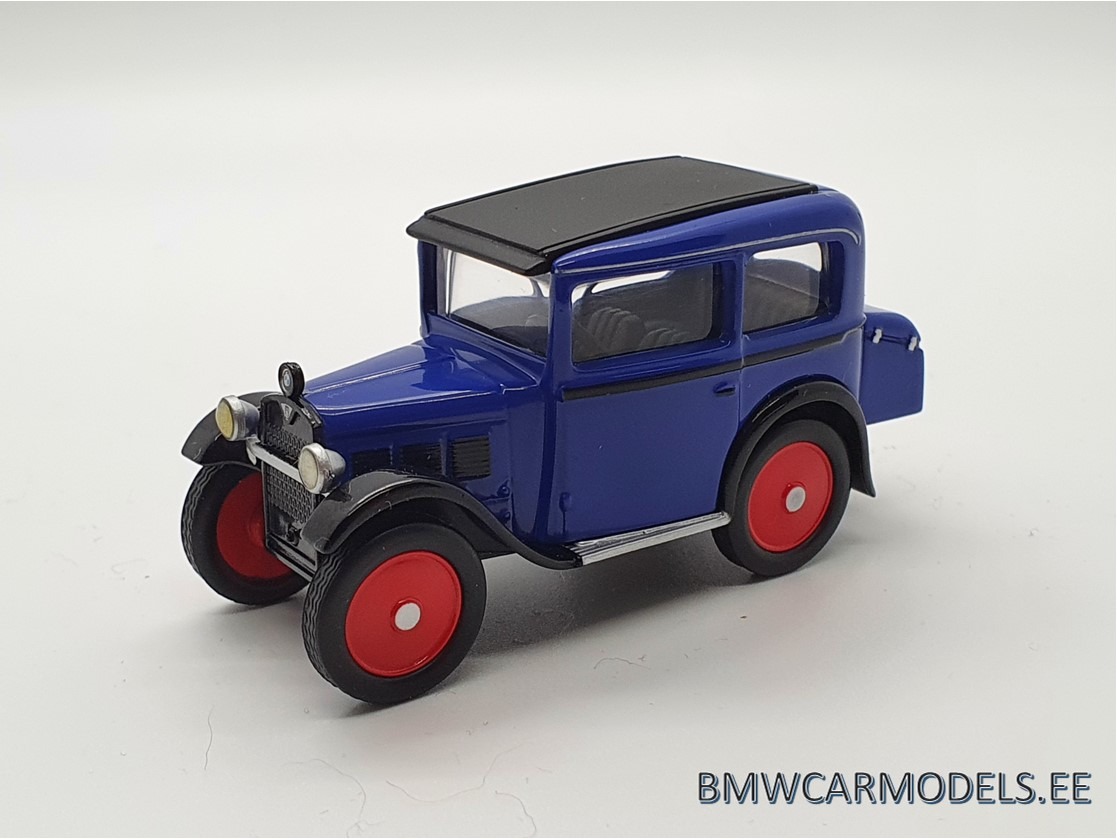
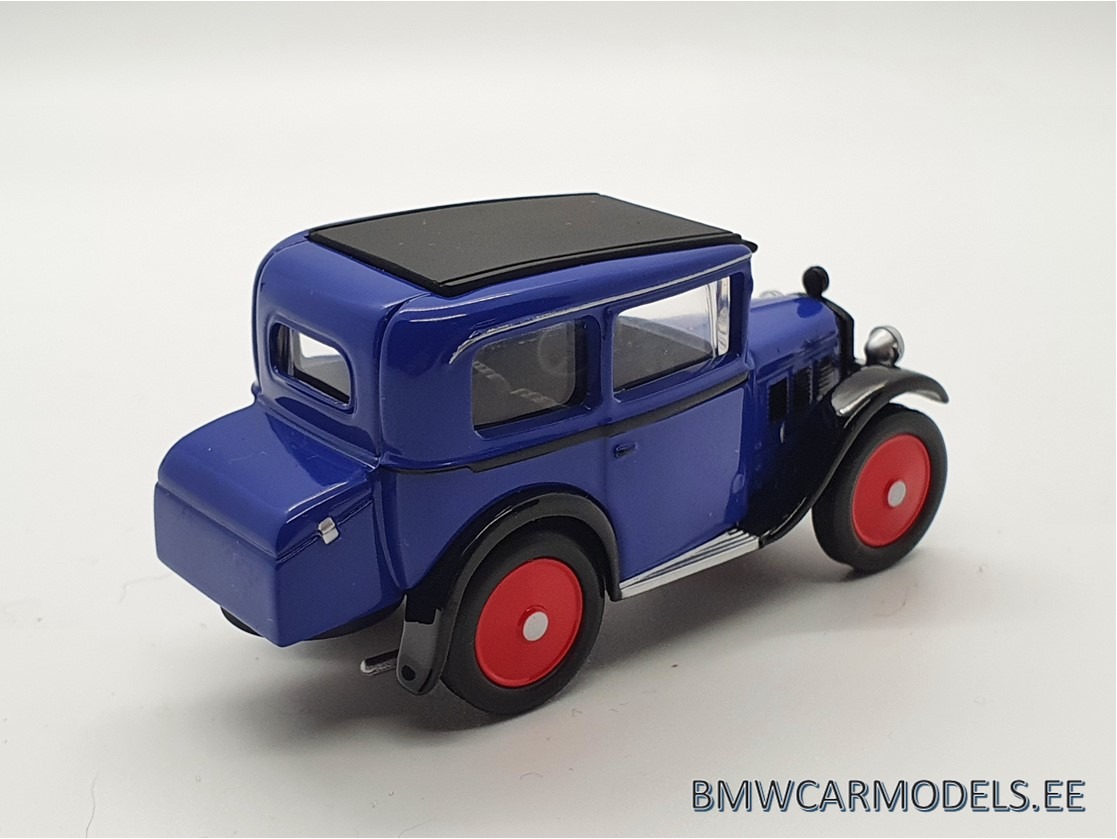
Minu kollektsioonis olev mudel on Schuco toodang.
Tehnilised andmed lühidalt:
Tootmisaeg: 1928–1929 BMW DIXI nime all.
Tootmiskoht: Eisenach, Saksamaa.
Mootor: 747 cm³ ridaneli.
Võimsus: 15 hj.
Tootmisarv: Dixi 3/15 mudeleid kokku 9307 autot.
Eripära: BMW esimene auto ja margi autotootmise algusmudel.
The BMW DIXI 3/15 marks the true beginning of BMW’s automobile production and belongs among the most important early models in the brand’s history. After acquiring the Eisenach factory in 1928, BMW began building an updated version of the small Dixi, and this became the first car marketed under the BMW name. The DIXI 3/15 was based on the Austin Seven built under licence, but adapted for the German market with left-hand drive, metric fasteners and several local technical modifications. Its historical importance is considerable, because it was this model that allowed BMW to enter the world of car manufacturing.
Technically, the BMW DIXI 3/15 used a 747 cc inline-four producing 15 horsepower. The car was simple, light and economical, yet very well suited to everyday use for its time. The Dixi 3/15 family proved successful, and a total of 9,307 Dixi-badged cars were built between 1927 and 1929 before the same basic concept continued more clearly under the BMW 3/15 name. For that reason, the BMW DIXI 3/15 is important not only as a small people’s car, but also as the first real step in the creation of BMW’s automotive history.
The model in my collection is produced by Schuco.
Technical data at a glance:
Production period: 1928–1929 under the BMW DIXI name.
Production location: Eisenach, Germany.
Engine: 747 cc inline-four.
Power output: 15 hp.
Production total: 9,307 Dixi 3/15 cars overall.
Special feature: BMW’s first car and the starting point of the brand’s automobile history.
BMW DIXI 3/15 tähistab BMW autotootmise tegelikku algust ning kuulub margi ajaloo kõige olulisemate varaste mudelite hulka. Pärast Eisenachi tehase omandamist 1928. aastal alustas BMW väikese Dixi edasiarendatud versiooni tootmist ning just sellest mudelist sai esimene auto, mida turustati BMW nime all. DIXI 3/15 põhines litsentsi alusel toodetud Austin Sevenil, kuid Saksa turu jaoks kohandati seda vasakpoolse rooliasendi, meetermõõdustiku ja mitme kohaliku tehnilise lahendusega. Selle mudeli ajalooline tähtsus on väga suur, sest just see andis BMW-le võimaluse siseneda autotootmise maailma.
Tehniliselt kasutas BMW DIXI 3/15 747 cm³ ridanelja, mille võimsus ulatus 15 hobujõuni. Auto oli lihtne, kerge ja ökonoomne, kuid oma aja kohta väga hästi kohandatud igapäevaseks kasutamiseks. Dixi 3/15 perekond osutus edukaks ning Dixi nime all toodeti aastatel 1927–1929 kokku 9307 autot, enne kui sama põhikontseptsioon jätkus juba selgemalt BMW 3/15 nime all. Just seetõttu on BMW DIXI 3/15 oluline mitte ainult väikese rahvaautona, vaid ka esimese tõelise sammuna BMW autoloo kujunemisel.
Minu kollektsioonis olev mudel on Schuco toodang.
Tehnilised andmed lühidalt:
Tootmisaeg: 1928–1929 BMW DIXI nime all.
Tootmiskoht: Eisenach, Saksamaa.
Mootor: 747 cm³ ridaneli.
Võimsus: 15 hj.
Tootmisarv: Dixi 3/15 mudeleid kokku 9307 autot.
Eripära: BMW esimene auto ja margi autotootmise algusmudel.
The BMW DIXI 3/15 marks the true beginning of BMW’s automobile production and belongs among the most important early models in the brand’s history. After acquiring the Eisenach factory in 1928, BMW began building an updated version of the small Dixi, and this became the first car marketed under the BMW name. The DIXI 3/15 was based on the Austin Seven built under licence, but adapted for the German market with left-hand drive, metric fasteners and several local technical modifications. Its historical importance is considerable, because it was this model that allowed BMW to enter the world of car manufacturing.
Technically, the BMW DIXI 3/15 used a 747 cc inline-four producing 15 horsepower. The car was simple, light and economical, yet very well suited to everyday use for its time. The Dixi 3/15 family proved successful, and a total of 9,307 Dixi-badged cars were built between 1927 and 1929 before the same basic concept continued more clearly under the BMW 3/15 name. For that reason, the BMW DIXI 3/15 is important not only as a small people’s car, but also as the first real step in the creation of BMW’s automotive history.
The model in my collection is produced by Schuco.
Technical data at a glance:
Production period: 1928–1929 under the BMW DIXI name.
Production location: Eisenach, Germany.
Engine: 747 cc inline-four.
Power output: 15 hp.
Production total: 9,307 Dixi 3/15 cars overall.
Special feature: BMW’s first car and the starting point of the brand’s automobile history.