BMW 1800 TI/SA oli piiratud tootmisarvuga eriversioon, mille BMW töötas välja Neue Klasse sedaani homologeerimiseks rahvusvahelises ringrajasõidus. Mudelitähises viitas „TI” nimetusele Touring International ning „SA” saksakeelsele sõnale Sonderausführung ehk eriversioon. Tegemist oli BMW 1800 TI märksa võistluslikuma edasiarendusega, mis viis sportliku sedaani kontseptsiooni tavalisest seeriamudelist palju lähemale ringrajaautole.
BMW 1800 TI/SA valmis ajal, mil BMW kujundas järjest tugevamalt oma mainet sportlike ja juhikesksete sedaanide tootjana. Väliselt jäi auto tagasihoidlikuks ning erines tavalisest Neue Klasse sedaanist vaid väheste detailide poolest. Selle tegelik erilisus peitus võimsamas mootoris, täiustatud veermikus, väikeses tootmismahus ja otseses seoses autospordiga. Seetõttu võib 1800 TI/SA-d pidada üheks BMW hilisemate suure jõudlusega sedaanide varaseks vaimseks eelkäijaks.
Tehniliselt põhines BMW 1800 TI/SA mudelil 1800 TI, kuid selle 1773 cm³ töömahuga neljasilindrilist M10 mootorit arendati põhjalikult edasi. Mootor sai kõrgema 10,5 : 1 surveastme, sportlikuma nukkvõlli, suuremad klapid ning kaks Weber DCOE 45 kahelõõrilist karburaatorit. Nende muudatuste tulemusena kasvas võimsus 130 hobujõuni, mis oli 20 hobujõudu rohkem kui tavalisel 1800 TI-l. Jõud suunati tagaratastele sportlike ülekannetega viiekäigulise Getragi manuaalkäigukasti kaudu.
Veermikku täiendati jäigemate stabilisaatoritega esi- ja tagasillal ning tavalisest 1800 TI-st suuremate esipiduriketastega. Auto oli ette valmistatud edasiseks võistluskasutuseks ning ostjatele pakuti ka erinevaid võistlusotstarbelisi lisalahendusi. BMW tootis 1965. aasta veebruarist juunini kokku ainult 200 autot ning neid müüdi eeskätt litsentseeritud võidusõitjatele. Väike tootmisarv ja otsene homologatsioonieesmärk muudavad BMW 1800 TI/SA üheks haruldasemaks ning ajalooliselt olulisemaks Neue Klasse mudeliks.
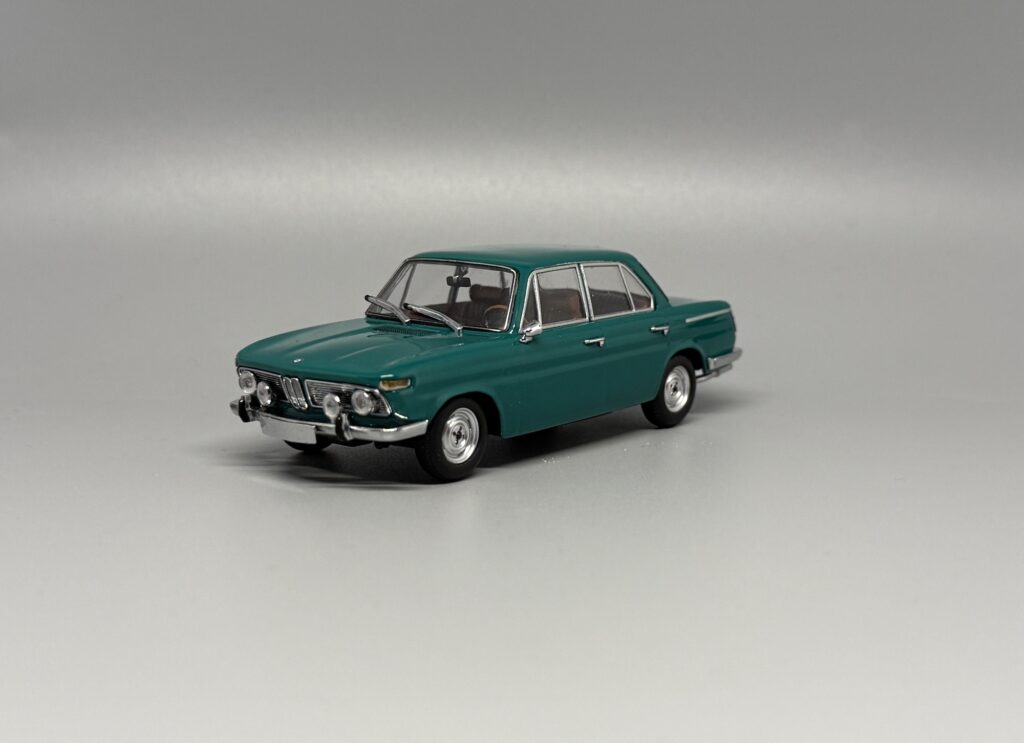
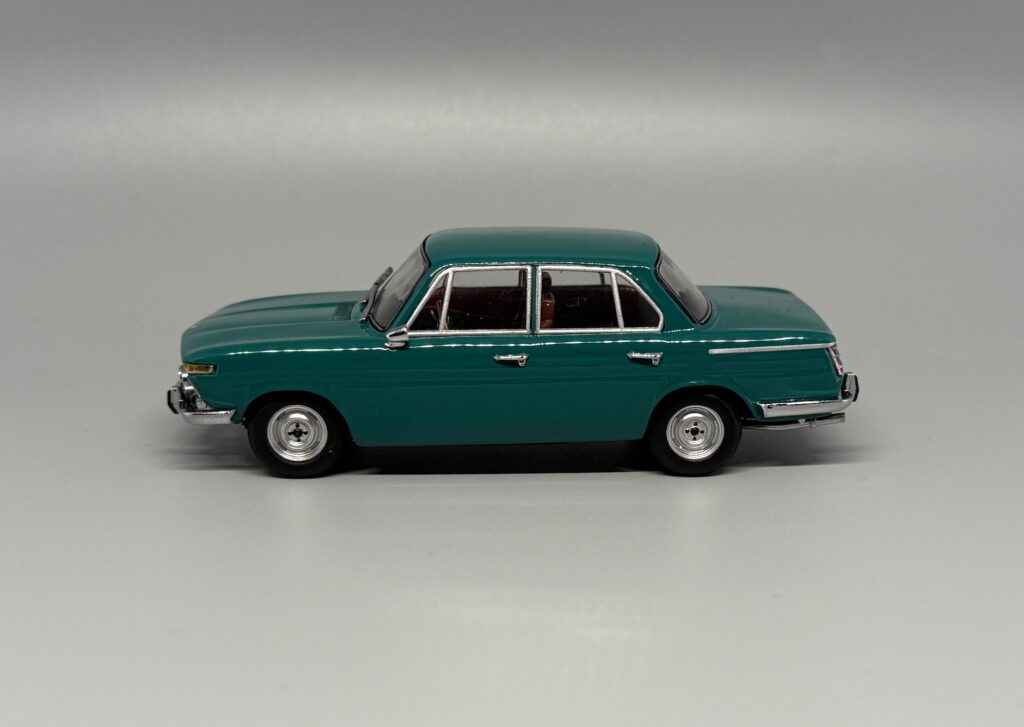
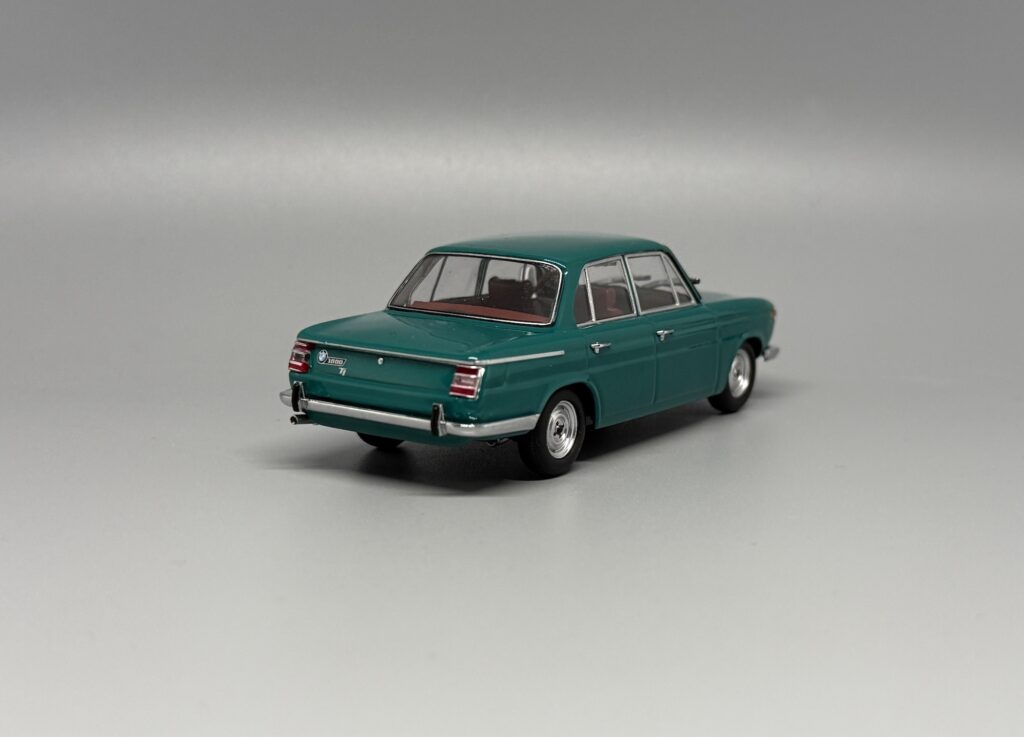
Minu kollektsioonis olev mudel on Minichampsi toodang ning see valmistati eksklusiivse eriväljaandena Model Car Worldile. Mudelit toodeti piiratud tiraažis kokku 1008 eksemplari. Mudel kujutab 1965. aasta autot.
Tehnilised andmed lühidalt:
Tootmisaeg: veebruar–juuni 1965
Tootmiskoht: München, Saksamaa
Mootor: 1,8 l ridaneli (M10), 1773 cm³
Karburaatorid: kaks Weber DCOE 45 kahelõõrilist karburaatorit
Võimsus: 130 hj
Käigukast: 5-käiguline Getragi manuaalkäigukast
Veoskeem: tagavedu
Tippkiirus: 186 km/h
Tootmisarv: 200 autot
Eripära: ringrajasõiduks homologeeritud Neue Klasse eriversioon, mida pakuti peamiselt litsentseeritud võidusõitjatele
BMW 1800 TI/SA was a limited-production special version developed by BMW to homologate its Neue Klasse saloon for international motor racing. In the model designation, “TI” referred to Touring International, while “SA” stood for the German word Sonderausführung, meaning special version. It was a significantly more competition-focused development of the BMW 1800 TI, bringing the concept of a sporting saloon much closer to that of a racing car.
The BMW 1800 TI/SA was created at a time when BMW was establishing an increasingly strong reputation as a manufacturer of sporting, driver-focused saloons. Its appearance remained understated, with only a few details distinguishing it from an ordinary Neue Klasse saloon. Its true significance lay in its more powerful engine, improved chassis, limited production volume and direct connection with motor sport. The 1800 TI/SA can therefore be regarded as an early spiritual predecessor of BMW’s later high-performance saloons.
Technically, the BMW 1800 TI/SA was based on the 1800 TI, but its four-cylinder M10 engine, with a displacement of 1,773 cm³, was extensively developed. It received a higher compression ratio of 10.5 : 1, a competition-oriented camshaft, larger valves and two twin-choke Weber DCOE 45 carburettors. These modifications increased output to 130 hp, 20 hp more than the regular 1800 TI. Power was sent to the rear wheels through a close-ratio five-speed Getrag manual gearbox.
The chassis was upgraded with stiffer anti-roll bars at the front and rear, together with larger front brake discs than those fitted to the regular 1800 TI. The car was prepared for further competition use, and buyers could select additional motor-sport equipment. BMW produced only 200 examples between February and June 1965, with the cars offered primarily to licensed racing drivers. Its limited production and direct homologation purpose make the BMW 1800 TI/SA one of the rarest and most historically significant models of the Neue Klasse era.
The model in my collection is produced by Minichamps as an exclusive edition for Model Car World. It was produced in a limited edition of 1008 pieces. The model represents a 1965 car.
Technical data in brief:
Production period: February–June 1965
Production location: Munich, Germany
Engine: 1.8-litre inline-four (M10), 1,773 cm³
Carburettors: two twin-choke Weber DCOE 45 carburettors
Power: 130 hp
Transmission: 5-speed Getrag manual
Drivetrain: rear-wheel drive
Top speed: 186 km/h
Production number: 200 cars
Special feature: competition-homologated Neue Klasse special version offered primarily to licensed racing drivers

BMW 1800 TI/SA oli piiratud tootmisarvuga eriversioon, mille BMW töötas välja Neue Klasse sedaani homologeerimiseks rahvusvahelises ringrajasõidus. Mudelitähises viitas „TI” nimetusele Touring International ning „SA” saksakeelsele sõnale Sonderausführung ehk eriversioon. Tegemist oli BMW 1800 TI märksa võistluslikuma edasiarendusega, mis viis sportliku sedaani kontseptsiooni tavalisest seeriamudelist palju lähemale ringrajaautole.
BMW 1800 TI/SA valmis ajal, mil BMW kujundas järjest tugevamalt oma mainet sportlike ja juhikesksete sedaanide tootjana. Väliselt jäi auto tagasihoidlikuks ning erines tavalisest Neue Klasse sedaanist vaid väheste detailide poolest. Selle tegelik erilisus peitus võimsamas mootoris, täiustatud veermikus, väikeses tootmismahus ja otseses seoses autospordiga. Seetõttu võib 1800 TI/SA-d pidada üheks BMW hilisemate suure jõudlusega sedaanide varaseks vaimseks eelkäijaks.
Tehniliselt põhines BMW 1800 TI/SA mudelil 1800 TI, kuid selle 1773 cm³ töömahuga neljasilindrilist M10 mootorit arendati põhjalikult edasi. Mootor sai kõrgema 10,5 : 1 surveastme, sportlikuma nukkvõlli, suuremad klapid ning kaks Weber DCOE 45 kahelõõrilist karburaatorit. Nende muudatuste tulemusena kasvas võimsus 130 hobujõuni, mis oli 20 hobujõudu rohkem kui tavalisel 1800 TI-l. Jõud suunati tagaratastele sportlike ülekannetega viiekäigulise Getragi manuaalkäigukasti kaudu.
Veermikku täiendati jäigemate stabilisaatoritega esi- ja tagasillal ning tavalisest 1800 TI-st suuremate esipiduriketastega. Auto oli ette valmistatud edasiseks võistluskasutuseks ning ostjatele pakuti ka erinevaid võistlusotstarbelisi lisalahendusi. BMW tootis 1965. aasta veebruarist juunini kokku ainult 200 autot ning neid müüdi eeskätt litsentseeritud võidusõitjatele. Väike tootmisarv ja otsene homologatsioonieesmärk muudavad BMW 1800 TI/SA üheks haruldasemaks ning ajalooliselt olulisemaks Neue Klasse mudeliks.
Minu kollektsioonis olev mudel on Minichampsi toodang ning see valmistati eksklusiivse eriväljaandena Model Car Worldile. Mudelit toodeti piiratud tiraažis kokku 1008 eksemplari. Mudel kujutab 1965. aasta autot.
Tehnilised andmed lühidalt:
Tootmisaeg: veebruar–juuni 1965
Tootmiskoht: München, Saksamaa
Mootor: 1,8 l ridaneli (M10), 1773 cm³
Karburaatorid: kaks Weber DCOE 45 kahelõõrilist karburaatorit
Võimsus: 130 hj
Käigukast: 5-käiguline Getragi manuaalkäigukast
Veoskeem: tagavedu
Tippkiirus: 186 km/h
Tootmisarv: 200 autot
Eripära: ringrajasõiduks homologeeritud Neue Klasse eriversioon, mida pakuti peamiselt litsentseeritud võidusõitjatele
BMW 1800 TI/SA was a limited-production special version developed by BMW to homologate its Neue Klasse saloon for international motor racing. In the model designation, “TI” referred to Touring International, while “SA” stood for the German word Sonderausführung, meaning special version. It was a significantly more competition-focused development of the BMW 1800 TI, bringing the concept of a sporting saloon much closer to that of a racing car.
The BMW 1800 TI/SA was created at a time when BMW was establishing an increasingly strong reputation as a manufacturer of sporting, driver-focused saloons. Its appearance remained understated, with only a few details distinguishing it from an ordinary Neue Klasse saloon. Its true significance lay in its more powerful engine, improved chassis, limited production volume and direct connection with motor sport. The 1800 TI/SA can therefore be regarded as an early spiritual predecessor of BMW’s later high-performance saloons.
Technically, the BMW 1800 TI/SA was based on the 1800 TI, but its four-cylinder M10 engine, with a displacement of 1,773 cm³, was extensively developed. It received a higher compression ratio of 10.5 : 1, a competition-oriented camshaft, larger valves and two twin-choke Weber DCOE 45 carburettors. These modifications increased output to 130 hp, 20 hp more than the regular 1800 TI. Power was sent to the rear wheels through a close-ratio five-speed Getrag manual gearbox.
The chassis was upgraded with stiffer anti-roll bars at the front and rear, together with larger front brake discs than those fitted to the regular 1800 TI. The car was prepared for further competition use, and buyers could select additional motor-sport equipment. BMW produced only 200 examples between February and June 1965, with the cars offered primarily to licensed racing drivers. Its limited production and direct homologation purpose make the BMW 1800 TI/SA one of the rarest and most historically significant models of the Neue Klasse era.
The model in my collection is produced by Minichamps as an exclusive edition for Model Car World. It was produced in a limited edition of 1008 pieces. The model represents a 1965 car.
Technical data in brief:
Production period: February–June 1965
Production location: Munich, Germany
Engine: 1.8-litre inline-four (M10), 1,773 cm³
Carburettors: two twin-choke Weber DCOE 45 carburettors
Power: 130 hp
Transmission: 5-speed Getrag manual
Drivetrain: rear-wheel drive
Top speed: 186 km/h
Production number: 200 cars
Special feature: competition-homologated Neue Klasse special version offered primarily to licensed racing drivers
Foto päris autost, BMW muuseum. Foto: Sten-Patrick Kreek
Photo of the real car, BMW Museum. Photo: Sten-Patrick Kreek