BMW 2500 (E3) tähistas 1960. aastate lõpus uut ajastut BMW ajaloos, sest just selle mudeliga naasis mark tõsiseltvõetava suure luksussedaani klassi. Mudelit hakati müüma 1968. aasta augustis ning see oli esimene auto BMW uuest “suure sedaani” mudeliperest, mida tuntakse ka tähisega E3 või nime all New Six. 2500 ühendas elegantse, sirgjoonelise disaini, iseloomuliku neeruvõre ja avara kerega autojuhile suunatud sõidutunnetuse, mis aitas BMW-l eristuda traditsioonilisematest konkurentidest. Just E3 pani aluse sellele, et BMW-d hakati üha enam seostama sportliku luksusega.
Tehniliselt kasutas BMW 2500 uut 2,5-liitrist ridakuue mootorit, mille võimsus ulatus 150 hobujõuni. Oma aja kohta pakkus see väga head tasakaalu mugavuse, jõudluse ja juhitavuse vahel ning just see sportlikum iseloom eristas E3 mudelit paljudest sama klassi konkurentidest. BMW 2500 jäi tootmisse kuni 1977. aastani ning mudelipere ajalooline tähtsus seisneb ka selles, et E3 oli hilisema 7. seeria otsene eelkäija. BMW enda ajaloolise ülevaate järgi müüdi 2500 mudelit kokku üle 92 000 eksemplari.
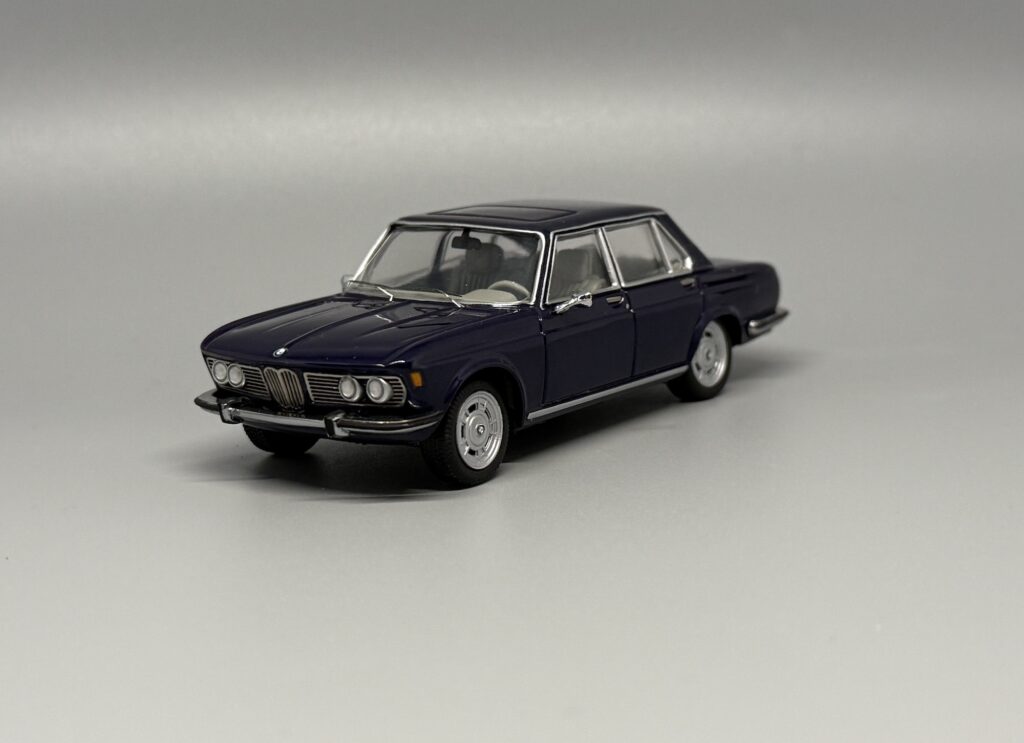
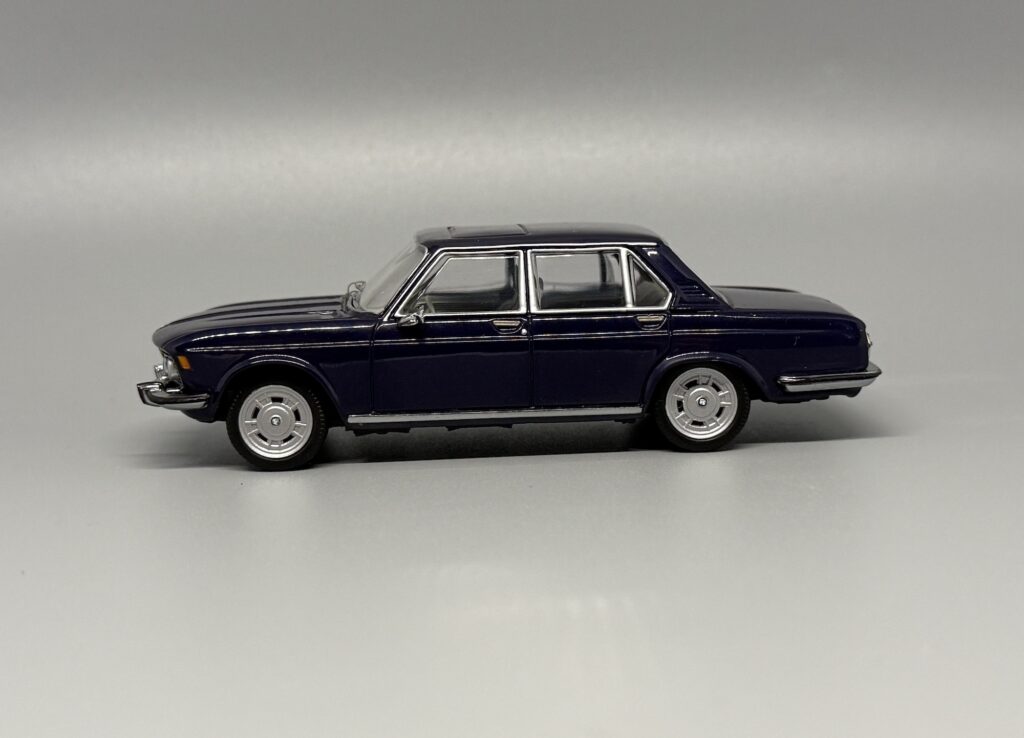
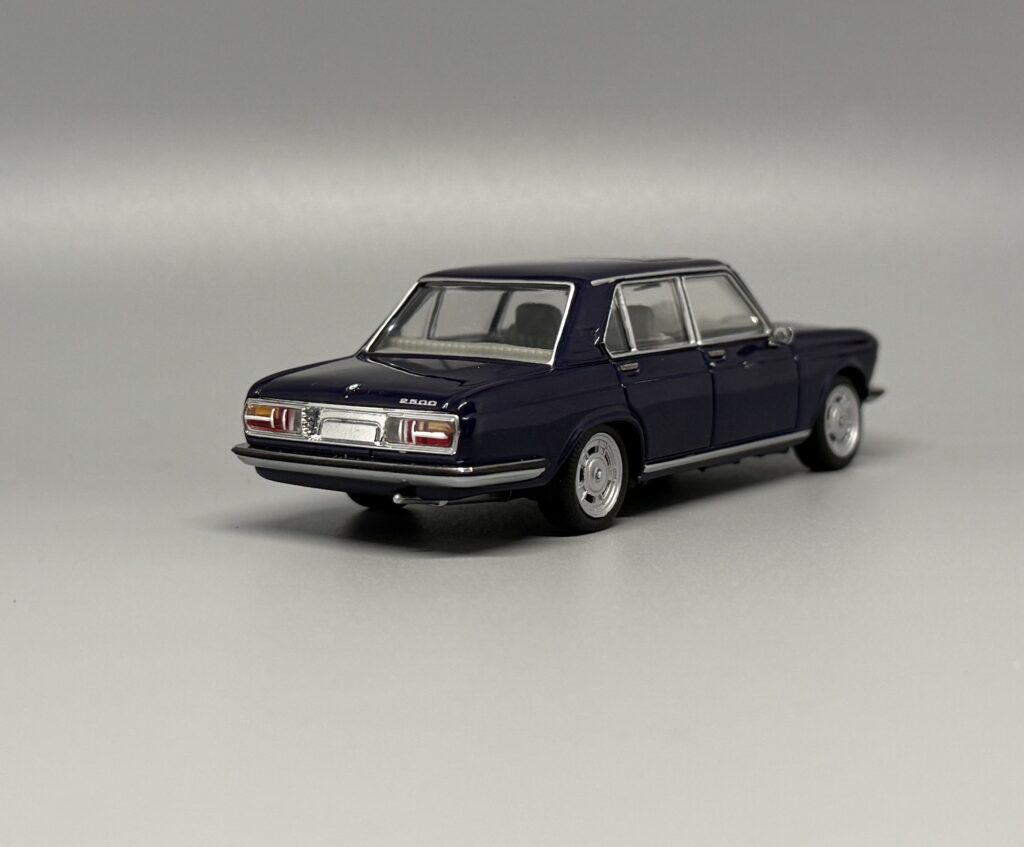
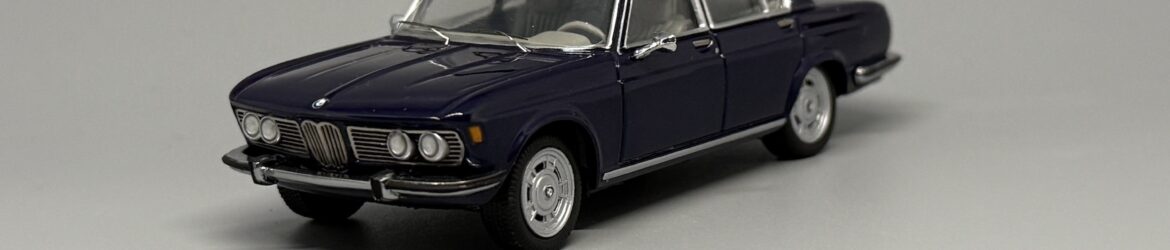
Minu kollektsioonis olev mudelauto on Schuco toodang. Tegemist on piiratud tiraažiga ning mudelit toodeti 1000 eksemplari.
Tehnilised andmed lühidalt:
Tootmisaeg: 1968–1977
Tootmiskoht: Saksamaa, BMW E3 mudelipere
Mootor: 2,5 l ridakuus
Võimsus: 150 hj
Tootmisarv: üle 92 000 auto
Eripära: esimene E3 “New Six” mudel ja hilisema 7. seeria eelkäija
The BMW 2500 (E3) marked a new era in BMW history in the late 1960s, as it was the model that returned the brand to the upper-class luxury sedan segment in a serious way. Sales began in August 1968, and it became the first car in BMW’s new large-sedan model family, known as the E3 or New Six. The 2500 combined elegant, straight-lined styling, the characteristic twin-kidney grille and a spacious body with a distinctly driver-focused character, helping BMW stand apart from more traditional competitors. It was the E3 that helped establish BMW’s reputation for sporty luxury.
Technically, the BMW 2500 used a new 2.5-litre inline-six producing 150 horsepower. For its time, it offered a very strong balance of comfort, performance and handling, and this more sporting character was exactly what set the E3 apart from many rivals in the same class. The BMW 2500 remained in production until 1977, and the historical importance of the E3 also lies in the fact that it became the direct predecessor of the later 7 Series. According to BMW’s historical material, more than 92,000 examples of the 2500 were sold.
The model in my collection is produced by Schuco. It is a limited edition of 1,000 pieces.
Technical data at a glance:
Production period: 1968–1977
Production location: Germany, BMW E3 model family
Engine: 2.5-litre inline-six
Power output: 150 hp
Production total: more than 92,000 cars
Special feature: first E3 “New Six” model and predecessor of the later 7 Series
BMW 2500 (E3) tähistas 1960. aastate lõpus uut ajastut BMW ajaloos, sest just selle mudeliga naasis mark tõsiseltvõetava suure luksussedaani klassi. Mudelit hakati müüma 1968. aasta augustis ning see oli esimene auto BMW uuest “suure sedaani” mudeliperest, mida tuntakse ka tähisega E3 või nime all New Six. 2500 ühendas elegantse, sirgjoonelise disaini, iseloomuliku neeruvõre ja avara kerega autojuhile suunatud sõidutunnetuse, mis aitas BMW-l eristuda traditsioonilisematest konkurentidest. Just E3 pani aluse sellele, et BMW-d hakati üha enam seostama sportliku luksusega.
Tehniliselt kasutas BMW 2500 uut 2,5-liitrist ridakuue mootorit, mille võimsus ulatus 150 hobujõuni. Oma aja kohta pakkus see väga head tasakaalu mugavuse, jõudluse ja juhitavuse vahel ning just see sportlikum iseloom eristas E3 mudelit paljudest sama klassi konkurentidest. BMW 2500 jäi tootmisse kuni 1977. aastani ning mudelipere ajalooline tähtsus seisneb ka selles, et E3 oli hilisema 7. seeria otsene eelkäija. BMW enda ajaloolise ülevaate järgi müüdi 2500 mudelit kokku üle 92 000 eksemplari.
Minu kollektsioonis olev mudelauto on Schuco toodang. Tegemist on piiratud tiraažiga ning mudelit toodeti 1000 eksemplari.
Tehnilised andmed lühidalt:
Tootmisaeg: 1968–1977
Tootmiskoht: Saksamaa, BMW E3 mudelipere
Mootor: 2,5 l ridakuus
Võimsus: 150 hj
Tootmisarv: üle 92 000 auto
Eripära: esimene E3 “New Six” mudel ja hilisema 7. seeria eelkäija
The BMW 2500 (E3) marked a new era in BMW history in the late 1960s, as it was the model that returned the brand to the upper-class luxury sedan segment in a serious way. Sales began in August 1968, and it became the first car in BMW’s new large-sedan model family, known as the E3 or New Six. The 2500 combined elegant, straight-lined styling, the characteristic twin-kidney grille and a spacious body with a distinctly driver-focused character, helping BMW stand apart from more traditional competitors. It was the E3 that helped establish BMW’s reputation for sporty luxury.
Technically, the BMW 2500 used a new 2.5-litre inline-six producing 150 horsepower. For its time, it offered a very strong balance of comfort, performance and handling, and this more sporting character was exactly what set the E3 apart from many rivals in the same class. The BMW 2500 remained in production until 1977, and the historical importance of the E3 also lies in the fact that it became the direct predecessor of the later 7 Series. According to BMW’s historical material, more than 92,000 examples of the 2500 were sold.
The model in my collection is produced by Schuco. It is a limited edition of 1,000 pieces.
Technical data at a glance:
Production period: 1968–1977
Production location: Germany, BMW E3 model family
Engine: 2.5-litre inline-six
Power output: 150 hp
Production total: more than 92,000 cars
Special feature: first E3 “New Six” model and predecessor of the later 7 Series
Foto päris autost. Algne allikas teadmata
Photo of the real car. Original source unknown